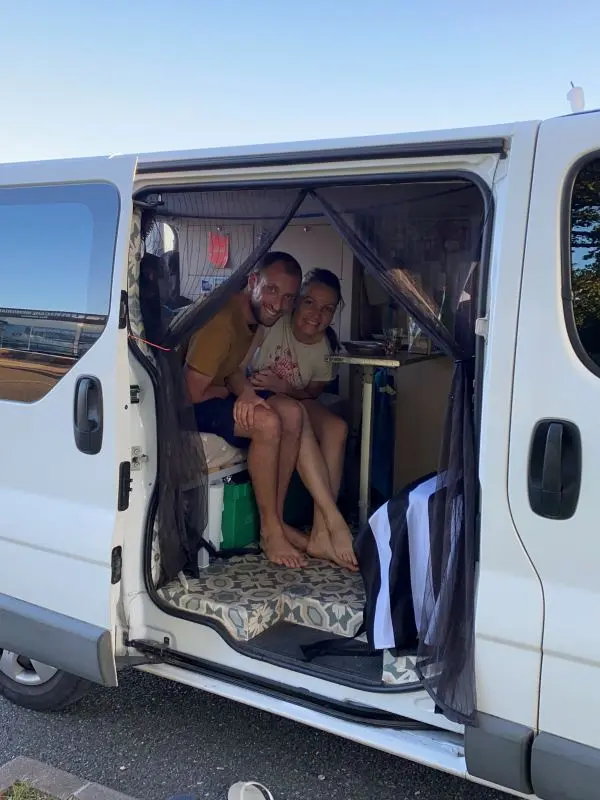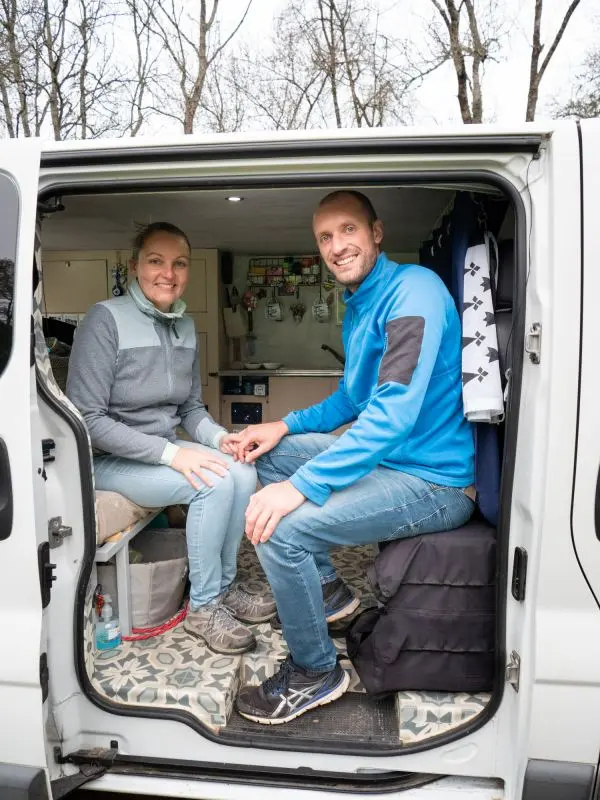
You finally have your dream van! Like a house on wheels, but much smaller than a tiny house… And all your equipment must fit into that limited space. How do you do it?
RayonRando asked Amélie and Anthony, who have been travelling since 2021 in Simone, a Renault Trafic L1H1 they converted themselves.
Amélie, Anthony… and Simone the van!
For over 2 years, Amélie and Anthony, both in their thirties, have divided their time between travelling Europe by van in warmer months and staying in France for winter.
In 2021, they toured Northern Europe for 5 months. In 2022, they headed to Southern Europe for 9 months, reaching Turkey. In 2023, they explored the United Kingdom for 3 months.
“We love this way of travelling and the freedom it gives us. In almost 3 years, we have visited over 30 countries and hope to continue for a long time: it has now become our way of life.”
Follow their adventures on Instagram: @envanlifesimone, and their blog: www.envanlifesimone.com.
What equipment do you need for several months in a van?
“To live in such a small space, everything must be useful daily and, above all, compact. Beyond the van conversion itself, we constantly question each item's usefulness to gain space and practicality without sacrificing self-sufficiency.”
Here are their answers on the main equipment needed to cover everyday needs:
Kitchen:
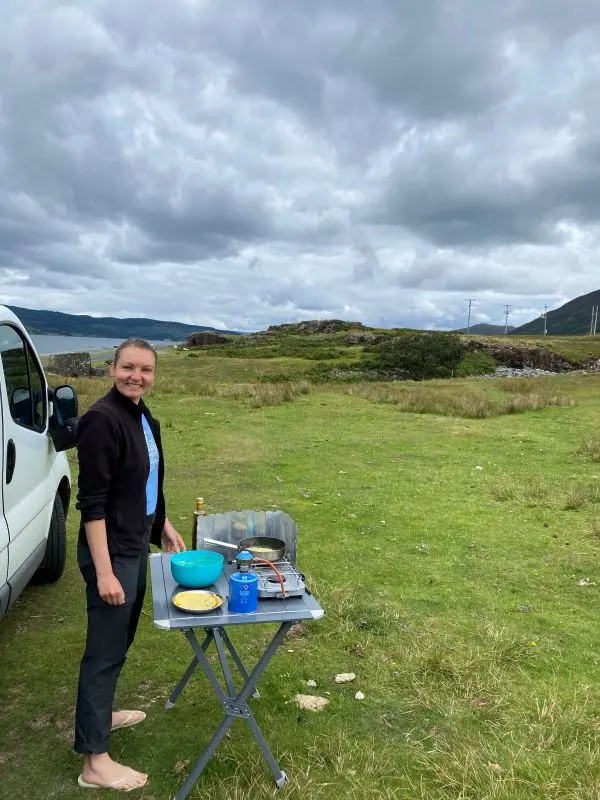
- A stove is essential for cooking in the van. We currently use a portable 2-burner stove compatible with a 450 g valve-type butane canister. We also have a small hiking stove, easier to set up for quick tasks such as heating water.
- For cooking, we have stacking cookware: a frying pan, two saucepans with lids, and a colander. Lids are essential for saving gas.
- To keep food fresh, we use a 40 L compressor coolbox. Its advantage is low electricity consumption. However, it is not essential in a campervan: it takes up space and requires a more complex electrical installation. It depends on how you buy food (stocking up or regularly buying fresh). Some coolboxes with ice packs stay cold for several days.
- For washing up, we use a compact, collapsible 10 L basin and a pressurised solar shower with Marseille soap, to minimise environmental impact.
- For waste, we use a 10 L bin and recycle where possible. The 10 L size also encourages regular disposal: storing rubbish in such a small space is difficult.
- For water, we have 20 L and 10 L containers and a 5 L gravity filter jug. Containers are easier to fill than a tank, but provide less autonomy.
Sleeping area:
We put considerable thought into our removable bed, an essential feature for us. We therefore need little else for the sleeping area. The bed is almost like home, except it measures 125*187 and consists of four removable foam sections. We have a normal duvet and down sleeping bags for low temperatures, plus a small battery-powered bedside light.
Bathroom / toilet:
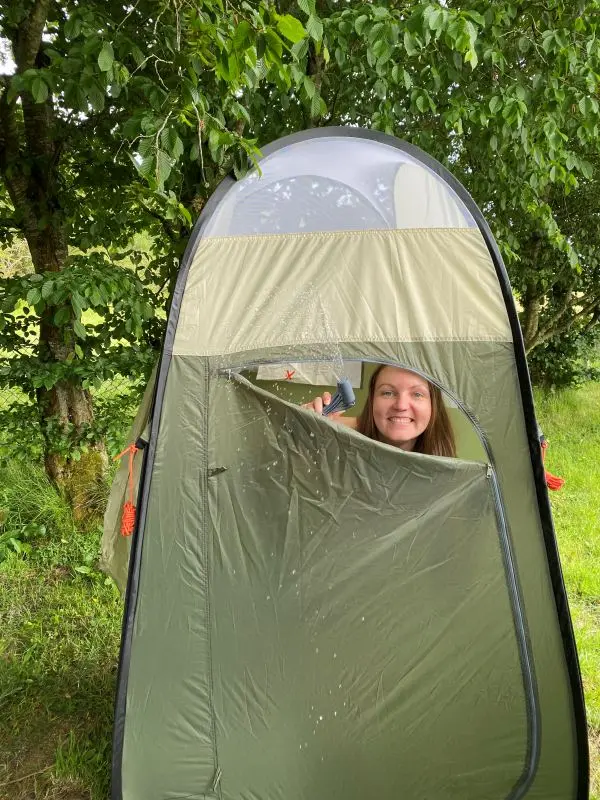
Our bathroom consists of a travel wash bag that unfolds and hangs from a hook. To wash, we use a 10 L pressurised solar shower. Pumping with your foot produces a spray almost like your bathroom shower. Leaving it in the sun heats the water. This shower is essential for us. For privacy and protection from wind and cold, we also have a shower tent secured outside with pegs.
We dry towels on a suction-mounted drying rack attached to the bodywork. Very practical, as we have no space to dry towels inside.
We chose a chemical toilet for independence. After our European tour, however, we want to switch to a dry toilet with urine separation. Suitable disposal points are not always easy to find, particularly in the United Kingdom.
Outdoors:
Several items let us enjoy living outside the van.
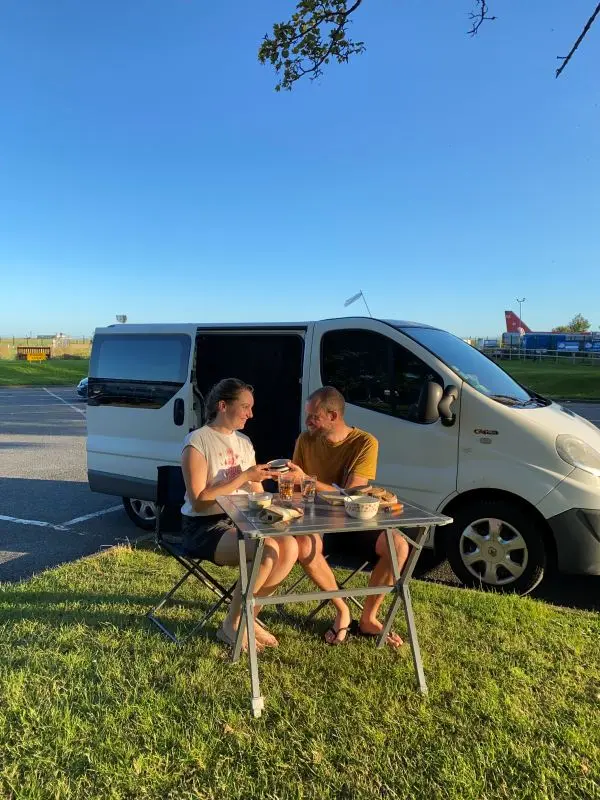
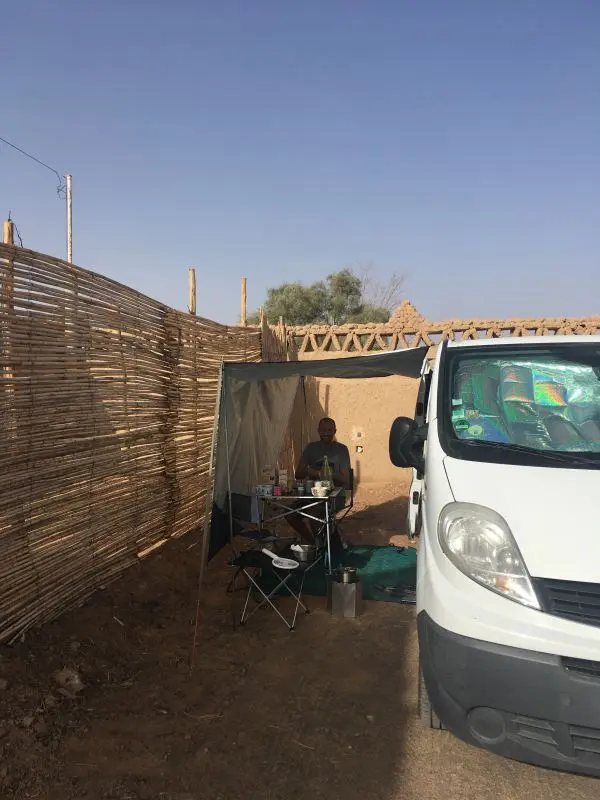
- A folding aluminium table offers a good weight-to-strength ratio. One adjustable leg stabilises it on uneven ground. Folded, it takes very little space.
- We have two light, folding chairs.
- In very hot weather, we can pitch a tarp as an awning for shade.
- For evenings, we have a rechargeable mosquito-repellent lantern for lighting.
These are essentials for enjoying the outdoors. However, putting them outside counts as wild camping. Check current local and national regulations to respect wherever you stop.
Electricity
We have a fixed AGM leisure battery charged by a flexible 160 W solar panel on the vehicle roof. We also carry a small 256 Wh portable power station with a 120 W solar panel. This makes us electrically self-sufficient. We favour rechargeable accessories over disposable batteries.
Other items:
Our side-door mosquito net is a summer essential. We have magnetic blackout curtains for the windows and a windscreen sunshade.
Safety equipment includes a fire extinguisher, window breaker and steering-wheel lock.
Conclusion:
Long-term comfort requires compact, effective equipment covering essential power, water, food and waste needs.
Also consider comfort equipment that becomes essential over time: comfortable sleeping and seating, weather protection and, particularly in summer, protection from sun, heat and mosquitoes.
Many thanks to Amélie and Anthony for sharing their experience. Happy travels to Simone on their next adventures!