Choosing a head torch is not always straightforward: you need to identify which performance features are actually useful and match them to your needs.

These needs can differ considerably between activities:

  • An emergency head torch, “just in case…”
  • At camp, to illuminate only your immediate surroundings.
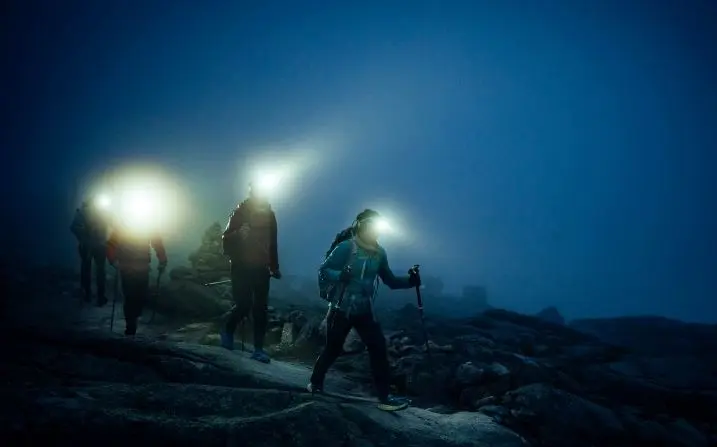
  • For an occasional early approach between 4:30 and 6 in the morning, or for hiking through much of the night.
  • For a 1-hour road run or an entire night trail running on mountain paths.
  • For a night mountain-bike ride or competition.
  • As often, the right compromise involves combining several factors:

How bright does my head torch need to be?

Wondering how to find a head torch that lights things “well”? Since “well” is rather vague, we tend to seek a number: lumens.

So how many lumens should a head torch have? Let us take a closer look first.

Lumens: a reference value to put in perspective

Almost all head torches state their lumen (lm) output to indicate brightness. This is light output, calculated using the luminous flux received on a 1 m2 surface situated 1 m from the light source. In principle, it allows comparisons between torches.

However, this information needs putting in perspective in 2 respects:

  • In shops, beware the lumen figure on the front of the box: it generally shows maximum output. A box may state 1,000 lumens, but this means maximum mode, active for just 30 seconds… Meanwhile, medium mode, lasting 6 h, delivers 150 lm…
  •      Lumens express the light leaving the torch, rather than the illuminance of the surface lit (which would be expressed in lux). Illuminance varies with lens, reflector and LED quality, which is difficult to assess easily. Beam width also matters.

So, you might ask, is 350 lumens good for a head torch?

To find what suits you, I recommend the following:

  • Ignore “max”, “turbo” and “boost” modes that provide high output very briefly. Look at “medium” modes balancing brightness and runtime. Check “low” mode output, which may suffice at camp (10–15 lumens). Some brighter modes may also offer sufficient runtime.
  • For quality lighting, favour specialist brands (Petzl, Nebo, Black Diamond, Led Lenser, etc.) over general outdoor brands and budget models.
  • If specified, check beam width. A wide beam provides peripheral vision at the expense of intensity, while a focused beam offers clearer but narrower vision. Some torches switch between wide and focused beams, or combine the 2.

Here are some figures for different uses:

  • At camp, 10 lumens lights the ground around you well outdoors. With 5 lumens, you can see inside a tent or what you are holding, but outdoor lighting is limited. Slightly more output is comfortable, but avoid shining it into other people's faces.
  • For walking, 100 lumens already provides good visibility. A little more output (or a high mode) may help when finding your way.
  • For running, aim for around 150 lumens, although 100 lm may suffice on a good road. For trail running, a long-lasting 150 lm mode is good, with a high mode of 350 lm or more for difficult sections or bad weather. A fairly wide beam is useful for trail running, or a combined wide and focused beam.
  • Mountain biking requires more output to see terrain clearly, depending on your riding (recreational, racing, solo or group).

Most torches have cool white light, which reveals details best. Warm light is pleasant but less crisp.

How much runtime do you need from your head torch?

Brightness and the associated runtime must be considered together.

Check runtime in hours for the modes you actually need (medium, medium and low, or medium, low and high). If it is slightly short, carry spare batteries or an additional rechargeable battery. This is a sensible safety precaution anyway.

The power source matters: some torches use disposable batteries, others rechargeable batteries. Some head torches accept either type, letting you carry disposable spares alongside a rechargeable battery. Rechargeables are useful if you carry a power bank or can recharge regularly.

Safety:

  • Besides spare batteries, a low mode with long runtime is useful (15 or 20 hours, for example).
  • Some torches switch to a minimum safety output when the battery is low.
  • Less commonly, a charge indicator is provided.

Weight, bulk and stability:

For self-sufficient trekking, weight and bulk matter. Avoid overestimating the output you need so you can keep weight down.

For running, trail running or mountain biking, weight matters, but stability is paramount: the torch should stay still under impact and be easy to forget you are wearing.

Some head torches have a separate battery pack at the back of the head for good stability. Some heavier, high-output torches add an overhead strap to the headband for excellent stability.

Lighting modes and ease of operation:

Head torches often have just one button for every function. Operation is generally simple (press to change modes), but switching can become confusing when there are many modes. Sometimes you press several times quickly; sometimes you hold the button down. Others combine single and multiple presses.

This can be confusing initially; it takes practice. Review operation before setting off with a torch you have not used for some time. Keep the instructions, which are easy to discard because there is only one button.

2 lighting features can be especially useful:

  • A torch that switches on in the last mode used (low or high, red or white).
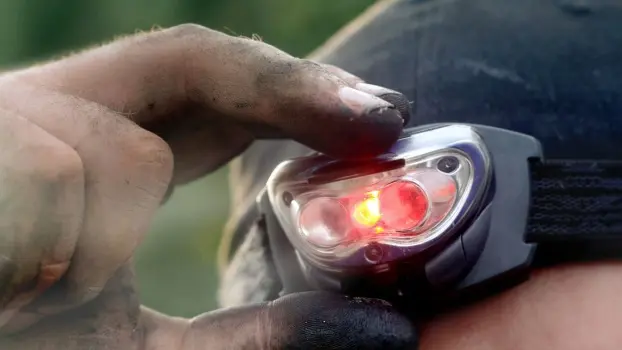
  • The ability to switch directly to red light.

Secondary features:

These are not always present or useful (beware “marketing” features), but may influence your choice when relevant to your needs:

  • Water resistance:

Useful beyond caving: canoeing, boating or hiking in Scotland may call for a torch resistant to rain and water. Such models have fairly high water-resistance ratings: IPX6, IPX7 and, less commonly, IPX8. IPX4 suits ordinary use (light rain, splashes).

  • Red light:

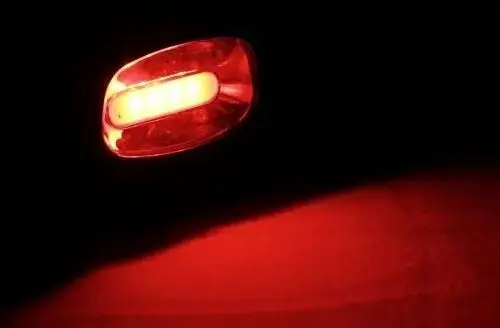
What is a head torch's red light for? It has two benefits: lighting your tent without disturbing a sleeping neighbour, and illuminating the ground or a map outside without dazzling yourself. This preserves your night vision (dilated pupils), avoiding the need for your eyes to readjust after switching off.

  • Flashing mode for signalling:

A safety feature if something goes wrong. It attracts rescuers' attention and greatly extends battery life.

  • Automatic features:

Switching on and off by waving a hand in front of the lens is a fairly unnecessary gimmick, in my view. Automatic brightness adjustment lowers output when you look at a map and increases it when you look up into the distance. This can help in some circumstances, but is not essential in most cases.

Conclusion

Although brightness is often a key criterion, study each torch's output/runtime table rather than choosing on maximum output alone.

If unsure, focus on a “medium” output with sufficient runtime for your activities.

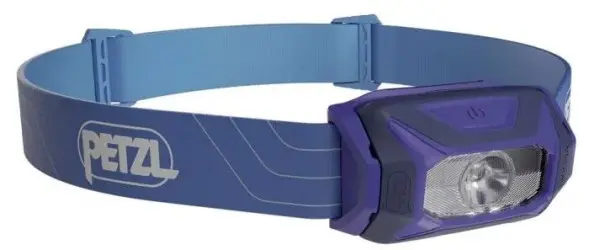
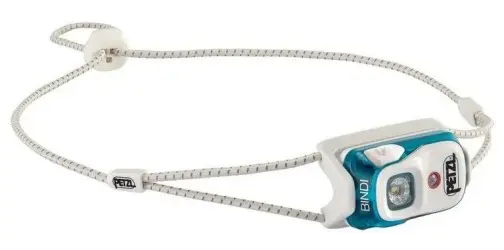
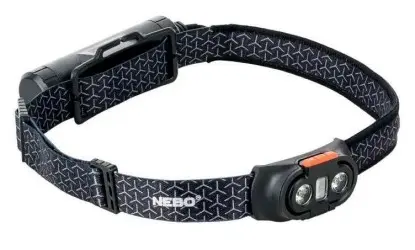
Petzl remains France's benchmark brand, with reliable head torches offering good value. Other specialists, such as Nebo, also provide excellent visual comfort, superior light quality and strong output/runtime ratios.

Whatever my head torch's runtime, I never leave without spare batteries or an additional rechargeable battery. Beyond lighting, your head torch is part of your safety equipment. Some ultra-trail races even require a second head torch.

Product comparison
Compare
Rayon Rando advice