





Before a hike, you hesitate: should you take one gas cartridge or two? One means risking running out in the mountains; 2 may mean extra weight that proves unnecessary. You also wonder whether a partly used cartridge will suffice.
A standard 450 ml gas cartridge weighs around 400 g. Optimising gas consumption can therefore bring peace of mind and potentially reduce weight.
In this article, Rayonrando suggests different ways to save gas and extend cartridge life by adjusting your equipment, food choices and heating methods.
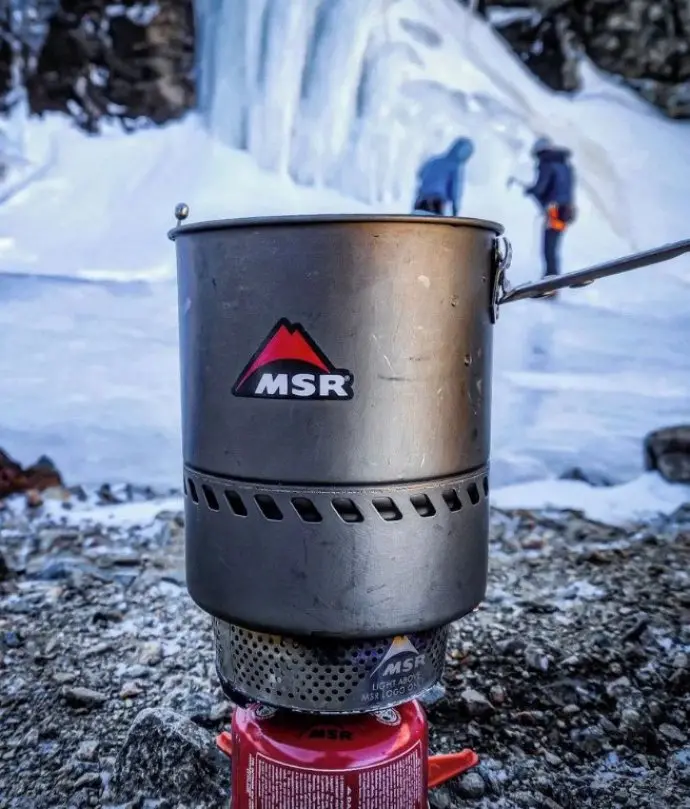
The windscreen
Sometimes considered heavy and unnecessary, a windscreen is very effective at helping your stove work optimally.
Most stoves are sensitive to the slightest breeze. You can clearly hear the flame waver in any draught. There is no need to wait for a storm to get the windscreen out: it is useful in all conditions.
Windscreens can also be very light. At Rayonrando, the lightest model weighs just 50 g: the Optimus Nova windscreen!
If that is still too much, use natural features for similar protection. A few well-placed large stones partly shield the flame. However, this will not be as effective as an aluminium windscreen fully surrounding the stove without gaps for draughts. Nor can you be sure of finding a natural windscreen at your next campsite.
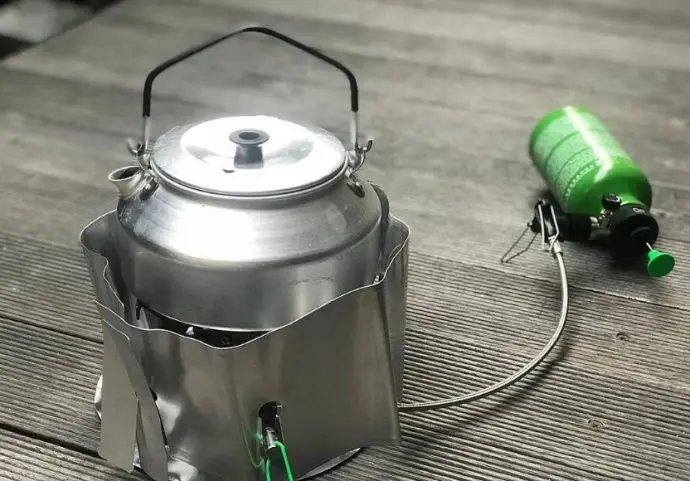
The lid
Obvious to many, the lid is sometimes forgotten beside the cooking pot with slices of dried sausage on it. It makes a practical plate, but remember its main function: retaining heat effectively to bring water to the boil faster.
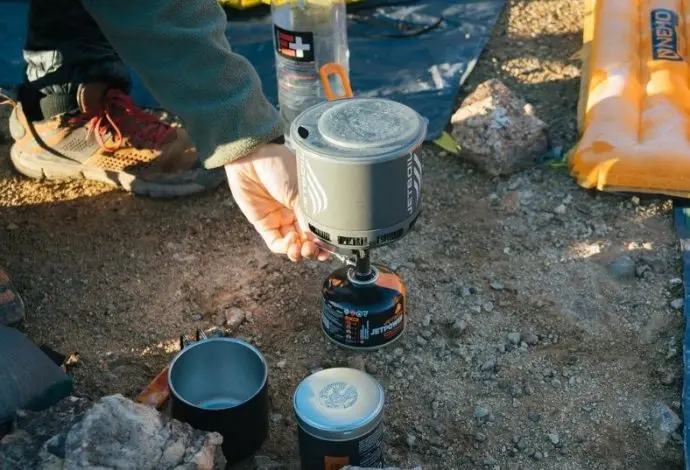
The integrated stove system
Several stove types are available for hiking meals. Find our article on the best ones here: link
An integrated stove system saves the most gas. The Jetboil Flash is one of the best-known models. With every component fitted together, this type fully shields the flame from wind and transfers maximum heat through an integrated heat exchanger. Heat loss is minimised by the tight-fitting lid and neoprene sleeve around the container. The heating speed compared with a conventional stove is impressive.
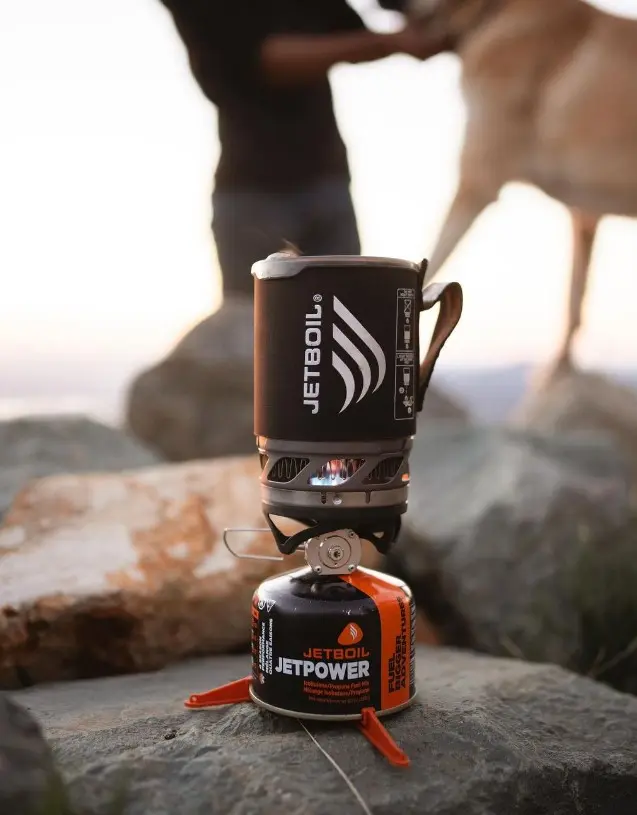
Cookware with a heat exchanger
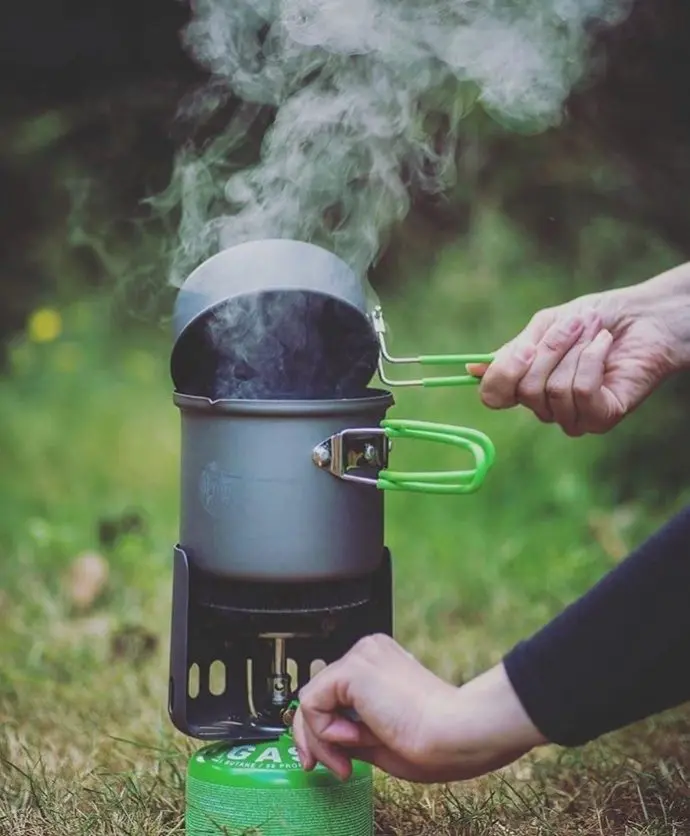
Some cooking sets, such as the Optimus Terra Weekend HE, incorporate a heat exchanger.
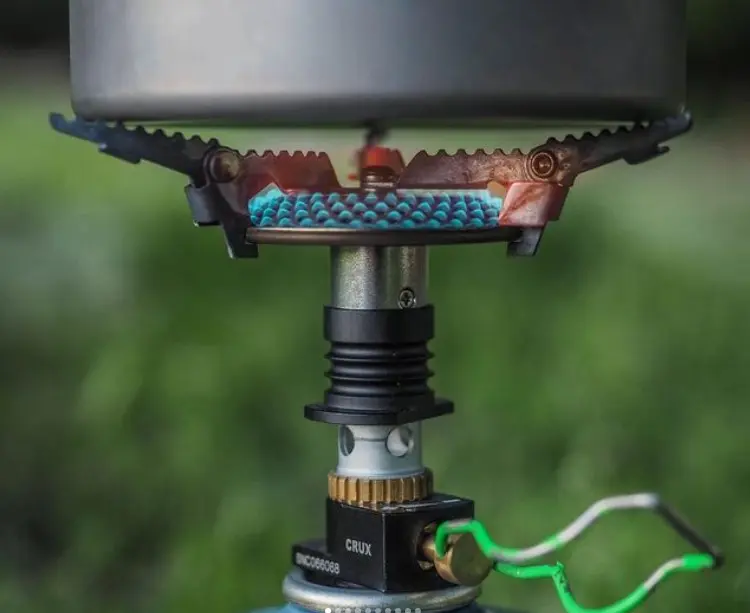
The exchanger consists of many small metal fins between the stove and pot. It captures and distributes heat across the pot's whole base for optimal heating.
Food choices
Alongside optimising equipment, choosing food according to cooking time is essential for saving gas.
Cooking brown rice, “3-minute” pasta or a freeze-dried meal uses very different amounts of gas.
Leave rice and pasta with 10-minute cooking times at home.
Here are some options:
- Quick-cooking foods: “3-minute” white pasta, couscous, instant mashed potato and Chinese noodles. Stock cubes vary flavours without adding much weight.
- Freeze-dried meals take first place for preserving your gas supply. Simply bring water to the boil and turn off the gas. Following the advice above can make this very quick. They are more varied and tastier, but also more expensive than the foods above.
Adjusting the stove
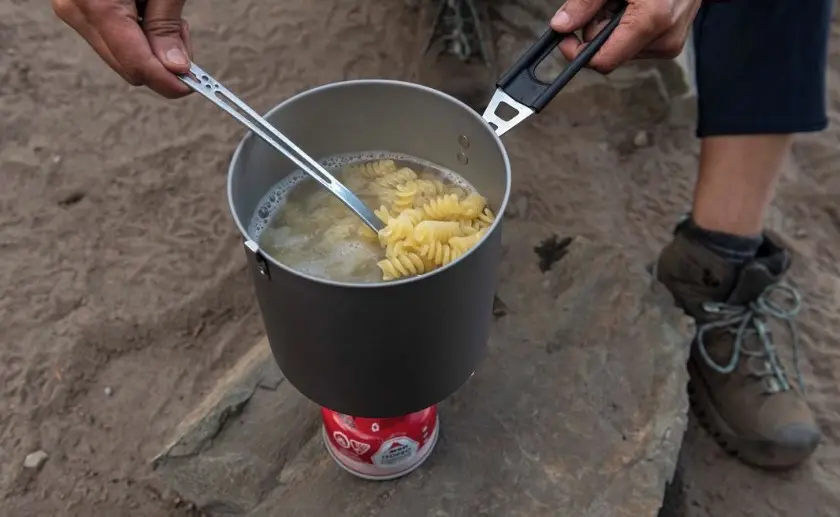
Watch your gas-flow setting. When very hungry, you may turn the gas fully on to heat quickly. Heating will indeed be fast, but gas consumption will also be high. An intermediate setting achieves the best balance of cooking time and gas use. So go easy on the control knob.
Heating time and boiling
The stove is lit and the water heating. But for how long?
The aim is often boiling, but reaching it can sometimes take time (because of cold or wind). If your water is clean and does not need boiling to eliminate viruses and bacteria, you can stop when it reaches a gentle simmer. This saves significant heating time and gas.
Cooking time can also be shortened. For “3-minute” pasta, you can turn off the gas after 2 minutes. On a warm summer evening, water in the pot cools slowly, although its temperature may drop quickly depending on conditions.
Knowing how much gas remains
We sometimes hesitate to take a partly used cartridge because we have no idea how much gas remains.
Here is a tip for roughly estimating the level:
- Place the cartridge in still water (a basin, large cooking pot or directly in a lake).
- Release the air bubble beneath the cartridge to prevent it tipping.
- Observe where the waterline sits.
- This line corresponds to the remaining gas level.
- A full cartridge sinks deeper, so the waterline naturally sits towards its top.
Here is a photographic example using MSR gas cartridges:
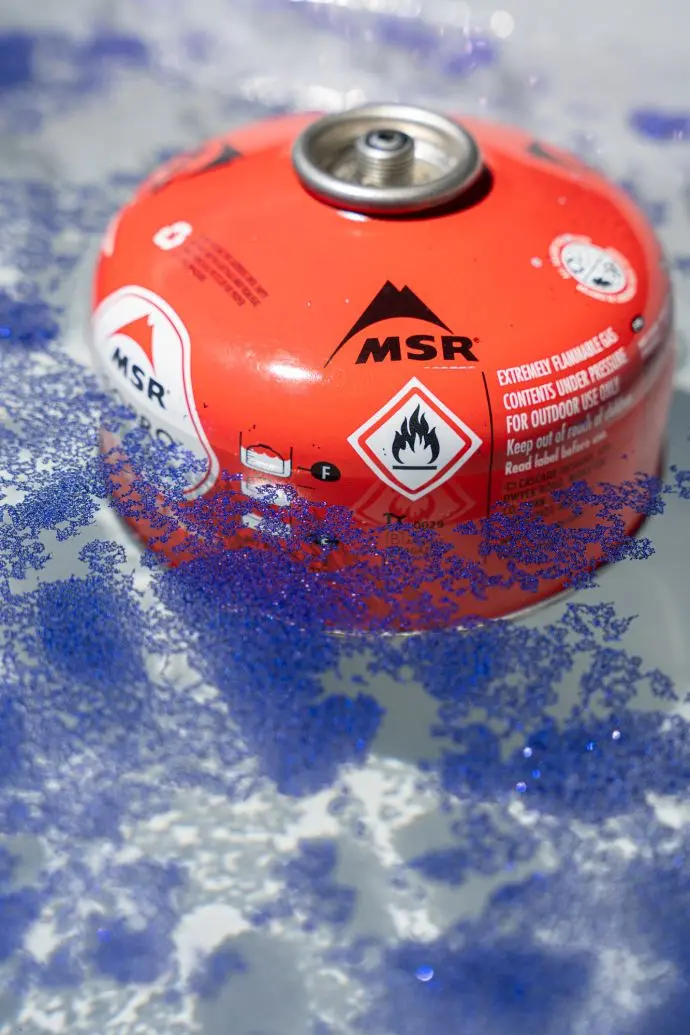
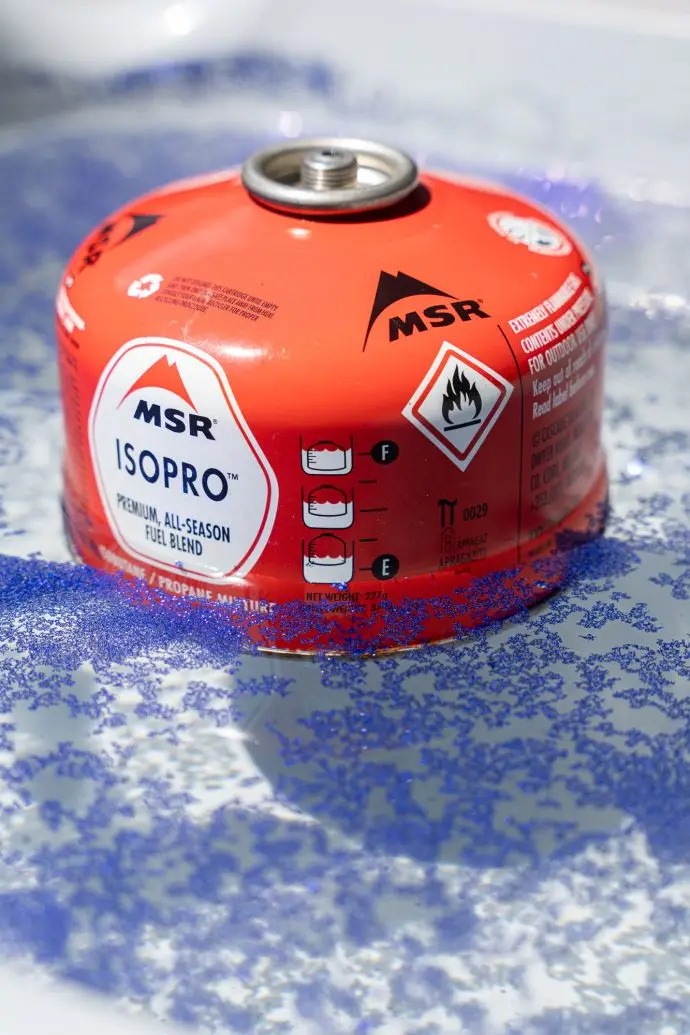
This cartridge model has markings to indicate the gas level more precisely from the waterline.
Conclusion:
These gas-saving hiking tips are useful in all circumstances, but especially when setting off with supplies you think may be “a little tight”.
We recommend after a few days of hiking checking the gas level remaining to measure your daily consumption. This helps assess whether you need to be particularly economical over the following days.
Do not sacrifice enjoyable moments, though, such as occasionally making your own raclette on a hike! Eating well is part of hiking's pleasure and keeps everyone's spirits up.