





Whether sleeping on a boat, in a hut, in a hiking tent or under the stars, sleeping bag choice directly relates to individual warmth and comfort needs. At RayonRando.com, our 1st step is to determine the right sleeping bag temperature rating for you.
To choose the right sleeping bag temperature rating, RayonRando addresses 3 essential points:
- What do the temperatures shown on a sleeping bag mean?
- How do I distinguish my actual needs from the stated temperatures?
- How do I choose the temperature rating suited to my actual needs?
1) The 3 temperatures shown on your down or synthetic sleeping bag
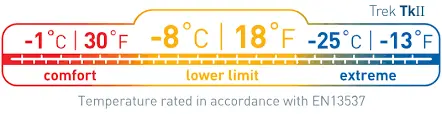
For most adult sleeping bags, 3 temperatures (comfort, lower limit and extreme) are estimated using a protocol following a specific standard: European EN 13537 or international ISO 23537. This usually appears on your sleeping bag label.
RayonRando.com selects only brands following one of these 2 standards.
The test protocol measures heat loss from a sensor-equipped mannequin inside the sleeping bag. The standard requires specific conditions, including:
- Mannequin surface temperature
- External temperature
- Humidity
- Wind speed
For clarity, the 3 measured temperatures also have plain-language definitions:
- Comfort temperature: down to this temperature, someone relaxed on their back is generally comfortable, in thermal equilibrium without feeling cold (determined using a mannequin simulating a 60 kg woman).
- Lower-limit temperature: the threshold where someone curled up in the bag is just on the verge of feeling cold (determined using a mannequin simulating a 70 kg man). Curling up minimises body surface losing heat.
- Extreme temperature: the temperature at which potentially fatal hypothermia becomes a risk (determined using a mannequin simulating a 60 kg woman, curled up under normal use conditions).
Use comfort temperature as your main reference, never extreme temperature.
These standards have benefits and limitations:
- The main benefit is making sleeping bags comparable across brands by temperature, since testing conditions are similar. This lets you choose among suitable bags for similar temperatures.
- The limitation is fixed-condition mannequin testing, whereas your sensitivity and conditions may differ and vary from night to night.
Published ratings are therefore only an indicator to adjust to your actual needs. You cannot rely solely on expected sheltered air temperature, because how cold you feel differs from thermometer readings.
2) Distinguishing actual needs from published ratings to choose a suitable sleeping bag
To choose a temperature range, consider factors not measured by standardised tests. Distinguish external factors, relating to camping conditions, from personal sensitivity. These may lower or raise the comfort rating you need.
2.1) External factors:
- Accommodation type:
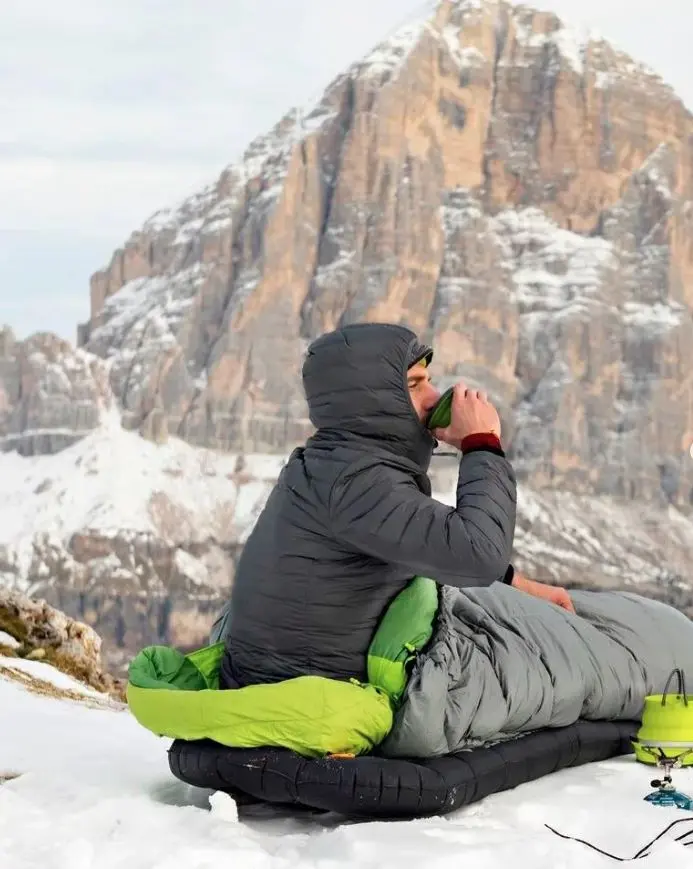
Under the stars or in a tent, you need a warmer bag than in a building or heated hut, not only because temperatures are lower but because of greater wind and moisture exposure. Allow a safety margin for greater weather uncertainty too.
- If sleeping in a tent:
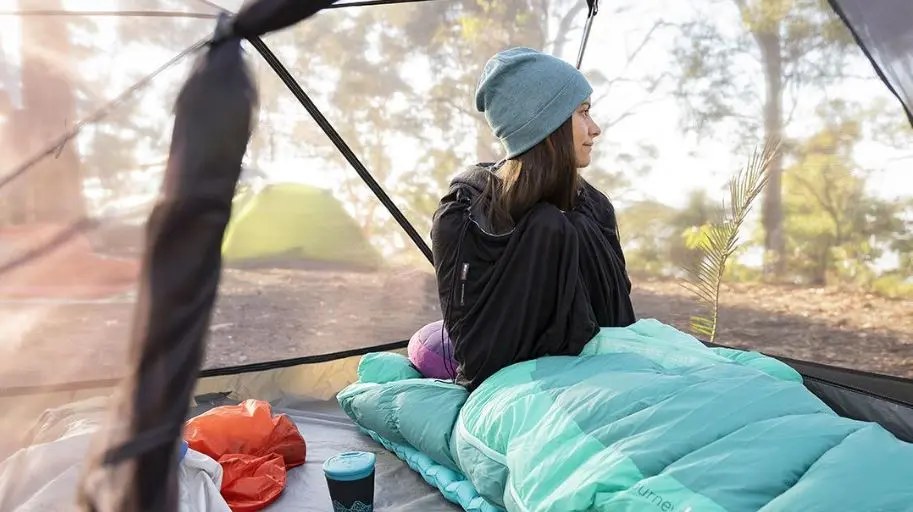
Consider the air volume to heat. Alone in a 2-person tent? It will be colder than sharing with 2 people or using a 1-person tent.
A single-wall tent will also feel colder, especially towards morning as condensation accumulates.
- The campsite:
Camping a few metres from a stream exposes you to colder, damper air than camping 50 m away. Consider glaciers or snow uphill: cold air flowing downhill overnight can reduce temperatures, making valley hollows best avoided.
In a wind-exposed location, such as a summit or ridge, warming surrounding air is harder because it moves constantly.
Consider altitude: descending by 2 or 300 m to camp can help and may suffice in cool weather. From experience, summer camps above 2,000 m in the Alps or Pyrenees can be very cold.
- Weather beyond sheltered air temperature:
Even in mild weather, moisture encourages thermal bridges and wind disperses body heat. With identical equipment, you may feel cold in mild, damp conditions but warm in cold, dry weather.
2.2) Personal sensitivity to cold and bag choice:
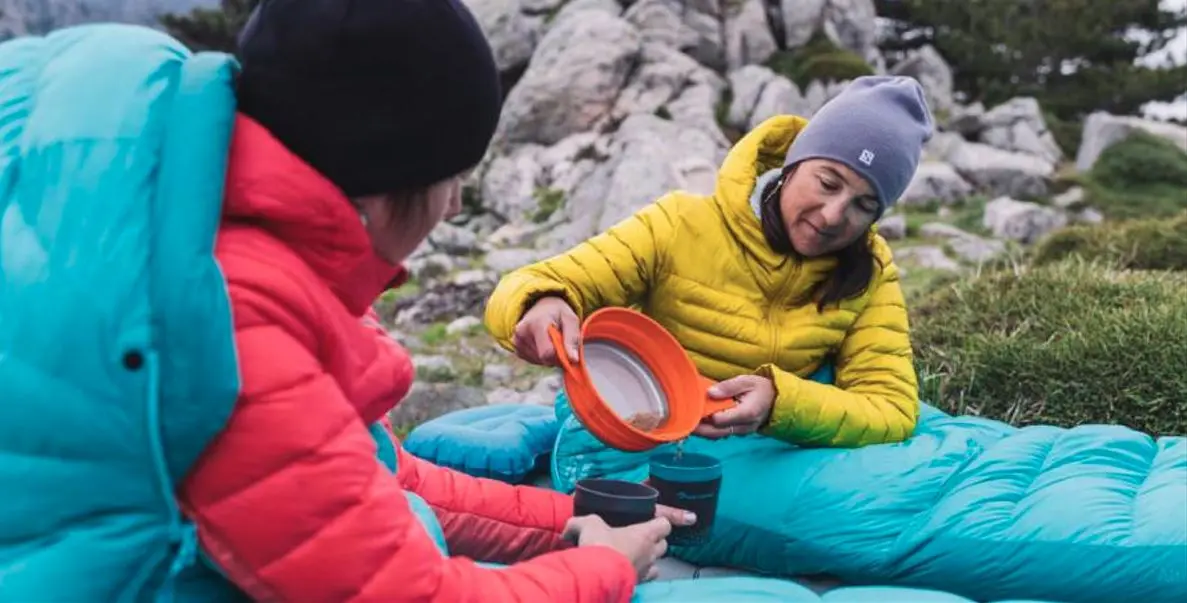
Our natural sensitivity differs from the test mannequin's:
Sensitivity to cold varies, mainly according to sex and metabolism:
- Male or female
Women are generally more sensitive to cold than men because of hormones and body mass.
- Metabolism
Linked to genetics, metabolism affects sensitivity to cold.
Our sensitivity varies from day to day:
Several factors influence it:
- Nutrition
If you eat too little after hiking, your body lacks energy overnight for recovery and heat generation. As you weaken, you feel cold more easily.
- Fatigue
Accumulating fatigue from one or several days' walking reduces the energy available to keep you warm.
- Cleanliness
Washing as night and cold arrive can require motivation. Yet dried sweat encourages thermal bridges. Washing helps: clean, dry skin breathes better, making you less sensitive to cold.
- Health
Illness makes you more sensitive to cold than usual.
You therefore need to assess the sleeping bag temperature you need using factors both personal and external well beyond expected sheltered air temperature. This often means choosing a warmer bag than forecast night-time temperatures suggest.
3) Choosing a sleeping bag temperature for camping and trekking:
To choose the right temperature:
- First research expected temperatures at your planned campsites.
- Then adjust your assessment for external conditions and personal sensitivity.
- Finally, account for unforeseen events that could increase exposure and sensitivity to cold.
From our experience at RayonRando.com, we generally choose a comfort rating between +5 and 0°C for summer tent camping in French mountains below 2,000 m, although expected sheltered temperatures are generally higher.
Avoid these common mistakes:
- Chasing minimum weight at all costs. Ultralight, compact bags exist, mainly down models, but do not underestimate insulation needs. This can endanger you or spoil your hike: setting off after a bad night is difficult.
- Assuming you can always add clothes against cold. Choosing a very light bag and dressing heavily overnight is a false economy. You risk poor breathability, perspiration and thermal bridges that chill you.
Adding a sleeping bag liner:
A liner can improve thermal comfort. Even thin silk or synthetic liners add an intermediate layer retaining warm air. Some models, such as Thermolite, add more warmth. Remember this is supplementary insulation: it does not transform a cool bag into a warmer category.
Discover our sleeping bag liner selection to complete your equipment at RayonRando.
Down versus synthetic filling:
From RayonRando's experience, down feels more pleasant at a comparable comfort rating because it is lighter and more breathable. Synthetics feel denser, which can be reassuring for cold sleepers.
Some guidance on choosing among the main temperature ranges:
- Sleeping bags rated +5 to +0°C are most popular for summer camping in ordinary conditions without particular sensitivity to cold.
- Sleeping bags rated -1 to -5°C suit 3-season use: spring, autumn, and summer high-altitude or more demanding camps. They also suit cold sleepers in ordinary conditions.
- Extreme-cold sleeping bags address genuinely cold, demanding conditions. Heavier and less versatile, but essential in some circumstances.
Conclusion
Sleeping bag temperature ratings are the first indicator to check. However, they are not universal values and should not simply be compared with expected sheltered temperatures.
Account for external conditions and personal sensitivity. This generally means choosing a bag warmer than expected sheltered temperatures suggest.
Use comfort temperature as your reference rather than lower-limit temperature, and never extreme temperature. If unsure, choose slightly warmer than your estimated needs.
At RayonRando.com, easily browse sleeping bags by temperature range. If still unsure between 2 or 3 models after considering these questions, contact us for advice.
One final tip: never forget your emergency blanket. It is useful beyond accidents.
Once you have chosen your bag, read this article full of tips for staying warm!