When setting off on a self-supported multi-day trek, food is essential and sometimes tricky. Planning hiking meals involves several constraints.

Choosing the right food for a self-supported hike is essential to maintain energy while limiting backpack weight. Over several days, every food should be selected for energy relative to weight, ease of preparation and keeping qualities.

-> The aim: eat enough without weighing yourself down, while still enjoying meals.

Here we offer an overview of what to consider, along with first-hand experience of the types of food the RayonRando team takes on self-supported treks.

This is not an exhaustive dietitian's article, but a hiker's perspective.

What constraints affect food on a multi-day hike?

Since you will carry everything for several days, you face more constraints than for a family picnic:

  • Weight and bulk must fit your backpack and the total load you can reasonably carry.
  • Without a fridge, often in hot weather, food keeping qualities are essential. 

-> These first 2 points favour dry foods.

With a small stove and simple cookware set, easy preparation is the rule.

Finally, moderate fuel use also matters when setting off for more than 3 or 4 days with limited gas supplies.

What are your energy needs when trekking?

Hiking energy needs are essential when planning your hiking meals.

Daily hiking energy needs

Daily needs vary according to the person, duration and intensity of effort. Women generally consume less than men. 

Generally allow:

  • between 2,400 and 3,000 kcal per day.
  • even more in demanding conditions: cold, altitude or technical terrain. 

To optimise weight and energy and avoid fatigue, remember:

  • Fats provide 900 kcal per 100 grams -> very useful for their energy density.
  • Carbohydrates: 400 kcal per 100 grams -> the main fuel source during exertion.
  • Protein: also 400 kcal per 100 grams -> useful for muscle recovery.

Including some fat is therefore key to achieving a good calorie-to-weight ratio. In practice, favour energy-dense, digestible foods that are easy to eat while walking.

Protein naturally plays an important role, particularly in preserving muscle. Vegetarians will often need to carry slightly more weight to obtain enough plant protein, combining sources properly for good absorption.

Remember mineral salts:

Sweat and exercise cause mineral losses. These are essential for muscle function; a deficit reduces muscle tone and may encourage fatigue and pain. Remember to season food if needed.

What about water?

Food absorption also requires good hydration. Besides drinking during the day, beginning dinner with soup and having a good mug of hot drink at breakfast helps.

Vitamins and fibre

These also belong in a balanced diet. You will not hike with a bag of oranges, but when resupplying, consider fresh foods for your next meal to avoid carrying their weight long.

How to meet your needs within these constraints?

Daily portions

Our team allows around 600 g of dry food per day per person, providing about 2,500 to 2,700 kcal.

To stay within 600 g, we therefore need foods averaging over 400 kcal per 100 g: 

  • Starchy foods provide around 350 kcal per 100 g.
  • Also include foods fairly rich in fat (dark chocolate, cheese, some cured meats, nuts and seeds).

They taste good and help contain total weight.

A little olive oil is easy to add to a meal, particularly starchy foods, for both energy and flavour.

Relatively few foods or preparations exceed 500 kcal. Among them, dark chocolate and some nuts and seeds are easy to carry. Crisps and salted peanuts qualify too.

Managing several days:

We carry a maximum of 5 days' food, or 3 kilos in the backpack, to avoid excessive weight. Whenever possible, we plan routes allowing resupply at least every 5 days.

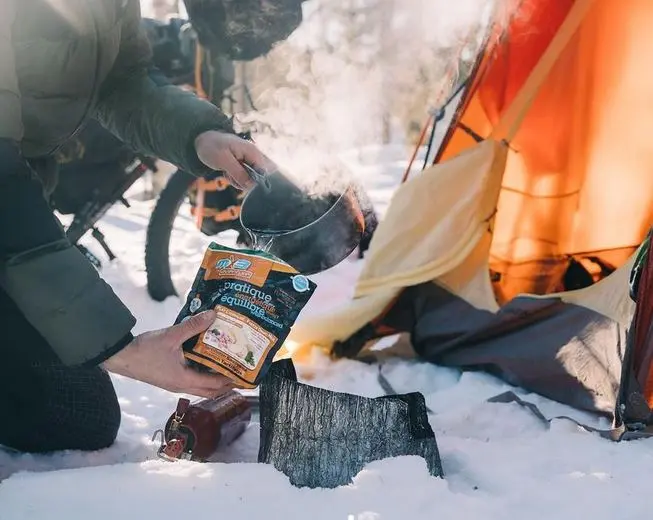
For the first 5 days, planning menus is easier because all options are available. Freeze-dried meals are very practical here.

Discover our range of freeze-dried meals.

For subsequent days, supplies depend on local grocery shops, with a more limited choice. However, it is easy to find certain dry foods: pasta (including 3-minute pasta to save gas), couscous, instant mashed potato, Chinese noodles, powdered milk, muesli and oats; and, of course, energy-dense foods such as chocolate, oil and cheese.

What to eat when hiking?

Here are our hiking meal ideas and typical menus:

Breakfast at camp

The morning aim is an effective start:

  • Hot drinks: coffee, chicory, herbal tea or another hot drink. Tea reduces iron absorption and is therefore discouraged during multi-day exertion.
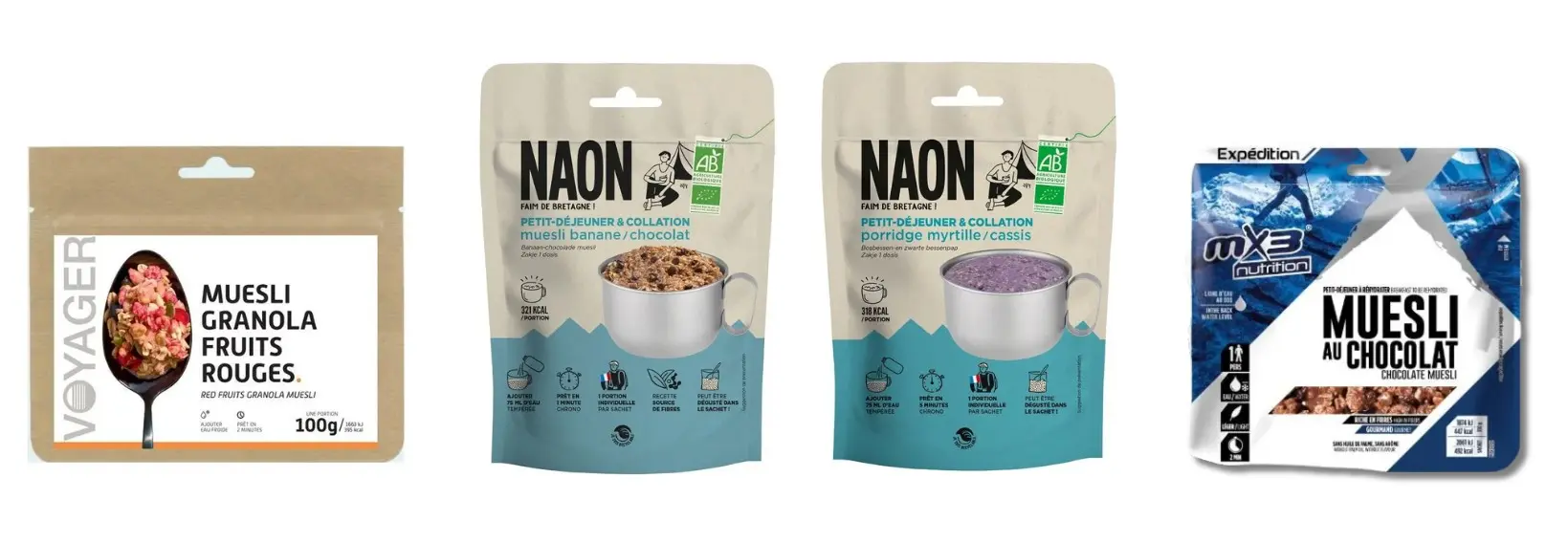
  • Freeze-dried muesli or porridge, generally a 125 g pouch, for the first days, then muesli + milk powder, or semolina + cocoa powder + vanilla sugar.

A complete breakfast helps limit energy dips.

Discover our freeze-dried breakfasts

50 g snacks:

They maintain a steady energy level:

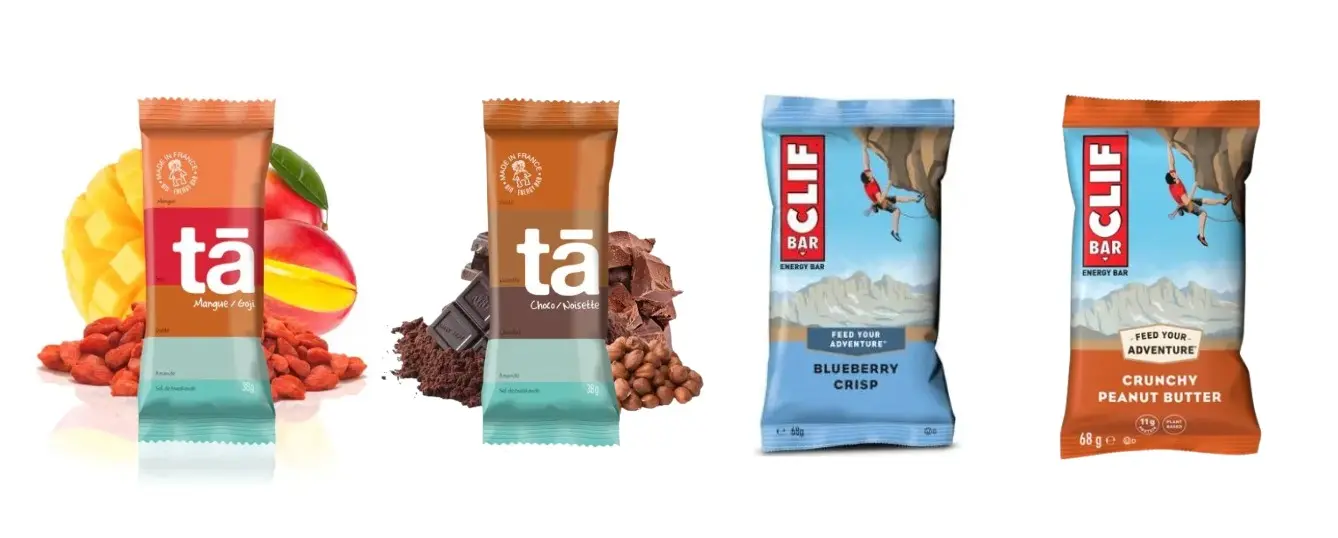
  • Honey- or date-based energy bars
  • Dried fruit and nuts (raisins, peanuts, cashews, pineapple, mango)
  • Fruit jellies

Eat regularly rather than having large meals.

Discover our snacks.

Lunch: quick and straightforward

At lunchtime, keep things simple:

  • 100 g of bread, tortillas or wraps (some happily replace bread with crisps: “leave the bag slightly open to reduce its volume; they provide more energy than bread”)
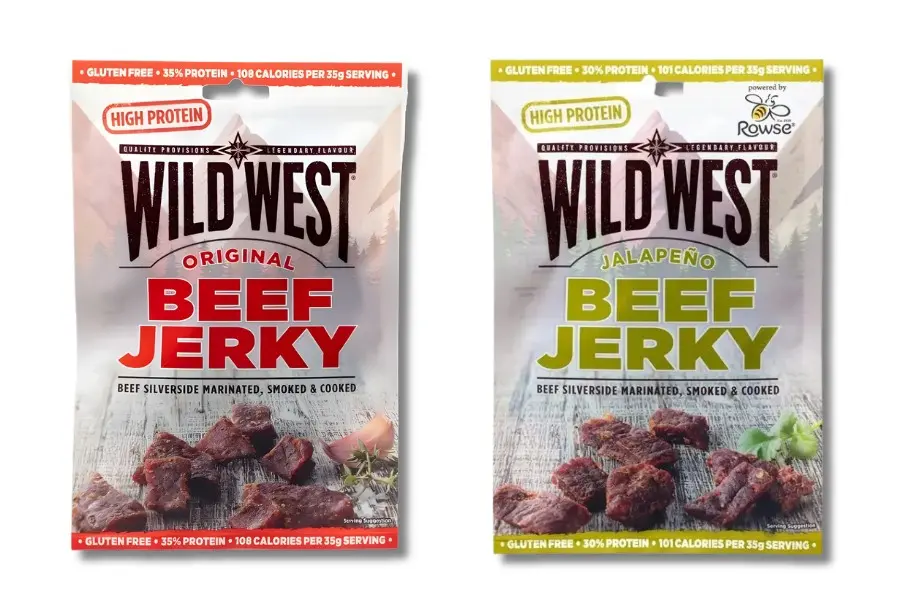
  • 50–70 g of cured meat,
  • 50–70 g of cheese, chocolate. 

Often eaten without cooking to save time.

Dinner at camp: recovery and rehydration

Your evening meal is essential:

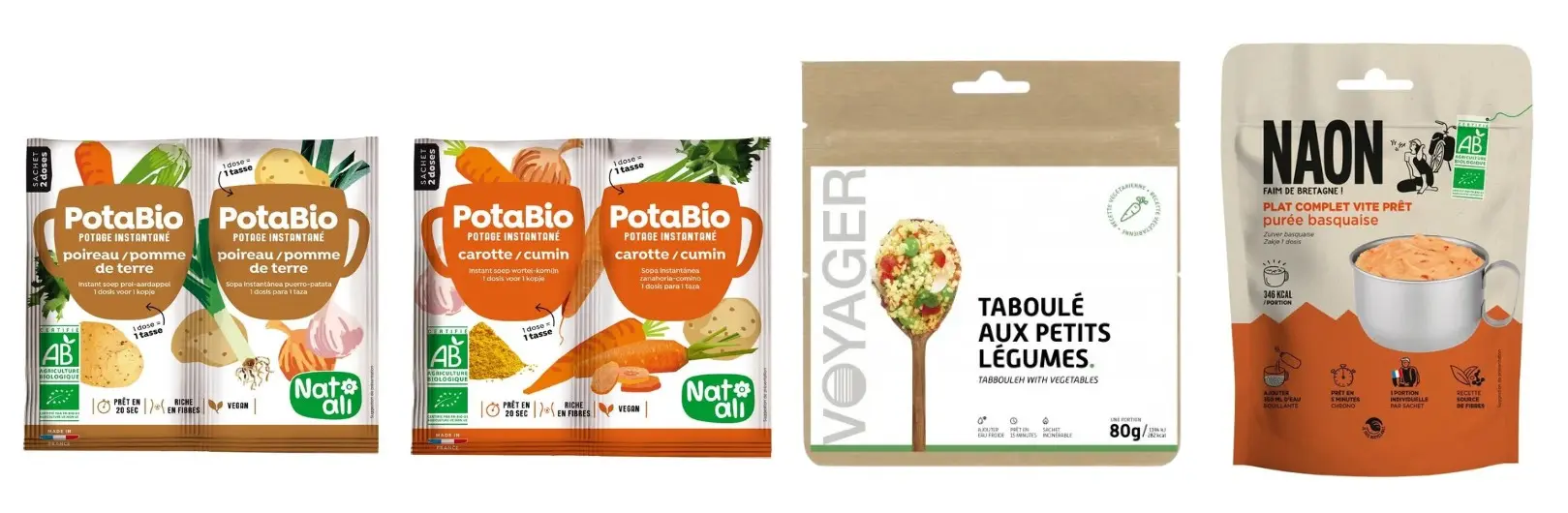
  • Always Potabio soup (it really rehydrates and revives you).
  • A 125 g freeze-dried meal or a meal based on starchy foods (3 min pasta, couscous, instant noodles, instant mash), plus something to add flavour, fats and minerals: sardines, stock cubes, spices, olive oil. For vegetarians, as well as pulses, health food shops sell soya protein chunks to rehydrate.
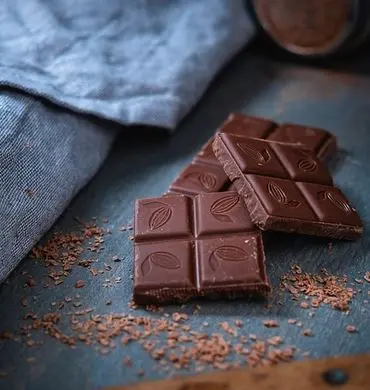
  • Something sweet if you like (dark chocolate provides plenty of energy and withstands heat better than milk chocolate).

A useful detail: a long-handled spoon is handy for stirring and eating freeze-dried meals:

What emergency food should you carry?

It is prudent to carry a little more food than strictly necessary. This may help if something goes wrong on the trail (a chill, delay or detour).

Pack a small amount of compact, high-energy food that is easy to prepare and eat:

  • Energy bar
  • Dark chocolate
  • Dried fruit and nuts

Something that provides energy and that you enjoy.

If you are worried about resupply, carrying a spare freeze-dried meal can be worthwhile.

Conclusion

To “keep going” on a self-supported hike, at a minimum you need adequate energy intake, hydration and salt. Weight and storage constraints naturally favour dry foods with enough fat.

To “cope well” with prolonged effort without muscle or digestive problems, also consider protein, minerals, vitamins and fibre.

And to “enjoy it” on a trek, choose foods you like too. Fortunately, this is easy: a basic freeze-dried meal often feels like a feast when eaten at camp after a long day's walking.

FAQ

What should you eat on a self-supported hike?

Choose lightweight, energy-dense, easy-to-prepare food: starchy foods, dried fruit, nuts, cheese, cured meats and freeze-dried meals.

How much food should you allow per hiking day?

Allow 500 to 600 g per day per person, providing around 2,000 to 3,000 kcal depending on exertion.

Which foods are best suited to a trek?

The best foods are high in calories and compact: walnuts, almonds, chocolate, oil, pasta and couscous.

What can you eat when hiking without a stove?

Choose a cold meal: bread or tortillas, cheese, dried sausage, dried fruit and energy bars.

How many days' food can you carry?

Generally, a maximum of 3 to 5 days to limit backpack weight.

Do you need freeze-dried meals when hiking?

Not essential, but very practical: lightweight, quick to prepare and long-lasting.

Product comparison
Compare
Rayon Rando advice