Weight is a hiker's old enemy, so choosing an ultralight tent to make your load more bearable is tempting. 1 kg, 1.5 kg, or even less than 1 kg. It sounds wonderful. And very light gear is often very compact too, which is another welcome benefit.
While the benefits need little explanation, in this article I want to draw your attention to the limitations and constraints of an ultralight hiking tent.
By weighing up the pros and cons, you can ensure that saving grams does not mean adding problems…
Looking for a tent that is extremely comfortable, exceptionally tough and ultralight? I do not think that will be possible… You will need to find the right compromises.
What compromises on comfort?
Here are some aspects of comfort for which you may need to establish your minimum requirements, or decide which optional features you are prepared to give up to save weight:
- The inner tent's floor area.
At less than 1m20 wide, fitting 2 mats and 2 sleepers without some inconvenience will be difficult. Some tents are also narrower at the foot end. On RayonRando.com, we specify if a tent is a ‘nominal’ 2-person model that cannot fit 2 standard inflatable mats side by side.
Do you want to keep belongings beside you overnight? You will then need sufficient width or generous length.
Also consider the sleeper's build: your companion with the physique of a rugby prop cannot make themselves smaller. - Internal volume, particularly height. The taller and roomier it is, the more fabric and metal are needed, adding weight.
Some lightweight tents, particularly tunnels, save weight through a low profile. This does not always let you sit up or change comfortably. If you only intend to slip inside to sleep, it may be enough. If you want more room to shelter from rain, read, eat or change, it can be uncomfortable.
Others are higher at the head than the foot, preserving some comfort. Lightweight, spacious tents do exist, of course, but use thinner, more delicate materials; see the next point.
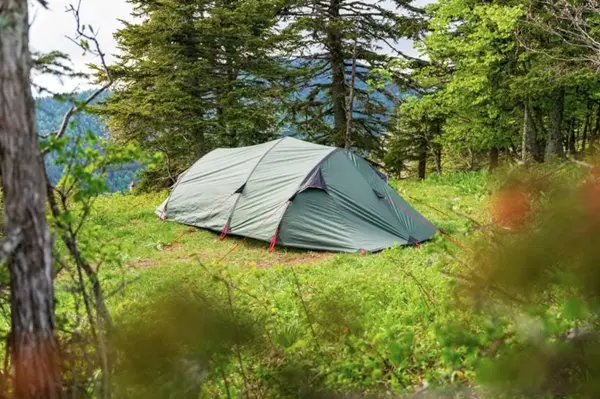
- The number and size of porches. Having 2 side entrances and 2 porches is very practical for getting in and out without disturbing each other and storing belongings. But a single porch and just 1 zip help save weight. Note that tents with one porch at the head end, such as Vaude's Hogan and Taurus, often provide enough space for 2 backpacks and 2 pairs of shoes.
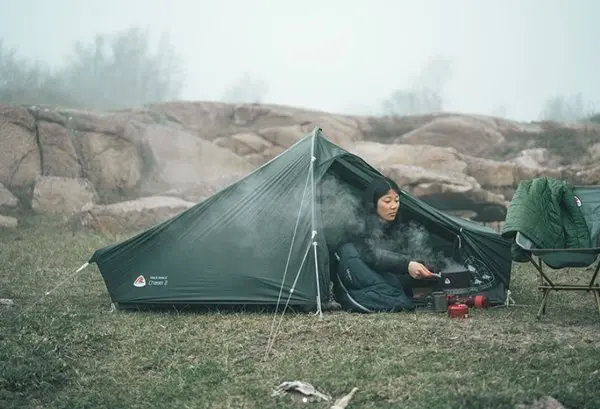
- Protection from draughts and cold. Take time to inspect the inner tent fabric. All-mesh fabric, like mosquito netting, is lighter and very pleasant in hot weather. But it lets wind through, which can be unpleasant in strong or cold winds. Some lightweight inners have mesh above and solid fabric below, sometimes extending higher at the head for a better balance of ventilation and protection. If you hike in 3 seasons or cold, windy conditions, this matters.
What compromises on durability?
Lightness means less material. You can achieve this by reducing the tent's volume, but the 2nd approach is to use lighter, thinner materials. This inevitably means greater fragility than ‘full-weight’ versions.
Here are 4 elements to consider:
- Thin groundsheet. These often have a waterproof rating of 1,200 mm hydrostatic head. Compared with ratings of 5,000, 8,000 or even 10,000 mm on ‘intermediate’ lightweight tents, this indicates thinner fabrics. Waterproofing itself is less the issue than the risk of puncturing the floor, which will then let water in. Take care when pitching: avoid stony ground and clear away branches, brambles and stones.
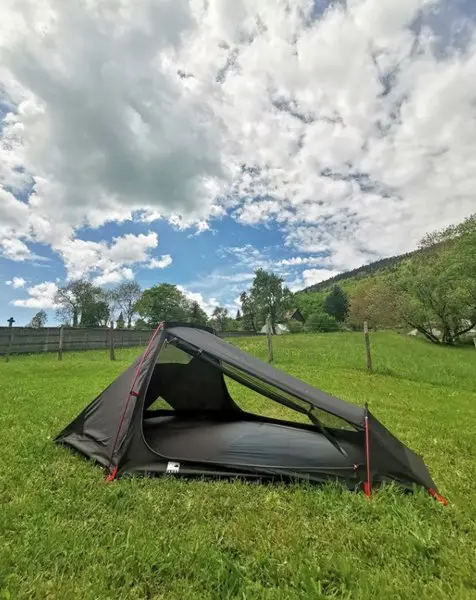
- Thin fabric and seams: under intensive use, they will have a shorter lifespan than thicker fabrics. Two weather conditions can weaken the fabric: UV exposure if you leave the tent in the sun for long periods, as these tents are designed to be packed away daily; and wind, with strong tension on the fabric potentially reducing seam waterproofness over time. Frequency of use and weather conditions are therefore 2 factors that may point you towards a less lightweight fabric.
- Poles: also thinner, they are generally unsuited to severe conditions, even though the shape and structure may improve resistance to gusts. For Iceland, for example, durability should take priority.
- Zips: generally no problem in normal use, but the sliders may be less suited to intensive use.
More generally, take care with long-distance travel or intensive use: do not compromise on strength. Your tent will take a beating. An ultralight tent is unsuitable and will cause problems. Paying a high price does not make it tougher… So prioritise durability and look after it.
However, I suggest a few ways to reduce compromises on durability:
- To protect the tent floor, carry an extra groundsheet. It need not be the one specifically designed for the tent: a lightweight sheet such as the Magic Carpet, available here in the shop, will do. If that seems too heavy, swap your basic emergency blanket for a reusable one such as the Trigano silver emergency blanket we offer on the website, weighing 160 g and suitable for multiple uses. Of course, remember to inspect and clear the ground if needed.
- To keep the floor watertight, avoid pitching in a hollow. Consider where water will flow if it rains.
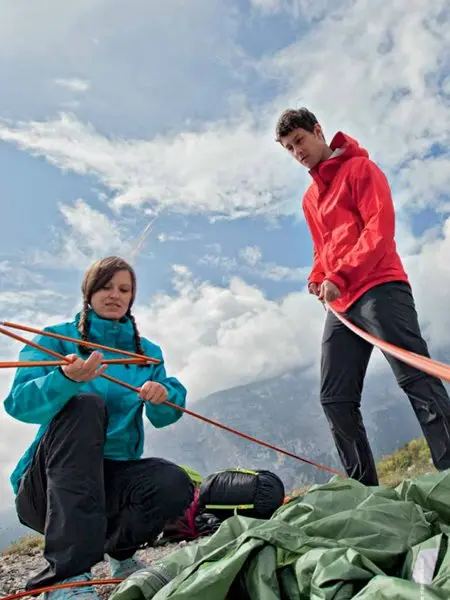
- If the wind picks up, remember to use guy lines: if they are not included, bring 4 lengths of cord and 4 pegs to add higher attachment points. This reduces swaying and pressure on the poles.
- For wind protection too, look for a more sheltered fold in the terrain. Otherwise, orient your tent to offer the least wind resistance. If there is no wind or it keeps changing direction when you pitch, choose the safest orientation, preferably along the valley rather than across it.
- If the zips resist, do not force them: loosen the fabric around the porch slightly so the slider moves freely.
- Finally, to preserve the outer fabric, do not leave your tent pitched permanently unless essential. A whole summer of UV will bake the fabric.
Conclusion:
As you can see, choosing an ultralight tent means understanding both what you gain and what you give up.
If you lack experience, here is my personal view:
- For use over more than 1 week, I find discomfort becomes quite troublesome. It is frankly unpleasant if you are away for several weeks.
- When sharing as 2 people with someone unused to wild camping, a little comfort also helps preserve the atmosphere and keep everyone happy.
- Difficult weather, especially wind but also cold and rain, favours a tent comfortable enough to spend more time inside than in good weather, change clothes and preserve a dry space. The same conditions also favour a tent that is light but sufficiently tough.
- For a trip lasting several months, forget ultralight tents and prioritise durability.
- Finally, for solo wild camping, 1-person tents are appealing but always fairly cramped. Many people prefer a 2-person model.
In other situations, what a pleasure to carry an ultralight tent that goes unnoticed in your backpack and is a joy at camp!