





At RayonRando, customers sometimes ask whether a jacket or footwear is ‘fully watertight’. We then explain that hiking equipment, even the most technical, is not watertight but ‘only’ waterproof.
Waterproofing, watertightness and water repellency: an opportunity to clarify these sometimes confusing concepts.
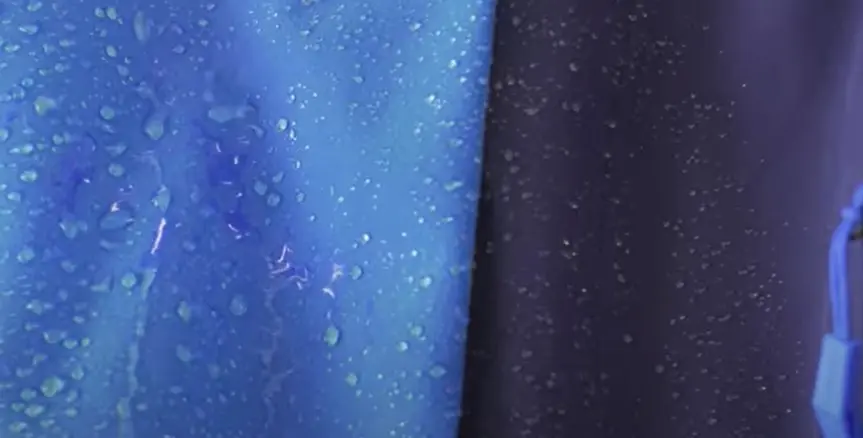
What is watertight, and why is it unsuitable?
Take your rubber boots and thick sailor's oilskins: they are properly watertight. You can be sure water will not get in. The disadvantage is that they are sealed on both sides: nothing gets in, but nothing gets out either.
When active, however, you sweat. If perspiration cannot escape, you are protected from rain but wet anyway… Furthermore, body moisture creates a thermal bridge, making you feel cold more easily, especially after exercise. Not to mention bacteria and other organisms developing, causing odours, irritation and so on…
In short, watertight clothing or footwear is uncomfortable when moving a lot and sweating, as when hiking.
Why are hiking footwear and clothing ‘only’ waterproof?
They prevent water entering up to a point… But eventually it can penetrate.
The reason is the other side of what I mentioned about watertight fabrics:
- Breathability: for comfort, your jackets and footwear must be as waterproof as possible while remaining breathable, allowing body moisture to escape.
- Weight and thickness are another reason: a hiking rain jacket, much lighter than an oilskin, is more pleasant both to wear and carry in your pack, and allows greater freedom of movement.
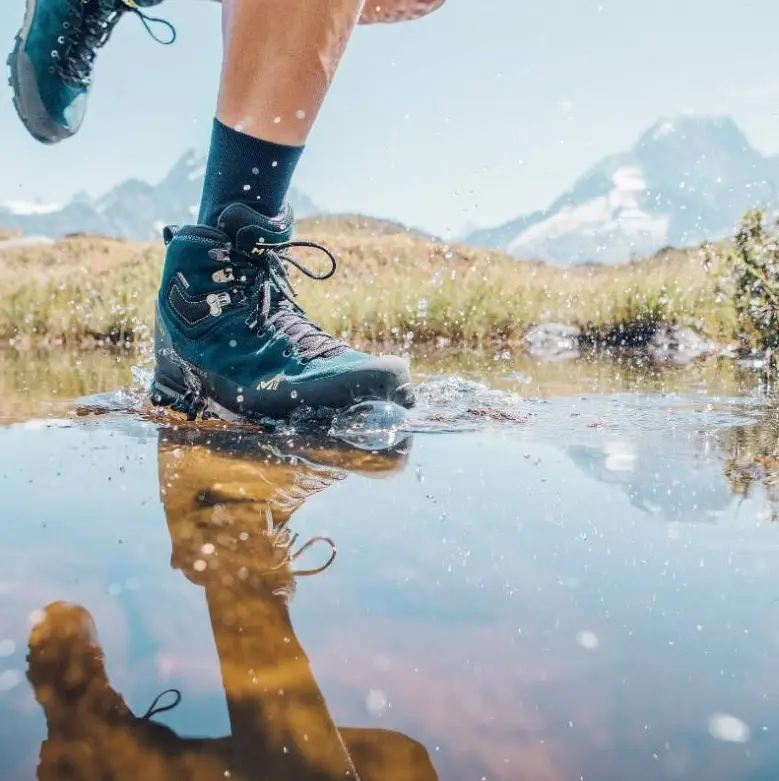
How can my jacket be both waterproof and breathable?
Because it has a membrane: imagine fabric with microscopic holes, small enough to keep water out but large enough to let water vapour escape. Goretex is the benchmark brand, but most manufacturers have their own.
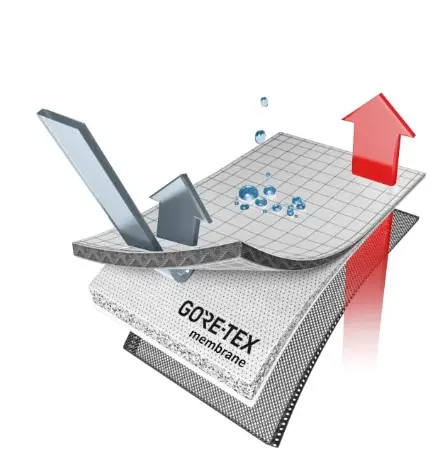
Membrane performance varies in waterproofing and breathability, sometimes assessed in laboratories. But be realistic: prolonged rain with a continuous layer of water on the fabric eventually penetrates. Likewise, heavy perspiration condensing on the fabric leaves you wet inside.
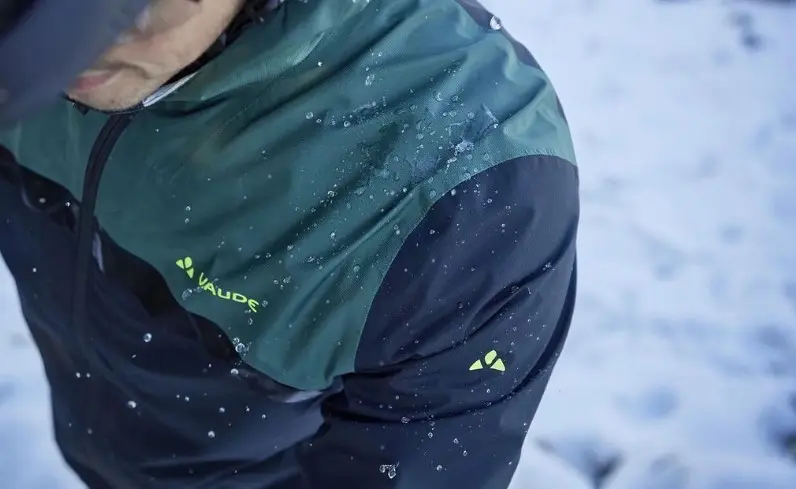
Why are hiking rain jackets more waterproof than tent fabrics?
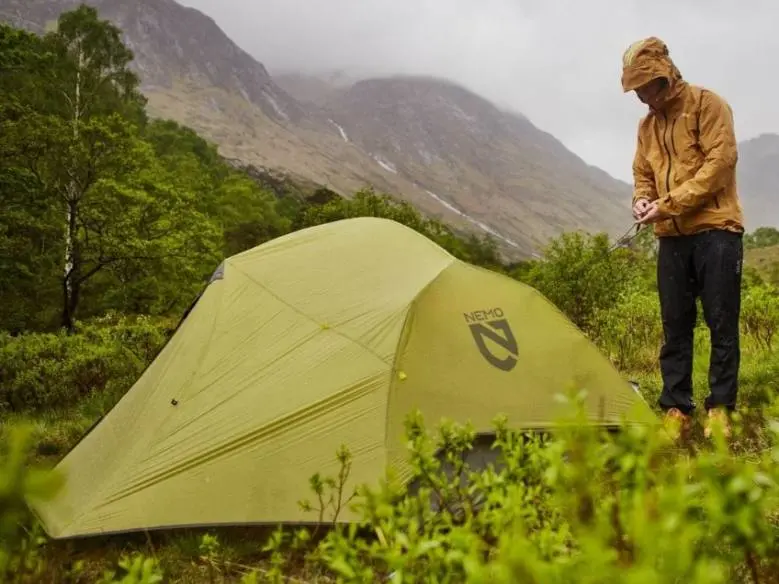
You may point out that a tent flysheet does not need to breathe much: air circulates between the 2 layers. So you might expect more waterproof fabric than on a jacket. For example, waterproofing, often measured in mm without going into detail, is commonly 10,000 mm or more for a jacket. For a tent flysheet, it is often 3,000 or even 1,200 mm on ultralight tents.
There are 2 reasons:
- Water repellency: water can pool in jacket folds or under backpack pressure; on a tent, the first aim is to make it run off. That is water repellency. If water runs off, it has no time to penetrate. Tensioning the flysheet at a steep angle lets gravity do the rest. A water-repellent surface treatment is often added, helping droplets bead and run off more easily. This matters particularly for ultralight tents with lower waterproof ratings.
- Weight and volume again: using oilcloth would be much heavier and bulkier.
Groundsheets are more waterproof than flysheets because they do not benefit from water running off.
Can you restore a fabric's waterproofing?
Not really, apart from patching tears.
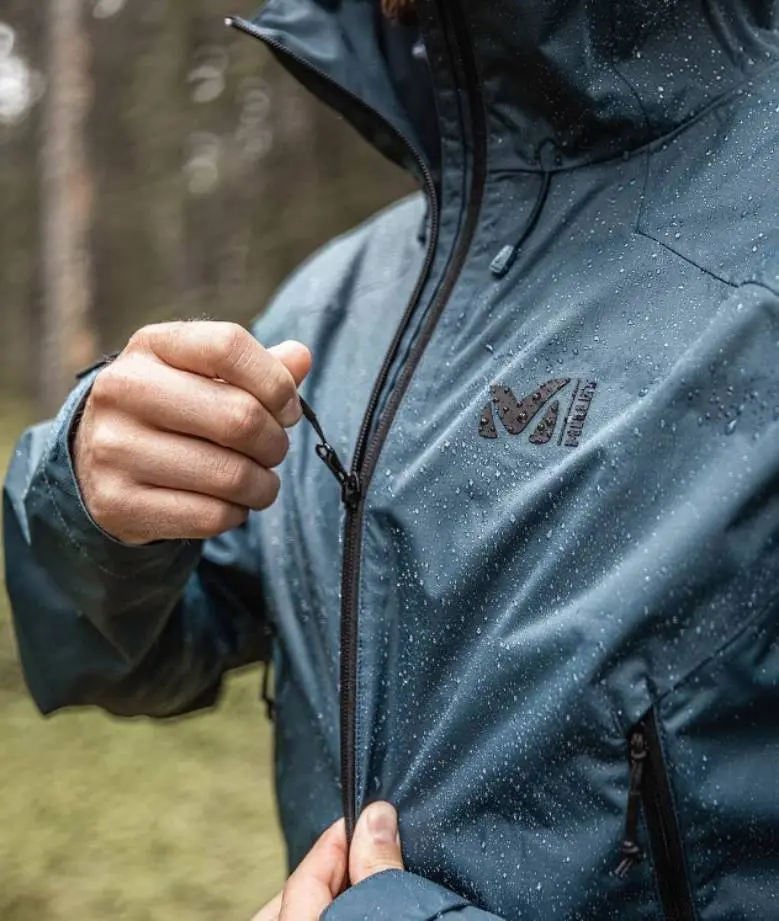
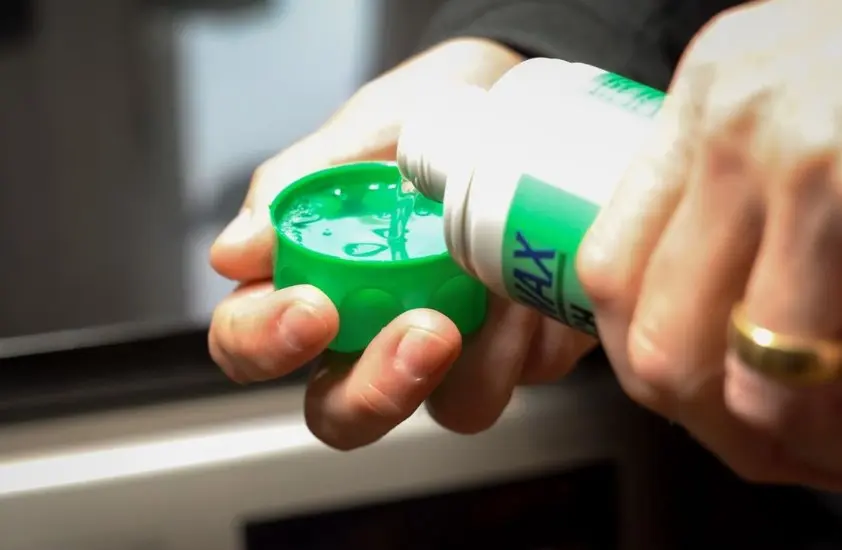
We sell spray-on or soak-in “waterproofing treatments”. But these restore surface water repellency, which can diminish with time, friction and washing. They are designed not to clog the waterproof membrane's pores.
But if the membrane is damaged, a treatment will not repair it. In particular, avoid excessively frequent washing and vigorous spin cycles.
RayonRando also offers liquid silicone to reproof seams. Apply it with a brush to impregnate the stitching and fill microscopic holes.
Conclusion:
For active use, which inevitably means sweating, forget watertightness and seek waterproofing and breathability in worn equipment. Fabrics with waterproof, breathable membranes appear in rain jackets and trousers and footwear; at RayonRando we also offer waterproof socks and gloves, very useful for cycling, for example.
For some waterproof fabrics, durability takes priority over breathability: gaiters, subject to abrasion, and rain ponchos, which must resist tearing if snagged.
For equipment such as tents, tarps and rain covers, we want waterproofing and low weight, so outer fabrics are designed to be water-repellent as well as waterproof. A higher waterproof rating often accompanies tougher, thicker and heavier fabric.
Water repellency can be restored with a treatment, but waterproofing cannot, except by sealing holes with an adhesive patch or using silicone on seams.
Finally, RayonRando does offer equipment described as ‘watertight’: roll-top bags, cases and other accessories to protect your belongings. There are always limits. Similarly, some electrical, optical and electronic equipment is water-protected. It sometimes carries an ingress protection rating, IP57 or IPX7 for the most protective.