





When trying footwear in a shop or at home, a flexible shoe often feels more comfortable than a firm or stiff one. But do not be misled: your hike may require fairly firm, or even very firm, footwear.
Sure-footedness, walking comfort, reduced fatigue, prevention of pain and injuries: choosing how flexible or firm your footwear should be has many consequences.
Rest assured, RayonRando is here… Here is some advice to help you understand your needs and choose the right model.
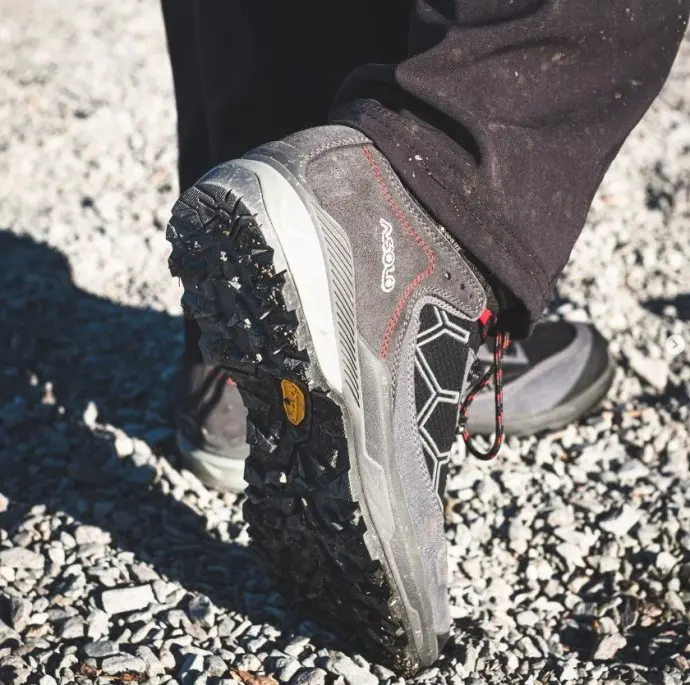
What makes hiking footwear flexible or firm?
First, of course, we think of the sole, whose thickness, composition and structure determine its firmness and strength.
But 2 shoes with the same sole will not necessarily feel equally firm. The type of upper also has an effect:
- An upper cut from a single piece of leather is generally firmer than one made from several stitched pieces.
- A leather upper is also generally firmer than a fabric upper.
- A low-cut shoe will be more flexible than an equivalent high-cut boot.
- Finally, a rubber rand adds stiffness, particularly if it wraps around the whole shoe.
For example, Asolo's Drifter and Greenwood use the same sole, but the Greenwood's one-piece leather upper makes it firmer than the Drifter's stitched fabric and leather upper.
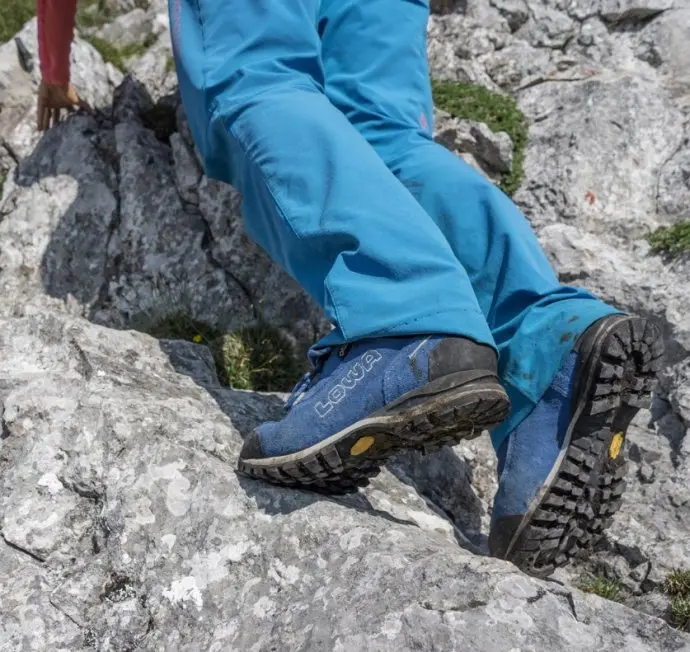
However, flexibility does not depend solely on the footwear, but also on the walker's weight. A shoe that feels firm to someone weighing 70 kg will bend much more easily under someone weighing 90 kg.
Do not rely on your first impression when bending a shoe by hand: it may feel stiff in your hands but quite flexible under your weight when walking.
Advantages and disadvantages according to flexibility or firmness:
Flexible footwear:
Flexibility allows a natural rolling foot motion, as when walking barefoot. The shoe bends to follow your foot's movement.
The downside is less secure footing. On rough and especially stony terrain, the shoe bends easily. Tendons and joints work hard to maintain balance and absorb impacts.
To accentuate these effects, flexible soles often have a slightly rounded profile at the toe and heel for a smooth rolling stride. The outsole may also be relatively soft.
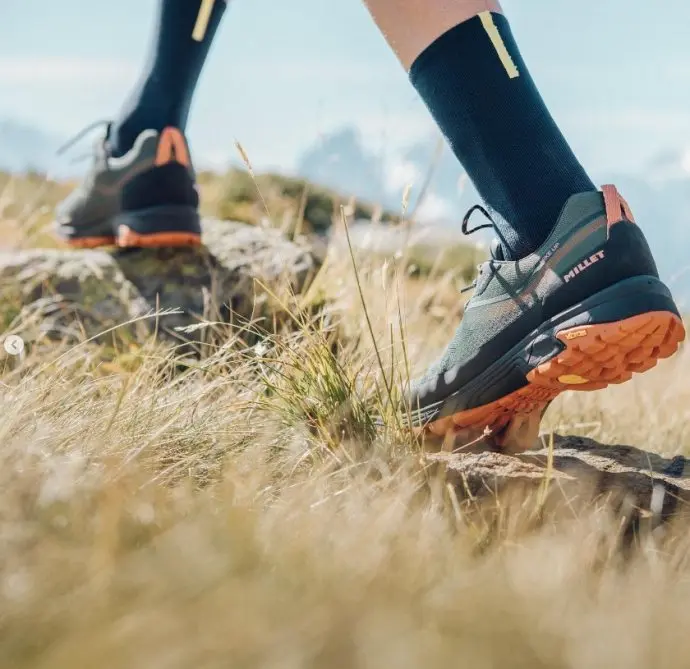
Firm footwear:
Firmness promotes proprioception. By reacting immediately and unconsciously to uneven ground, you naturally maintain balance without overworking your joints. Firm footwear provides more secure footing.
Similarly, firm footwear provides better grip on rough or stony ground. The sole's profile is often more angular at the toe and heel, letting you gain secure purchase without slipping on stones. The outsole is generally fairly hard.
The drawback is that the shoe follows the foot's rolling motion less. On flat ground, particularly tarmac, it feels somewhat jarring and may eventually make the soles of your feet feel hot.
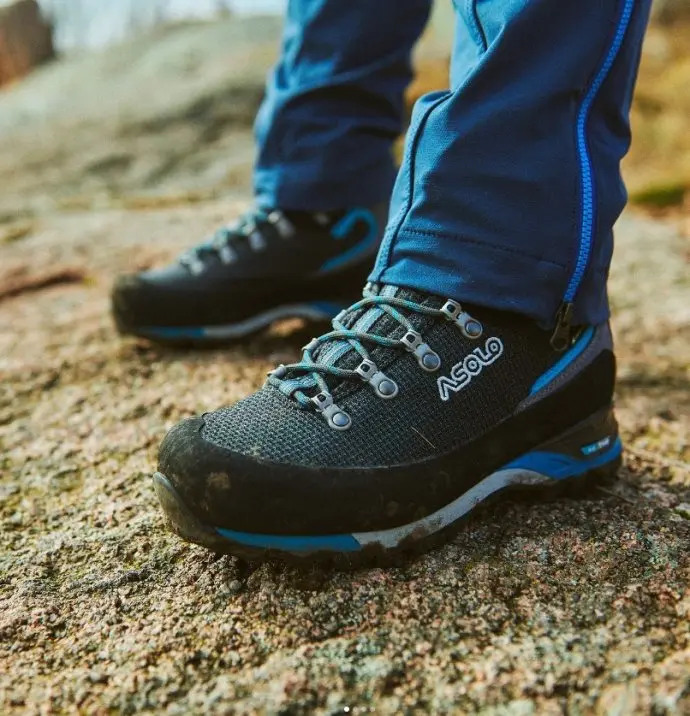
How to choose between flexibility and firmness:
Your choice should consider 3 aspects: the terrain you will hike on, the total load carried, and your own sensitivities and abilities.
According to terrain:
On flat ground or regular sloping terrain such as a forest track, especially with a hard surface, flexible footwear that follows your foot's movement will be more comfortable.
On rough, uneven or stony terrain, firm footwear provides secure footing. It also helps you feel more comfortable and less tired over time.
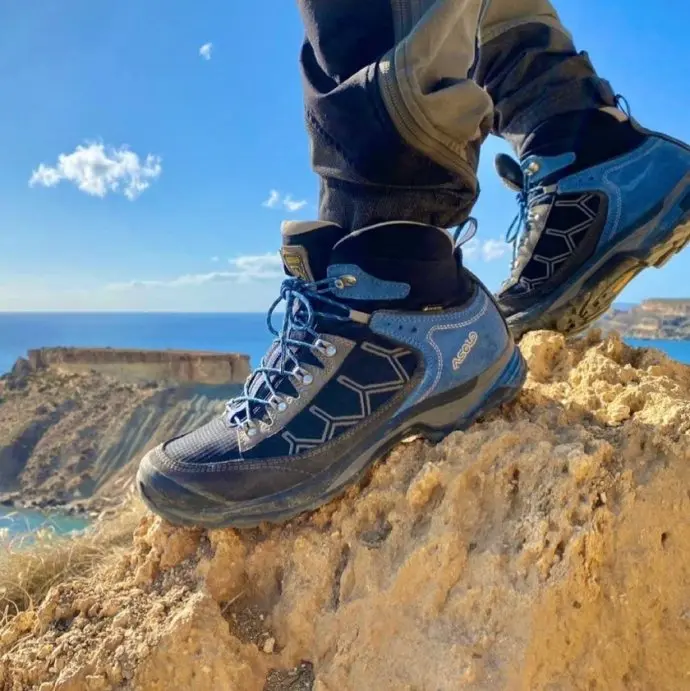
According to load:
The more you carry, in a high-capacity backpack for example, the more your footing is affected, both by the weight and by a change to your usual centre of gravity. In this case, firm footwear makes perfect sense.
A ‘heavy’ load depends not only on pack weight but also your own weight. From personal experience, carrying more than 20% of my body weight feels heavy and makes my footing less secure. This is only a guideline, but there is a difference between people travelling self-sufficiently with camping equipment and several days' food, therefore heavily loaded, and those carrying only personal belongings, if they pack sensibly…
Regardless of the load, the person's weight matters too, as mentioned earlier. Someone weighing 50 kg has less need for firm footwear than someone weighing 90 kg, who already needs good support.
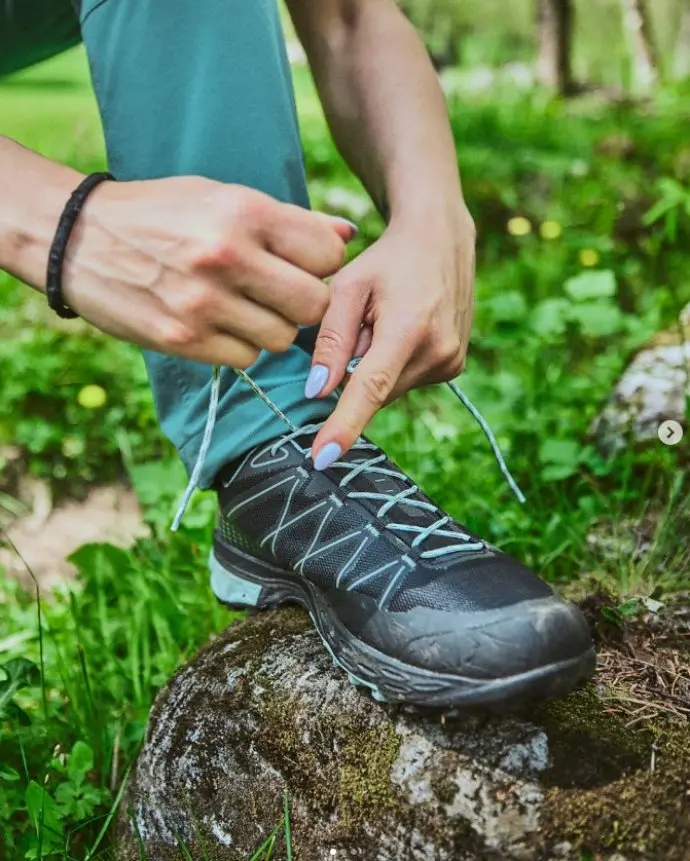
According to your own sensitivities:
If you are sure-footed with strong joints, flexible footwear will suit you. For example, if you regularly run downhill and leap across scree, you normally already have very good proprioception and no joint problems.
Conversely, firmer footwear will suit you better if you have had joint problems, are not sure-footed, or have little experience on rough terrain or carrying a heavy pack.
Conclusion:
Take care when trying hiking footwear in a shop: do not rely on your first impression, without a load and on a flat, hard floor. Think about the conditions in which you will use it: terrain, load and duration. Footwear that initially feels less pleasant may prove more comfortable in real conditions.
Finally, remember that not everything depends on your footwear:
- Optimise your pack's weight and weight distribution to affect your centre of gravity as little as possible.
- And trekking poles? Used correctly, they consistently give you 2 points of contact with the ground, relieving your legs and making your footing more secure. Find more information in our article on the subject.