





For a long time I hiked without trekking poles. But that was a long time ago… Since taking them up, I have never let them go, at least on longer hikes.
Some RayonRando visitors are unsure whether to use poles. They wonder about their usefulness, and perhaps how to use them. It is true that walking with just one pole, or without properly supporting yourself on your poles, offers limited benefits.
Here I address the first part of that question: the advantages and disadvantages of using trekking poles.
Benefits of using trekking poles:
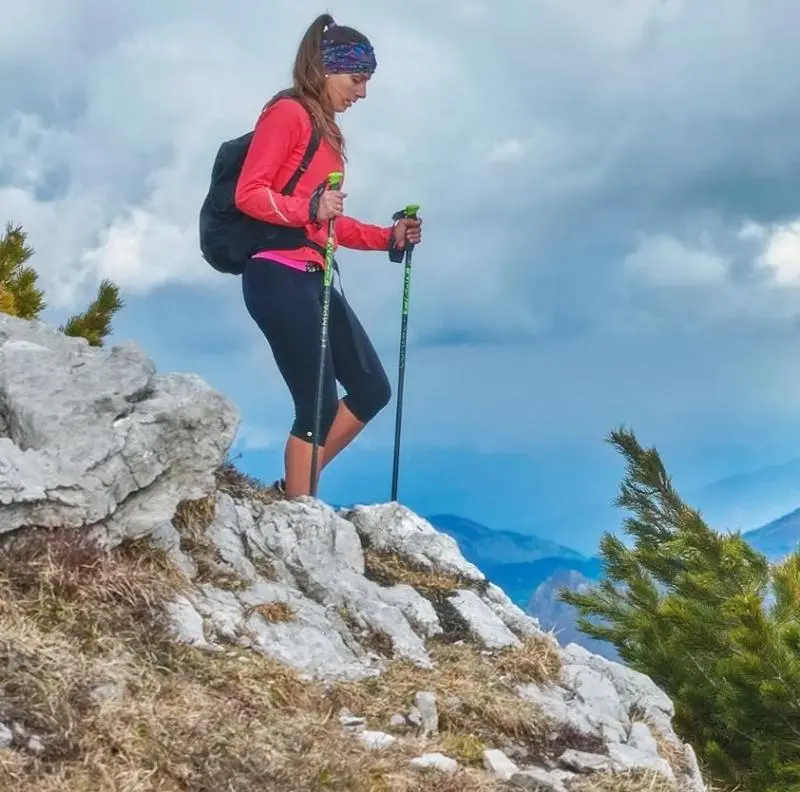
- Poles improve safety. This is the first benefit that comes to mind. Having often fallen while hiking (particularly because of a weak ankle), I immediately noticed the difference when using poles. Not only is footing more secure, but a well-placed pole corrects missteps before a fall. Since enjoying the experience of a well-loaded child carrier, I can tell you the safety benefit is paramount.
- Poles stabilise. Providing 2 simultaneous contact points (right foot and left pole), they prevent twisting and spare joints: ankles and knees absorb less impact at each step than when walking without poles.
- Poles support. Distributing body weight over 2 contact points relieves leg muscles. They significantly limit muscle fatigue on rough terrain or long days. I appreciate them both uphill and downhill.
These benefits only arise if you genuinely put weight on correctly adjusted poles with every step. Some hikers merely place the poles without leaning on them, giving a feeling of security against missteps but little real stability or relief.
Drawbacks of trekking poles:
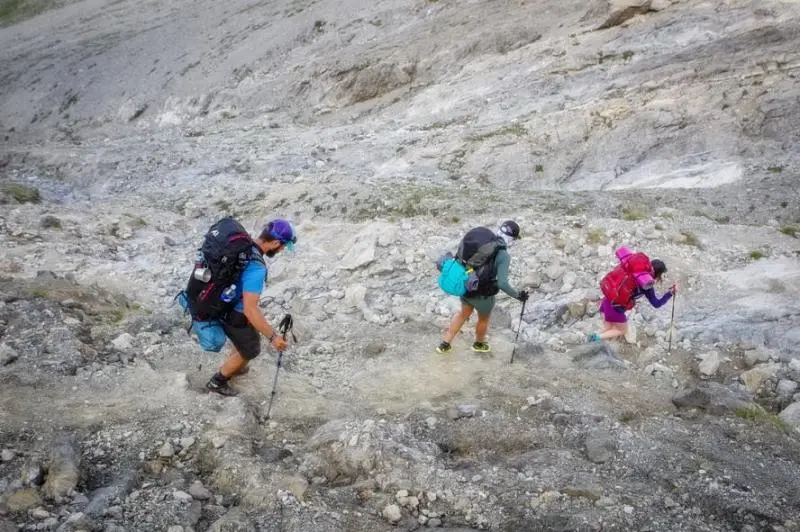
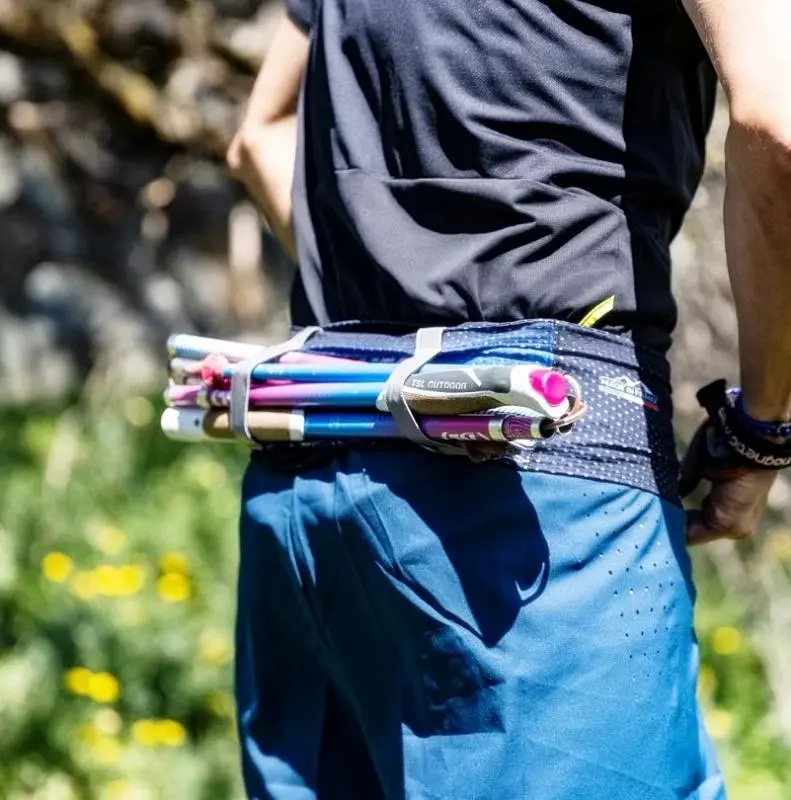
- Your hands are occupied. Frequent camera or binocular use means freeing your hands, or putting poles down for comfort. This is also inconvenient on scrambling or cable-protected sections. Sometimes you need to fold and attach poles to your pack to pass comfortably and safely.
- Sensitive wrists. For some people, bearing weight through sensitive wrists at every step is unpleasant. However, poles with integrated shock absorbers exist, such as the Fizan Trek AS. The absorber can be locked or activated as needed.
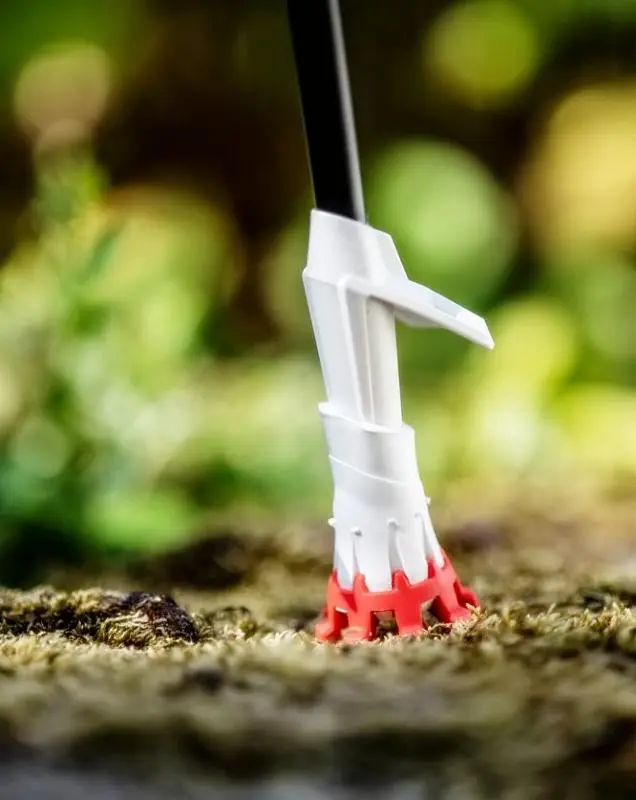
- Stony sections. A pole can get trapped between 2 stones (and your momentum can lever it until it breaks). Avoid leaning on poles in these sections. However, I have tested TSL spider-shaped pole tips that provide better grip here.
- Extra weight when carried on your backpack. However, poles are generally in your hands almost all the time, so this is secondary in regular use. Pole weights vary greatly, offering opportunities to save weight too. The lightest adjustable poles weigh around 150 g, such as the Fizan Compact.
- Bulk? If storing poles inside your bag (for a flight, for example), some are rather long. However, these are telescopic or folding poles, so bulk is relative. Some are more compact, such as the TSL Tour Alu 5 Light folding poles (40 cm). I sometimes also separate telescopic sections to pack them more easily inside my backpack.
When should you use walking poles, and when should you avoid them?
In my experience, you can use trekking poles:
- Throughout multi-day hikes.
- When carrying a significant load (trekking backpack or child carrier).
- On day hikes with elevation gain, rough terrain or uneven ground.
- On a strenuous long hike (a return trip to a summit, for example).
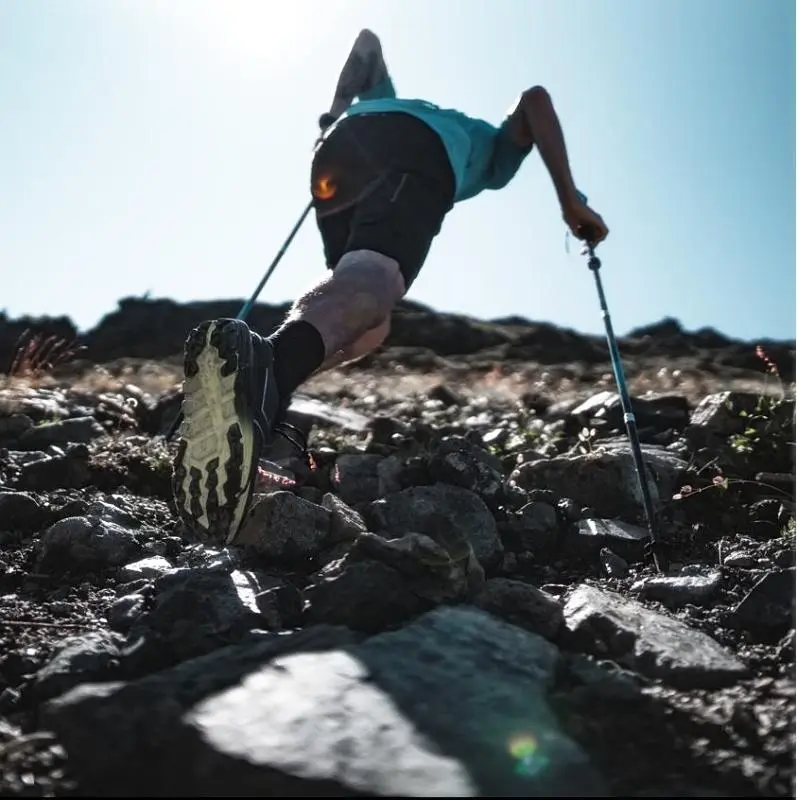
You may choose not to use them in these situations:
- Hiking on easy terrain.
- Weak or painful wrists.
- Needing to keep your hands free.
- You are a mountain goat. You enjoy running down scree slopes.
- Also, when they are prohibited, as sometimes on coastal paths (to avoid encouraging coastal erosion) or certain trail races (to avoid injuring others).
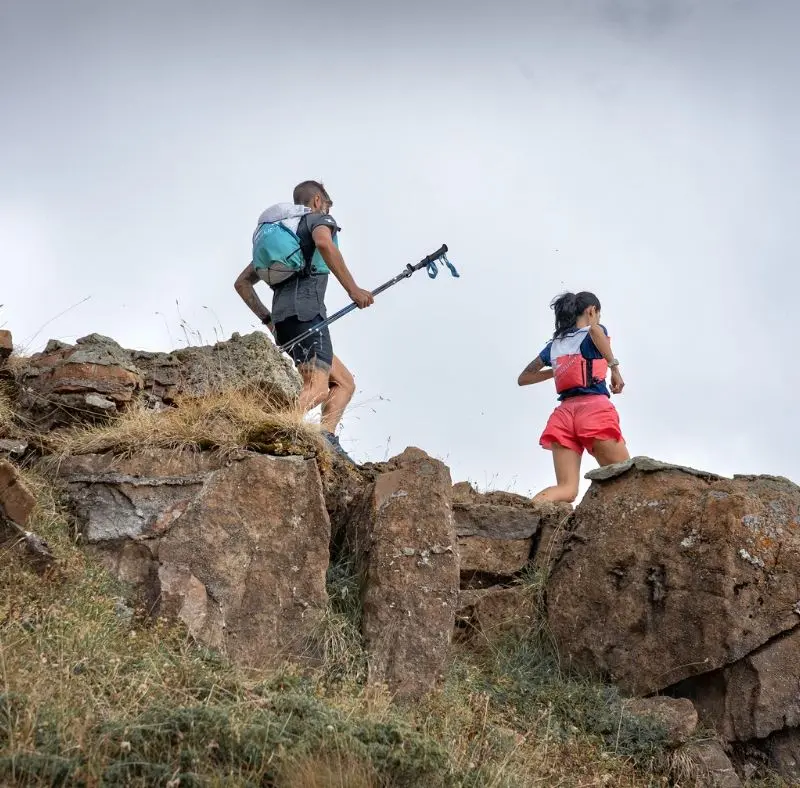
Conditions for using trekking poles properly:
- Always use 2 poles, bearing weight with each step.
- Adjust them to your height and the slope (shorter uphill, longer downhill).
- Use the wrist strap for support.
- RayonRando will cover technique in a dedicated article.
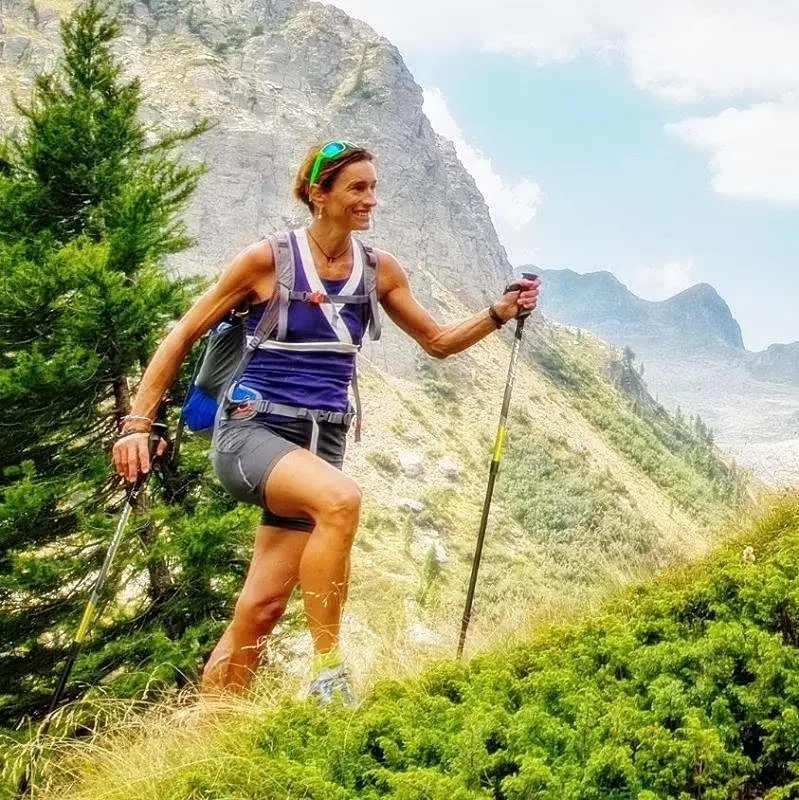
Conclusion:
Since taking up trekking poles, I cannot do without them. Fewer falls and twisted ankles, but also more comfort: greater stability with less concentration and muscle fatigue. Overall, the drawbacks seem minimal, except on scrambling or cable-protected sections, where prudence means folding and stowing them.
I do not use them on family walks in the forest or by the sea, but always when hiking in the mountains. They seem essential when carrying a loaded backpack (and even more so a child carrier). For me, they naturally complement good footwear.