





When starting cycle touring, the luggage question arises quickly: backpack or panniers? Some cyclists simply take the bag they already own. Yet the choice directly affects comfort, fatigue and bicycle stability.
A backpack can be an excellent option, but only in certain cases. In other situations, it quickly becomes uncomfortable or detrimental. Discover with RayonRando when to use a backpack for cycle touring, when to avoid one and how to choose the right model.
A backpack for cycle touring: good or bad idea?
A backpack is neither always wrong nor universally suitable. It depends mainly on three factors:
- outing duration
- weight carried
- terrain type
On a bike, your body already leans forwards. Adding weight on your back changes:
- your posture
- weight distribution
- shoulder and lower-back fatigue
The greater the backpack weight, the greater the strain.
Backpack capacity also matters. A large pack encourages more equipment, further increasing load and discomfort.
In practice, backpacks work well for lightly loaded outings. As load or duration increases, their limits quickly appear.

When a backpack is a good idea
In some circumstances, a backpack remains a simple, effective option.
Day outings
For a short outing, a backpack is often simplest.
A small pack carries water or a hydration reservoir, windproof layer, food and a minimal repair kit.
In this case, a 5 to 15 litre capacity is generally sufficient.
The aim is simple: keep the load light.
Technical terrain: mountain biking or demanding gravel
On technical trails, panniers can sometimes hinder you through:
- swaying
- constraints in narrow passages
- interference with the wheel or suspension
A small backpack keeps equipment close to your body, improving bicycle stability. The bike also remains fully manoeuvrable.
That is why mountain bikers often use hydration packs.
A minimalist approach
Some riders deliberately travel very light. This means:
- little equipment
- a quick outing
- limited self-sufficiency
A backpack then becomes a simple, compact option.
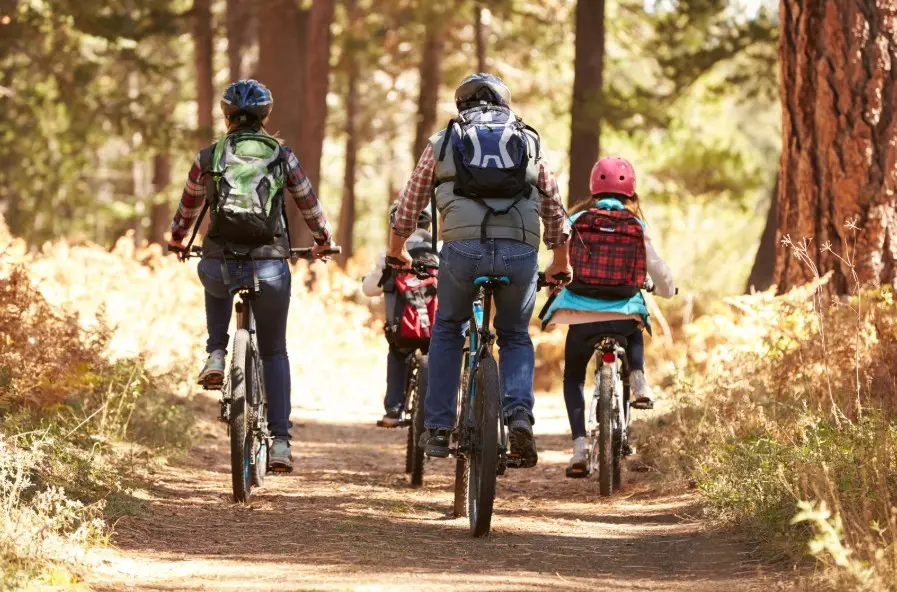
When a backpack becomes a bad idea
In many situations, a backpack quickly becomes the least suitable option.
Cycle touring or long distance
Over several hours or days, backpacks often cause:
- shoulder fatigue
- lower-back pain
- constant pressure on the back
Even with a good backpack, carrying weight over tens of kilometres is demanding. Unlike hiking, the forward-leaning posture transfers load poorly to the hips. Shoulders and back bear most of it.
That is why cycle travellers almost always use panniers.
Heavy loads
Once the pack exceeds around 5 to 6 kg, discomfort increases considerably:
- shoulder compression
- rider imbalance, especially on bends, rough sections or narrow passages
- increased muscular fatigue
When cycling, it is almost always better to put weight on the bike rather than your body.
Hot weather
A backpack greatly reduces back ventilation.
The result:
- heavy perspiration
- feeling hot
- prolonged discomfort
Even with effective back ventilation, a backpack breathes less than wearing no backpack.
How to choose a backpack for cycle touring?
If you decide to use one, certain criteria matter particularly.
What volume and capacity for cycle touring?
Keep capacity moderate.
Here are useful guidelines from RayonRando:
- 5 to 10 L: short outings with a hydration reservoir, a few accessories and snacks. A model such as the Apex 8 offers enough space while remaining compact, stable and streamlined.
- 10 to 15 L: day outings with a hydration reservoir, rainwear, food and accessories while retaining good agility. For example, the Wilsa Raid 16 L provides space for everyday equipment without compromising stability.
- 15 to 20 L: greater self-sufficiency, perhaps with a change of clothing. The Deuter Bike I carries a substantial load while remaining compact, breathable and suited to a forward-leaning posture.
Beyond this, a backpack is often too bulky for cycling, causing fatigue and instability.
Is a 30 L cycling backpack too much?
Some nevertheless choose a 30 L backpack, often as a borderline compromise between travelling light like bikepacking and carrying quite a lot. For multi-day trips, we advise against it: panniers provide better lasting comfort.
A good support system
A cycling backpack must remain stable.
At RayonRando, we highlight these important features:
- ergonomic shoulder straps that are not too thick.
- a chest strap to prevent swaying, especially useful on uneven terrain, slopes and bends.
- a lightweight waist belt for stability, which must close without compressing the abdomen.
This prevents unwanted movement, particularly while pedalling or riding uneven ground.
Adequate back ventilation
Ventilation remains limited with a cycling backpack, but some systems improve it:
- breathable foam panels
- ventilation channels
It will never be perfect, but encourages airflow to reduce perspiration.
Should you use a suspended-mesh backpack?
Suspended-mesh backpacks are more breathable, but also stiffer and less comfortable when leaning forwards. Depending on load, they may catch more wind and offer less stability. They can work at small capacities (10 L), but often less well with greater capacity and heavier loads.
Organisation and quick access
When cycling, it is useful to have:
- a hydration reservoir with drinking tube and bite valve, allowing you to drink without stopping or losing control of the bike.
- an external pocket for small items such as snacks and a phone, which should be easy to grab. The aim is to limit unnecessary stops.
- A main compartment that is not too deep, limiting sway and wind resistance.
Alternatives to a backpack: often more suitable
In many cases, carrying equipment on the bike remains best.
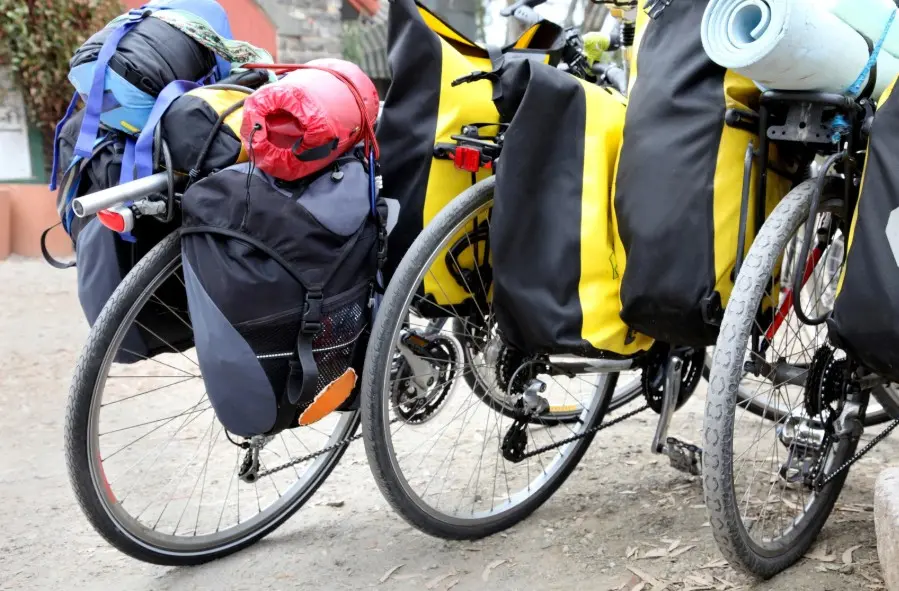
Rear panniers
Mounted on a rack, panniers provide:
- good weight distribution
- high carrying capacity
- optimal long-distance comfort
This is the classic cycle touring option.
RayonRando.com has selected these panniers:
Bikepacking
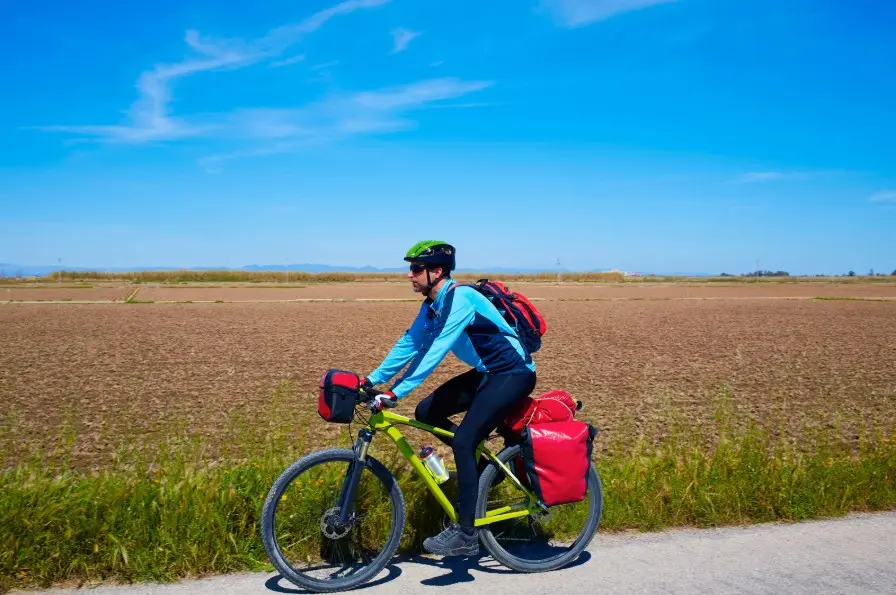
Bikepacking uses bags attached directly to the bike:
- saddle bag
- frame bag
- handlebar bag
This configuration provides:
- a low centre of gravity
- good stability
- a manoeuvrable bike on uneven tracks and rough routes.
It is very popular for gravel and mountain-bike adventures.
The compromise: small backpack + bike bags
Some cyclists use:
- bike bags for main equipment
- a small hydration pack for water and essentials
This combines comfort and accessibility.
Backpack or panniers: choosing for your activities
Choosing between backpack and panniers mainly depends on outing type, load and terrain. Many cyclists start with a backpack for simplicity, practical for short or sporting rides. But as distance or load increases, limitations quickly appear.
The main problem is weight distribution. With a backpack, the rider carries the entire load: shoulders, back and lumbar muscles work constantly. Over hours of pedalling, this can cause muscular fatigue, pain or discomfort.
Panniers instead put weight directly on the bike. Your body stays freer and posture less constrained. This is why most cycle travellers and bikepackers favour this option.
A backpack remains excellent for urban outings or walks, being easy to carry once off the bike. Outdoors, it also keeps equipment to hand and preserves handling agility on technical trails.
Overall, backpacks suit light, sporting outings. For long distances or carrying equipment, panniers are generally more comfortable and efficient.
At RayonRando, we advise according to your use:
| Use | Backpack | Panniers |
|---|---|---|
| Day outing | ✔️ | Optional |
| Technical mountain biking | ✔️ | Sometimes obstructive |
| Lightweight bikepacking | ✔️ | ✔️ |
| Cycle touring | ❌ | ✔️ |
| Heavy load | ❌ | ✔️ |
| Hot weather | ⚠ | ✔️ |
We also advise according to your priorities:
| Criterion | Backpack | Panniers |
|---|---|---|
| Back comfort | Moderate over time | Excellent, leaves your back free |
| Bike agility | Excellent | Reduced, less manoeuvrable |
| Equipment access | Quick and easy | Requires a complete stop |
| Technical terrain | Very suitable | Less suitable |
| Long distances | Less comfortable | More comfortable |
Conclusion
A backpack can be practical for short, light outings, especially mountain biking or gravel riding. A small capacity (5–10 L) can also complement bike bags. But as duration, heat or load increases, its limitations quickly appear.
In most cases, carrying weight on the bike remains most comfortable. Panniers or bikepacking bags offer better weight distribution and reduce long-distance fatigue.
FAQ
What backpack capacity for a day ride?
For a day of cycle touring, a backpack capacity of 10 to 15 litres is generally sufficient. This holds the essentials: water or a hydration bladder, windproof layer, food, repair tools and a few accessories. A larger pack often encourages you to carry unnecessary equipment, increasing weight and reducing comfort on the bike.
How much weight can you carry in a backpack while cycling?
For comfort, it is best to limit backpack weight to around 3 to 5 kg. Above this, the load becomes more noticeable on your shoulders and lower back, especially over long distances. When cycling, carrying weight on the bike itself, in panniers or bikepacking bags, is generally more efficient than carrying it on your body.
Backpack or bike bags for bikepacking?
The most common bikepacking solution uses bags attached directly to the bike: saddle bags, frame bags or handlebar bags. This setup keeps the centre of gravity low and avoids loading the cyclist's back. A small backpack can sometimes supplement the equipment, particularly for hydration or items you want to access quickly.
Is wearing a backpack more tiring when cycling than hiking?
Yes, in most cases. When hiking, you carry the pack in a relatively upright posture, with the weight mainly on your hips. On a bike, you lean forwards, changing the load distribution. The pack's weight then puts more pressure on your shoulders and lower back, potentially increasing fatigue over several hours of pedalling.
Can you travel by bike with a backpack?
Travelling by bike with a backpack is possible, but generally not the most comfortable option. Over several days or weeks, carrying weight constantly on your back can cause fatigue, pain or heavy perspiration. Most cycle tourists prefer rack-mounted panniers or a bikepacking system, allowing them to carry equipment without excessive strain on the body.