





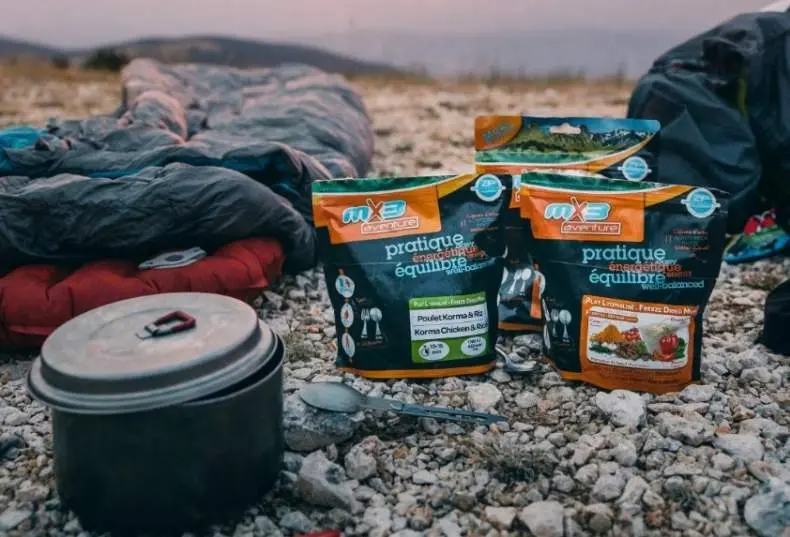
You are used to your pot of pasta when hiking, but wonder whether freeze-dried meals offer any benefits? Here are their main advantages and disadvantages compared with “traditional” cooking on a trek.
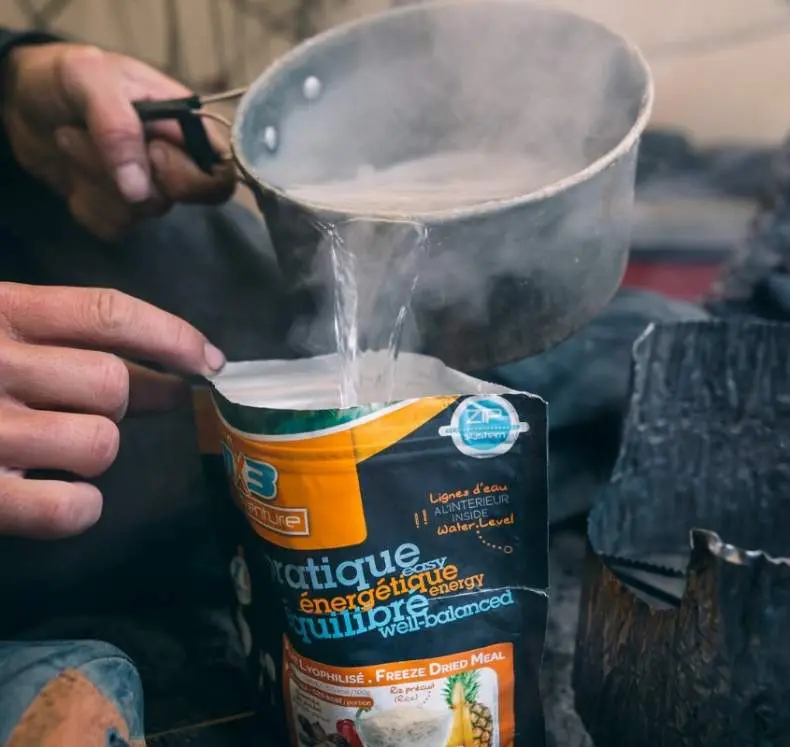
Freeze-dried meals are dehydrated through freezing followed by dehydration under vacuum. They are then packed dry in airtight pouches. Add water (usually hot) and wait a few minutes for a meal ready to eat.
The most common format is a 125 g net meal, becoming a 400–450 g meal once rehydrated.
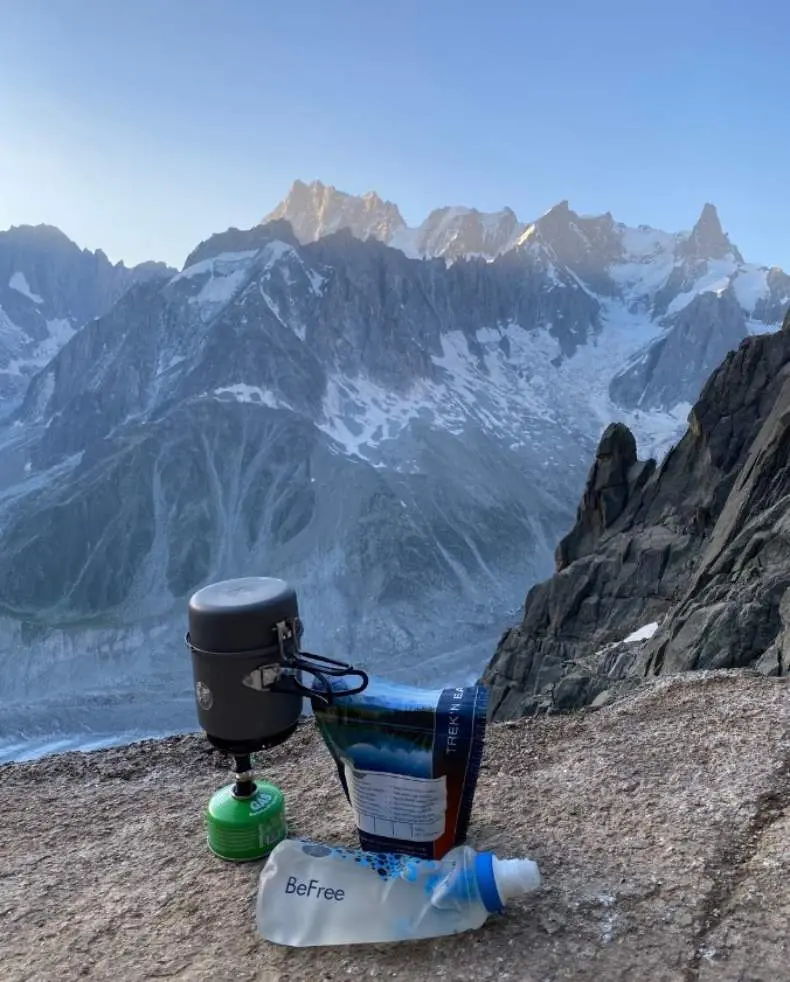
Benefits of freeze-dried meals on a trek:
Weight and compactness: a complete meal weighing 125 g for a standard portion, in a flat pack that slips easily into your bag: the benefits for optimising load weight and volume are clear.
Nutrition relative to weight: freeze-dried meals are generally designed to be energy-dense (often 400 to 500 kcal for a 125 g portion). Varied ingredients also provide the nutrients of a balanced diet.
Variety and enjoyment: tired of pasta? With freeze-dried meals, the chef offers a different recipe every day: regional dishes, world cuisine, traditional meals, vegetarian dishes, fish or meat. The same applies to desserts and breakfasts, albeit with fewer options than main meals.
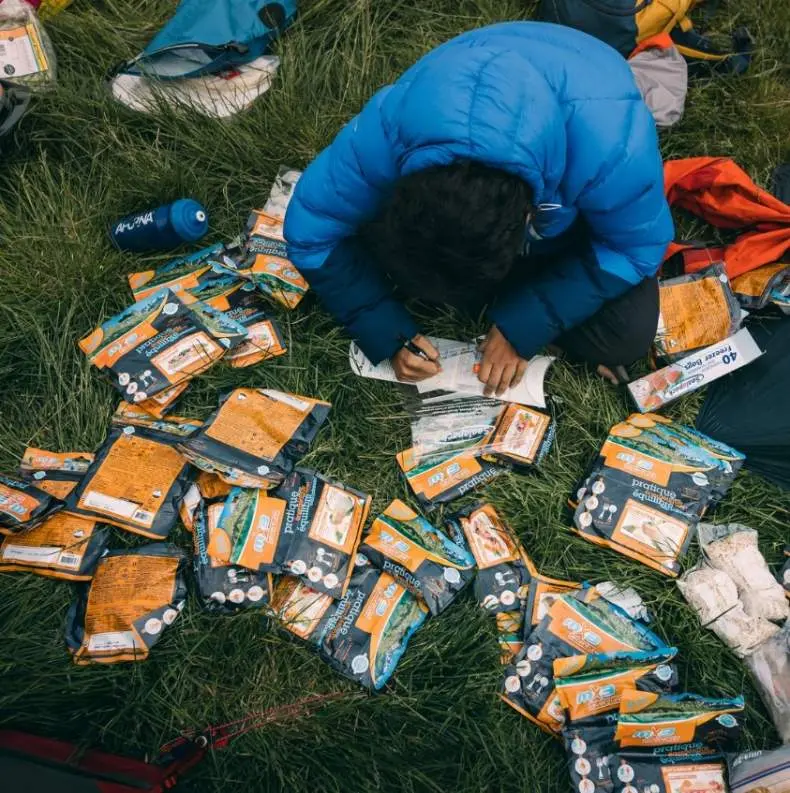
Ease: a few minutes, no washing-up. Simply heat water without cooking, since the meals are already cooked. Mix well and wait a few minutes. Eat directly from the pouch, so no washing-up. Its base opens out, letting it stand unsupported. It could hardly be simpler.
Gas and water savings. Once water boils, no more gas is needed. There is no cooking water to discard, helping optimise the water you carry if your campsite has none.
Storage: protected in its pouch, the meal will not spoil. Neither heat nor moisture affects it. Keep a few at home: they do not expire tomorrow (often 2 years' shelf life after manufacture).
Drawbacks of freeze-dried meals when hiking:
Have I made your mouth water? Take time to read the next few lines anyway. There are drawbacks too:
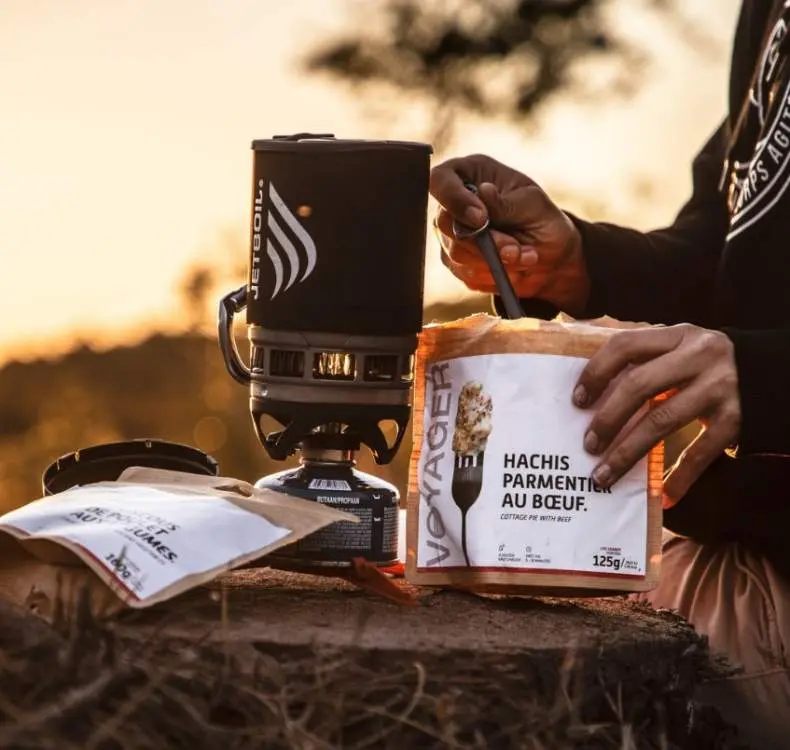
Texture: ingredients are often cut into tiny pieces: do not expect the appearance or texture of the homemade recipe. Keep this in perspective, though: eating a … in the mountains after a day's walking, I find it delicious. Eating it again at home, I enjoy it less… Personally, I prefer Voyager meals: I find their consistency closer to the original.
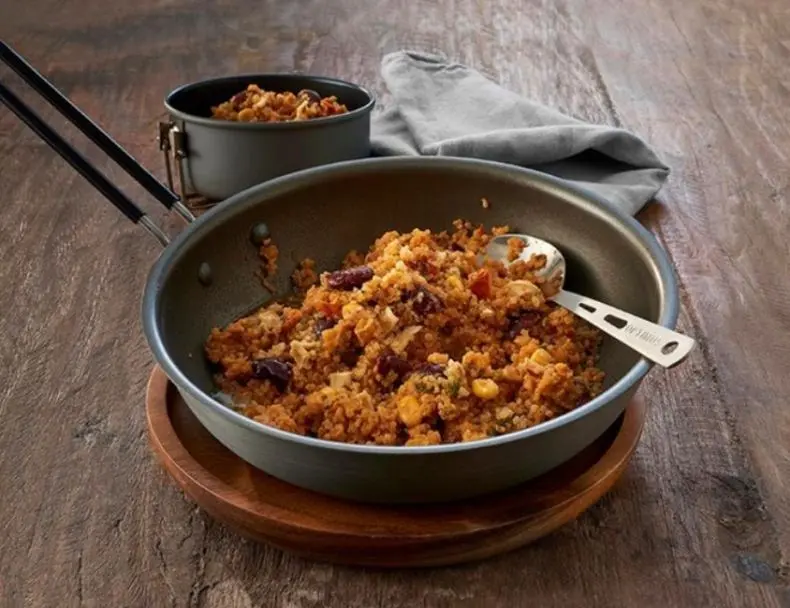
Seasoning: meals are already seasoned. I never add salt or pepper, but sometimes find them a little over-seasoned. A matter of taste…
Get the water quantity right: add enough, but not too much, or the result will be too dry or too runny. Internal water-level marks are generally fairly reliable. For creamy desserts, be particularly careful not to overfill. Mix thoroughly, reaching into the bottom corners: a still-dry mouthful is unpleasant.
A long spoon keeps your fingers clean. It is practical for mixing; otherwise food gets on your fingers, and washing facilities are not always nearby. For eating from the pouch, some packs have a tear line halfway down so you can eat as from a bowl.
Packaging: one or two meals per day per person means that many wrappers to carry in your rubbish bag during the hike, and that much waste to discard.
Production energy? I have no figures, but freeze-drying necessarily uses more energy than eating a meal cooked on site.
Price. In a trekking food budget, eating only freeze-dried meals quickly adds up. It is naturally cheaper than buying food from huts, but considerably more expensive than a diet based on 3-minute pasta and mashed potato.
Conclusion:
Freeze-dried meals bring real enjoyment while being practical. On trips of a week or more, eating something different, hearty and tasty every day is truly pleasant. For me, the advantages clearly outweigh the drawbacks.
Personally, I never carry more than 5 days' food. When away for 2 weeks, I therefore take freeze-dried meals from RayonRando for the first 5 days. Then I resupply at grocery shops, where freeze-dried meals are unavailable (except soup!), and switch to usual hiking food. I generally eat a cold lunch, reserving soup and a freeze-dried meal for dinner.