





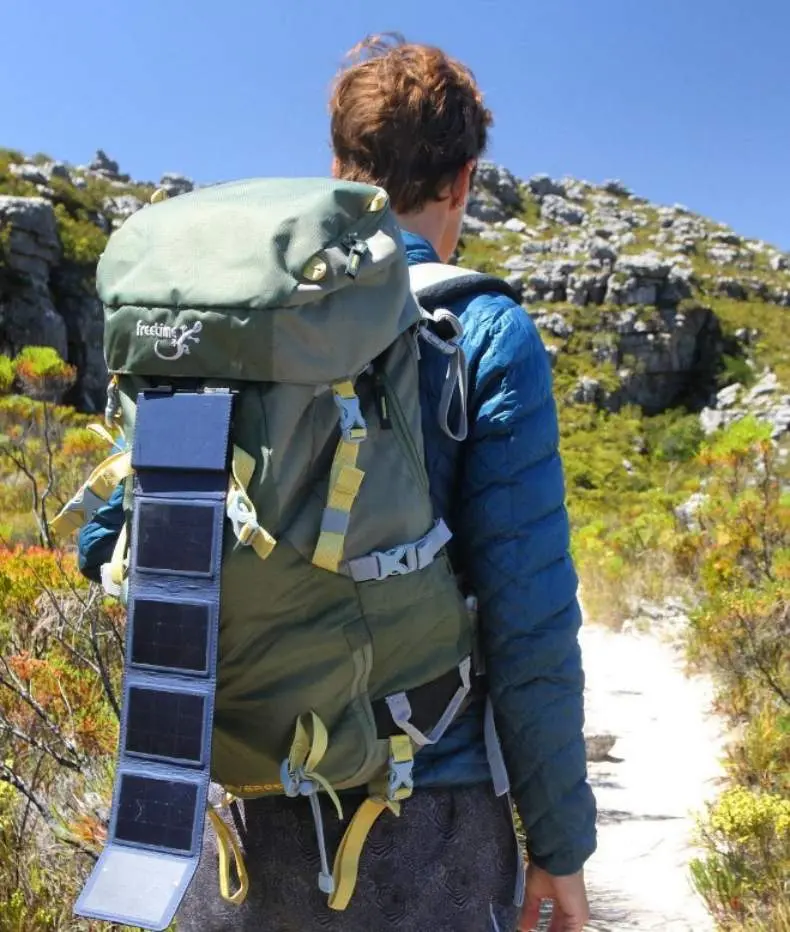
Hiking lets you disconnect from everyday life, but not always from your devices… Phone, GPS watch, head torch: portable power needs often require a backup phone battery, sometimes paired with a compact solar panel.
RayonRando helps you choose batteries and solar panels to suit your circumstances:
- Assess your daily electrical energy needs.
- Choose battery specifications suited to your devices and needs.
- Understand how a solar panel works and how to use it correctly.
- Choose a solar panel suited to your energy needs.
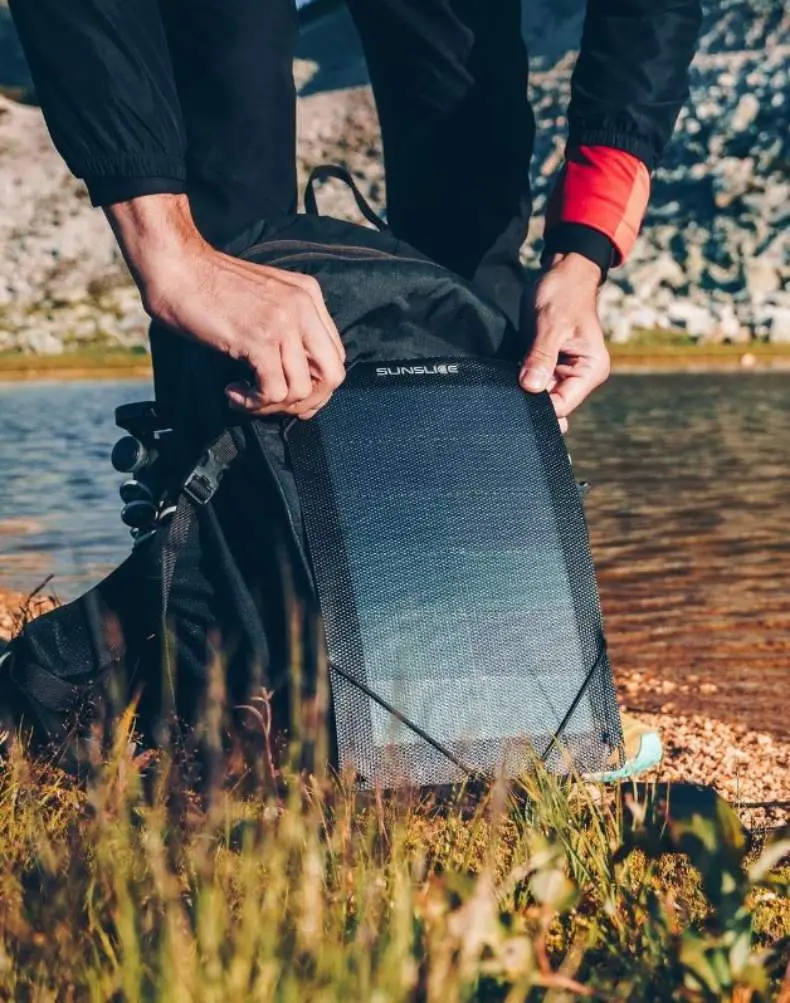
Power banks: more than an energy reserve.
What battery capacity do you need?
Several criteria matter:
- Assess your daily energy needs. For example, each day I need a full charge for my GPS watch and half a charge for my phone and head torch. After checking each device's battery capacity, I estimate my needs at around 3,000 mAh. Remember to add a safety reserve for low-light days when the solar panel cannot fully recharge the battery. In this example, a 5,000 mAh battery should suffice.
- Choose between battery + solar panel or battery alone. A panel paired with a lightweight 5,000 or 10,000 mAh battery, for example, provides long-term independence. But for 3 or 4 days, a larger, heavier 10,000 or 20,000 mmA battery, fully charged before departure, may suffice without a solar panel.
- For multi-day hikes, weight and compactness matter and may call for a compromise. Assess essential needs carefully (such as always retaining a phone charge for safety) and optional uses (you can use GPS occasionally instead of continuously when batteries are low). Choose lightweight power banks to reduce your hiking load.
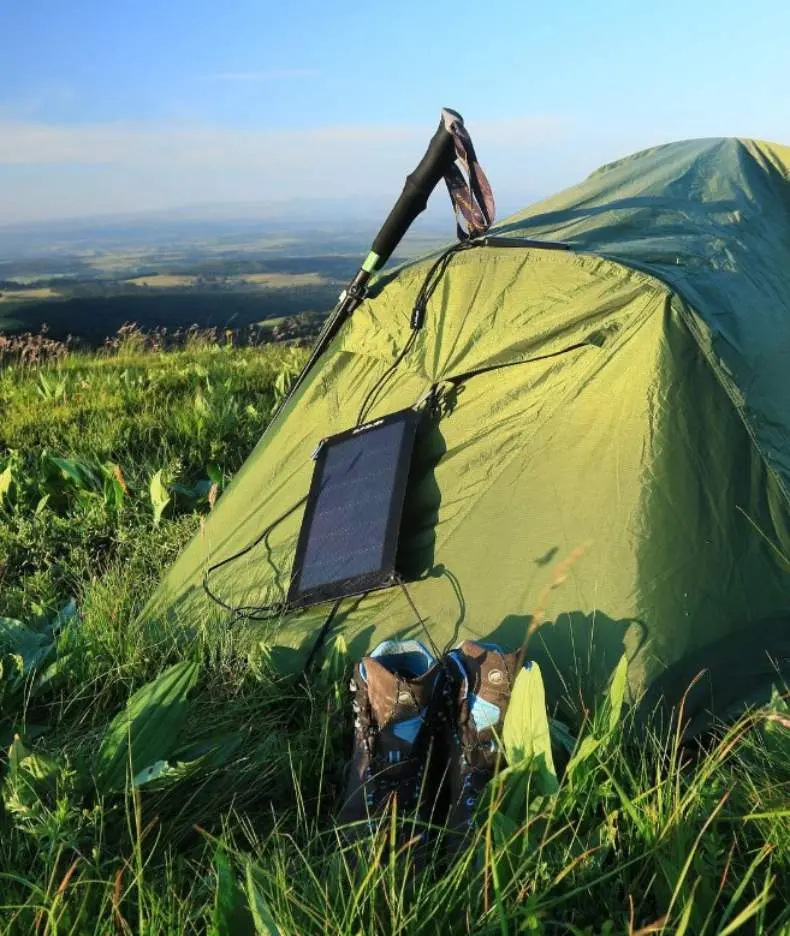
Why pair a solar panel with a battery rather than use it alone?
- To protect your devices. Solar panel output fluctuates constantly. Many devices charging via 5 V USB have charge controllers to prevent overcharging (watches, GPS units, head torches). Smartphones and tablets, however, are more sensitive and may stop charging after a sudden fluctuation. You may think your phone has charged when its protection has actually cut in. It is therefore better to charge a battery first, which then provides a steady supply to recharge your devices.
- For convenience: charging devices in the evening is easier when you use them during the day.
- For an emergency energy reserve. Keeping a day's charge in reserve is wise for low-light days.
Finally, consider connections. Most small devices use a 5 V USB port, but larger devices may need a 12 V port, for example (laptop, drone, etc.).
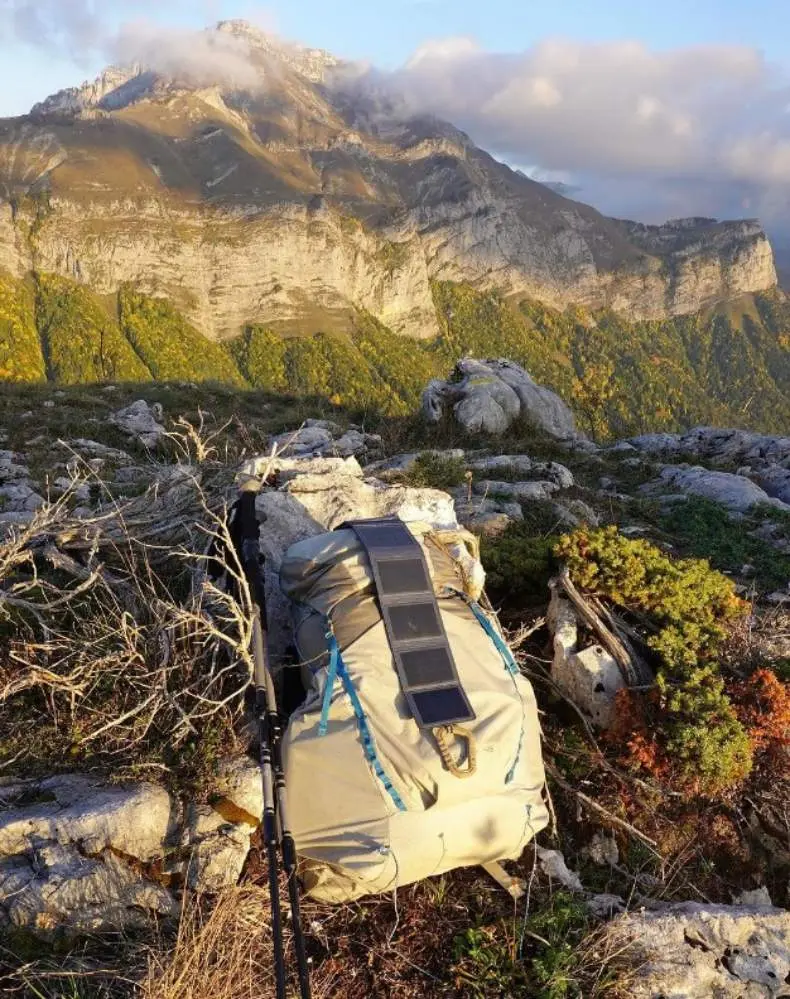
How efficient is a solar panel, and in which conditions?
Variable output:
- Solar panel output naturally depends on sunshine. It is higher under clear skies and lower with cloud cover, mist or rain. The panel still works when weather hides the sun, however.
- Solar radiation, and therefore output, is greatest between around 10:00 and 15:00.
- Direct exposure to sunlight is best. Ideally, position the panel perpendicular to the sun's rays. Avoid shadows falling across it where possible. Do not expect it to work indoors. Placing the panel behind a window greatly reduces charging.
Does a moving panel work?
Yes, in principle a moving panel captures sunlight as well as a stationary one. The advantage of keeping it still is that you can check its exposure, whereas this changes continuously while moving.
Can you use a solar panel in the rain?
Yes, a solar panel still works in rain, but is not completely waterproof because water can enter its connections. It can be used in rain, but avoid prolonged exposure to water and dry the connections afterwards if necessary.
Keep the battery or device being charged in a pocket for protection. Although compact batteries (such as Sunslice models) withstand rain, they are not fully waterproof and prolonged or repeated exposure to water may affect performance.
How can you tell whether the panel is working?
On Sunslice and Powertec panels, an LED beside the socket lights up when the panel receives an electrical signal. You can therefore check immediately that your panel can charge a device.
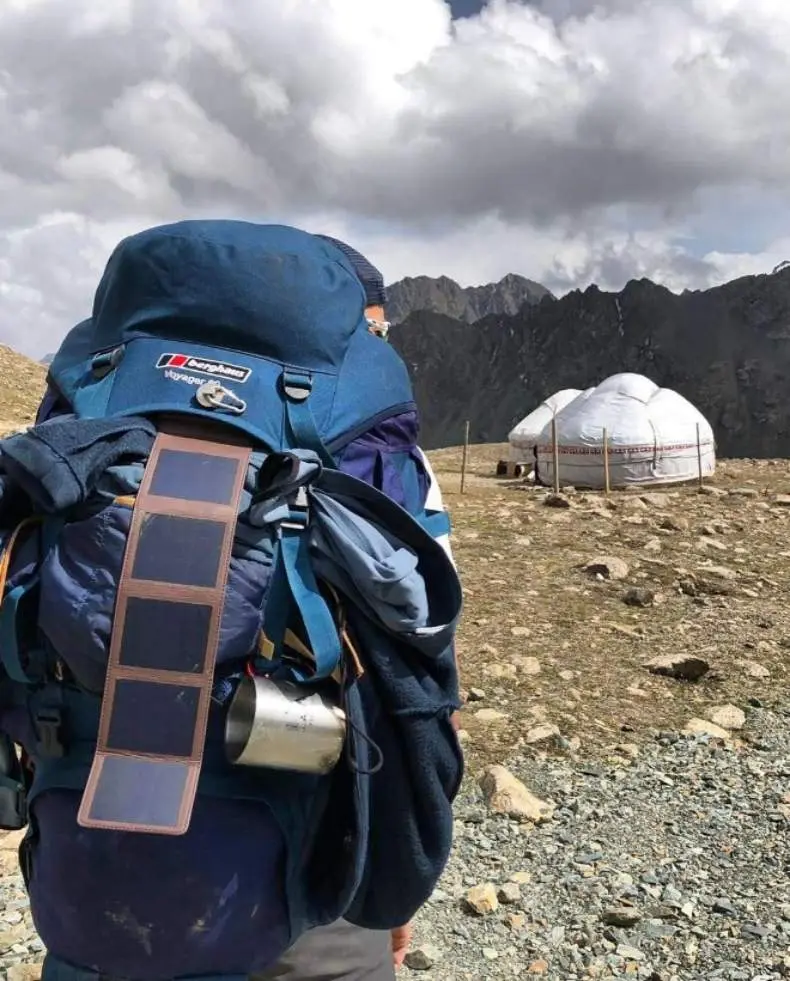
How do I choose my solar panel's output?
Start with the daily requirements calculated when choosing your battery. In our example, we needed 3,000 mAh of charge and, for safety, ideally a battery charged to 5,000 mAh by the end of the day.
For example, Sunslice offers 3 panels with 5 V ports, delivering maximum outputs of 1,200 mAh for the Fusion Flex 6 W, 2,400 mAh for the Fusion Flex 12 W, and 3,600 mAh for the Fusion Flex 18 W.
In our example, the Fusion Flex 6 W provides enough with its 1,200 mAh: in theory, 4 h of optimal charging would almost fully recharge my empty battery. I expect my panel to receive varying exposure for 8 hours (walking and breaks), and my battery will generally not be empty at the start of the day. A more powerful, bulkier panel is therefore unnecessary.
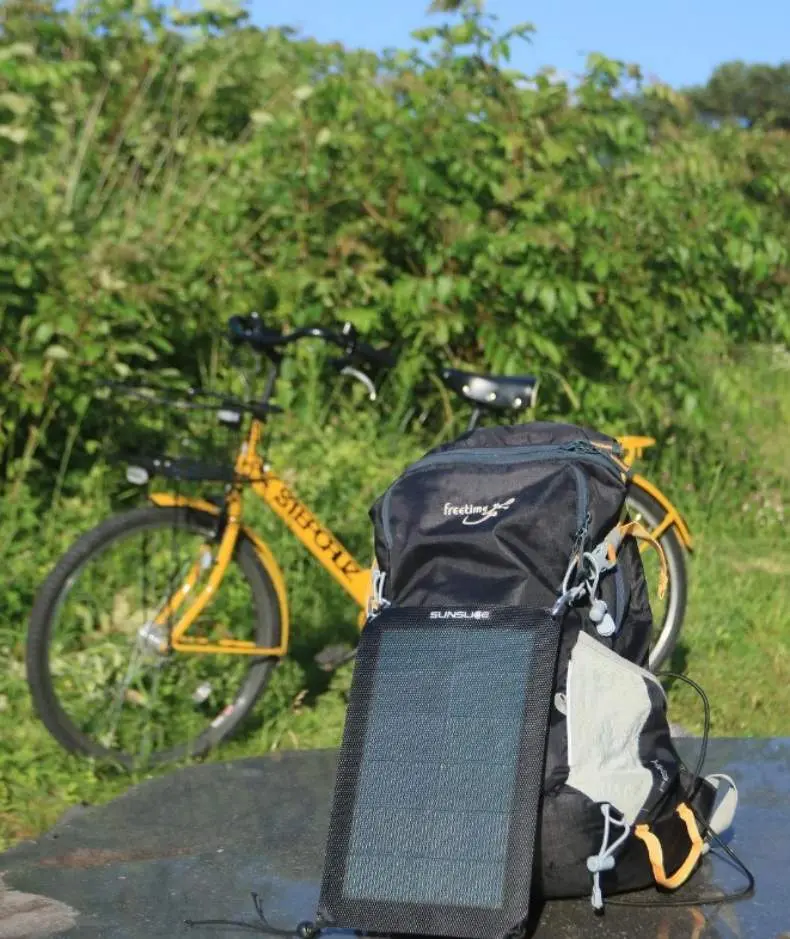
Which power banks should you pair with which solar panels?
Our customers' most common choices are:
- A 5,000 mAh battery with a 6 W panel (1,200 mAh): lightweight, compact and usually sufficient for everyday needs.
- A 10,000 mAh battery with a 6 W panel (1,200 mAh) for everyday needs while retaining a safety reserve.
- A 10,000 mAh battery with a 12 W panel (2,400 mAh) for both capacity and a safety margin in charging and storage.
Higher-capacity power banks and more powerful panels suit much more intensive use (for example, fully draining a phone and GPS watch every day).
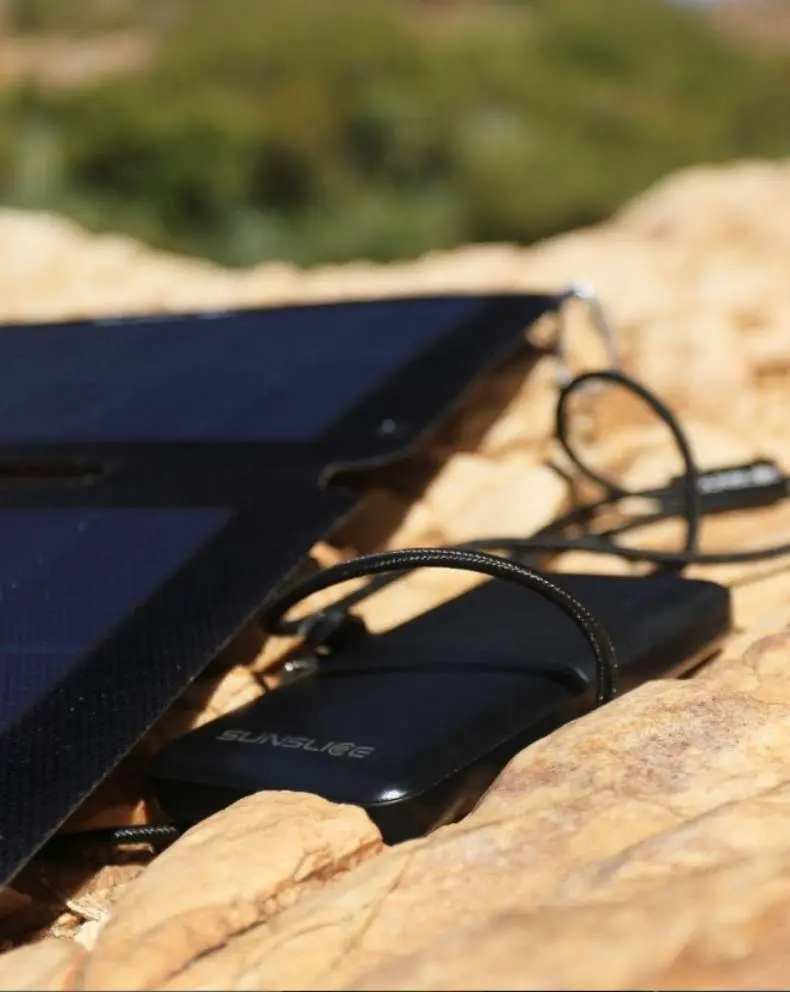
Conclusion:
For a 3- or 4-day trip, choose between a substantial power bank charged before departure or a lighter battery paired with a solar panel.
On a longer journey, a solar panel with an integrated battery provides independence and peace of mind.
Sunshine and charging conditions remain uncertain, so allow a safety margin when selecting battery capacity or choose a larger solar panel.
In all cases, we recommend pairing a battery with your solar panel rather than connecting devices directly: safer for your equipment, more practical and better for independence.