





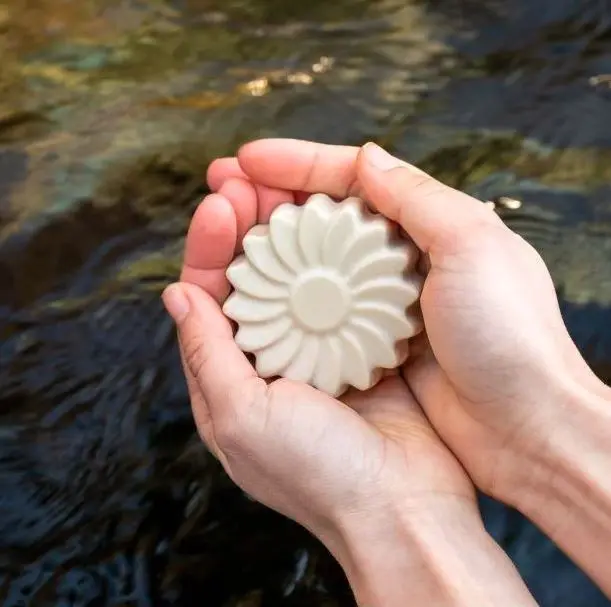
A bath is impossible, and even a lukewarm shower is out of reach, yet after a day's trekking you could really use a wash… A trickle of water or an icy torrent: options are generally limited. Then evening comes, the sun disappears and a cool breeze reminds you of your altitude.
Rest assured: RayonRando helps you overcome those slight concerns and stay clean by taking the drama out of this “sensitive” subject in a few points:
- Why wash on a trek?
- Where can you wash when wild camping?
- Which parts of the body should you prioritise?
- Which products and accessories should you use for washing?
Why wash on a trek?
To stay clean, obviously, you might say. But it does not stop there. How do you feel after washing? Much better than before, certainly! Washing soothes, relaxes (even with glacier water) and refreshes. The benefits for body and mind are immediate, so why go without?
But the practical benefits go further:
- Washing helps prevent bacterial and fungal growth that can cause irritation and unpleasant odours. These problems are more likely during strenuous physical activity, with the heavy sweating it brings.
- Washing helps the skin breathe better. Dried sweat leaves minerals, lactic acid and other organic compounds on the skin that should be removed. Going to bed with clean skin improves heat exchange between your body and the outside. You then feel less cold at night and recover better.
- Washing on a trek helps protect your sleeping bag from sweat-related dirt. This is particularly important with a down-filled sleeping bag. The feathers are more likely to stick together, reducing its insulating power. Alongside good hygiene, consider using a sleeping bag liner with your sleeping equipment.
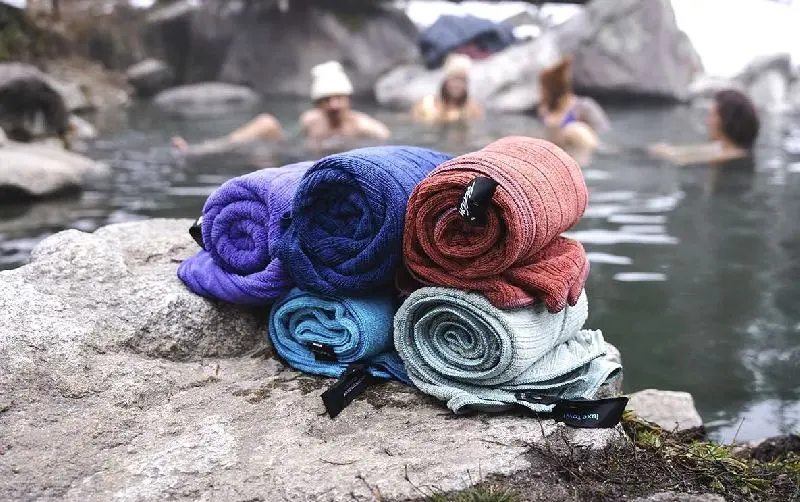
Where can you wash at camp?
Whether for drinking or washing, finding water is crucial when hiking. Try to plan ahead as much as possible. Identify your campsites before the hike. There are 3 different situations to distinguish:
My campsite is near a mountain hut or walkers' hostel
Contact the person in charge: you should be able to arrange a shower under certain conditions before heading to your campsite.
My campsite has no water or hut nearby
Locate the last water sources before your campsite to wash, even if you still have 40 minutes' walking afterwards. Read the IGN map carefully: depending on the season, streams may be dry.
If you still want a backup plan, wipes or pre-moistened wash mitts can help (see below).
My campsite seems perfect: there is water nearby
Once at your ideal campsite, it is tempting to lie in the grass, release the day's effort and contemplate the surrounding nature.
A tip: do not put off washing! Your body is still warm. Washing in the stream will be harder half an hour later. Better still if you can enjoy a few rays of sunshine.
If you plan to camp near a drinking-water source, at least remember to go downstream of it to wash.
If you must choose between a lake and a stream for washing, choose the 2nd. This avoids leaving the used water standing.
Which parts of the body should you prioritise when washing on a trek?
Glacier water is not to everyone's taste, or rather temperature. Even after a very long day's hiking, washing your whole body can be difficult. Or you may lack enough water for a full outdoor shower, or sufficient privacy.
In this case, you must choose which areas to wash: prioritise hands, teeth, face, genitals and feet.
These areas accumulate sweat, and some receive very little ventilation, exposing them to the problems mentioned earlier.
They also have relatively small surface areas, so little water is needed to wash them.
If you are getting used to this fresh water only a few degrees above freezing, or still have some water left, continue with all areas with skin folds (around joints). This helps prevent various skin problems.
Which products should you use to wash on a trek?
It may seem obvious, but favour naturally derived products wherever possible to limit the environmental impact of your visit. Here are some products that could help with your hiking shower:
A specific or multipurpose soap in these forms:
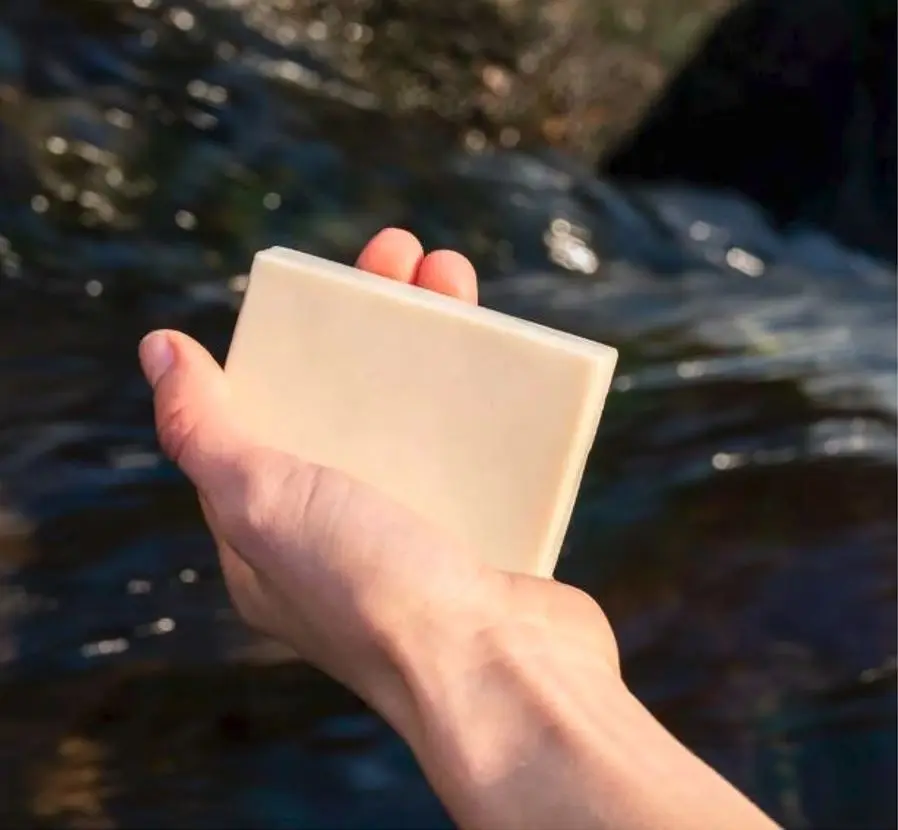
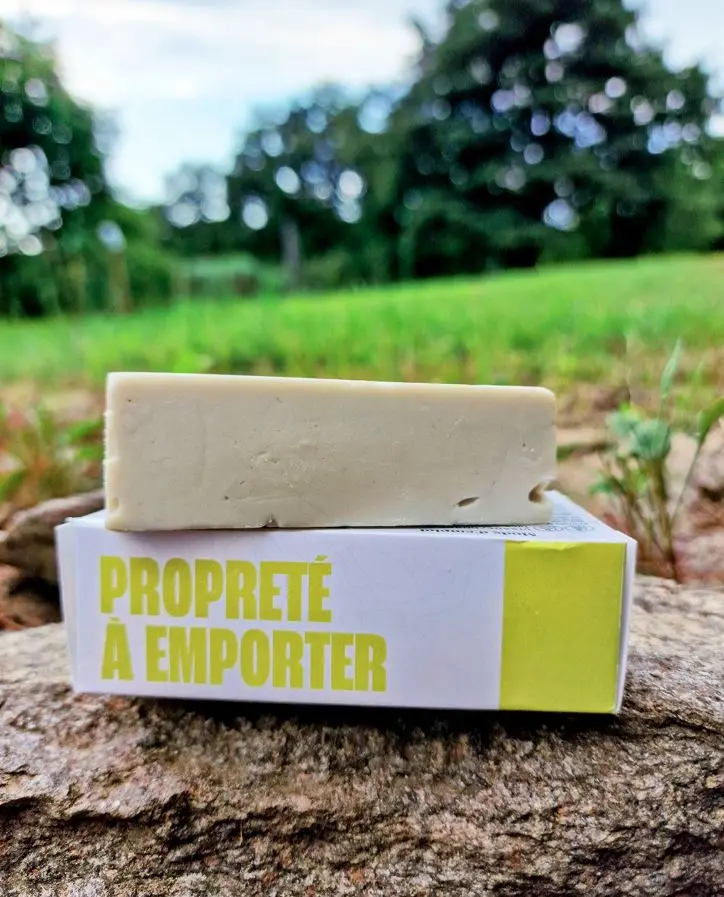
- Solid: very long-lasting if well protected, but relatively heavy. Consider cutting off only the piece you need.
- Liquid: very practical, just like at home. Concentrated formulas in compact bottles are available.
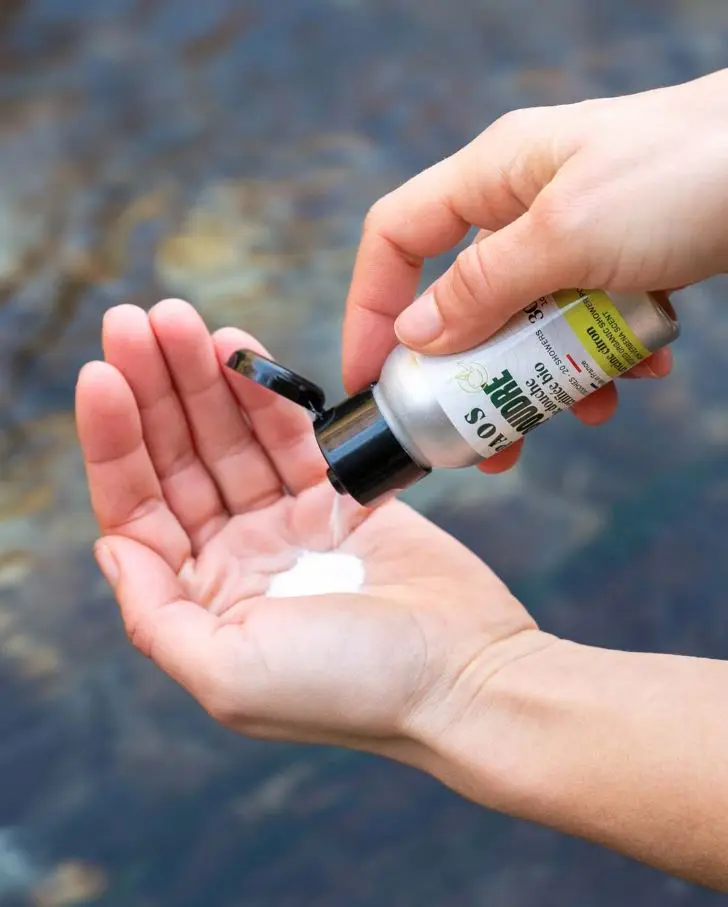
- Powder: ultralight and very compact. Sprinkle a little soap onto wet hands or your body and wash! It is as simple as that, and requires little water to rinse.
- Sheets: like powder, very light and compact. Very practical for a quick wash of specific areas when needed.
- Seawater option: if your trek follows the coast, a solid soap is available for this purpose. However, you will need fresh water to rinse.
Wipes or pre-moistened wash mitts: if you are stuck in your tent with no water nearby, or hiking in the middle of a desert, these are a very practical, economical backup requiring no water.
Toothpaste in these forms:
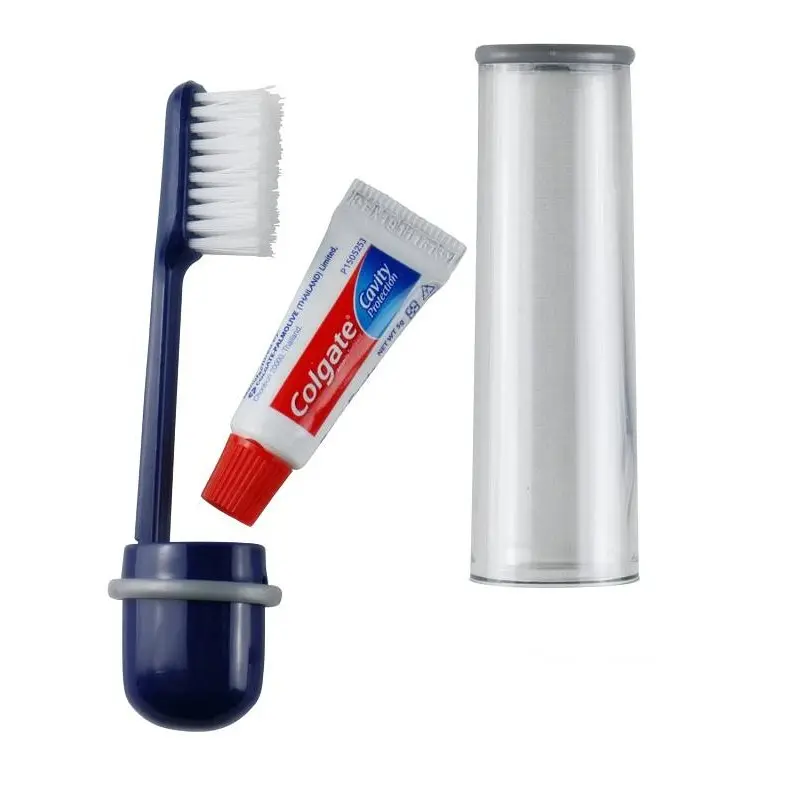
- Liquid: standard-sized containers in supermarkets or mini ones from specialist hiking equipment shops.
- Solid: toothpaste tablets reduce waste (plastic tubes are replaced with a glass bottle) and let you control consumption: 1 tablet = 1 brush.
Which washing accessories should you use on a trek?
Far from your comfortable bathroom, you need to choose which accessories to carry to avoid a bulky, heavy backpack. Fortunately, very practical accessories are available:
- The microfibre wash mitt: very light, compact and above all practical. This type of mitt lets you soap and rinse yourself faster in cold water, avoiding a dip in a 5°C pool!
- The microfibre towel: now well known among hikers, it offers excellent absorbency for its weight. Depending on the product, different synthetic fibres can be particularly lightweight.
This towel rinses, wrings out and dries very quickly, preventing odours and extra weight in your backpack.
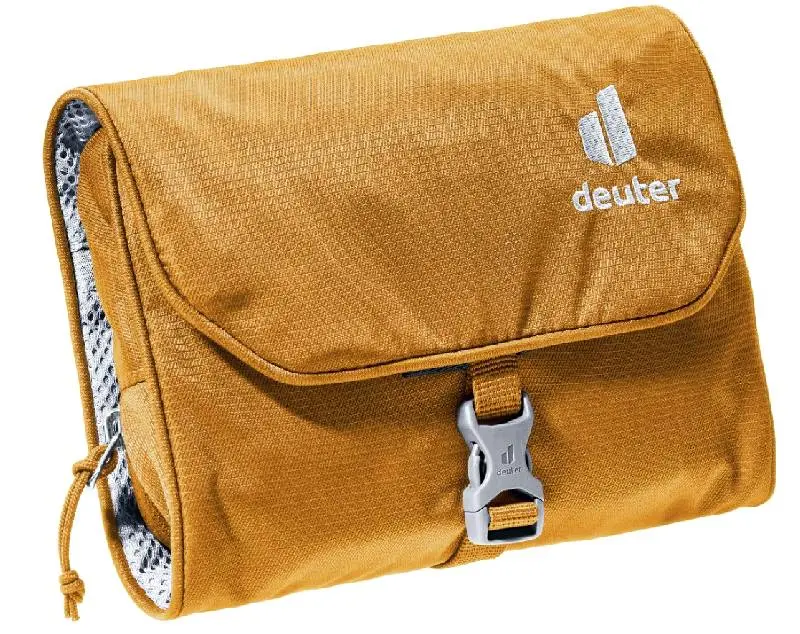
- The hanging wash bag: simple and practical in places that are not very clean.
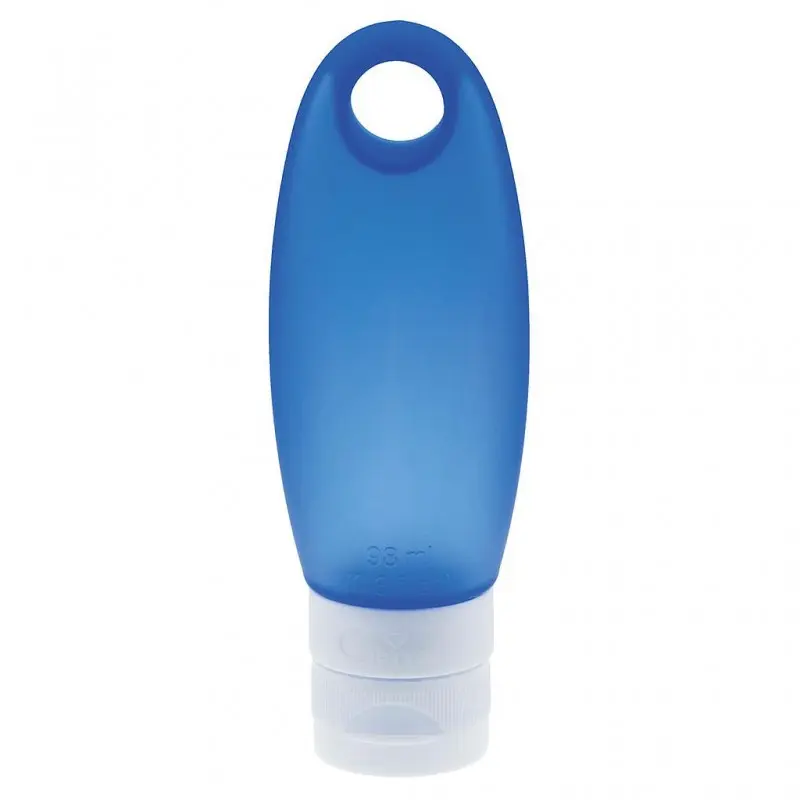
- Soft bottles: whether storing soap, shampoo, sunscreen or something else, these bottles are very practical for carrying only small quantities. Ideal for getting through airport security smoothly too.
- The folding or retractable toothbrush: a slightly less radical solution than cutting down your toothbrush, while preserving brushing comfort.
- The portable shower: in a van or car, before or after your trek, it offers the comfort of a full shower.
- The collapsible basin or bucket: when you need to wash away from water sources, these accessories are very compact allies.
Conclusion
Washing on a trek, outdoors and far from your bathroom, can be challenging, but always brings a great sense of wellbeing. We therefore strongly recommend:
- Washing as soon as you finish walking, before your body cools down;
- Always washing sensitive areas, even with very little water, to avoid very unpleasant irritation.
Finally, our long experience at RayonRando lets us round off this article with 2 pearls of wisdom:
- Facing an icy stream? Challenge your companions. “I dare you” works very well;
- However, avoid splashing your partner while they hesitate at the edge. It does little for group harmony.
Rayonrando wishes you wonderful hikes, with or without a shower.
Water is vital, especially on a trek. If you want to know how to find drinking water when hiking, head this way.