





Always keen on a substantial debate, RayonRando today helps you choose how to stay hydrated while hiking: should you stick with the traditional water bottle or use a hydration reservoir and drinking tube?
Here are the advantages and disadvantages of the 2 hydration options.

A hydration reservoir with drinking tube:
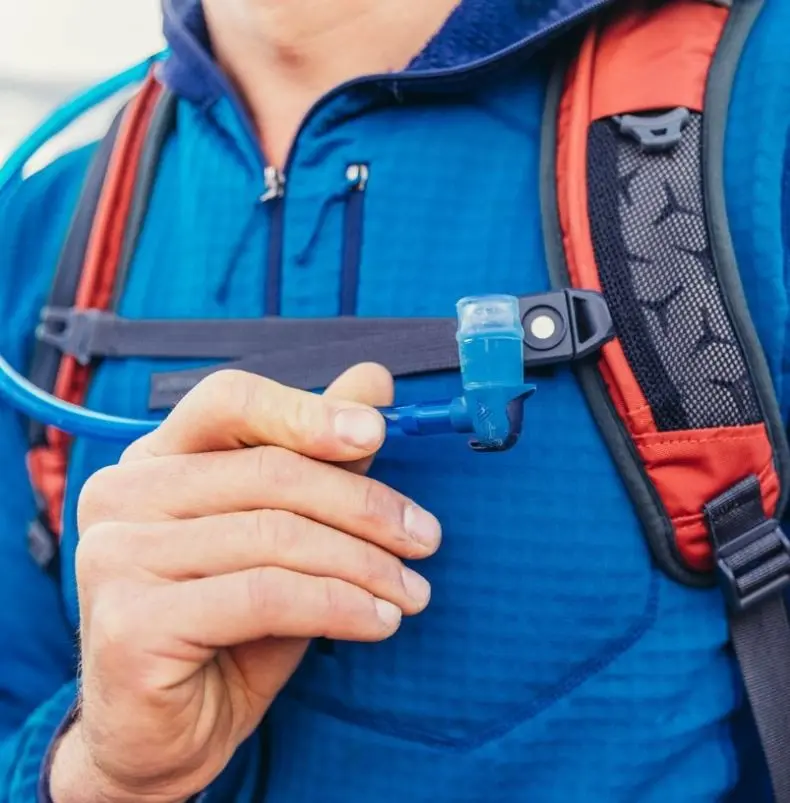
A 1.5 to 3 L reservoir connected to a drinking tube. The reservoir goes inside your rucksack, with the tube generally attached to a shoulder strap.
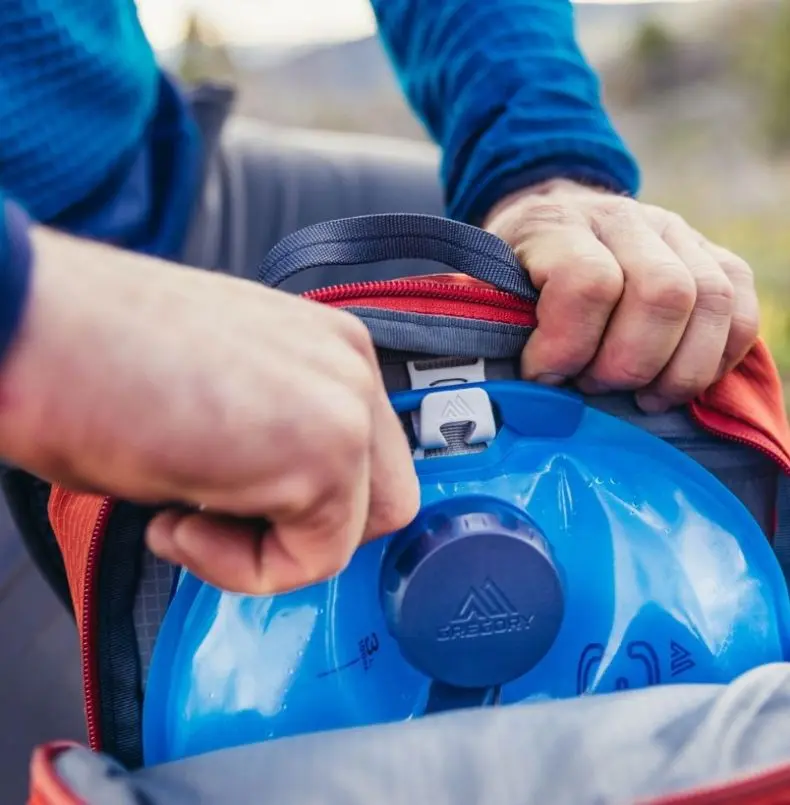
Advantages of a hydration reservoir for hiking:
- Immediate, effortless access. The drinking tube is always within reach. You do not need to stop and take your rucksack off. Drinking is easy, even while walking. A useful tip: I use a small magnetic accessory, the Magnetic Clip, to detach and reattach the tube without even looking.
- Regular drinking. Instead of taking a long drink occasionally, you can sip regularly to stay properly hydrated.
- Large capacity. The most widely used size, a 2 L reservoir, provides a good water supply and meets most needs.
- Maintains balance and centre of gravity. Inside your rucksack, against your back, the reservoir is ideally positioned.
- Cool water. Protected inside the rucksack, the reservoir does not heat up. Here is a trick to avoid a mouthful of lukewarm water heated in the tube: blow into the mouthpiece after drinking to push water out of the tube.
- Light weight. A 2 L reservoir is lighter than 2 metal bottles.

Disadvantages of a hydration reservoir for hiking:
- You cannot see how much water remains. If you need to ration water because refill points are infrequent, you may discover, unpleasantly, that the reservoir is empty sooner than expected. This can be a problem.
- The mouthpiece gets dirty. When I put my rucksack face down on the ground, I sometimes get dirt on the mouthpiece. I generally take more care next time, but it is unpleasant at the time.
- Taste? Personally, I do not find that the reservoirs I use affect the taste of water, although I have heard different experiences. It probably depends on the reservoir and water used. Of course, if you add squash (or anything else), the flavour may linger on subsequent uses.
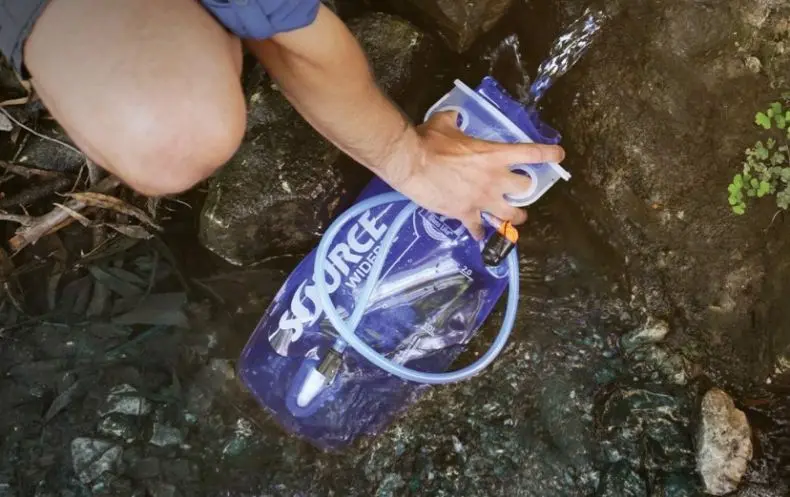
- Cleaning? This depends on the reservoir opening. Some have wide openings allowing access with a sponge, such as the Source Widepac 2 L; others have bottle-style necks. These need a bottle brush and vary in convenience. RayonRando sells flexible brushes for drinking tubes. Again, ease of use varies.
- Leaks? I do not consider this a problem; they are generally reliable. Only mishandling, or perhaps a heavy fall onto your back, might cause a leak. I have never had this problem.
- If the reservoir gets wet while filling it in a stream, it goes back into your rucksack wet.
Hiking water bottles:
Advantages of water bottles for hiking:
- 2 bottles to manage your supply. You can easily assess how much water remains and check whether you have been drinking enough.
- A metal container if you prefer to avoid plastic. Plastic bottles are available, but aluminium, and sometimes steel, are more popular.
- No taste. If you use them only for water, bottles generally do not affect its taste.
- Water treatment. With 2 bottles, you can treat one with Micropur (requiring a ½ h wait before drinking) while keeping drinking water in the other.
- For trail runners in particular, small bottles fit into shoulder-strap compartments, making access almost as easy as with hydration reservoirs.
- Cleaning. With a bottle brush, cleaning is as straightforward as washing a water bottle.
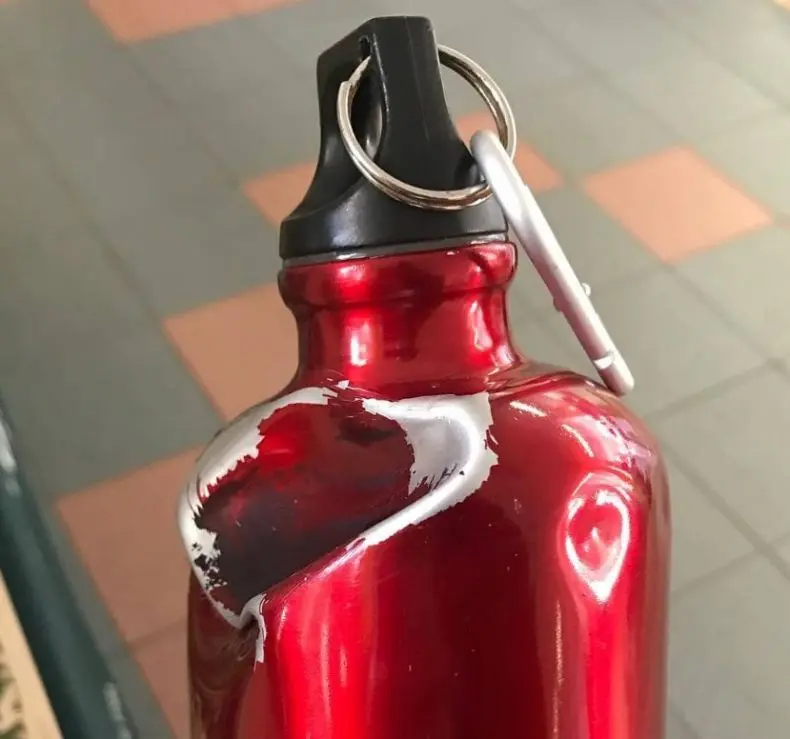
- Durability. Metal bottles, at least, can withstand knocks and dents; puncturing them takes considerable force.
Disadvantages of water bottles for hiking:
- Awkward access. Bottles are generally carried in open side pockets or even inside the rucksack. Unless someone helps, you need to take your pack off either to retrieve them or at least to put them back.
- Irregular drinking. Since bottles are slightly less convenient than a reservoir, you may drink less often and in larger quantities. You might feel thirsty on a climb but not want to stop to get your bottle.
- Less convenient handling. Most have screw caps, which take longer to use than a drinking tube. This may also discourage regular drinking. Bottles with drinking tubes, such as the Zéfal Trekking 700, and quick-opening bottles are available, however.
- Difficult filling in some conditions. A tap is straightforward, but filling is not always easy from a trickle running down rock or a spring in a narrow gap between 2 stones.
- Weight. Some soft plastic bottles are light, but metal bottles are heavier than hydration reservoirs, especially if you take two.
- Heat. Water may warm up in sunshine if the bottle is in an open rucksack side pocket. Not very pleasant towards the end of a hike…

Conclusion:
The practical benefits and limitations of bottles and hydration reservoirs vary according to use and habits.
When carrying a large rucksack, I prefer a hydration reservoir. It is more stable, makes regular drinking easier and, above all, saves me taking my rucksack off and putting it back on. On treks, I add a Liquitainer soft bottle as a lightweight backup for when I need to carry lots of water (before reaching a dry campsite, for example).
On a walk with a small rucksack, however, I find moving my pack to reach a bottle easy enough. A single one-litre bottle generally suffices, so I go without a hydration reservoir.