FAQ
How can you stay warm at night in the mountains?
Staying warm at night in the mountains means addressing 4 factors: campsite location, ground insulation, wind protection and moisture management. A suitable insulating mat, sheltered spot and dry clothing are essential. Eating before sleeping is also recommended to optimise body heat production.
Can you sleep without a sleeping bag in a survival situation?
Yes, but this requires substantial ground insulation and effective shelter from wind and moisture.
Without specialist equipment, the key is to make the best use of natural resources to stay warm. You must insulate yourself from ground moisture and cold with a bed of dead leaves, branches or your thickest clothing. Build a simple shelter, however basic, to protect against wind.
Wear several layers, wrap yourself in your emergency blanket, eat an energy-rich snack and drink something hot before bed. Sleeping near a fire (following all safety rules) or sharing a shelter with others are also very effective ways to cope with cool nights.
Why am I cold despite a good sleeping bag?
In most cases, the problem is the ground, wind or moisture. A high-performing bag cannot compensate for poor insulation beneath your body. Moisture creates thermal bridges and significantly increases how cold you feel. Your own condition also matters greatly. You become more sensitive to cold if you have not washed off the day's sweat, have not eaten enough calories, or are tired, ill or injured.
What is the best way to warm up quickly?
The best approach is to produce heat through short, controlled movements: squats, arm movements and gentle hops. Then immediately retain this heat in an insulated environment (closed sleeping bag, protected shelter, insulating mat). The aim is to avoid further heat loss after the effort.
Is a fire enough to sleep warm?
No. A fire mainly heats by radiation and only on one side of the body. It replaces neither ground insulation nor wind protection. It also needs constant supervision. Treat fire as a supplement, never your sole source of warmth.
Can you sleep in an emergency blanket without a sleeping bag?
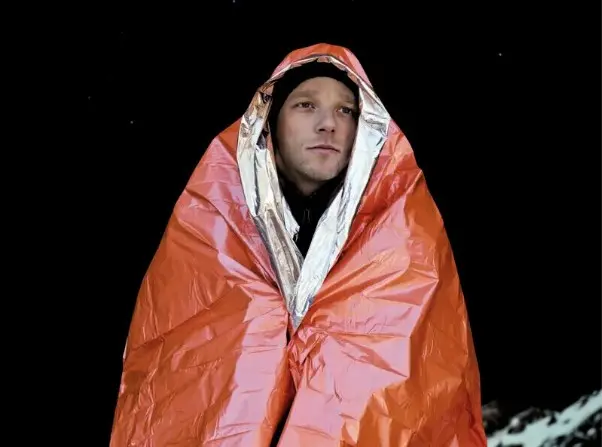
This is possible in an emergency, but requires great caution. An emergency blanket alone offers very basic insulation, which may suffice in mild weather but becomes truly risky in severe cold. For optimal thermal comfort, ideally combine it with a conventional sleeping bag, creating several protective layers.
In an emergency, however, its reflective surface can gain you a few absolutely vital degrees, even without conventional sleeping equipment. Wrap it directly around yourself or use it as an additional outer layer to improve insulation from the ground and wind.