





Taking a wood-burning stove camping? It is hardly new, but the practice has grown somewhat in recent years. At RayonRando, we sell quite a few, although they remain secondary to gas stoves.
Wondering whether it is really a practical option?
On paper, wood-burning stoves offer several benefits:
- You are self-sufficient in fuel almost everywhere: fuel for the stove can (almost) always be found. No more risk of running out of gas.
- You no longer use petroleum products, and little wood is needed: the stove is small and takes very little to fuel it.
- It is compact and light. The models we offer at RayonRando fold down and weigh 350 to 400 g, comparable to a lightweight gas stove and cartridge.
Yes, but is it easy to use, and does it really produce enough heat?
To check, I tested the Robens Lumberjack. I did so on a windy day (without a windscreen), which inevitably makes the flame waver and reduces efficiency.
Here are the results of our wood-burning hiking stove test.
Setup: quick
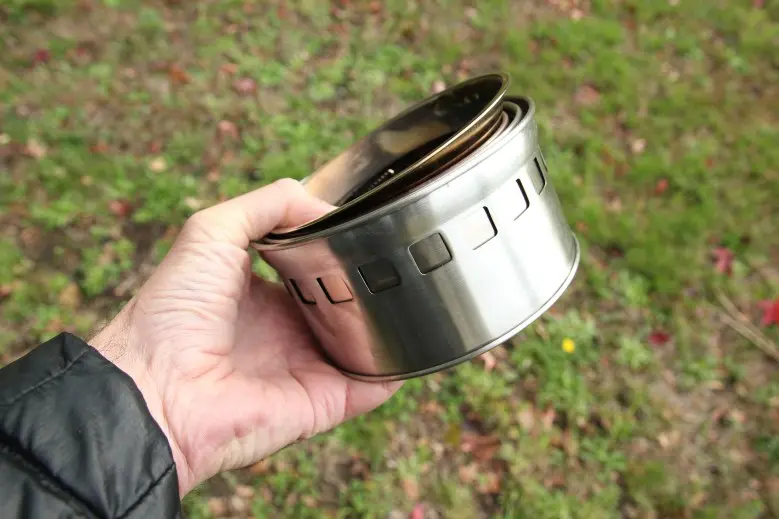
Folded, the stove is very compact. Its different parts nest inside each other. Setting it up takes only seconds, with no difficulty.

Lighting: simple
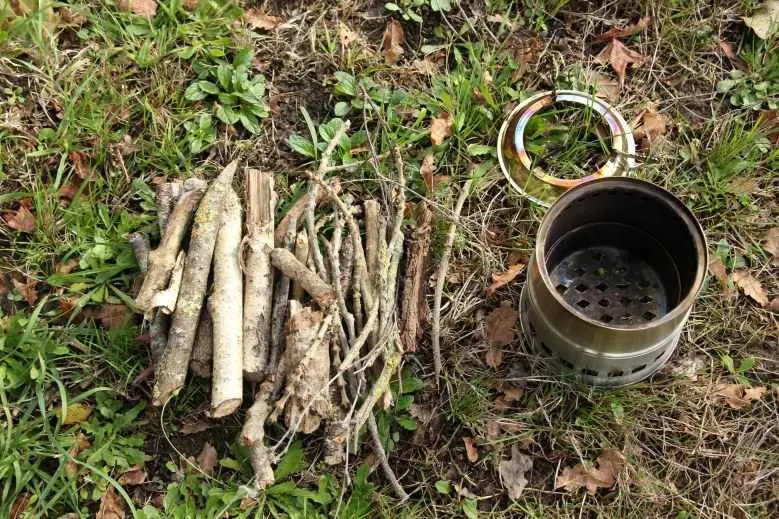
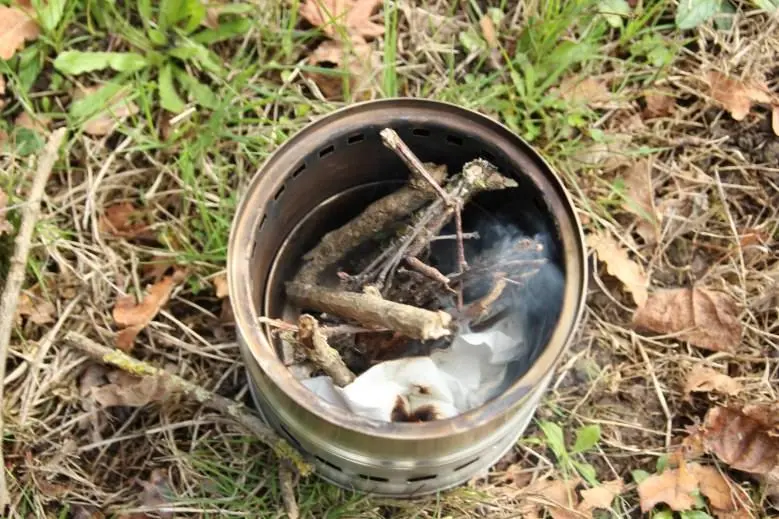
I have a small wood supply: a few twigs and small branches, gathered and broken by hand. To light it, I use the basics: my lighter, a paper tissue and some twigs.
First observation: it catches quickly and draws well. The perforated stove base allows an optimal draught.
Heating: good draught and little smoke
I then add slightly larger wood. Sometimes I must break it again, as pieces really need to be only a few centimetres long.
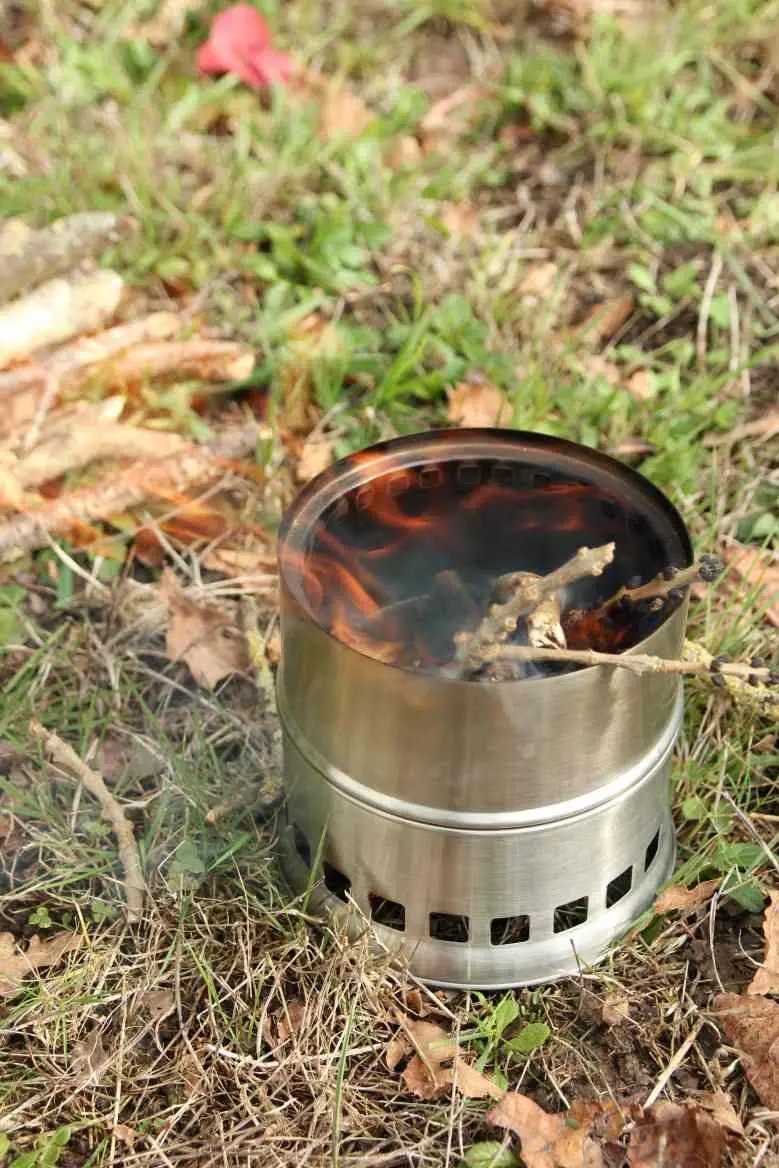
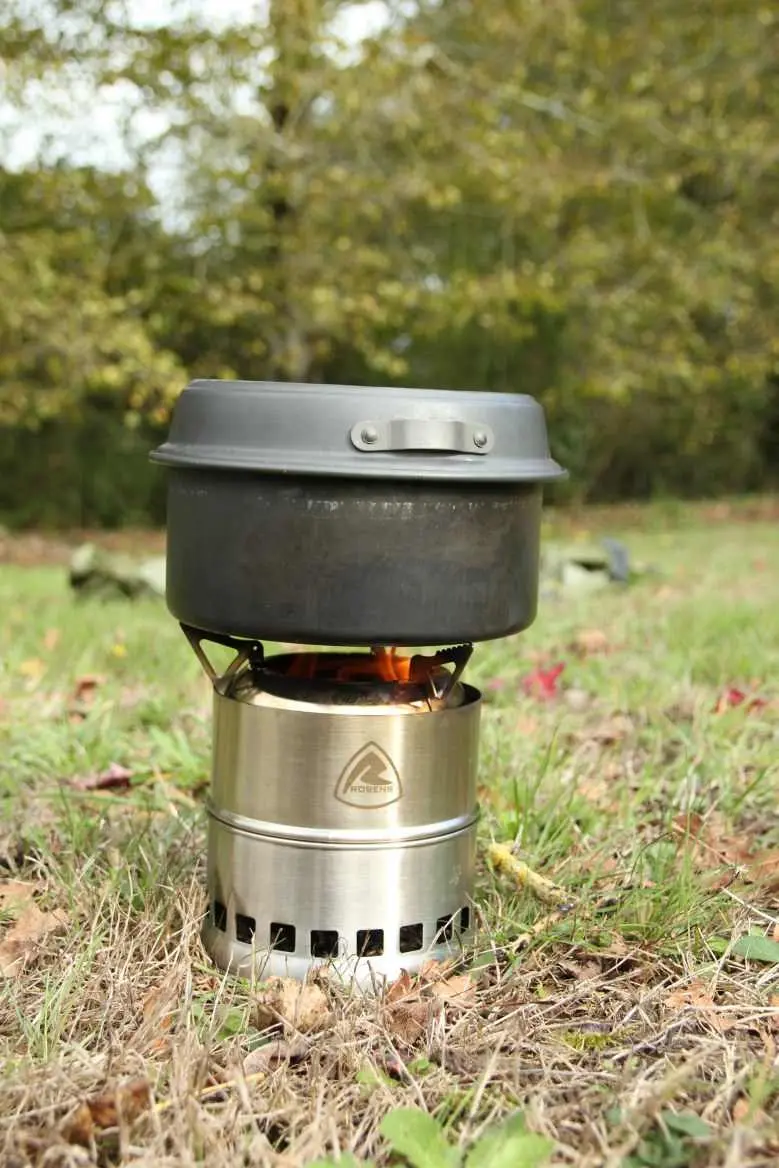
This model has a double wall: hot air rises inside and exits just above the flames. This heated air ignites the gases and optimises combustion. There are 2 benefits: good energy efficiency for maximum heat, and little smoke.
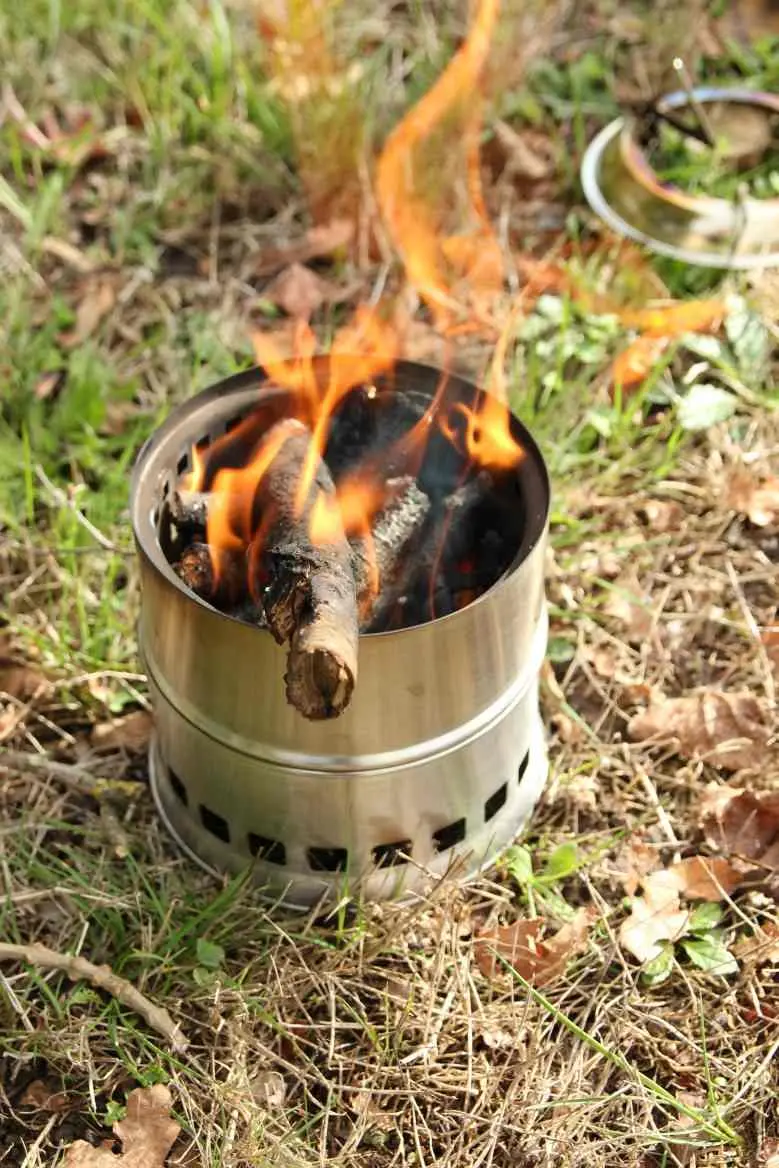
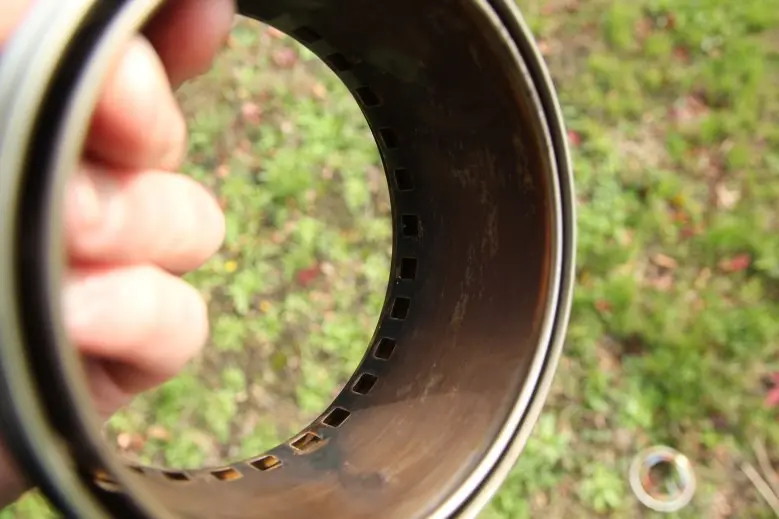
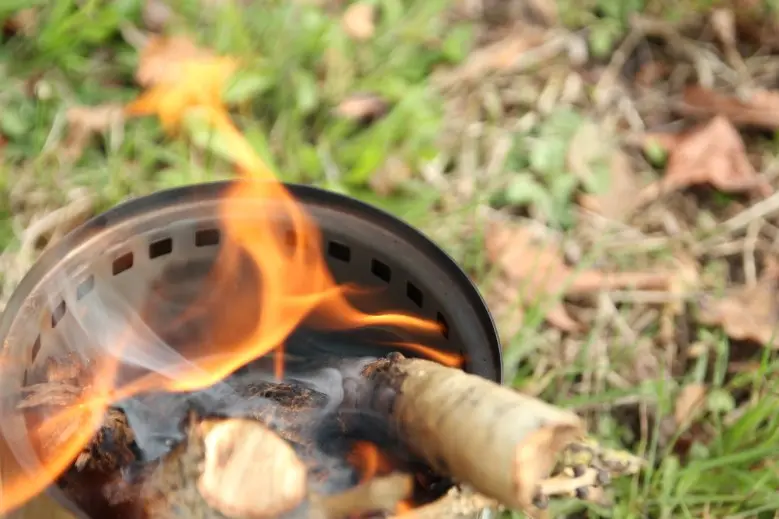
Double wall The effect of the double wall is visible
I find that although the stove smokes when lit, there is no smoke once hot and the wood is burning. Adding a substantial load of wood creates another short smoky phase until the flames clear it completely. Outside lighting and major refuelling, smoke causes little discomfort. I did take care to use dry wood. The small firebox also contributes to comfortable use.
Cooking: less practical than a gas stove
The stove is lit. I fit the pot support.
Now to the cooking. I test a standard pot (without a heat exchanger), filled with 0.75 L of water and covered with its lid.
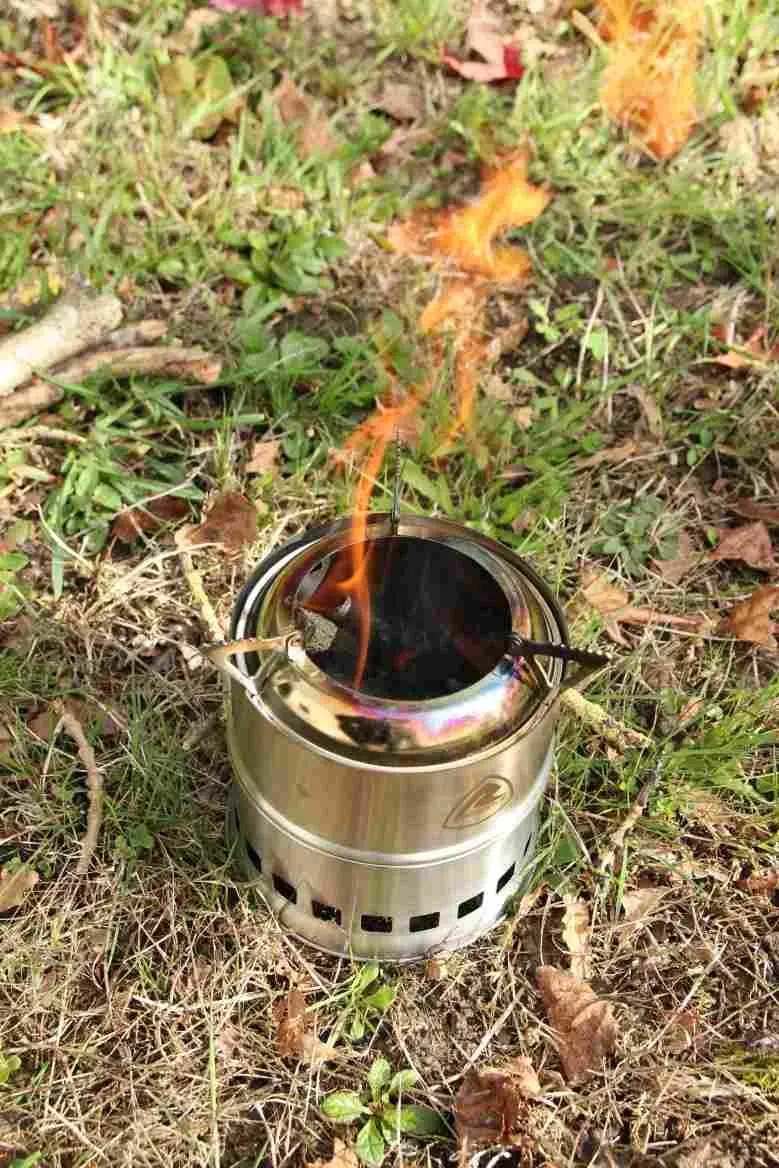
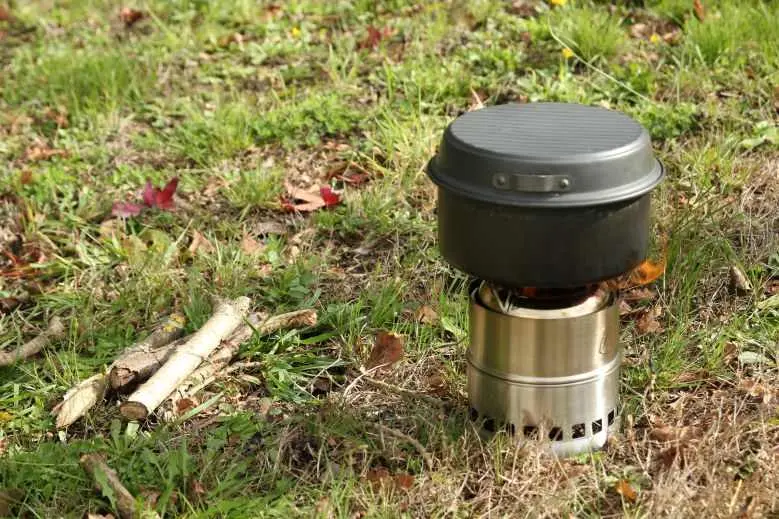
First phase:
I let it heat without adding wood. After 7–8 minutes, I check the water. It is hot enough for instant coffee, but I can dip a finger in it: nowhere near boiling. Lifting the pot, I see embers remain but no flame. It will not get any hotter.
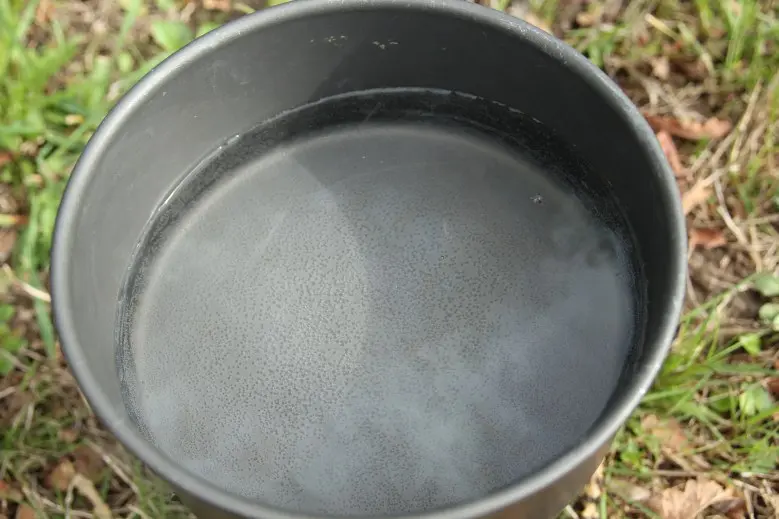
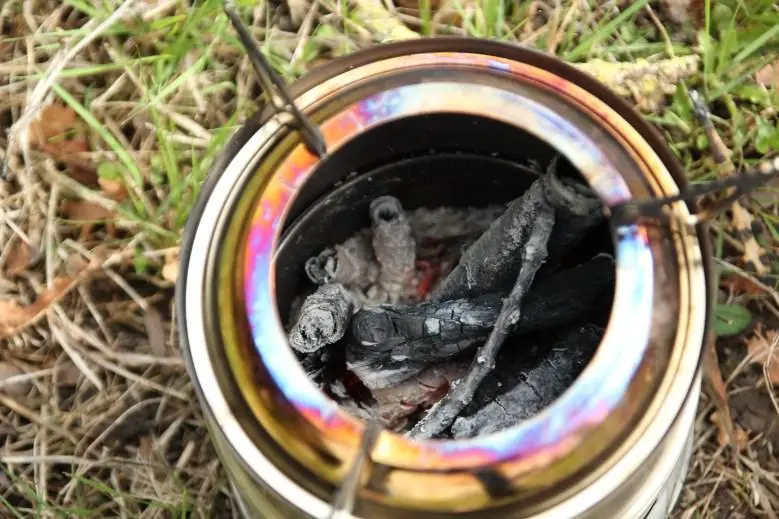
Second phase:
I refill with wood. Since the flame had gone out, the stove smokes a little before returning to optimal combustion. I probably should have added wood sooner for optimal burning and heating.
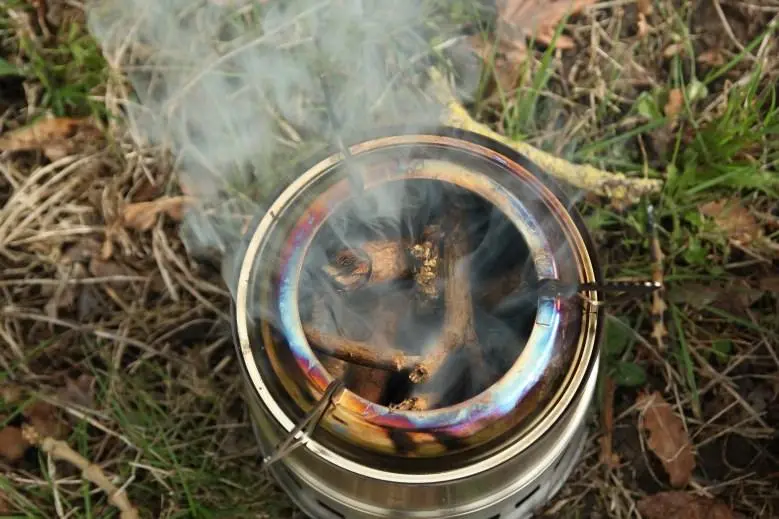
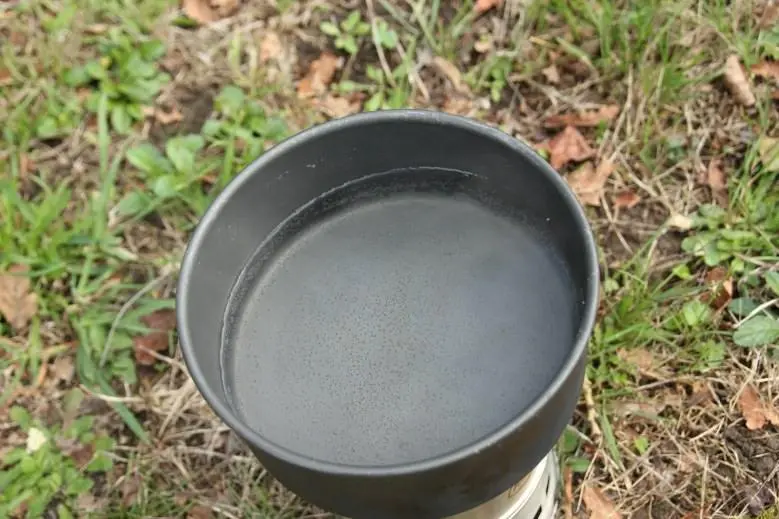
After 5–6 minutes, I check the water: now it is very hot, but still not boiling. It would suffice for soup and probably a freeze-dried meal.
Third phase:
Rather than waiting for a hypothetical boil, I add wood and try cooking.
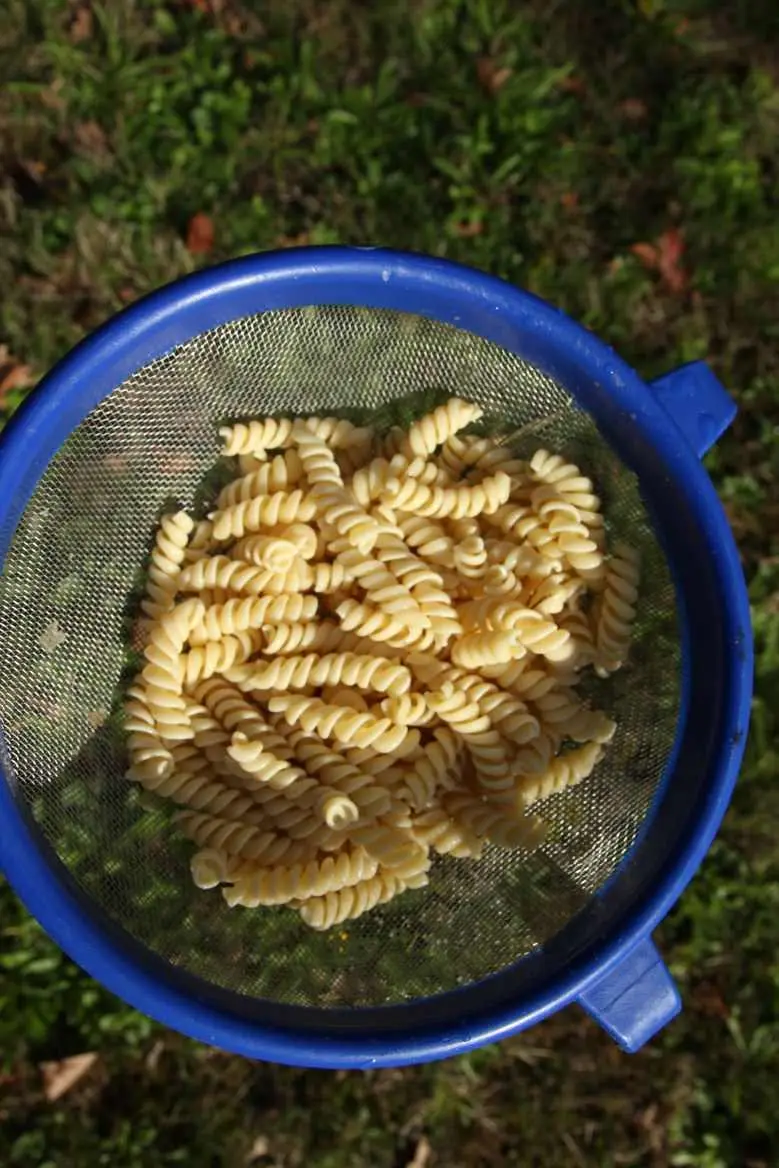
I add 6-minute pasta. Naturally, without boiling, it is not cooked in 6 minutes. I wait 12 minutes (without adding wood); this time it is a little overdone for my taste. So cooking is possible, but takes longer than over gas, and regular wood feeding is preferable.
Maintenance: simple
As for dirt, my pot is anodised (and well used), so I cannot see any soot. But pleasantly, running a finger underneath picks up no soot either. This seems logical, since combustion is very effective and burns off smoke well. It also means I will not dirty everything, and cleaning will be easy.
Remember, though, I used very dry wood. This is essential for optimal combustion.
The stove simply needs emptying once combustion finishes. It packs into an included pouch. No need to wash it until the trek ends.
Conclusion:
Yes, a wood-burning stove works for hiking.
But I find it much less practical than a gas stove in 2 respects:
- Heat output is lower, so cooking takes longer. Day to day, this inevitably means spending more time preparing meals.
- Using it involves constraints: find dry wood and cut it into small pieces; expect some smoke on lighting (or more with damp wood); watch the flame and add wood regularly, which means removing the pot. Rain or strong wind makes this more demanding.
On the positive side:
- Everything from assembly to maintenance is simple. It is easy to light and use. Little fuel is needed. You can keep a small wood supply in your bag and replenish it easily.
- For simply heating or simmering, it is fairly quick (though slower than gas). Cooking is possible, but takes more time.
Compared with the test conditions, I think wood-burning stove performance can be improved in several ways: use a windscreen to protect the flame, a pot with a heat exchanger to optimise heat transfer, and quick-cooking foods (3-minute pasta, mashed potato, freeze-dried meals).
Overall, using a wood-burning stove is entirely possible, but is more a matter of conviction than performance. It also reassures people concerned about being unable to resupply gas during their journey.