Hiking footwear faces demanding conditions: moisture, mud, dust and repeated friction. Without regular care, it quickly loses comfort, waterproofing and durability.

Caring for hiking footwear is straightforward: a few simple actions at the right time extend its life. This practical guide explains how to care effectively for hiking footwear, with suitable products available at RayonRando.

Why care for hiking footwear regularly?

Insufficient care quickly leads to:

  • loss of waterproofing
  • materials stiffening or cracking
  • reduced breathability
  • premature sole wear

Well-maintained footwear, by contrast, offers better support, greater comfort and lasting moisture protection. Care is an integral part of a hiker's equipment routine.

Clean hiking footwear after every outing

How often should you clean your footwear?

Light cleaning is recommended after every hike, particularly on muddy, wet or dusty terrain. The sooner dirt is removed, the less it damages materials.

A simple, effective method

  1. Remove laces and insoles.
  2. Dry-brush to remove soil and grit.
  3. Clean with lukewarm water and a soft brush.
  4. Apply a hiking footwear cleaner.

Avoid household cleaners or laundry detergent: they degrade fabrics, leather and waterproof membranes.

Drying hiking footwear properly

Drying is an essential, often overlooked step.

Always avoid

  • radiators or stoves
  • hairdryers
  • direct sunlight

Excessive heat can distort footwear, loosen soles and damage membranes.

Recommended method

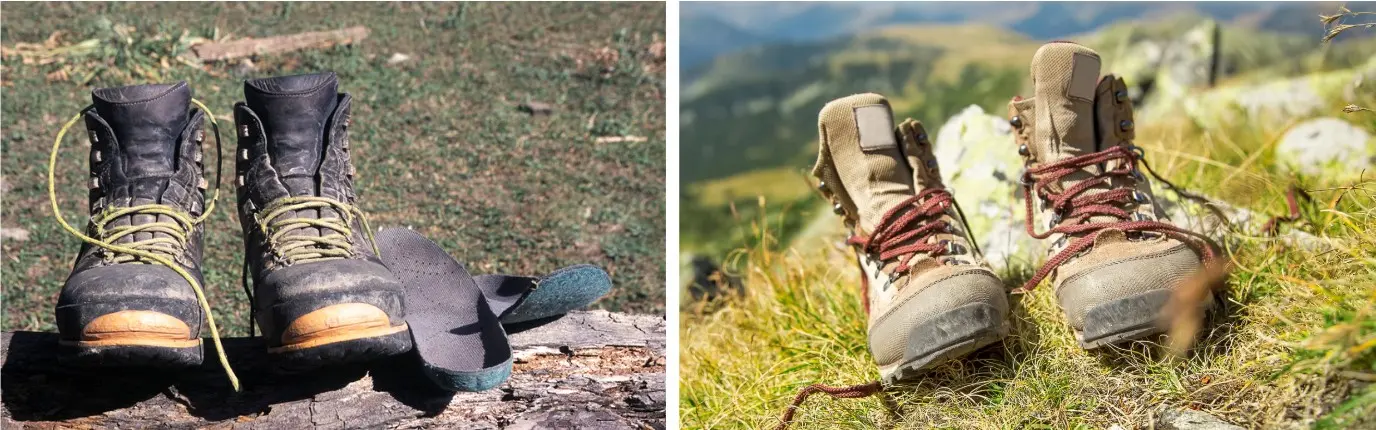
  • Air-dry at room temperature
  • Open the tongue fully
  • Put newspaper or a moisture absorber inside

Caring for footwear according to material

Leather hiking footwear

Leather needs conditioning to retain suppleness and water resistance. Without care, it dries and cracks.

Good practices:

Footwear with a waterproof membrane (Gore-Tex or equivalent)

Waterproof membranes need regular care to remain breathable. Dirt blocks pores and reduces effectiveness.

Essential advice:

Synthetic or fabric hiking footwear

Fabric or synthetic footwear is light and quick-drying, but easily accumulates dirt and loses water repellency over time.

Good practices:

  • Gentle, regular cleaning
  • No oily products (grease or leather polish)
  • Waterproof after washing

Re-waterproofing hiking footwear

When water stops beading on the surface, the water-repellent treatment has worn off. It is time to re-waterproof.

Effective method

  1. Clean the footwear
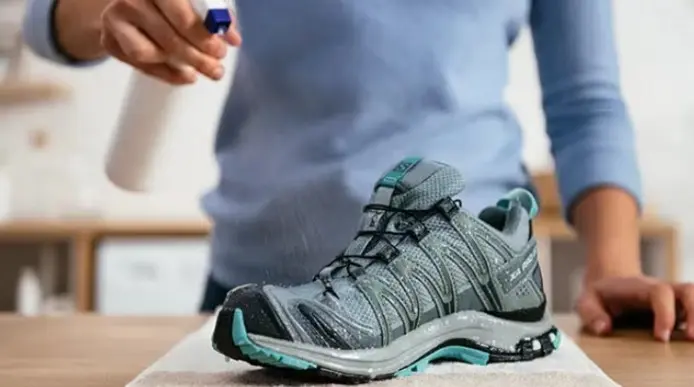
  2. Apply a hiking footwear waterproofing spray to clean, slightly damp material
  3. Allow to dry naturally

A good water-repellent treatment effectively protects against moisture without harming breathability. For versatility, a hiking footwear water-repellent treatment suits all materials.

Caring for soles and limiting wear

  • Clean tread lugs regularly
  • Remove trapped small stones
  • Check the adhesive bond

Clean soles retain better grip and wear more slowly.

Storing hiking footwear properly

Between outings or out of season:

  • Store somewhere dry and ventilated
  • Avoid closed bags, damp cellars or car boots
  • Maintain their shape with paper

Conclusion

Caring for hiking footwear preserves comfort, waterproofness and longevity. Regular cleaning, appropriate drying, material-specific care and re-waterproofing make all the difference.

With simple actions and suitable care products available at RayonRando, your footwear stays reliable and effective hike after hike.

FAQ – Hiking footwear care

How should you care for hiking footwear?

Clean hiking footwear regularly, dry it naturally, apply care suited to its material (leather, synthetic or membrane) and renew waterproofing when water stops beading.

How often should you clean hiking footwear?

Light cleaning is advisable after every hike, particularly on muddy or damp terrain. More thorough cleaning is recommended when dirt becomes ingrained or before waterproofing.

Can you machine-wash hiking footwear?

No. Machine washing can distort footwear, loosen soles and damage waterproof membranes. Clean by hand with lukewarm water and a specialist product instead.

How should you dry wet hiking footwear?

Air-dry hiking footwear at room temperature. Avoid direct heat sources such as radiators or hairdryers. Newspaper absorbs moisture inside.

How should you care for leather hiking footwear?

Clean leather footwear, then condition it regularly with suitable cream or polish. This preserves leather suppleness and good moisture resistance.

How should you care for Gore-Tex hiking footwear?

Gore-Tex footwear needs frequent cleaning with membrane-compatible products. Suitable care retains waterproofness while maintaining membrane breathability.

How should you care for synthetic or fabric hiking footwear?

Clean fabric or synthetic footwear regularly with gentle products. Avoid oily products. Re-waterproofing is recommended after cleaning.

When should you waterproof hiking footwear?

Re-waterproof footwear when water stops beading on the material's surface. Renew treatment regularly, particularly after several cleans or rainy outings.

Which product should you use to waterproof hiking footwear?

A specialist hiking footwear waterproofing spray is recommended. It suits leather, fabric and waterproof membranes without harming breathability.

How can you extend hiking footwear's life?

Regular care, suitable drying, effective waterproofing and dry, ventilated storage significantly extend hiking footwear's life.

Do hiking footwear soles need care?

Yes. Cleaning soles and removing stones trapped in tread lugs limits wear and preserves grip, particularly on technical terrain.

Where should you store hiking footwear out of season?

Store hiking footwear somewhere dry, ventilated and protected from moisture. Avoid leaving it in a closed bag, cellar or car boot.

Product comparison
Compare
Rayon Rando advice