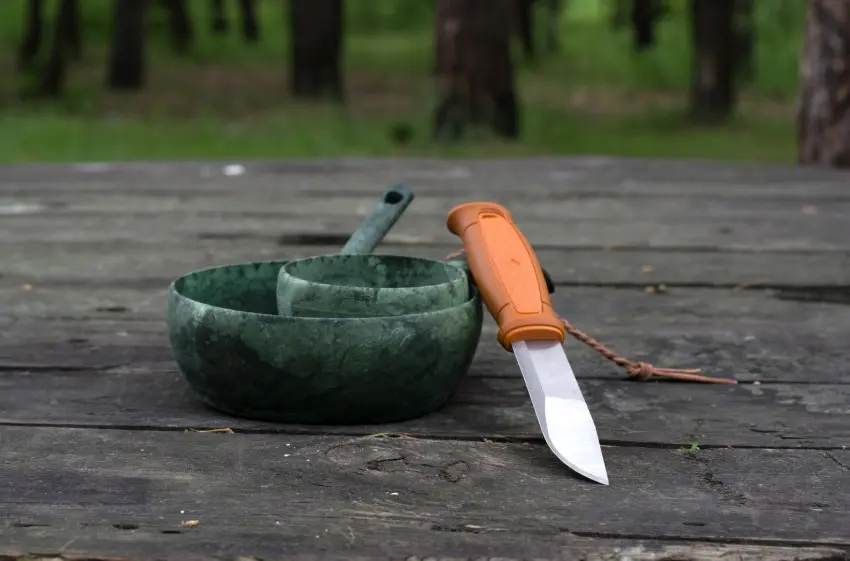
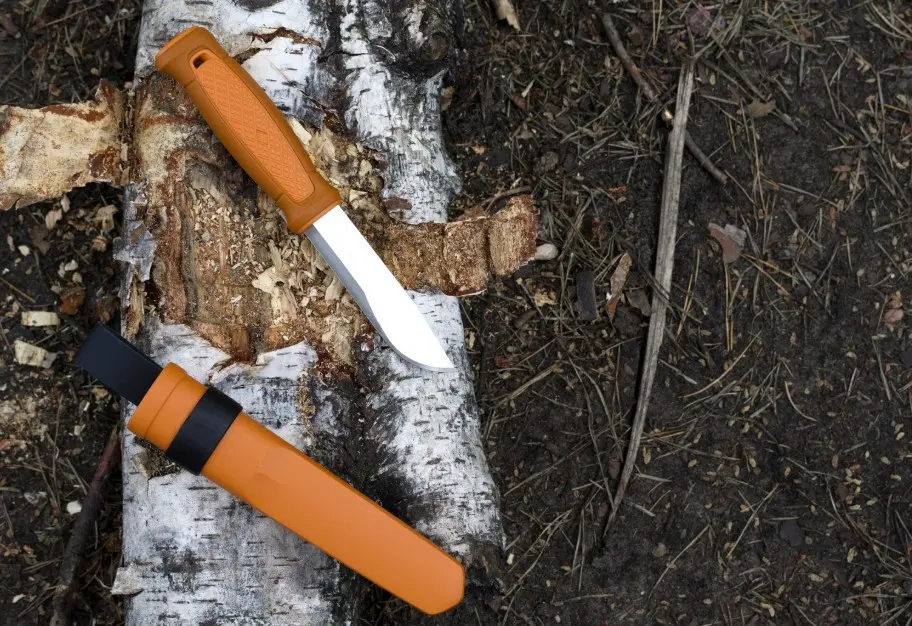
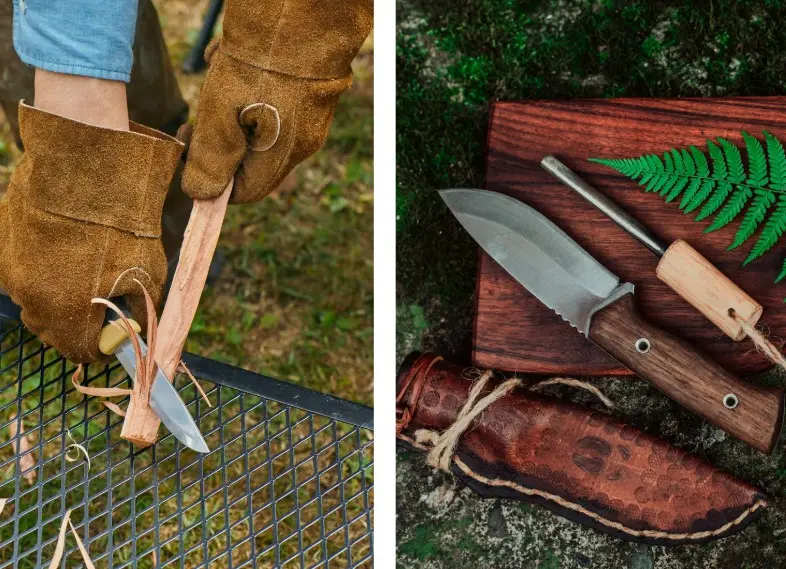
For the woodsman, a bushcraft knife is the basic accessory for almost everything: cutting firewood, cooking, building a shelter, carving and repairs. For back-to-nature enthusiasts, it is the first survival-kit accessory: an essential, versatile tool.

But not all knives are equal. Blade length, steel type, construction strength and ease of maintenance determine whether a knife is truly reliable in the field.

RayonRando explains the essentials for choosing a bushcraft knife suited to your activities, without mistakes.

Features of a good bushcraft knife

A bushcraft knife should be robust, simple and versatile. It is designed for intensive use outdoors.

In the vast majority of cases, this means a fixed-blade knife. Stronger than a folding knife, it withstands demanding tasks such as cutting wood and batoning better.

A good bushcraft knife generally has:

  • a robust fixed blade.
  • an ergonomic handle with good grip, for safe, precise use
  • a solid construction (ideally full tang)
  • a carrying sheath for belt or backpack attachment

Simplicity often ensures reliability. Effective bushcraft knives are generally understated and built to last.

Which blade length should you choose?

Blade length directly influences versatility. It should be long enough, but not too long: capable of cutting a small branch, while remaining easy to handle.

For a bushcraft knife, ideal blade length is generally between 9 and 12 cm.

This size allows:

  • to cut branches or prepare wood
  • to perform precise tasks such as carving
  • to cook or prepare food

A shorter blade sometimes lacks power for certain tasks.
An overly long blade becomes less manageable for fine work.

In most situations, a blade around 10 cm is an excellent compromise.

Blade thickness and strength

Blade thickness plays an important role in knife strength.

A thin blade is pleasant for precision work or cooking, but less suited to demanding tasks.

A thicker blade allows you:

  • more force to be applied
  • to split wood by batoning (using it as a wedge)
  • better long-term durability

For a versatile bushcraft knife, 3 to 4 mm thickness often balances toughness and cutting ability well.

The importance of full-tang construction

A frequently recommended criterion for a reliable bushcraft knife is full tang construction.

This means the blade extends along the handle's entire length.

The advantages are numerous:

  • greater strength
  • better impact resistance
  • greater durability

This construction is particularly valued in bushcraft, where knives may face substantial stresses.

Which steel for a bushcraft knife?

A knife blade is steel composed of iron and carbon (0.2 to 2%: a higher proportion makes the blade harder), sometimes with other elements added to improve particular properties.

The two main steel families used for knives are:

  • stainless steel
  • carbon steel

Stainless steel

Steel tends to oxidise, dulling the blade and potentially causing pitting if corrosion is severe. Chromium is added to prevent this, producing stainless steel.

Its benefits:

  • resists moisture well
  • requires little maintenance
  • retains its edge reasonably well

However, the edge may be less fine and harder to sharpen. This is the most common knife steel, producing useful blades for all kinds of tasks, especially with occasional sharpening at home.

An interesting choice for those wanting an easy-care knife, particularly for hiking.

Carbon steel

Carbon steel oxidises more readily, but has other qualities thanks to a finer, less hard structure than stainless steel.

Its strengths:

  • better, finer edge
  • easier sharpening
  • excellent cutting performance

Particularly suited to users who maintain knives regularly and want a high-performing edge.

However, avoid this steel in very humid or marine environments. Store it clean and dry, otherwise it rusts.

If unsure, choose stainless steel. It meets most needs.

Beyond composition, different blade heat-treatment techniques (heating and cooling) produce harder or more flexible blades.

Edge retention and ease of sharpening: hard, but not too hard

A blade's sharpness depends on how fine its edge is. The finer the edge, the more effectively it cuts.

Steel hardness influences two things:

  • edge retention
  • ease of sharpening

A hard blade:

  • retains its edge longer
  • but takes more effort to sharpen
  • an overly hard blade may be less resilient to impact, causing small chips.

A softer blade:

  • blunts more quickly
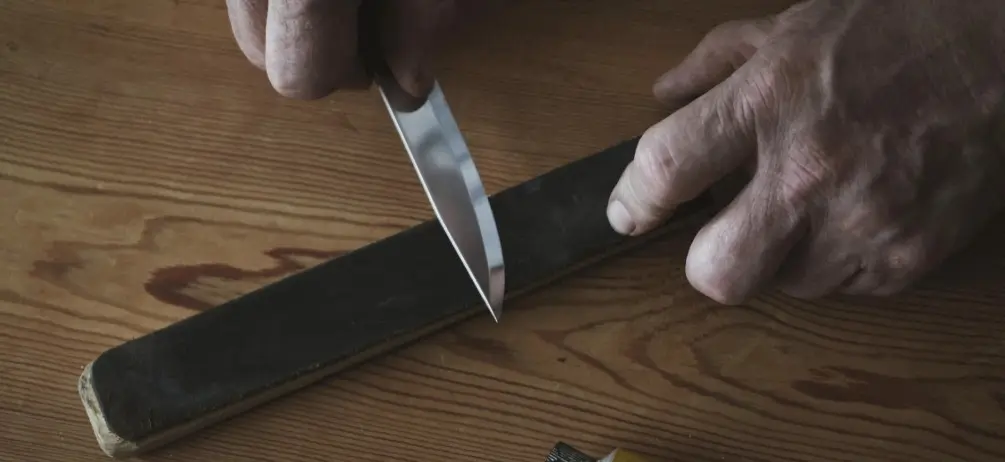
  • but can be easily resharpened in the field

The choice therefore often depends on use and maintenance habits.

In summary, a relatively hard stainless steel blade allows long-term use with little maintenance, with occasional home sharpening. A carbon steel blade, of varying hardness, better suits those wanting a high-performing edge through regular sharpening, including in the field. Very hard blades are best reserved for specific uses and people equipped for sharpening (belt sharpener).

Morakniv: a benchmark for affordable bushcraft knives

Among the knives selected at RayonRando, we particularly appreciate Morakniv.

We selected a range of Morakniv bushcraft knives that impressed us for several reasons:

  • Made in Sweden with good-quality Swedish steel.
  • Robust blades with a good edge, suited to bushcraft needs.
  • Rubberised handles providing good grip even when wet.
  • Finally, excellent value for money, thanks to rubber handles without compromising on the blade.


Our selection helps you find the Morakniv bushcraft knife best suited to your needs:

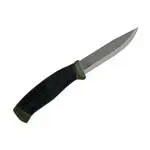
  • The stainless steel Morakniv Companion is the reference for everyday use: a dependable bestseller that will not cost an arm and a leg…
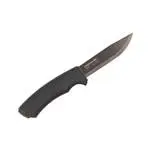
  • For more intensive, forceful use, we also offer thicker-bladed models such as the Mora Bushcraft knife. Particularly useful for splitting a branch, using the blade as a wedge and driving it with a log, for example (batoning).
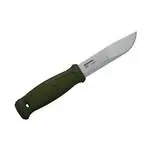
  • Finally, choose a lightweight but tough knife such as the Morakniv Kansbol, allowing forceful and precise work thanks to its blade's thinner tip.
Our selectionMorakniv
Companion
Mora BushcraftMorakniv
Kansbol

FAQ

What is the ideal bushcraft knife size?

Most effective bushcraft knives have blades between 9 and 12 cm, balancing power and precision well. Around 10 cm usually offers a manageable, versatile blade.

Should you choose carbon or stainless steel?

Stainless steel needs less care and resists moisture better. It is the simplest, most sensible choice in most cases.
Carbon steel often offers a better edge but requires more care. Reserve it for a specific need: very good sharpness for regular or intensive use.

Should a bushcraft knife be full tang?

Full tang construction is generally recommended for bushcraft because it increases strength and durability. The blade extends the handle's full length and better withstands impacts.

How should you maintain a bushcraft knife?

Generally, clean the blade, dry it after use and sharpen regularly. Carbon steel blades require more attention: dry them promptly and optionally apply a light oil coating to prevent oxidation.

Product comparison
Compare
Rayon Rando advice