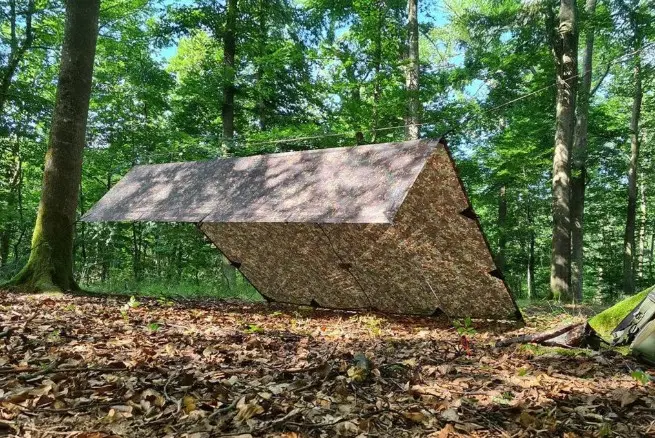
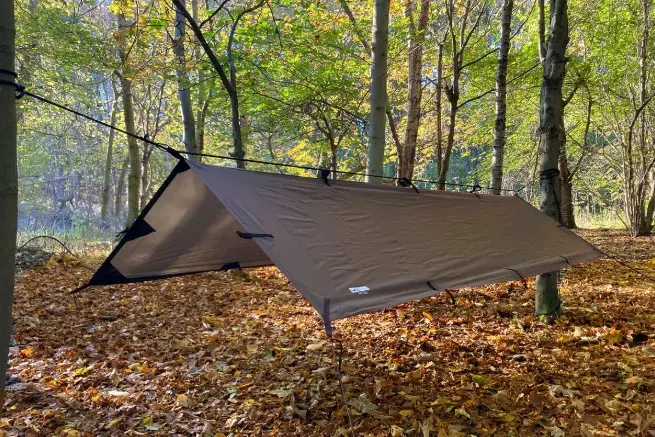
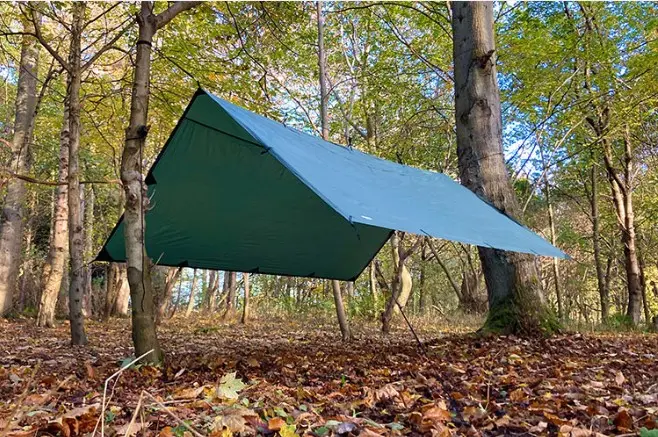
In bushcraft and survival, a tarp is much more than shelter. It is a versatile, light, reliable tool that can adapt to almost any situation when chosen and used correctly. Unlike a tent, it does not dictate a fixed use: you choose the pitch, orientation and protection level.

But this freedom has a downside: the wrong tarp can quickly become uncomfortable or problematic, especially in worsening weather. Unsuitable dimensions, overly delicate fabric, too few attachment points: these are common beginners' mistakes.

In this article, we explain how to choose a tarp genuinely suited to bushcraft and survival, according to your experience and activities.

Why use a tarp for bushcraft and survival?

Tarps appeal for a simple reason: they offer maximum possibilities with minimal equipment.

In bushcraft, they let you:

  • adapt to terrain, whether dense forest, clearing or slopes
  • develop pitching and weather-reading skills
  • remain discreet and self-sufficient

In survival situations, a tarp becomes safety equipment:

  • quick protection against rain and wind
  • shelter adaptable to the emergency
  • fabric that can serve other essential purposes

Unlike a tent, a tarp makes you think. That is precisely what makes it such a valuable learning tool.
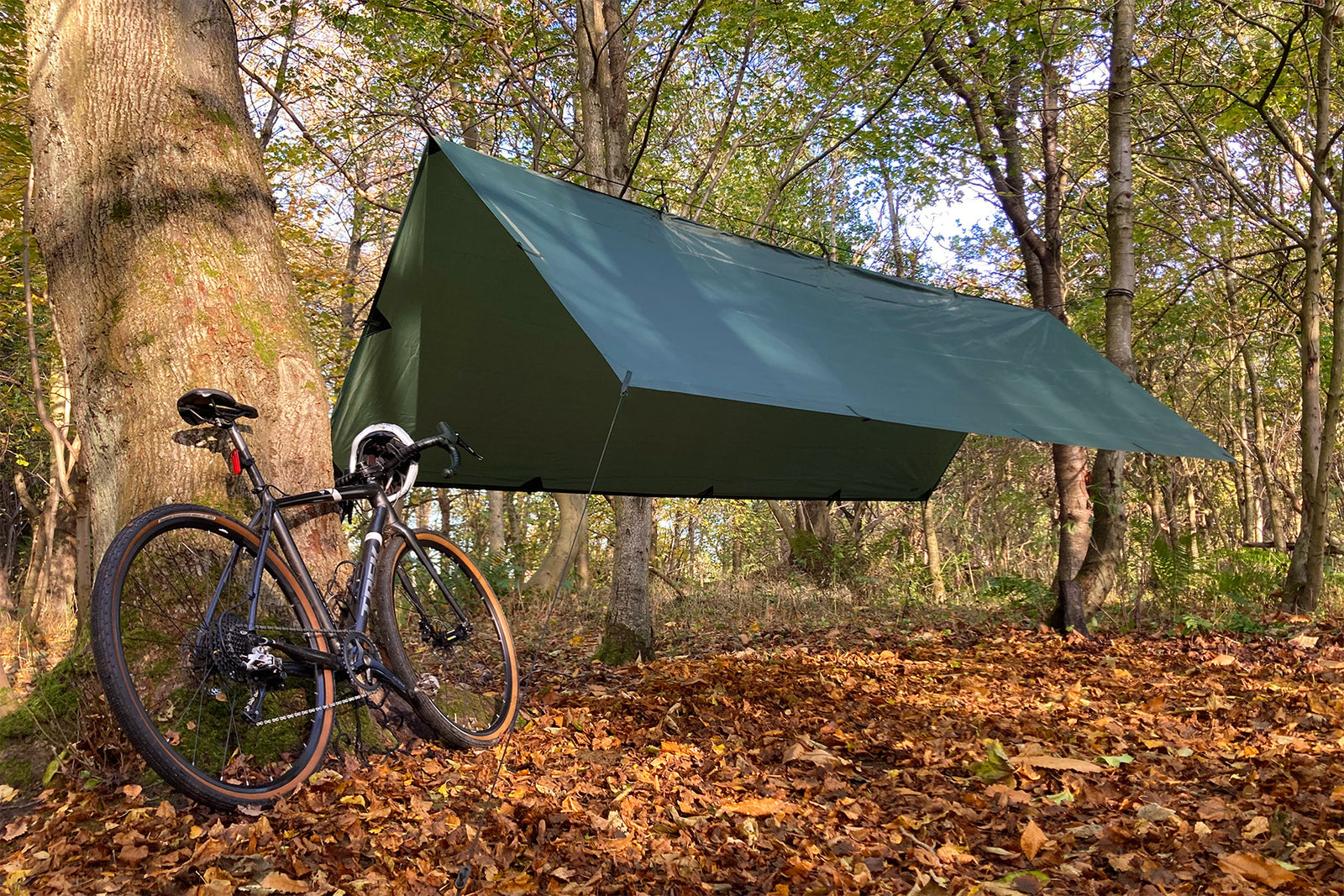
DD XL tarp

Essential criteria for choosing a bushcraft tarp

Tarp dimensions

Size is the first criterion to consider, directly determining comfort and possible pitching configurations.

Here are reliable guidelines according to use:

  • 1 person in a hammock
    A 3×3 m tarp is the minimum. It covers the hammock properly and protects against sideways rain splash. A rectangular 3×4 m format offers greater comfort in bad weather. A 2x2.5 format only makes sense to optimise weight when carrying the tarp as an emergency backup.
  • 1 person on the ground
    3×3 m remains the most versatile size. It allows enclosed setups and provides effective protection with a good slope angle.
  • 2 people on the ground
    A 3×4 m or 4×4 m tarp is more comfortable, offering more room to sleep, store equipment and close the shelter.
  • Small groups or prolonged camping
    A 4×4 m tarp is clearly recommended. A large tarp is heavier but offers much better protection and more room for error in difficult conditions.

→ The larger the tarp, the more forgiving it is of pitching mistakes, but the heavier it is in your pack.

Generally avoid complex or asymmetric shapes, such as trapezoids or hexagons, which are less versatile in use.
Fabric material

Most bushcraft tarps use:

  • Polyester: stable in rain, durable over time
  • Nylon: very strong and lighter, but can stretch when wet

Ripstop is strongly recommended for a tough tarp. It limits the spread of tears and improves durability, especially in woodland.

UV-resistant treatment

An often overlooked point is UV-resistant treatment. Fabric regularly exposed to sunlight without UV protection ages much faster. For a tarp used frequently or in open areas, this treatment significantly extends its life. For example, all threads in DD Hammocks tarps are UV-resistant, with UV 50+ protection.
Waterproofing: hydrostatic head

For bushcraft and survival, 2,000 mm is the absolute minimum. 3,000 mm or more offers real security in prolonged rain.

Remember: a well-tensioned, correctly oriented tarp protects better than a highly waterproof one pitched badly. Above all, a good slope and absence of folds let water run off.
Weight and packed size

Weight depends on

  • size: moving from 3x3 m, or 9 m2, to 4x4 m, or 16 m2, increases the amount of fabric by 77%.
  • material: nylon is lighter than polyester but more expensive.
  • reinforcements and the number of attachment points.

For conventional bushcraft, a little extra weight is acceptable for greater durability.
For bushcraft hiking or long trips, every gram counts: the balance becomes crucial.

Attachment points and finishing

This is fundamental to versatility.

As a guide:

  • 3×3 m tarp: generally 16 to 19 attachment points
  • 4×4 m tarp: often 19 to 25 attachment points

The more attachment points:

  • the more varied the setups
  • the better the wind resistance
  • the easier it is to tension the fabric correctly

Corner reinforcements and seam quality make an enormous difference over time, as these areas are subjected to the greatest tension.

Integrated guy lines and tensioners

Some tarps come with integrated guy lines and tensioners

Advantages:

  • faster setup
  • precise tension adjustment
  • fewer knots for beginners to master

Not essential, but very welcome in the field.
Tarp colour: camouflage or neutral

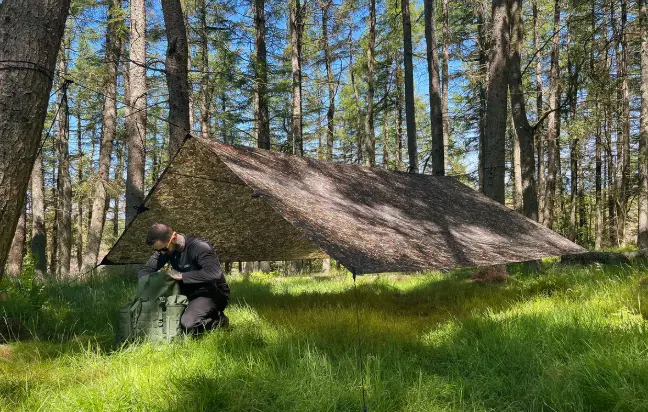
Your tarp's colour directly affects discretion, but also visibility if needed. A camouflage tarp, whether khaki or brown, blends perfectly into dense woodland. However, excessive military-style camouflage could make it difficult for rescuers to locate you.

In bushcraft, discretion often matters greatly to minimise your visual impact on nature. A discreet tarp respects the wild character of the setting while providing effective weather protection. Choosing a shade suited to woodland or mountain surroundings greatly improves your immersion.

Remember that colour also affects temperature, depending on the season. A dark tarp absorbs solar heat in winter, while a light shade reflects it, preferable in summer but less discreet. Neutral colours often remain the most versatile choice across conditions.

→ For bushcraft and survival, natural colours remain the best choice.

Which tarp for your activity?

Tarp for conventional bushcraft

Bushcraft requires a strong, versatile tarp capable of supporting many configurations.

3×3 m remains the benchmark for a serious start.
Find different sizes and colours here: Tarps and bushcraft bivouac shelters

Tarp for survival and self-sufficiency

Survival prioritises reliability, tolerance of mistakes and maximum protection. A larger, well-reinforced tarp offers a greater safety margin against cold, wind and prolonged rain.

Ultralight tarp for lightweight wild camping and bushcraft hiking

The priority here is clear: reduce weight without sacrificing essential protection.

Suitable examples:

  • Superlight 2.9 × 3 m tarp
    Tarp Superlight 2.9x3 M
    Lightweight, compact and perfect for solo touring.
  • 4 × 4 m tarp
    Tarp 4x4 M
    Heavier, but extremely versatile and reassuring.
The best bushcraft tarp setups

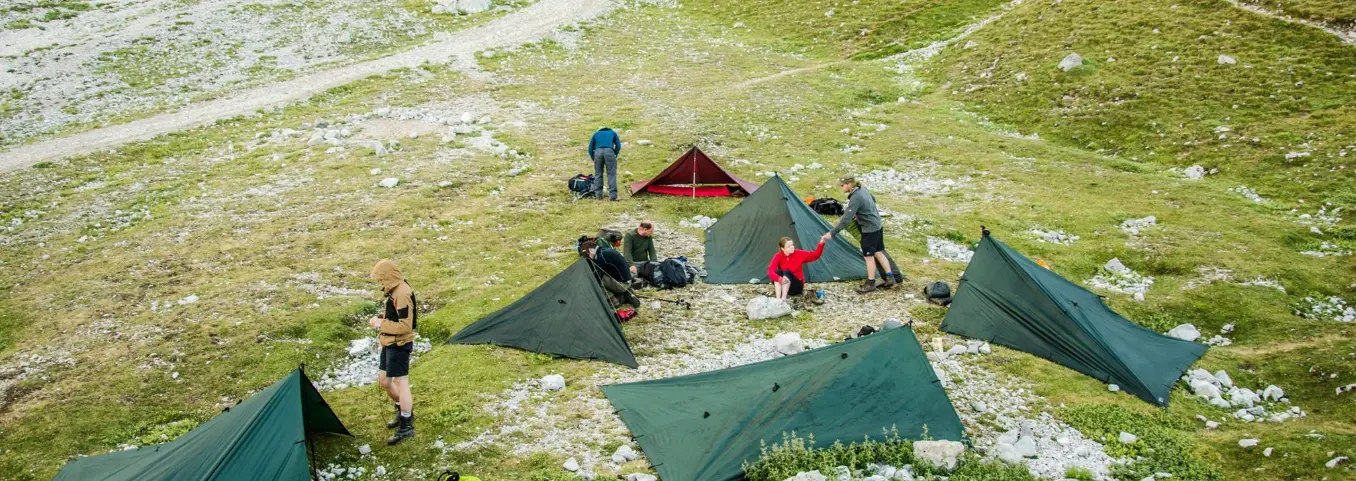
A tarp allows a wide variety of setups, each meeting a specific need.

  • Simple A-frame: requires two trees and four pegs for a 10-minute setup offering excellent protection.

The A-frame is the simplest configuration for beginners seeking an effective shelter. Two raised attachment points and four ground pegs are enough for optimal rain protection. This wild camping classic offers remarkable stability, even when the weather suddenly deteriorates.

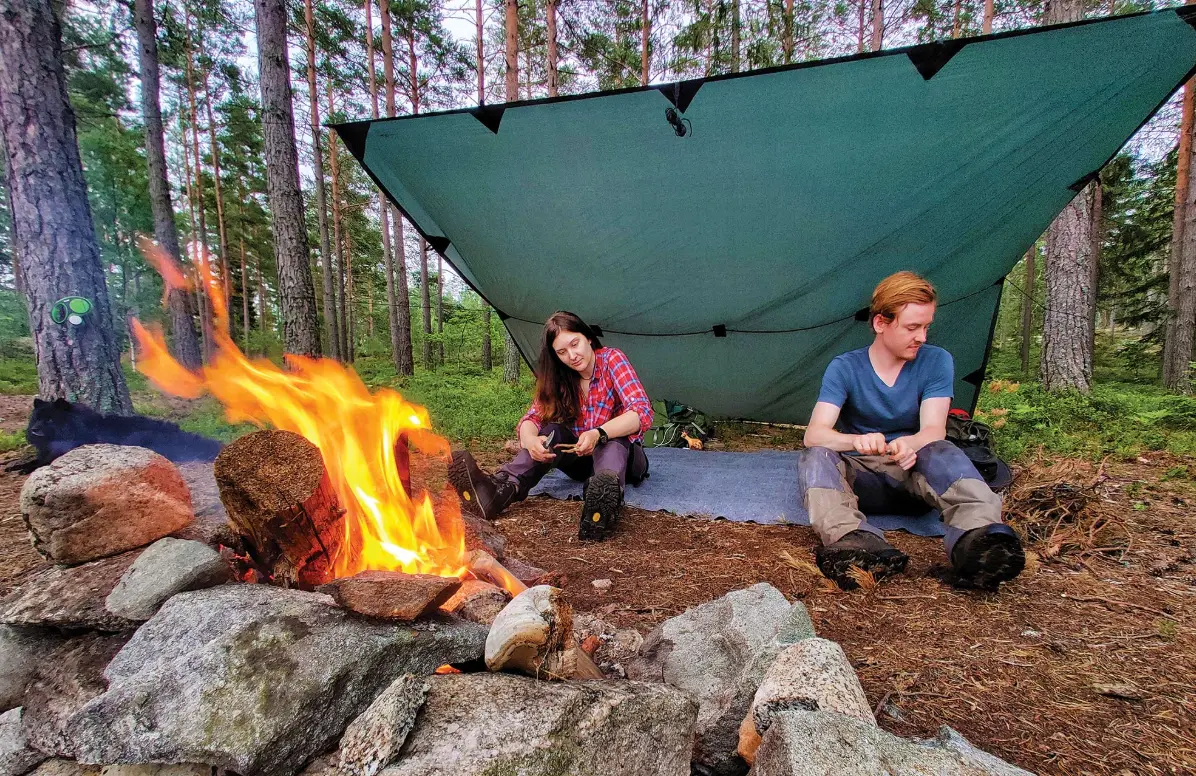
  • Open lean-to: a single slope for direct access to the fire, very practical in fine weather and pitched in 5 minutes.

The lean-to configuration is perfect for sheltering from wind while enjoying an unobstructed view. It is the ideal setup for enjoying a campfire's warmth on your first nights outdoors.

Basic knots to master: learn the clove hitch, Prusik and timber hitch for secure attachments.

Master these two setups before trying more complex shapes such as a dome or parallelogram.

→ The larger the tarp and the more attachment points it has, the easier these configurations are to achieve.

Practical tarp uses beyond shelter

A tarp is not just for sleeping under.

It can also be used to:

  • protect the ground as an improvised footprint
  • shelter equipment
  • collect rainwater
  • create a dry work area
  • provide a windbreak or sunshade

In survival situations, this versatility is a major asset.

Conclusion

For bushcraft and survival, the right tarp always prioritises:

  • versatility
  • strength
  • reliability in the field

Avoid common mistakes when choosing a tarp

  • Choosing too small a size ‘to save weight’
  • Neglecting attachment points
  • Confusing a basic tarpaulin with a bushcraft tarp
  • Never testing your setups before heading outdoors

A simple, well-sized tarp that you know how to use remains one of the best shelters available.
FAQ — Bushcraft and survival tarps

Which tarp should bushcraft beginners choose?

For starting bushcraft, a 3×3 m tarp remains the best choice. It offers an excellent balance of versatility, ease of pitching and reasonable weight. You can try most classic setups — A-frame, lean-to, ridge tent and enclosed shelter — without excessive technical demands.
An undersized tarp quickly limits your options, while an oversized one makes setup more difficult for beginners.

A proven model such as the DD Hammocks Tarp 3×3 m is particularly suitable: tough fabric, plenty of attachment points, good rain performance and excellent value. It is forgiving of pitching mistakes and lets you improve with confidence.
👉 Tarp 3x3 M

What tarp size should one person choose?

For one person, 3×3 m is the recommended minimum, whether in a hammock or on the ground. This covers your sleeping area properly while leaving some margin to orient the shelter against the wind or create an overhang against rain.
If you sleep on the ground and want to shelter your pack or cook under cover, a slightly larger 3×4 m or 4×4 m format significantly improves comfort, especially in bad weather.

To summarise:

  • lightweight, mobile use → 3×3 m
  • uncertain weather or a more static camp → larger size

Is a tarp enough in heavy rain?

Yes, a well-chosen, correctly pitched tarp is more than sufficient in heavy rain. The deciding factor is not just fabric waterproofing, but above all:

  • tarp tension
  • slope angle
  • orientation relative to the wind

A tarp pitched too high or too flat will let water in, even with highly waterproof fabric. Conversely, a low, well-tensioned setup with its back to the wind can stay perfectly dry through hours of continuous rain.
That is why a tarp involves skill as well as equipment.

Tarp or tent in a survival situation?

In survival or self-sufficient situations, a tarp offers several advantages over a tent. It is lighter, more versatile and can be used in many ways according to the emergency: shelter, windbreak, equipment protection or water collection.
It also adapts better to uneven terrain and requires less ground space.

A tent remains more comfortable and ready to use, but has only one purpose. In survival situations, improvisation and adaptability are essential: a tarp better suits this approach, provided you master the basic setups.

What tarp colour should you choose for bushcraft?

For bushcraft, prioritise natural colours. Green, brown and camouflage blend into the surroundings, reduce visual impact and encourage discreet, respectful use of nature.
These colours are also less visually intrusive during prolonged camping.

Light tarps can help reflect heat or brighten the space, but are more visible and less suited to bushcraft or survival.
👉 For versatile woodland use, green or camouflage remains the best choice.

Do you need a specific ‘survival’ tarp?

There is no true ‘survival’ tarp in the strict sense. What matters is the tarp's features, not its marketing label.
A good survival tarp should be:

  • large enough for enclosed setups
  • equipped with numerous attachment points
  • made from tough, thoroughly waterproof fabric
  • reliable over time

A tough bushcraft tarp that you know how to use will always be more effective than a ‘survival’ tarp that is poorly designed or used incorrectly. In survival, simplicity and reliability come first.

What is the difference between a tarp and an ordinary tarpaulin?

The main difference is design and purpose.
An ordinary tarpaulin is designed for utility use — building sites, gardening or occasional protection — with few attachment points and fabric that is often stiff or brittle in the cold. A bushcraft tarp, by contrast, is designed for the outdoors: lightweight yet tough fabric, numerous attachment points around the edges and sometimes in the centre, reinforcement at stress points, and better wind and rain performance.

In practice, an ordinary tarpaulin can help in a pinch, but greatly limits possible setups and withstands prolonged wild camping poorly.

Can you sleep under a tarp all year round?

Yes, you can certainly sleep under a tarp all year, provided you adapt your setup and equipment. In summer, an open, ventilated setup is more than enough. In autumn and winter, pitch the tarp lower, more enclosed and with its back to the wind to retain warmth.

A tarp does not replace insulation: sleeping mat, groundsheet and sleeping bag remain essential. In cold or windy conditions, a sufficiently large tarp, at least 3×3 m or even 4×4 m, provides significantly more effective protection.

Which tarp should you choose for hammock sleeping?

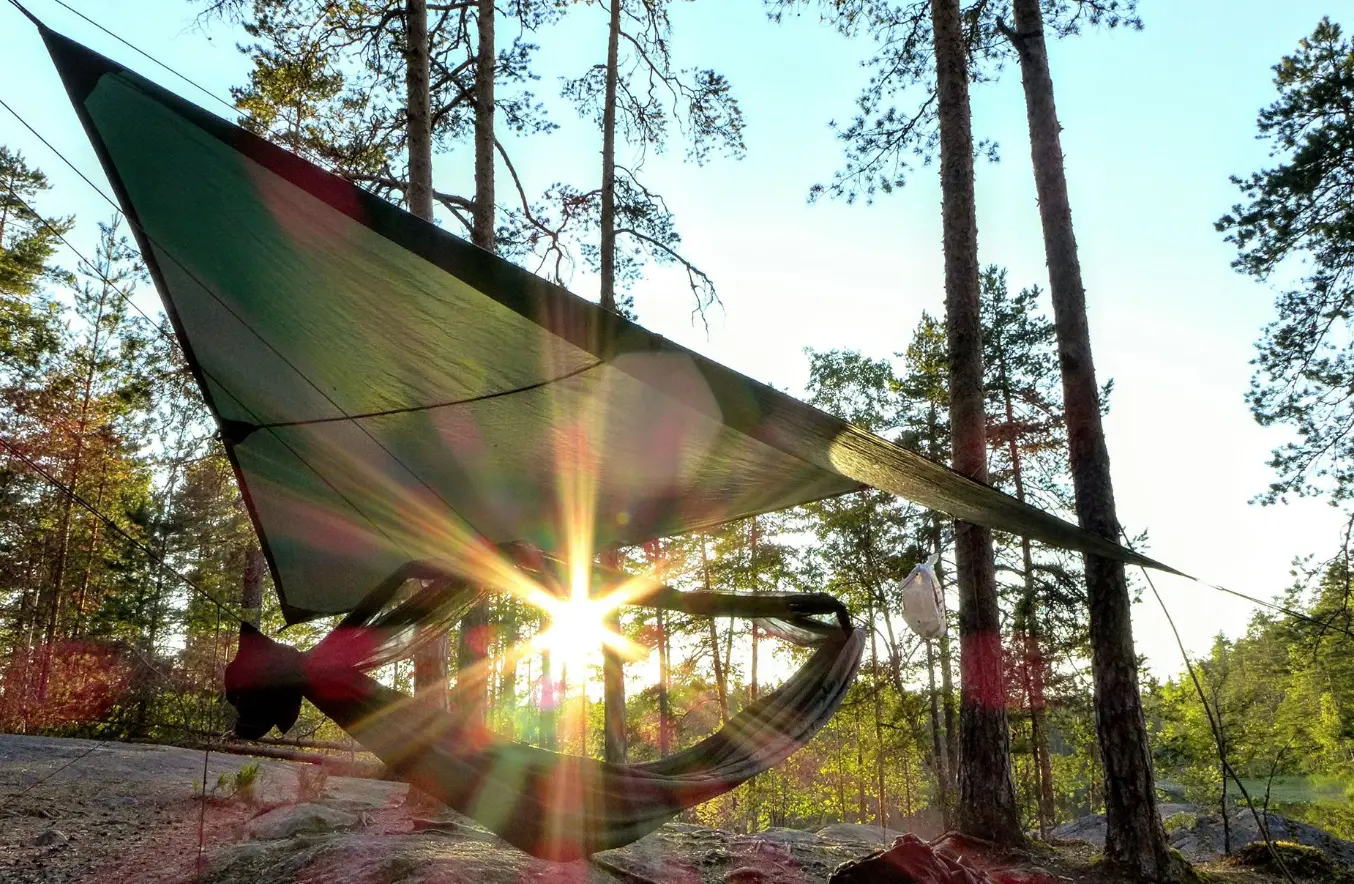
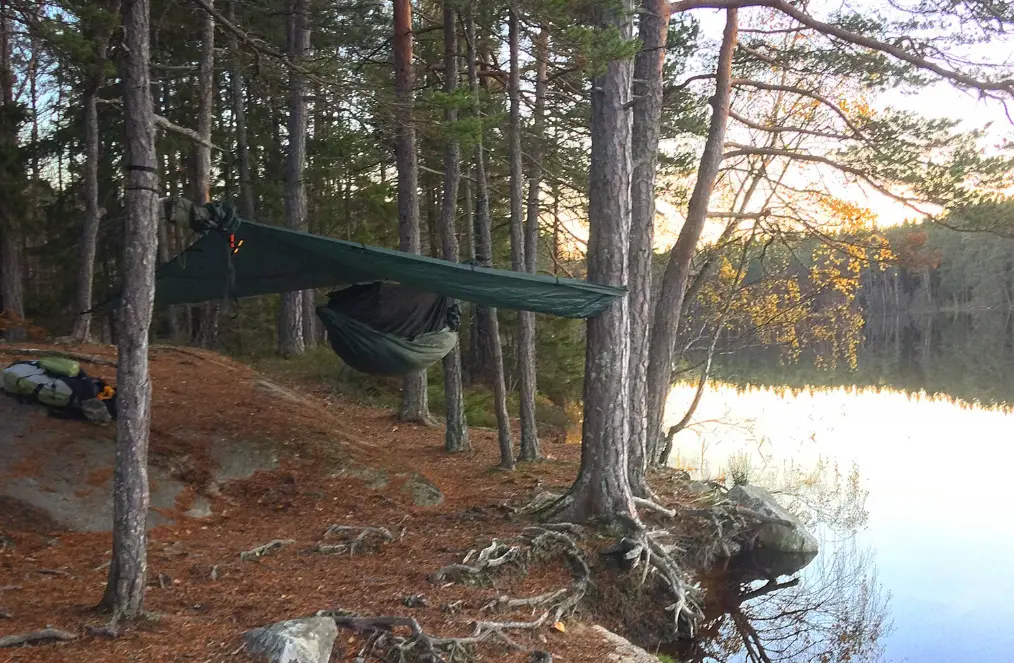
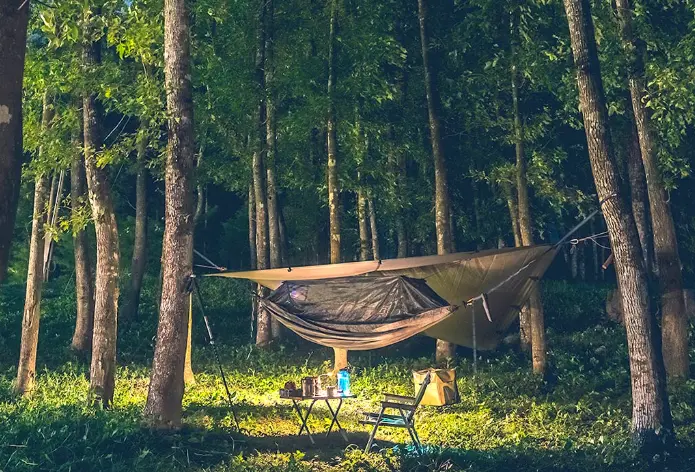
For a hammock, the tarp must cover not only the sleeping area but also the ends to prevent wind-driven rain splash. A 3×3 m tarp is an acceptable minimum, but a rectangular or slightly longer format offers significant extra comfort.

The tarp should also have central or intermediate attachment points to adjust tension and prevent flapping in the wind. A tarp that is too short or narrow quickly becomes inadequate when the weather deteriorates.

Does a tarp really protect against wind?

Yes, a well-pitched tarp protects fairly effectively against wind if correctly oriented. Everything depends on the setup. A low shelter, closed on exposed sides and correctly tensioned, acts as a genuine windbreak.

The most effective wind-resistant setups are low enclosed shelters, well-oriented ridge configurations and arrangements using the ground to close the shelter. Tarp size and the number of attachment points are crucial here.

Do you need a groundsheet with a tarp?

Yes, a groundsheet or protection beneath your sleeping area is strongly recommended. A tarp protects from above, but not from moisture rising from the ground or cold transmitted by conduction.

A groundsheet, lightweight sheet or even part of the tarp can isolate your sleeping area from the ground. In bushcraft and survival, this layer is essential for thermal comfort and equipment durability.

How many cords do you need to pitch a tarp properly?

The number depends on the setup, but in practice at least 6 to 8 guy lines are recommended. This lets you secure the main corners and adjust tension at the sides.

For more complex setups or strong winds, extra cords offer greater flexibility. Tarps with integrated guy lines and tensioners make pitching much easier, especially for less experienced users.

Can you use a tarp everywhere for wild camping?

Tarp use follows the same rules as wild camping generally, which vary by country, nature park and local regulations. A tarp is no more or less permitted than a tent.

However, its visual discretion and minimal ground impact encourage more respectful use, provided you follow local rules, permitted camping hours and the ‘Leave No Trace’ principle.

How long does a bushcraft tarp last?

A tarp's lifespan depends on fabric quality, frequency of use and care. A well-designed tarp, used correctly and stored dry, can last many years, even with regular use.

The main causes of wear are UV, repeated rubbing, excessive tension and damp storage. A tough tarp with reinforcement and ripstop will age much better than a basic model.

Product comparison
Compare
Rayon Rando advice