





Adjusting your backpack correctly for comfortable hiking
Just bought a new backpack from Deuter, Osprey or another brand?
To enjoy hiking fully, carrying your backpack must not cause discomfort. So how do you avoid back pain with a backpack? By adjusting it properly!
A correctly adjusted backpack should carry most of its weight on your hips. It should not pull on or hurt your shoulders.
There are generally 4 adjustment points: shoulder harness height (not always), hip belt, shoulder straps and load-lifter straps above the shoulders.
How should you put on a backpack? Follow several steps:
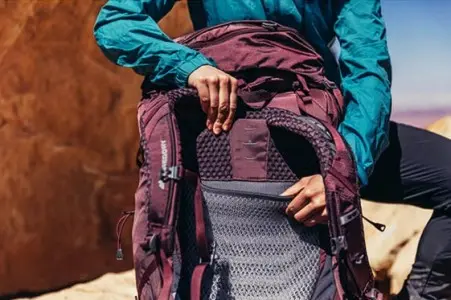
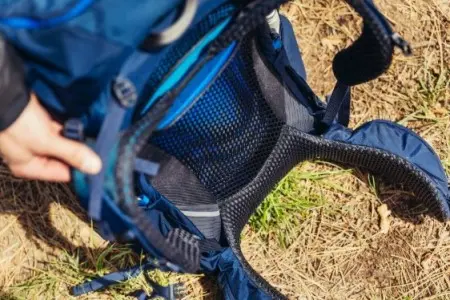
1- Adjust the shoulder harness height
Most large backpacks have adjustable shoulder harness height: a visual scale lets you position it according to your height, often with hook-and-loop fastenings. This is not the case on smaller backpacks or suspended-mesh models. So how do you set the backpack height?
- Simply position the shoulder straps at shoulder-blade height so they follow the curve of your shoulders.
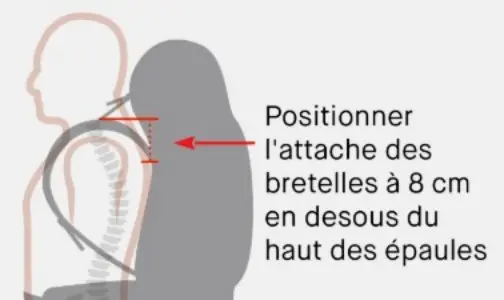
2- Load your backpack
Loading your backpack helps you feel the correct adjustment and weight distribution more easily, and adjust if needed. This will probably help prevent backache.
3- Fully loosen the shoulder straps and load lifter straps
Loosen your hiking backpack's load lifter straps to make putting it on easier.
4- Put on your backpack and adjust the hip belt first
The shoulder straps are loose, so the weight rests entirely on the hip belt. Tighten it sufficiently to stabilise the backpack on your hips and ensure your hips carry the weight.
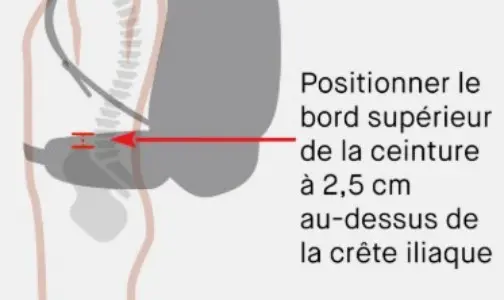
5- Once the hip belt is adjusted, tighten the shoulder straps
Shoulder straps should be tight enough to stabilise the backpack, but must not pull on your shoulders. You should easily slide a finger between your shoulder and strap.
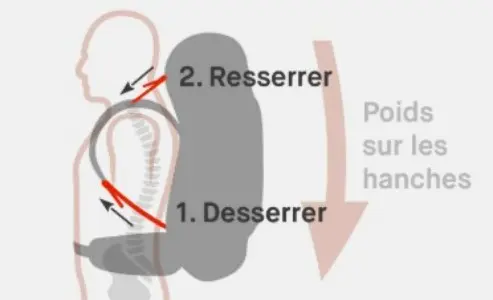
6- Adjust the load lifter straps
The backpack should not pull you backwards. Tighten these straps to bring it closer to your back so it does not pull on your shoulders, without restricting movement.
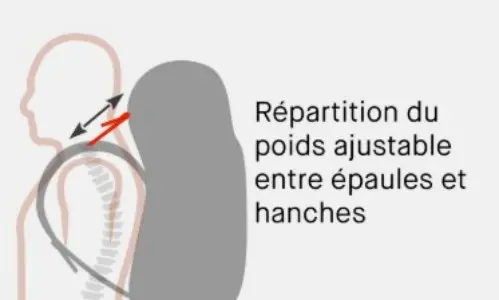
7- Finally, clip and adjust the sternum strap
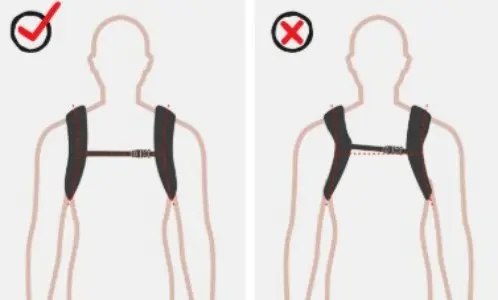
If using the sternum strap, its height is generally adjustable. Position it horizontally: it brings the shoulder straps together to stabilise the backpack better. Sometimes, however, you may feel more comfortable without it.
Conclusion:
Your backpack is correctly adjusted if:
- You feel the weight rests mainly on your hips.
- It pulls neither on your shoulders nor backwards.
- You retain good freedom of movement.
Remember, though, that adjusting your backpack is not enough: you must pack it properly too. Arrange your belongings carefully: distribute weight evenly and keep the heaviest items close to your back, preferably low in the pack, to best respect your centre of gravity and balance.