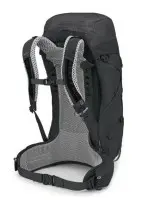
A hiking backpack, essential equipment for any hiker or traveller, can be chosen according to many criteria. But comfort should remain the priority, which means focusing on the carrying system. This consists of several components:

  • The frame
  • The back panel type
  • The hip belt type
  • The shoulder strap type

In this article, we explain the characteristics of each component and which carrying system to choose for your hiking activities.

The hiking pack's frame

This structure inside the pack's back can be rigid, usually aluminium, or semi-rigid. The latter often uses a pre-shaped plastic panel that is both flexible and tough. There is a 3rd option: no frame. In that case, only the pack's fabric sits against your back. The frame's purpose is to transfer the load onto your pelvis, where most of the weight should rest. Ideally, the frame should be strong, lightweight and flexible enough to withstand twisting.

Which frame for which use?

If your hiking involves self-sufficient multi-day trips with a tent, sleeping bag, mat and so on, choose a backpack frame strong enough to handle the load. Several aluminium frame designs exist, the simplest being flat stays, as on the Wilsa Trekker 55 backpack. More affordable, these suit moderate loads. For optimal comfort, a perimeter aluminium frame or X-shaped frame is more suitable. It distributes the various load transfers evenly across your back. This effective type of structure is found on the Gregory Zulu 55, for example.

For lightweight multi-day hiking, without a tent and sleeping equipment, or with a maximum weight around 7-8 kg, you can choose a semi-rigid structure. Lighter but strong enough to transfer this type of load onto your pelvis, a semi-rigid frame, as on the Osprey Talon 33 backpack, gives you a light, comfortable backpack for this use.
For lightweight day hiking, you can choose a frameless backpack such as the Elementerre Sarawat 25. That gives you 25 L weighing around 500 grams! If you load your pack more heavily, for example with the children's belongings too, at least a semi-rigid structure is preferable. Your back will thank you at the end of the day.

The hiking pack's back panel type

Hiking packs have 2 main types of back panel: foam or tensioned mesh. As the name suggests, this panel is the part directly in contact with your back. It therefore plays an important role in carrying comfort. This involves how it feels — mesh and foam feel very different — its ability to dissipate perspiration, and its capacity to handle a load. Both foam and tensioned mesh backs have advantages with associated trade-offs. Understanding these is important when choosing.

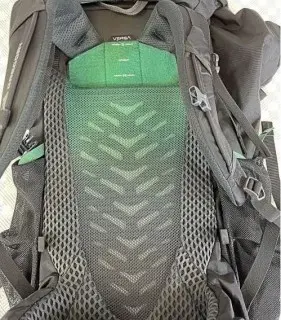
The foam back panel

Hiking backpack brands offer a wide variety of back panels, often closely related to the target price. Foam panels differ in:

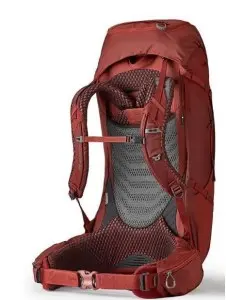
Layout: some panels are designed to be breathable while contacting your entire back, as on Gregory's Stout model:

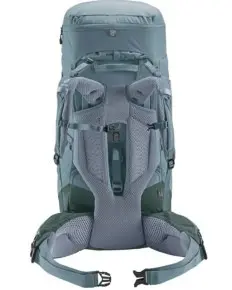
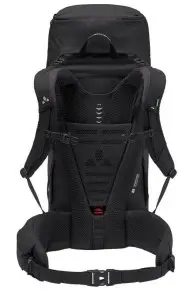
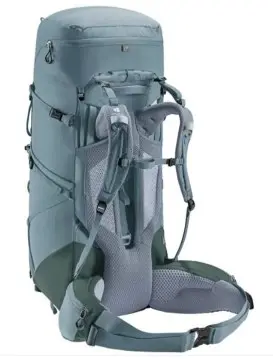
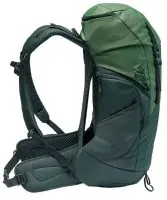
Other panels have more substantial foam padding on either side, leaving a ventilation channel in the middle, as on Deuter's Aircontact or Vaude's Asymmetric:

Aircontact core 45+10 SL women's backpack
Asymmetric 42+8 hiking backpack

Thickness: this relates to the foam layout and/or the backpack's position in the range. Fairly thick foam is a sensible choice, especially around the shoulder blades, to cushion the load.


Density: foam can be very thick yet very soft. Denser foam will support the load better over time. However, dense foam costs more to manufacture. You therefore need to weigh this against your intended use of the backpack.


Fabric finish: this can range from simple perforated fabric to ‘3D’ mesh. The latter feels more pleasant over long periods of use.


Load resistance: most foam panels withstand the forces they face very well: twisting, stretching and compression. At Rayonrando, we tend to recommend these panels for heavy loads.

The tensioned mesh back panel

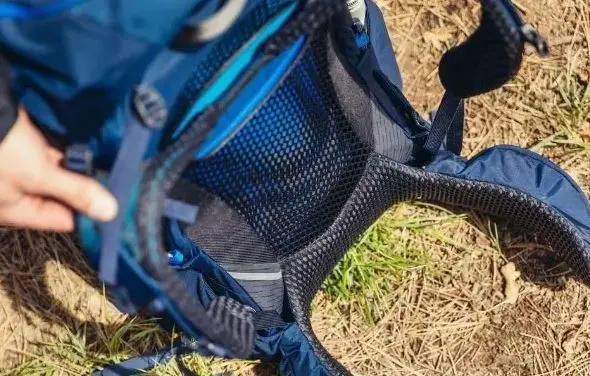
The main purpose of tensioned mesh is to create enough space behind it for air to circulate, improving the removal of perspiration. As with foam panels, tensioned mesh comes in various grades, with different levels of technical sophistication. Here are some criteria to distinguish them:

Tension: well-tensioned mesh handles the load better and maintains enough space behind it, even under substantial weight.

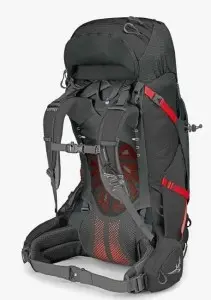
Coverage: some mesh panels, such as on the Osprey Atmos AG50, cover a very large area, including the lower back and hips. Very effective, but more expensive.
Other tensioned mesh panels cover most of the back, with foam reinforcement at the lower back and hips.

  • The mesh used: on more technical backpacks, as with foam back panels, the mesh has a more pleasant texture, making it more comfortable against a T-shirt over long days.
  • Load resistance: the deliberate flexibility of a tensioned mesh panel reduces the maximum load it can handle. Tensioned mesh backpacks are therefore generally not recommended for very heavy loads.

Finally, tensioned mesh requires a curved frame to allow airflow. As this curve extends into the main compartment, its volume may be reduced and/or distorted. Bear this in mind if you plan to pack bulky equipment.

Generally, foam backs or close-fitting backs are less breathable than mesh backs, but keep the load closer to your body and therefore preserve your centre of gravity better. They are well suited to maintaining freedom of movement and making the weight less noticeable, particularly with heavy loads.
Conversely, tensioned mesh backs are more breathable, with good airflow between your back and the pack, but position the load further from your back and therefore affect your centre of gravity more. They are good for light or moderate loads, but reach their limits with heavy loads, and therefore with well-filled high-capacity packs.

The hiking pack's hip belt

A hiking backpack is designed to transfer the load onto your hips and put as little weight as possible on your shoulders. It is therefore important to have a hip belt suited to your load and to how long you will walk with your pack. Here are the features that define a hiking pack's hip belt:
Length:
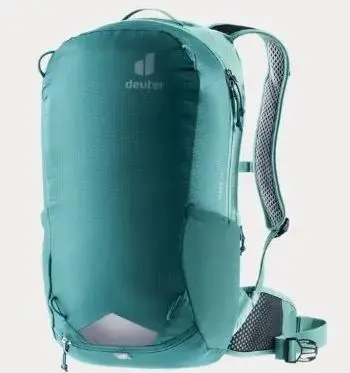
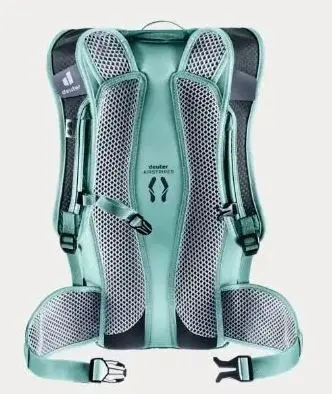
On small-capacity packs, 10-20 L, you may find a very short hip belt. With very little extra weight, it holds the backpack in place and limits potentially unpleasant sideways movement.

The Race 16 pack has an advantage over most packs of these capacities, which have no hip belt or just a rather uncomfortable strap.
You will then find backpacks with a belt reaching your iliac crests, the hip bones that bear most of the load. For good carrying comfort with a substantial load over time, a backpack with this type of belt is strongly recommended.

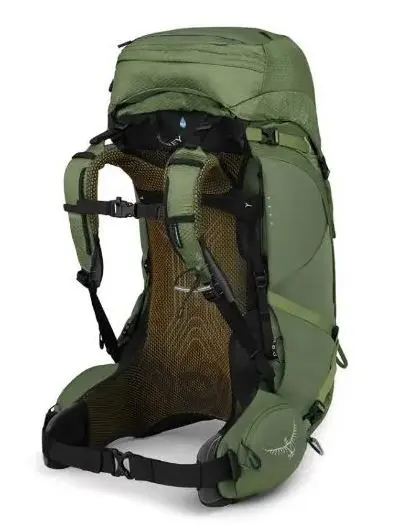
Finally, there are length-adjustable hip belts, as on the Osprey Aether or Gregory Baltoro. Very comfortable, they wrap further around your hips and improve load distribution. These belts are most often found on backpacks for long treks with potentially very heavy loads. They also offer a solution for people with a large waist.

Aether Plus 60 backpack
Baltoro 65 hiking backpack

Foam structure and density: for lightweight day hiking, you will find backpacks with very flexible, thin hip belts. These go hand in hand with very light backpacks and good breathability, as on the Deuter AC lite 22 SL. For a heavier load, choose a belt with firmer, thicker foam to cushion the forces on your hips, such as the Osprey Talon 22 or Gregory Stout 55.

Finally, for increased comfort on treks with heavy loads over long periods, trekking backpacks have hip belts with a hollow that cups the iliac crests securely. Some backpacks, such as the Deuter Aircontact Core, show this feature very clearly.

Aircontact core 45+10 SL women's backpack

Finally, like the back panel, hip belts use fabrics with varying levels of breathability and softness.
Contact the Rayonrando team for help choosing.

Hip belt/back attachment: some of the most comfortable backpacks use a hip belt attached in a way that reduces the effect of the pack's movements. Each brand uses its own technology, such as Variflex for Deuter, to achieve this effect.

The hiking pack's shoulder straps

Although most of the load is carried by your hips through the belt, your backpack would struggle to stay on without shoulder straps! Their main role is to stabilise and cushion the load, but they can also improve the removal of perspiration. Simply put, their design is very similar to the hip belt's:

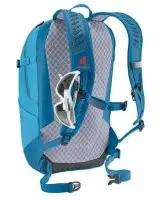
Thickness, density and mesh: for a lightweight day hike, thin straps with breathable mesh are suitable, as on the Deuter Speed lite 21. With greater loads and/or longer trips, thicker, firmer straps are welcome, as on the Vaude Jura 32. To improve comfort in hot weather, some backpacks have thick, firm and highly ventilated shoulder straps, such as the Osprey Stratos 44.

Vaude Jura 32 pack
Speed lite 21 pack
Stratos 44 pack

Attachment to the back panel: some shoulder straps are sewn to the back across their full width, while others use clever, inevitably more expensive systems that retain excellent mobility, rather like pivots. These attachments improve comfort by reducing the effects of the backpack's swinging movement.


Shape and length: on most women's backpacks, the shoulder straps are shaped to leave the chest area free, whereas men's backpacks have straighter straps. Some models, such as the Osprey Aether 55, have adjustable shoulder straps. Like an adjustable hip belt, these provide better contact with your torso, especially for larger builds. Adjustable shoulder straps can also reduce rubbing from the webbing connecting the pack to the padded strap.

Conclusion:

The carrying system, comprising frame, back panel, hip belt and shoulder straps, must suit your hiking activity, body size, trip length and load.

A common mistake is to focus primarily on the pack's weight. We generally try to lighten our kit to reduce fatigue and increase comfort. While reducing the weight of the contents makes sense, seeking the lightest possible backpack can have the opposite effect: more discomfort and fatigue. 

It all depends on the load's weight and volume. Day hiking with a few kilos and a 2-week trek carrying 15 kg do not require the same carrying system. For a heavy load, a comfortable carrying system inevitably weighs more than a semi-rigid back with thin shoulder straps and hip belt.

Choosing a good carrying system takes some thorough research. Contact the Rayonrando team: we are always happy to advise you by email.

Product comparison
Compare
Rayon Rando advice