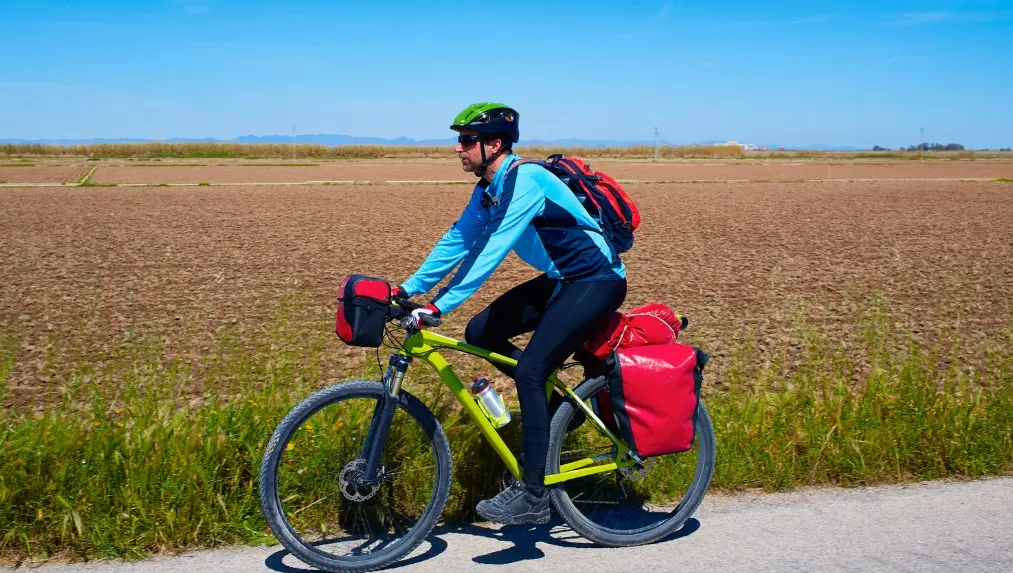
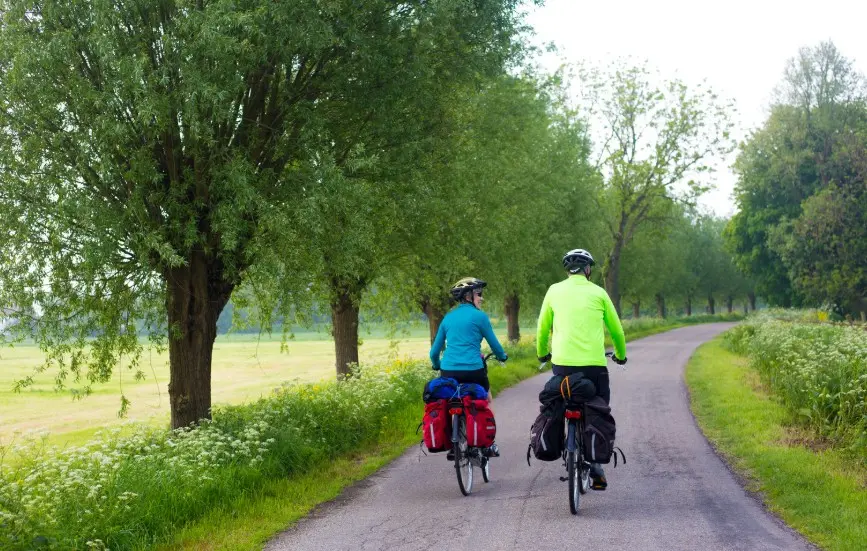
A cycling trip means carrying all your equipment on the bike. Tent, clothing, food and tools: every item needs its place in the bags.

But organising luggage is not only about saving space. Poor load distribution makes a bike unstable, unnecessarily tires the rider and complicates manoeuvres. Thoughtful organisation lets you ride more comfortably, retain good handling and access equipment easily.

RayonRando presents the essential principles for organising your bags effectively on a cycling trip.

Why pannier organisation matters on a cycle tour

Good load organisation directly influences bike handling.

Good weight distribution affects:

  • Bike stability on roads or tracks
  • Greater pedalling comfort
  • Cornering agility and better control on narrow or technical sections
  • Greater safety downhill

Appropriate organisation and packing allow:

  • Quick equipment access during the day
  • Faster setup at camp or a campsite

How much luggage should you carry on a cycle tour?

Luggage weight varies with the length of your trip, how self-sufficient you want to be and the season.

Average luggage weight on a cycling trip

Here are some typical luggage weights for cycle tourists:

  • Lightweight travel / bikepacking: 8 to 12 kg
  • Conventional self-supported travel: 12 to 20 kg
  • Heavily loaded travel (extended self-sufficiency): 20 to 25 kg

The lighter the load, the more manoeuvrable, enjoyable and efficient to pedal the bike remains.

How to distribute weight on a touring bike

The main rule is simple: keep weight as low as possible and balance the bags.

At RayonRando, we believe 3 types of balance are essential, although they vary depending on how heavily the bike is loaded:

  • Left / right: aim for a balance close to 50/50 for comfort and stability.
  • Top/bottom in panniers: place heavier items at the bottom, reserving the top and handlebar bag for lighter equipment. A low centre of gravity aids stability and handling.
  • Front / rear: the balance may differ depending on whether you are carrying a light or heavy load.

Front/rear pannier distribution for a light load

With a minimalist setup (bikepacking or light touring):

  • 60 to 70% of weight at the rear
  • 30 to 40% at the front

This distribution provides:

  • Light steering and an easier-to-handle bike
  • More responsive handling without overloading the rear.

Distribution for a heavier load

When luggage becomes heavier (around 15 to 18 kg or more), balance the bike more evenly:

  • around 50% at the rear
  • around 50% at the front

This setup provides:

  • Better overall stability, particularly less weaving on descents, because there is not too much weight and pressure on the rear wheel and there is enough on the front wheel.
  • More precise steering.

In this case, heavy, dense items belong in front panniers, as low as possible, with bulkier items at the rear.

How to organise your panniers in practice

Logical organisation makes life easier throughout the trip. Beyond weight and bulk distribution, consider accessibility: which equipment do you need, and when during the day?

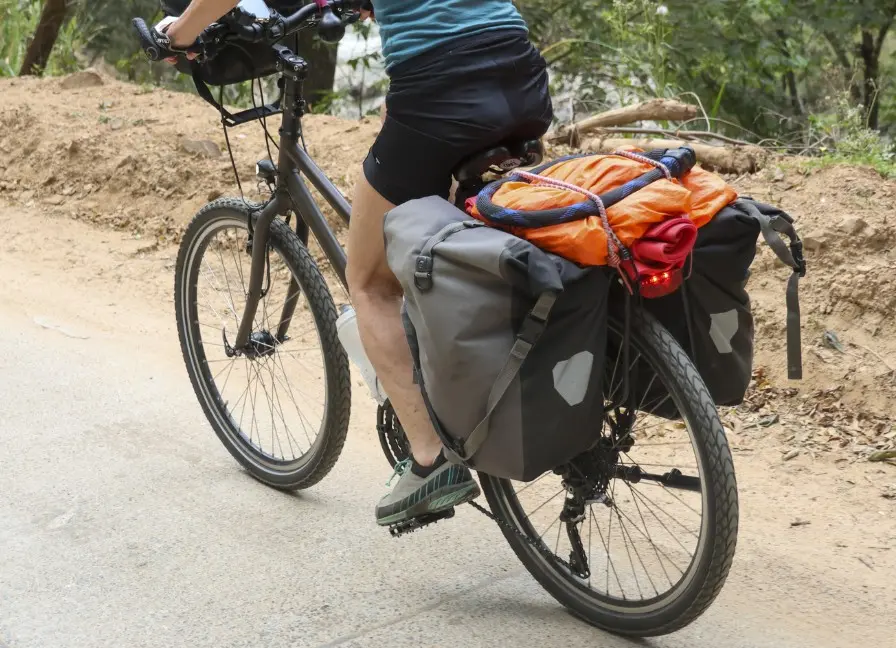
Rear panniers: bulky equipment

These are the most-used panniers in cycle touring.

Their generous 20 to 25 L capacity accommodates most of your equipment.

Typical contents include your tent, sleeping bag, clothing, sleeping mat and camping equipment.

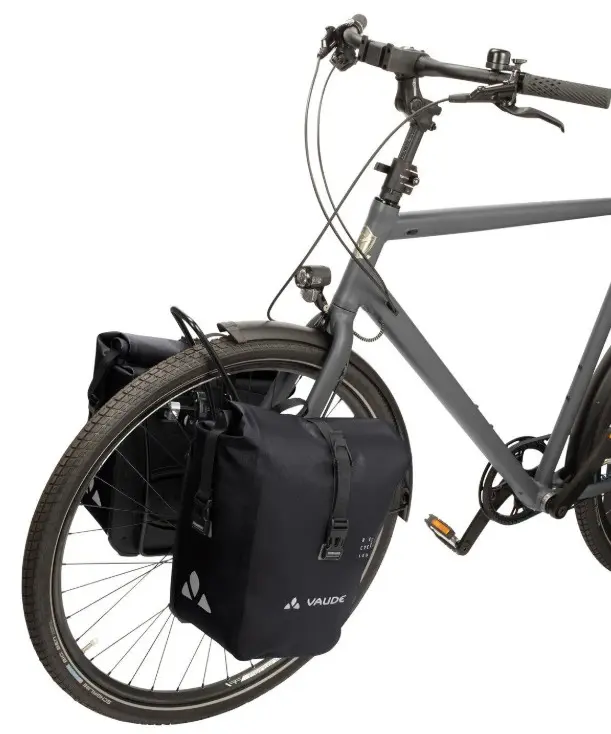
Front panniers: compact, dense equipment

Front panniers mainly balance the bike's load.

Smaller (12 to 15 L), they generally hold:

  • compact equipment
  • dense or heavy objects on a heavily loaded bike

Examples: food, stove, additional tools

Positioned low on the bike, these items improve stability.

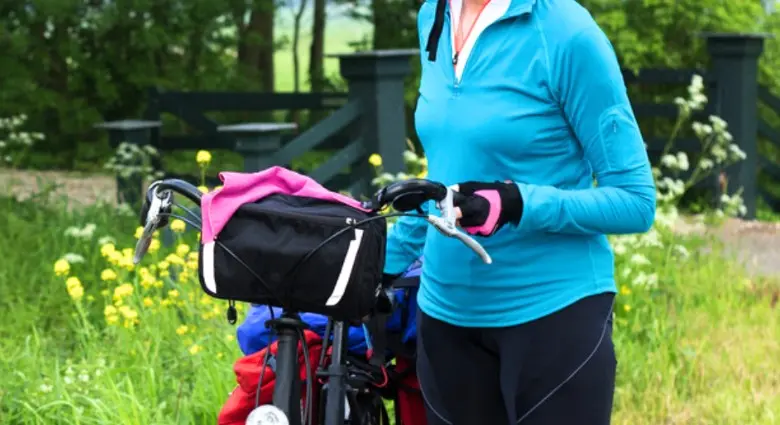
Handlebar bag: accessible essentials

The handlebar bag, often 4 to 7 L, keeps items you need during the day close to hand:

  • Phone
  • Wallet
  • Documents
  • Camera
  • Energy bars

Keep it relatively light to avoid heavy steering.

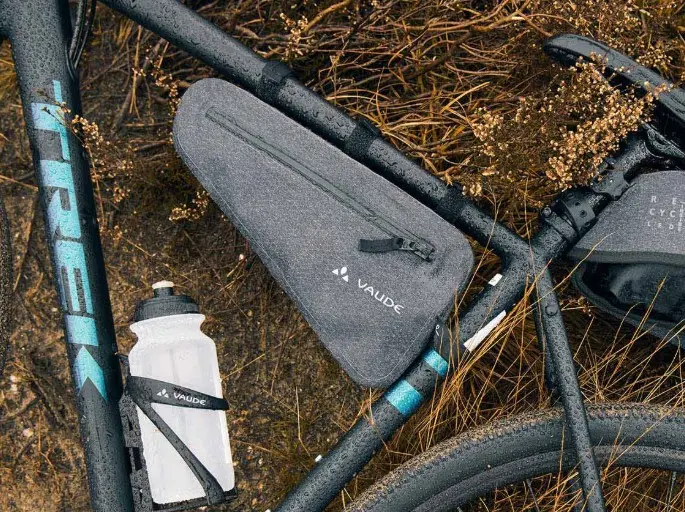
Frame bag: tools and equipment potentially useful during the day

In a bikepacking setup, bags attach directly to the bike frame.

This reduces the need for luggage racks and encourages a more minimalist approach to equipment.

You can put equipment here that you might need during the day, although not necessarily every day:

  • Multitool
  • Pump
  • Inner tube
  • repair kit
  • Power bank

Tips for making the most of pannier space

A few simple techniques help you use space efficiently:

  • Roll clothes rather than folding them
  • use internal dry bags, ideally in different colours or with distinctive markings.
  • use compression sacks
  • Group equipment by category so you do not have to open several panniers to find what you need.

Keep the same organisation every day to find equipment quickly. If needed, stick a label inside each pannier indicating its contents. This helps you look in the right place and repack identically the following morning.

Common pannier packing mistakes

The most common mistakes include:

  • Overloading the rear panniers. When carrying a heavy load, excessive weight on the rear wheel increases pressure on the rear tyre and makes pedalling harder, while the less heavily loaded front wheel is less stable.
  • Uneven weight between left / right panniers. This is why it helps to keep the same packing system each day once you have balanced your load.
  • Putting heavy objects too high up. This reduces stability both when riding and when parked.
  • Mixing equipment together. Having to open several panniers to find what you need soon becomes frustrating.

Making items used during the day hard to reach. This beginner's mistake may not happen on your first day, but can easily occur when packing in a hurry one morning.

How should you pack a tent on your bike?

This is often the bulkiest, heaviest equipment. A space-saving tip is to remove the poles from the storage bag. These incompressible components make the tent bulky. Store poles on the rack or in a pannier if short enough. The rest of the tent can be rolled more compactly and split between 2 bikes.

The best improvement: travel light

Beyond these packing and load-distribution tips, at RayonRando we believe the best way to simplify bag organisation is to reduce the weight of equipment carried.

If accustomed to hiking, try loading your bike little more heavily than your hiking backpack. With 15 kilos to carry, you can do without front panniers.

A lighter load offers several advantages:

  • A bike that is easier to handle, thanks to having no panniers weighing down the front wheel and a reasonable load on the rear wheel.
  • Less fatigue on long stages
  • Greater efficiency uphill
  • Simpler organisation, since you have packed only the essentials.

A few effective strategies:

  • Limit clothing. As on a trek: one daytime outfit and one evening outfit.
  • Choose compact equipment
  • Prioritise versatile equipment
  • Avoid “just in case” items, apart from safety equipment, of course.

Travelling light often improves the whole trip.

Conclusion

Organising bags properly is essential for a successful cycling trip. Good weight distribution improves stability, makes riding easier and simplifies equipment access.

Following a few simple principles — balanced weight distribution, logical packing and a carefully chosen kit — makes enjoying the journey much easier.

However, at RayonRando we believe optimising carried weight remains key. Light equipment means more freedom and enjoyment on the road. Heavier equipment means more comfort at camp. Find your right balance.

FAQ

What is the maximum weight for bike panniers?

Most cycle tourists carry 12 to 20 kg of luggage on self-supported trips. Lightweight bikepacking setups are nearer 8 to 12 kg. Beyond 20 to 25 kg, handling noticeably worsens and uphill effort increases greatly. Acceptable total weight also depends on route profile and rider experience.


How should weight be distributed on a loaded bike?

Place heavy objects as low as possible in panniers to lower the centre of gravity. Balance panniers left to right too. With a heavy load, distributing weight between front and rear greatly improves stability.


Should more weight go at the front or rear?

For light travel, most weight can remain at the rear, retaining good handling and steering precision. With heavier loads, a more balanced split, close to 50% front and 50% rear, makes the bike more stable and predictable on descents and bends.


How can you save space in bike panniers?

Several techniques optimise space: compression sacks, rolled clothing, equipment organised in pouches, and limiting unnecessary items. Consistent organisation also helps you find equipment quickly during the trip.


What should go in a handlebar bag on a cycling trip?

The handlebar bag is ideal for daytime essentials: phone, wallet, documents, map, camera or snacks. Avoid heavy items to keep steering light and handling good.

Product comparison
Compare
Rayon Rando advice