





Choosing snowshoes is not always straightforward, as models differ considerably.
Depending on terrain, snow type and your winter hiking activities, a model may prove comfortable or quickly limiting. Flat terrain, rolling routes or steeper slopes each impose specific criteria.
To choose snowshoes well, consider several factors in the right order:
- size, directly linked to the weight carried and flotation in snow,
- grip, from crampons and rails, essential for safety uphill, on traverses or hard snow,
- then the binding system, which determines foot support and lasting walking comfort.
This guide helps you understand these criteria and choose snowshoes genuinely suited to your activities.
This will help you make the right choice from our TSL snowshoes, selected to suit different uses.
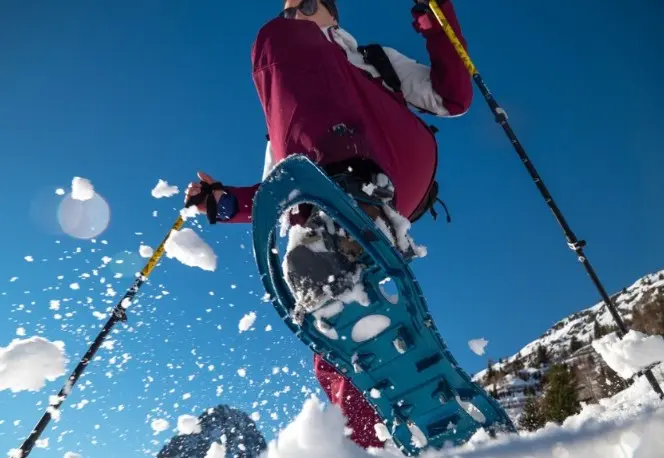
The different types of snowshoes
There are several types of hiking snowshoes, designed for different terrain and experience levels. Identifying where you hike most often helps avoid a model that is excessive or, conversely, inadequate.
Snowshoes for flat terrain
These snowshoes are designed for relatively even routes with little elevation gain, such as groomed trails in ski resorts' Nordic areas.
- Suited to relaxed walks and hikes
- Flotation comes first
- Limited grip, poorly suited to slopes
They suit occasional use or terrain without technical demands.
Snowshoes for rolling terrain
Versatile models are the most widespread. They offer a good balance of flotation, grip and walking comfort, making them suitable for most winter hikes.
- A balance of width and manoeuvrability
- Enough grip for moderate climbs
- Varied use on powder or more compact snow
This is the most common choice for regular hikers.
Snowshoes for mountains and steep slopes
These snowshoes are designed for more demanding terrain, with pronounced slopes and sometimes harsher conditions. Grip and stability take priority.
- More aggressive crampons
- Side rails for traverses
- A balance of flotation and precision
They are aimed at experienced mountain users.
1) How do you choose snowshoe size and suitable flotation?
Snowshoe size is crucial because it directly determines flotation, the ability to stay near the snow's surface according to the weight carried and snow type. An undersized snowshoe sinks quickly, while an oversized model becomes cumbersome and less manoeuvrable, especially on rolling or sloping terrain.
TSL snowshoes generally specify minimum and maximum shoe sizes and weights. However, these ranges are so broad that they do not always help you choose. For example, TSL Highlander Access M snowshoes are specified for shoe sizes 39 to 47. Above all, shoe size is not really the deciding criterion.
Find the right balance between flotation area and manoeuvrability:
- Flotation: the larger the size and frame, the better the flotation in snow. Your needs naturally depend on your weight with equipment: at 55 kg you sink less than at 95 kg, so you do not need as large a frame in the first case.
- Walking ease: a large frame may be tempting for better flotation, but at 1 m 60 with relatively short legs, you risk stepping on your own snowshoes, as your stride is shorter than someone measuring 1m85 with long legs.
At RayonRando, we consider this last criterion, linked to your height, essential. Simply put, we recommend medium-sized snowshoes, M, 425 or 418 depending on the model, if you are under 1m70, and large sizes, L, 435 or 438 depending on the model, if you are over 1m70. Around 1m70, choose medium with relatively short legs and large with relatively long legs.
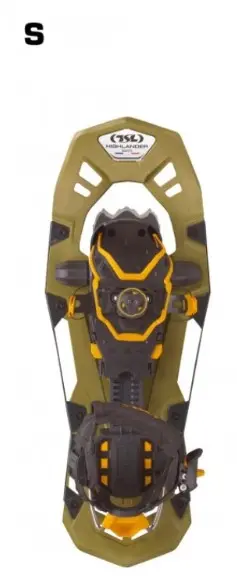
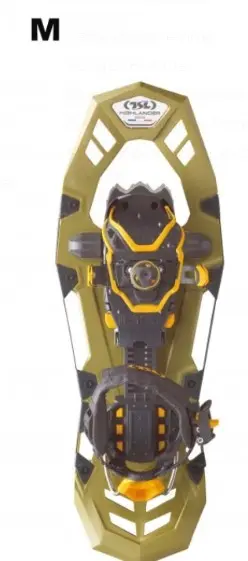
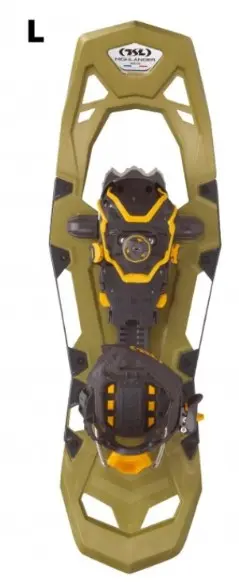
Your weight is the second adjustment criterion. If you are ‘short but strong’, weighing 90 kg for example, the large size may make sense, although you may need to adapt your stride to the larger frame.
Conversely, if you are tall but weigh under 70 kg fully equipped, a medium size may feel equally comfortable. But consider the hiker's total equipped weight: person plus backpack.
If you have no snowshoeing experience, stick to the height criterion; it is the safest approach. In any case, finding a natural stride takes a little adjustment when you first start snowshoeing.
Finally, remember that the snowshoes with the strongest grip, discussed next, have larger frames than models for easy walks.
However, flotation alone does not guarantee safety: grip becomes crucial as soon as the terrain steepens.
2) Snowshoe grip according to terrain: crampons, rails and stability
Snowshoe grip determines safety and stability when terrain becomes steeper, harder or more uneven. Unlike flotation, grip does not affect sinking into snow but your ability to move without slipping.
We distinguish standard models from high-grip models. Standard models have a rigid frame with a slight rim, 6 spikes and the metal front claw found under the toes on all models.
High-grip models have spikes plus metal teeth or even metal rails to bite into all snow types. Their longer frames, compared with standard models, also have traction features to prevent slipping uphill and downhill. The frame is generally more flexible to compensate for its greater size and allow the foot to roll naturally.
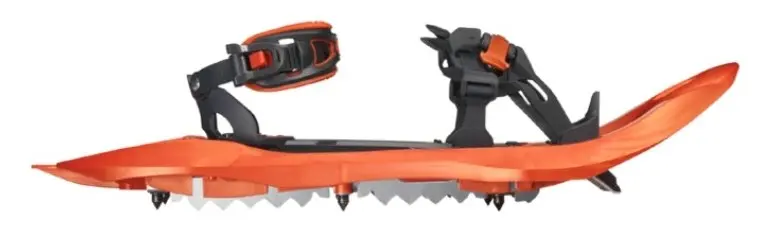
- TSL Highlander Access snowshoes offer a large frame with high-grip bars and rails.
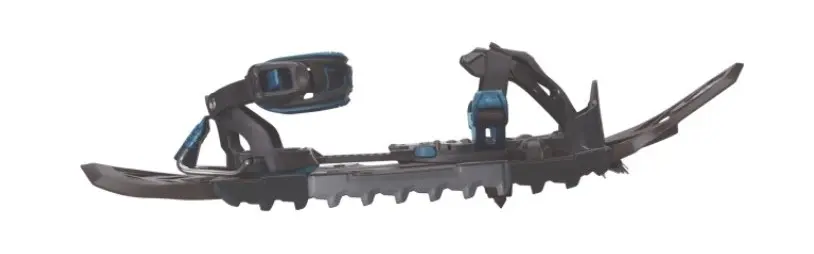
- Symbioz Hyperflex Original snowshoes offer strong grip on a flexible frame to adapt to all terrain and snow types.
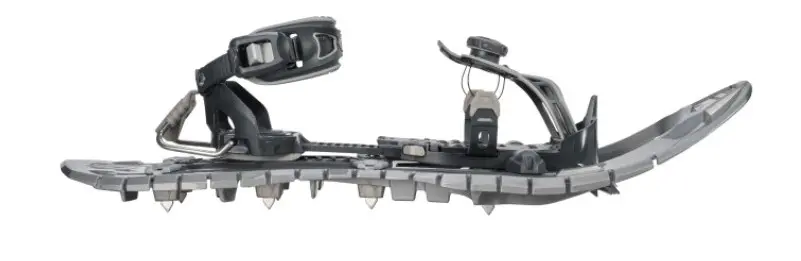
To choose well, at RayonRando we recommend assessing your needs according to:
- Terrain: if you stay on marked resort routes or easy trails with an existing track, standard models are sufficient. Good grip is necessary in the following cases:
- Steep climbs: effective crampons under the forefoot
- Traversing slopes: side rails provide stability
- Hard or crusted snow: grip is essential to avoid slipping
- Your activity: if you go out frequently in variable conditions, investing a little more in an all-round model may be worthwhile. Combine flotation and grip in this case.
Good grip is essential, but only fully effective when the binding system holds the snowshoe securely on your foot.
3) Snowshoe binding systems: support and comfort
The binding system plays a central role in walking comfort and precise footing. It suits high-cut hiking boots or snow boots with sufficiently flexible uppers. Avoid low-cut shoes, which will quickly fill with snow.
At RayonRando, we generally consider this last point less important. However, it matters for regular snowshoe use, or if you need to remove and refit them during a hike, for example when alternating snow and rocky patches that could damage them.
In this case, snowshoes that are easy to put on and remove, even with gloves, are welcome.
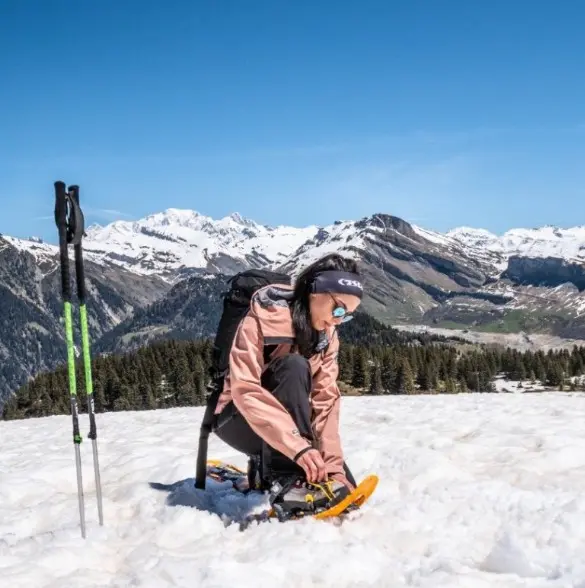
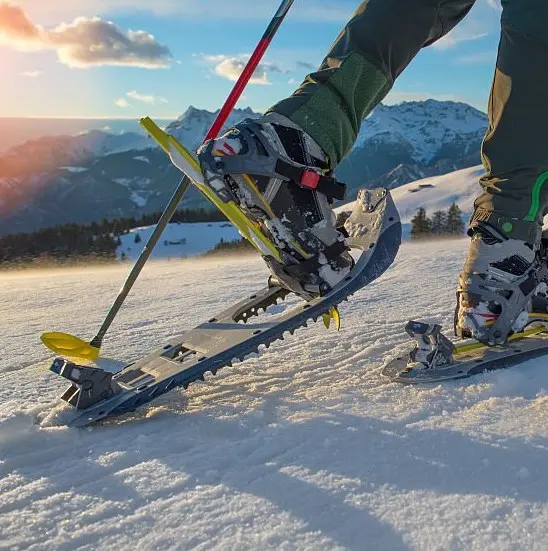
All TSL snowshoes have a ratchet adjustment to fit your shoe size. They also have a heel lift, sometimes useful on steep slopes. These can often be raised using a pole and folded down by hand.
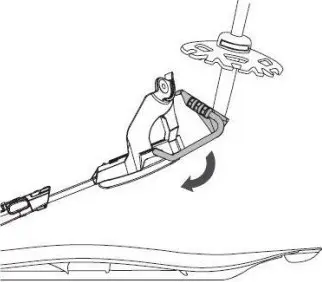
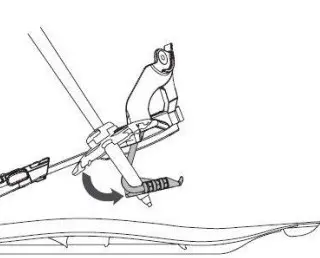
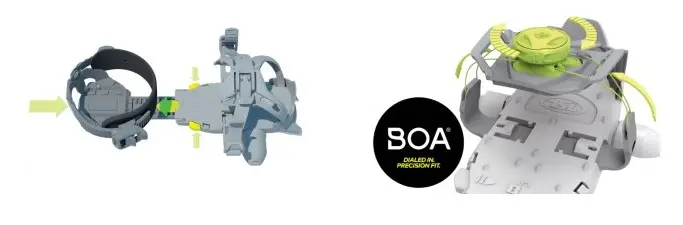
The other adjustment systems vary in practicality. Higher-end models make adjusting binding dimensions easier. In our view, the most important point is tightening over the instep, followed by tightening around the toes. These should stabilise the foot and limit unwanted movement.
A properly adjusted binding lets you make full use of flotation and grip while reducing fatigue over time.
Conclusion:
Once you have confirmed the size suited to your height and build, identify the relevant activity and terrain criteria to choose a larger or smaller snowshoe with more or less grip. To summarise:
- powder snow → flotation comes first, whatever the terrain.
- hard or tracked snow → flotation is secondary, grip matters more or less according to elevation gain.
- technical terrain → grip comes first, with good manoeuvrability.
By considering these criteria, you can choose snowshoes genuinely suited to your terrain, build and winter hiking activities.
Snowshoes are a lasting investment, so choosing a slightly more versatile model than your immediate needs require may be worthwhile, accompanying you over the years.