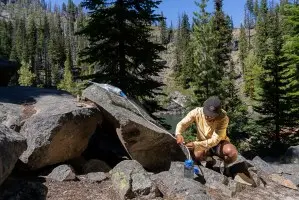
Finding safe drinking water on a hike can be challenging, either because water sources are absent or because available water is unsafe or uncertain. While you can go without food for a while, a lack of water during activity quickly becomes a problem, even a danger.

In this article, I share tips and good practices for ensuring access to safe drinking water when hiking.

Option 1: find water that is already drinkable

Option 2: purify “questionable” water

Finding water that is already drinkable

The best way to find drinking water is to go where you can be reasonably certain it is safe to drink, although this is not always easy.

Here are some ideas for finding drinking water:

In the mountains:
You will not find treated water, but you can find drinking water in certain identifiable places:

  • At a staffed hut: drinking water is generally available, but only when the hut is open. If it is closed, enquire in advance.
  • Near a shepherd's hut: if a shepherd lives there, a water source is probably nearby. However, this is not guaranteed, and the spring can sometimes be difficult to spot. If the shepherd is absent, the piped spring may be shut off, and the valve may not be visible.
  • At a piped spring: a piped spring near the trail generally has a good chance of being drinkable. However, check the map to see what lies above it (pastures, animals or homes) and be cautious: in this case, treating the water is preferable.

    In all these situations, if in doubt, remember to treat the water.

Near homes:

  • In a village, the nearest watering hole is the cemetery. There is always an accessible tap for flowers.
  • Near a house or café, simply ask to refill your water bottle. I have never been refused. A motorhome beside the road or in a car park might also help (with the risk of being handed a cold beer, but nothing ventured…).

Purifying questionable or unsafe water:

The safest approach is to draw the least questionable water possible. Here are the precautions to take before purification:

Avoid:

Avoid stagnant water, which can be a thriving breeding ground. Avoid cloudy or distinctly muddy water.

Also avoid water flowing directly from a glacier: low in minerals and cold, it can cause diarrhoea if you drink a lot.

Choose:

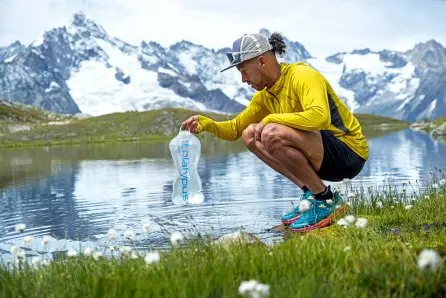
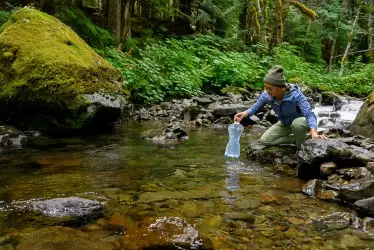
Draw running water that is as clear as possible.

Always check your map to see where it may come from. Again, if pastures or homes are above it, take no chances: treat the water. If there is only a rock face, it is safer.

In general, drinking a small amount exposes you to less diarrhoea risk than drinking a large quantity of contaminated water.

Then purify the water:

Purification eliminates the microorganisms responsible for most digestive disorders. However, no standard filtration guarantees removal of toxic substances. Even carbon filters have limited effects (they only filter partially and mainly reduce bad taste).

The article How to filter water when hiking provides more detail on water purification. Several methods are available:

  • Micropur (or hydroclonazone) tablets. These are essential basic equipment, even if you do not intend to use them. They destroy all microorganisms (including viruses), and you must wait a while before drinking (often ½ hour).
  • UV filters: practical for purifying clear water, they also destroy microorganisms in 1 minute. Suitable for small volumes, but ineffective with cloudy water. Good for drinking regularly during a walk, but impractical if you need several litres.
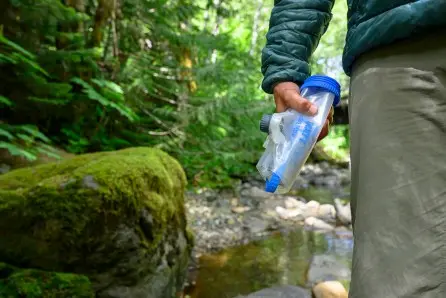
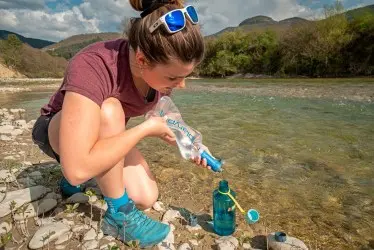
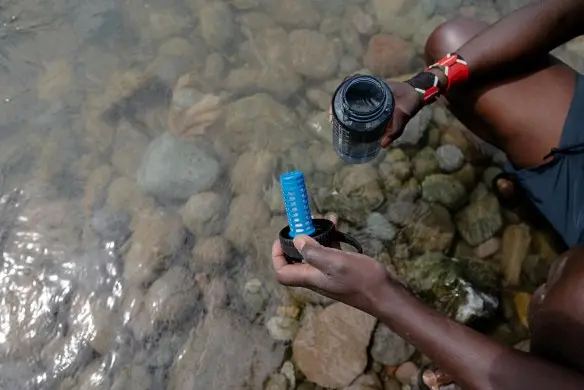
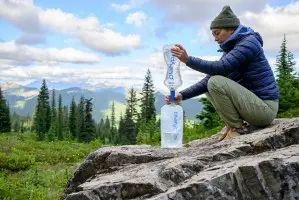
  • Filter bottles are very popular, purifying small amounts of water without chemicals or waiting. They remove bacteria and protozoa but do not fully guarantee protection from viruses. Useful in France for drinking while walking, but insufficient in tropical regions, for example.

  • Mechanical filters: these treat larger quantities of water, including muddy water, to produce clear water without bacteria or protozoa (with the same caveat for viruses).
  • If in serious doubt, or in tropical regions, combine filtration with Micropur.
  • The stove! Bring water to a rolling boil for 1 to 5 minutes (depending on altitude): this uses considerable gas, so is a backup solution.

Have none of this? Not good! Here is a tip: reduce risks by exposing clear water, and clear water only, in a transparent bottle to sunlight. As with UV filters, UV radiation gradually destroys microorganisms and reduces risk (probably not completely, so be cautious).

Conclusion:

To always have drinking water when hiking, I recommend:

  • Plan ahead: locate springs, streams and huts on the map; carry extra water before a long dry section and ask people you meet, hut staff and shepherds for information…
  • Be cautious: if in doubt, purify water by one method or another.
  • If thirsty and unable to purify water, drink small quantities of questionable water rather than a large volume. Change your route if necessary to reach the nearest water source.
  • Remember that one person's incapacity can endanger the whole group. Do not play with fire…

Finally, bear in mind that the various methods protect against microorganisms, the main risk, but not really against pollutants. That said, outside lowland areas, microorganisms are the main problem.

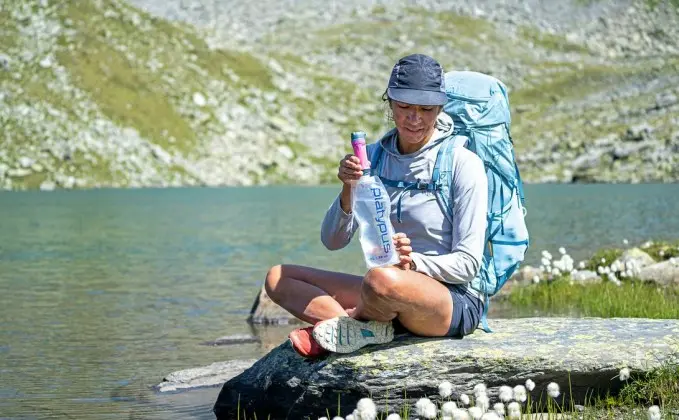
Personally, I set off with a 2-litre hydration bladder, filled according to need. I also carry a spare soft water bottle (such as a Liquitainer) for extra water on long dry stretches or before a campsite without water.

Product comparison
Compare
Rayon Rando advice