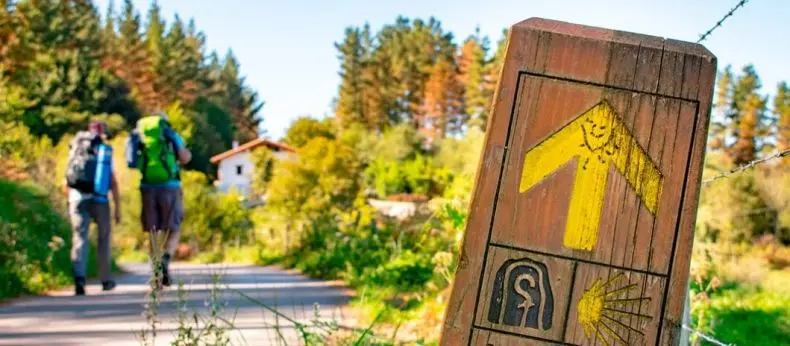
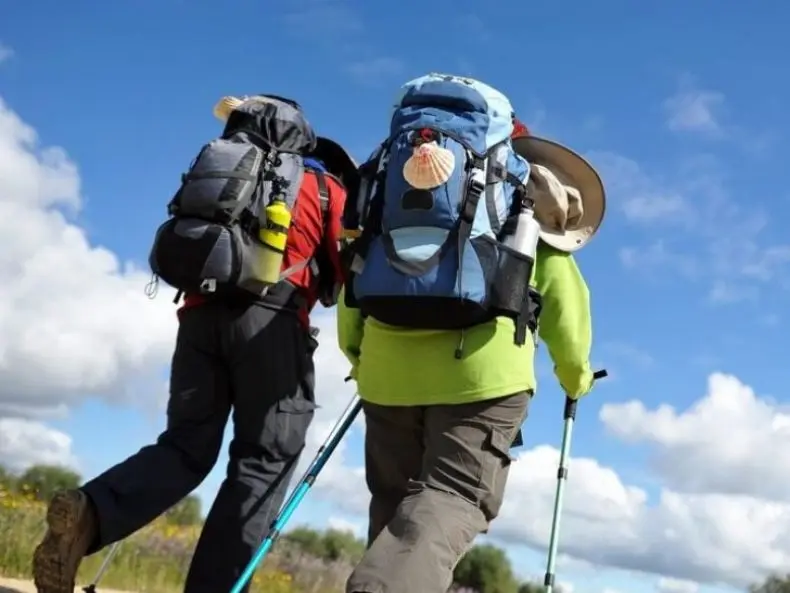
With the first fine days, many hiker-pilgrims set out on the Camino de Santiago routes, completing part or all of the pilgrimage. Sleeping equipment raises important questions:
- On the Camino, do you need a sleeping bag or liner?
- What sleeping equipment should you take when staying indoors along the Camino?
- Which sleeping bag should you choose if camping every night or occasionally?
- If leaving Le Puy-en-Velay early in the year or finishing in Galicia in autumn, how much insulation does your sleeping bag need?
Good recovery helps make the Camino enjoyable. Here are solutions for these different situations.
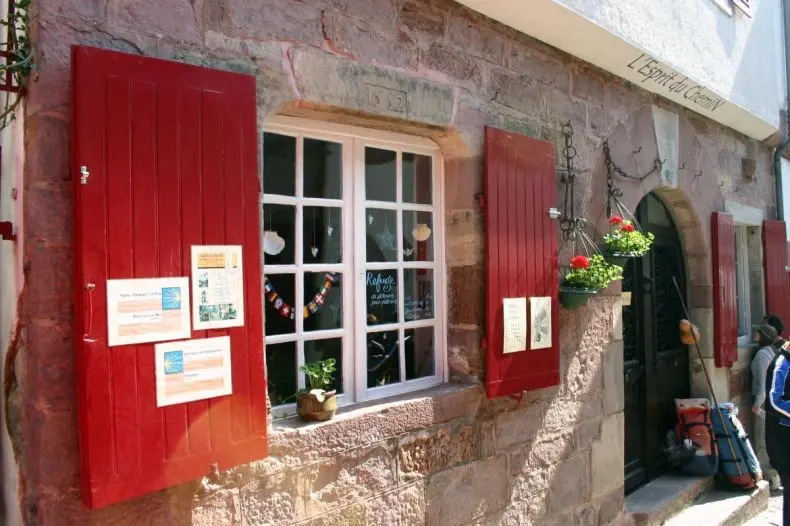
Staying indoors:
Do you need a sleeping bag?
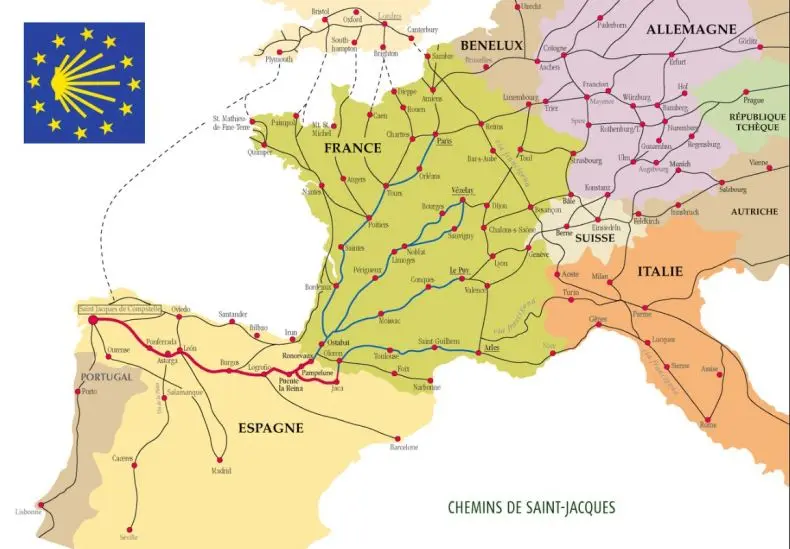
In France, you should generally find blankets in most indoor accommodation (certainly in gîtes and guesthouses). A light, compact liner may then suffice (see below). This is conditional, however: following Covid, some accommodation stopped providing blankets. If all your stays are booked, check before departure and take only a liner if appropriate.
In Spain, provision is less predictable, with many shared accommodation facilities where blanket availability is hard to confirm beforehand. Carrying a sleeping bag is safer.
On a long trip without planned accommodation, you may sometimes use a makeshift shelter without blankets or prefer not to use available blankets for comfort and hygiene. A sleeping bag is then very useful.
If you need a sleeping bag:
You do not need a warm bag. A comfort temperature between +12 and +5°C suffices. Add a lightweight liner to wash occasionally on longer trips.
Prioritise low weight and minimal packed size. You could also choose a slightly heavier bag for greater comfort.
- Aim: minimum weight and bulk:
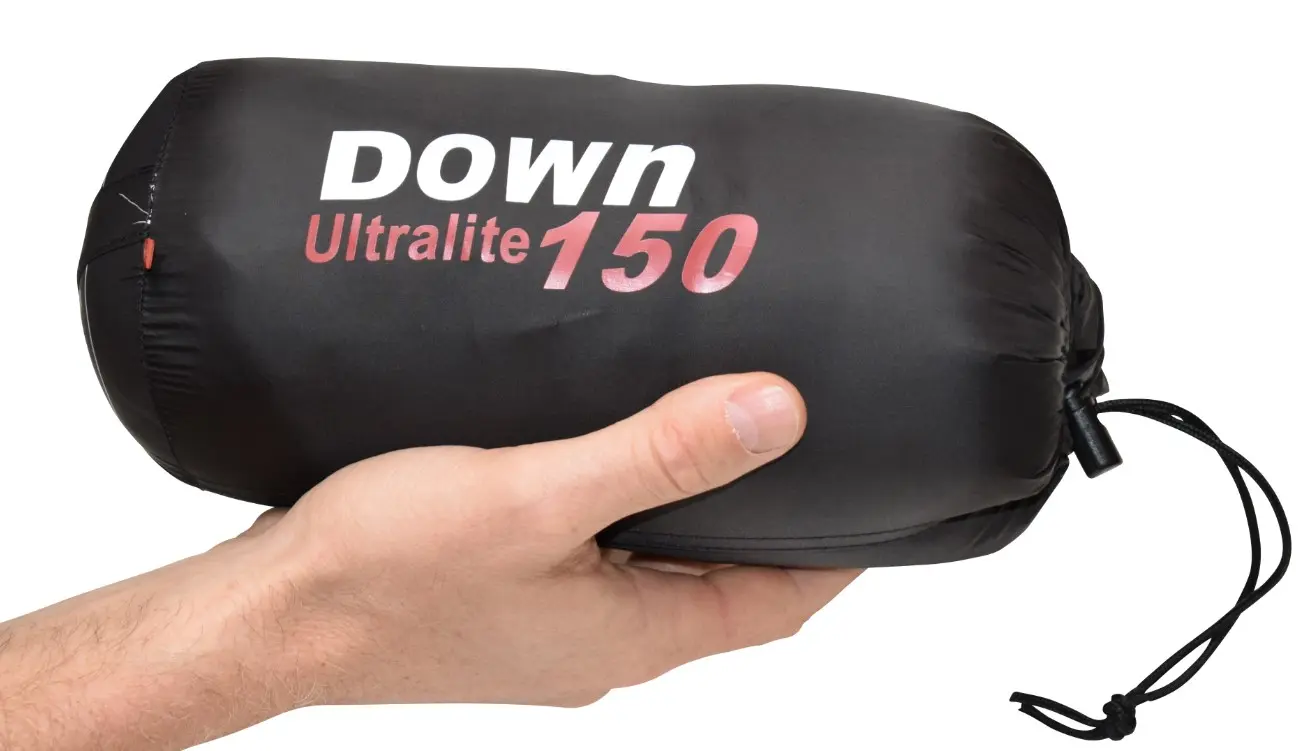
A goose-down sleeping bag offers maximum lightness and takes very little rucksack space. Consider 2 bags around 450 g: the Wilsa Down Ultralite 150 and Ferrino Lightec 500.
For a lower price, a synthetic-filled bag around 600 g also works, such as the Wilsa Trail 600.
- Aim: low weight and bulk with greater comfort:
Inevitably slightly heavier and bulkier, but at 900 g you can have a warmer synthetic sleeping bag such as the Millet Baikal 750.
For more room in a lightweight rectangular bag, move upmarket to down with the Husky Drumy.
If you feel the cold, a camping-oriented bag may suit you.
Camping:
Thermal protection now matters, as temperatures can drop under canvas. Even in mild temperatures, humidity and wind can chill you. Accumulating fatigue may also increase sensitivity to cold.
Travelling in the warmer months (roughly May to September, weather permitting), a bag rated between +5 and 0°C should suffice. In March, or late September onwards in Galicia, a bag closer to 0°C may be wise.
- For the warmer season:
I strongly recommend a down bag for small packed size and low weight, with a comfort rating around 5°C. Lighter and more breathable, it is also more pleasant than synthetic filling over time.
Around 800 g, consider the Ferrino Lightec 800, unusually able to open fully like a blanket, or the Wilsa KL 250, effective at an affordable price.
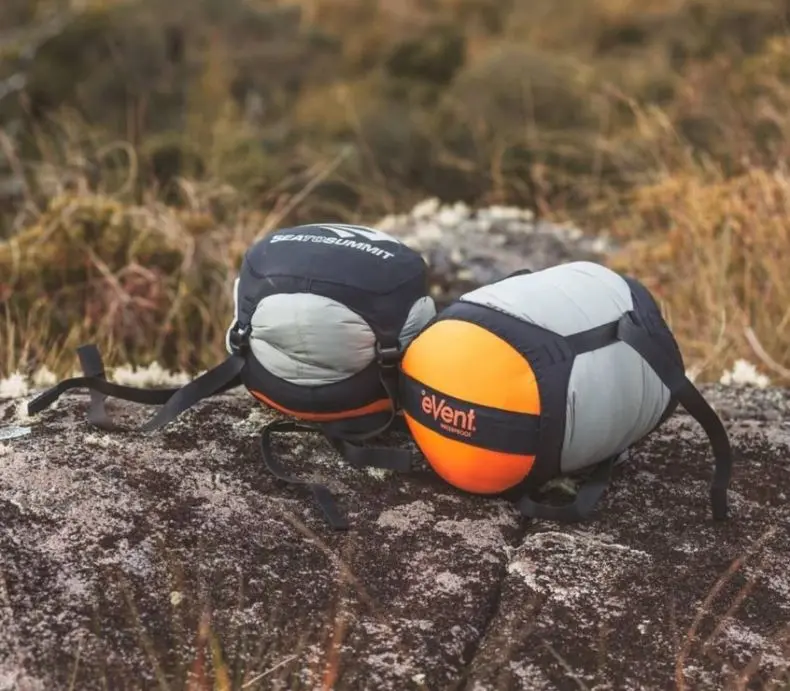
Save more weight with water-repellent down bags around 500 g, such as the Sea to Summit Spark SP II, although prices are considerably higher.
For a smaller budget, choose synthetic: the Millet Syntek 0 weighs slightly over 1 kg, or the Sea to Summit Trailhead II, barely heavier but with a full-length zip.
- For 3 seasons:
Here, I recommend only down to maintain suitable weight and packed size, with a rating closer to 0°C.
Below 1 kg, the Millet Light Down -5 offers an effective solution with water-repellent down. Save weight at a higher price with the Therm-a-Rest Hyperion 20F/-6C, just 600 g with exceptional-quality water-repellent down.
If alternating indoor stays and camping, consider the Sea to Summit Trek TK II, slightly over 1 kg, with a full-length zip for ventilation in mild temperatures.
On a tighter budget, the synthetic Ferrino Lightec SM 1100, weighing 1.1 kg, may suit if nights are not too cold.
Which sleeping bag liner for the Camino de Santiago?
Whether supplementing a sleeping bag or using provided blankets, choose a light, compact liner. Longer trips also call for a comfortable liner that washes and dries easily.
The most appealing compromise seems the Sea to Summit silk/cotton blend liner, in mummy or rectangular shape. Light (150 g), very pleasant, and easy to wash and dry.
You can choose 100% silk for maximum comfort, with slightly more delicate care. The Cocoon Sarco Natural Silk Mummy Liner and Rectangle Travel Sheet are excellent quality.
A 100% cotton liner is possible, but heavier (around 300–400 g). Worth considering without a sleeping bag for short trips. Weight and drying time become constraints on longer journeys. The Trigano Momie mummy liner and rectangular Elémenterre Epicéa work well.
Conclusion:
For the French section of the Camino de Santiago, staying indoors, a good liner should suffice (with the caveats above).
For the Spanish section, camping or occasional makeshift shelters, a sleeping bag becomes useful or necessary. Choose the right comfort rating first, before minimising weight and packed size.
To understand ratings better, and why “comfort temperature” does not guarantee everyone's comfort in every situation, read our article on “choosing a sleeping bag”.