Choosing the right luggage system for your bike largely determines your comfort, self-sufficiency and enjoyment. The difference between minimalist bikepacking and traditional cycle touring mainly concerns capacity, weight, mounting system, stability and bike handling.

And, of course, fatigue! The common ground? Carrying equipment efficiently without spoiling the pleasure of riding.

This guide helps you choose according to your riding style, terrain and trip length. The choice differs greatly between the Vélodyssée and Grande Traversée du Massif Central.

For each luggage solution, we present the optimal capacity, recommended volumes and practical options to simplify packing. Whether heading for a weekend on technical trails or two weeks on roads, you will know exactly which lightweight equipment to take.

Bikepacking or cycle touring: how do luggage systems differ?

The main difference lies in their travel philosophy and luggage system. Bikepacking prioritises lightness and handling on difficult ground (tracks and rough terrain), while cycle touring focuses on carrying capacity, comfort and self-sufficiency over long distances, usually on tarmac or firm surfaces.

Bikepacking therefore favours freedom over comfort, while cycle touring prioritises lasting comfort.

Benefits of minimalist bikepacking bags

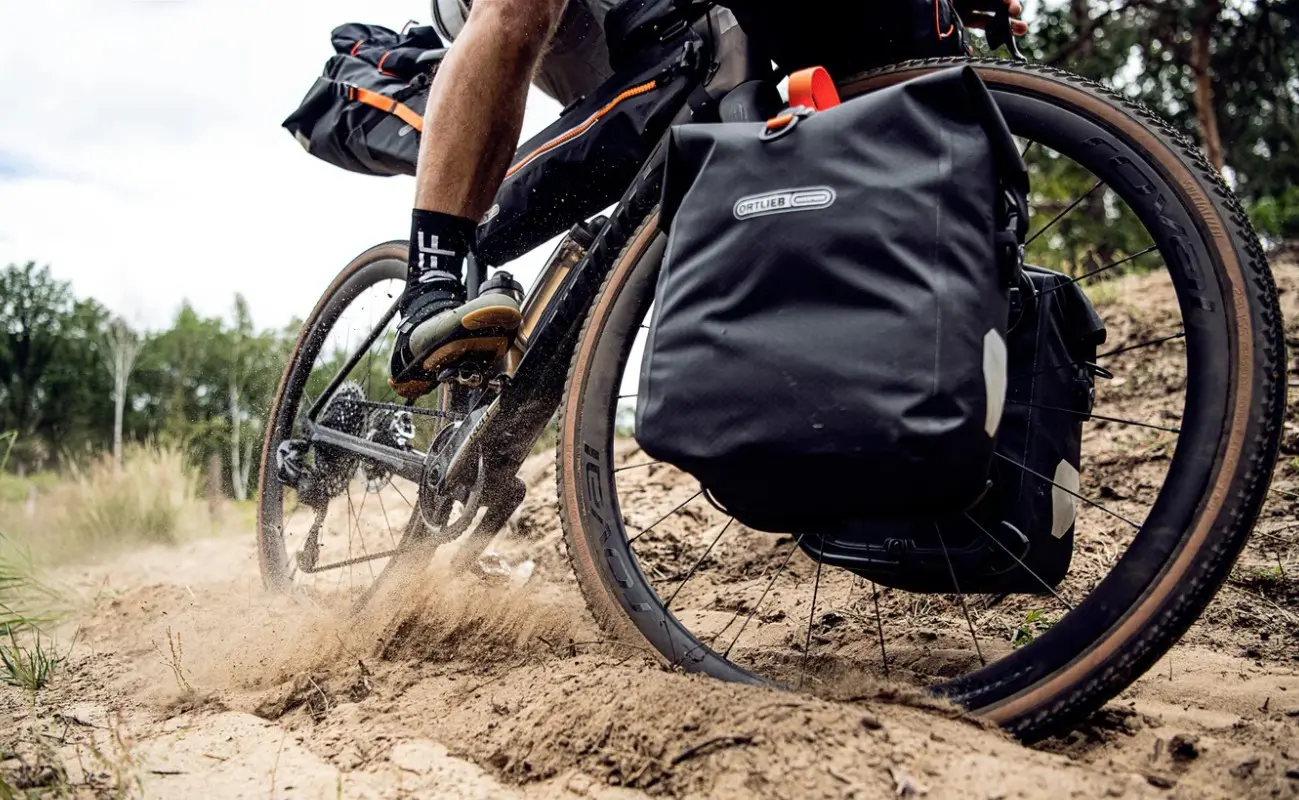
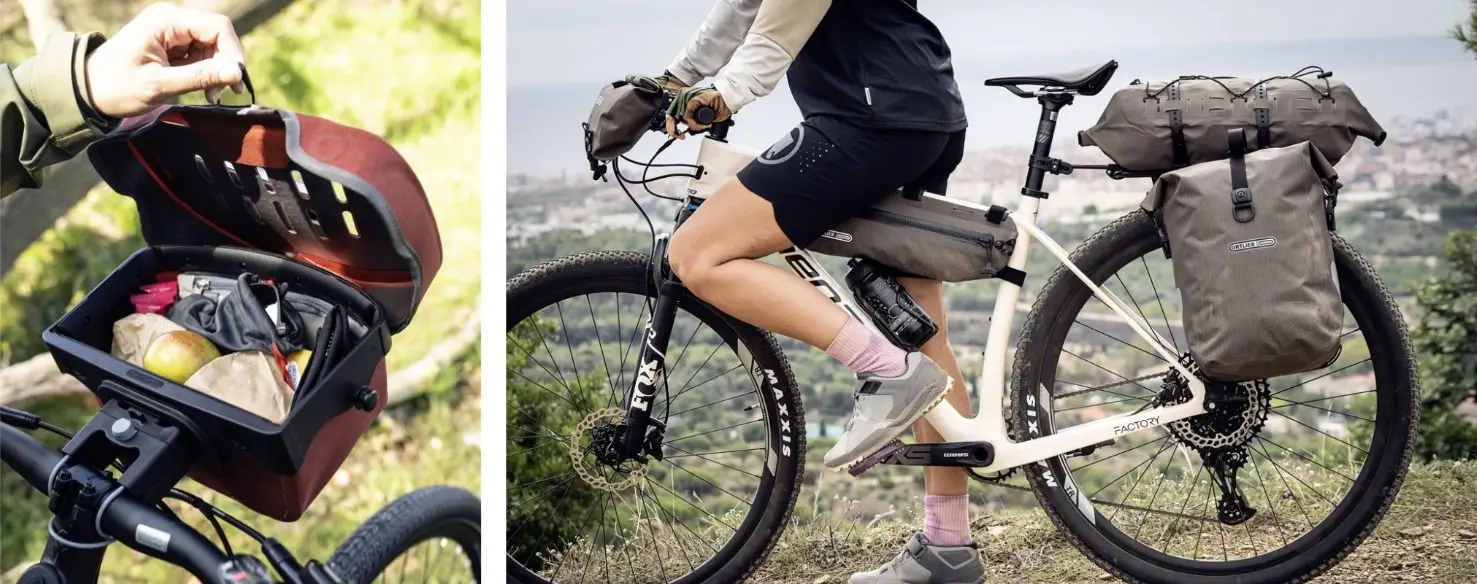
Bikepacking bags attach directly to the frame, handlebars or beneath the saddle, without racks. This lowers the centre of gravity and retains excellent handling, even on narrow or steep trails. Discover how to choose the ideal luggage system for your route and actual needs.

Bikepacking generally combines 3 bag types:

  • Saddle bag: substantial capacity, but prone to swaying
  • Frame bag: excellent stability, quick access
  • Handlebar bag: ideal for light, compressible equipment

These bags feature:

  • Flexible materials: light, durable fabrics with waterproof roll-top closures, specially designed to resist abrasion on rough terrain.
  • Limited capacity: 10 to 20 litres total, divided between several small bags, ideal for trips of one to three days. Access can be less practical than with touring panniers.
  • Aerodynamic design: a compact profile following the bike's shape, reducing wind resistance and improving uphill performance.

Typically, the handlebar bag holds a sleeping bag and light clothing for quick access. The frame bag houses tools and supplies, while the saddle bag carries the tent or mat. Balanced weight between front and rear ensures excellent stability.

Tubular fork bags are also available, but beware: they add front-end weight and may reduce handling on rough terrain.

Benefits of the traditional rack system

For long-distance travel, the best bike luggage system remains the traditional rear rack, sometimes supplemented by a front rack.

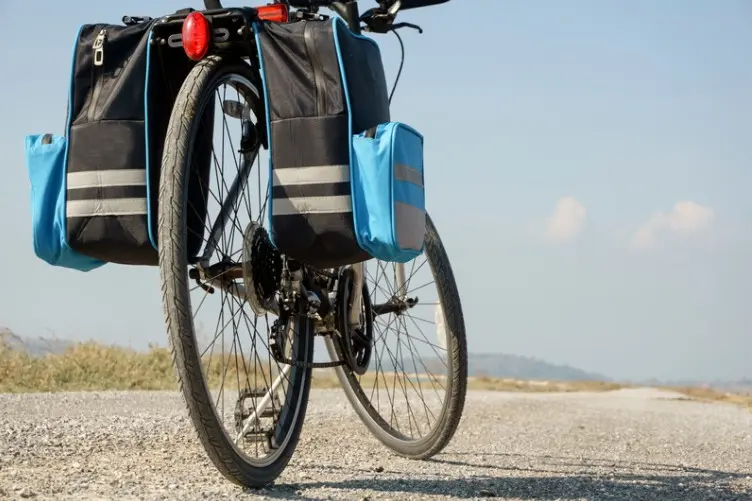
  • Side panniers then offer generous capacity of 25 to 50 litres per pair, ideal for bulky luggage.
  • Handling when stopped is easy: the Click-Fix system removes rear panniers in seconds while securing your belongings during breaks.
  • The rigid or semi-rigid backing protects equipment more effectively from impacts and supports heavy loads without distorting.
  • Access is easy, both during the day (handlebar bag) and at your overnight stop.

Bike trailer: an option for specific needs

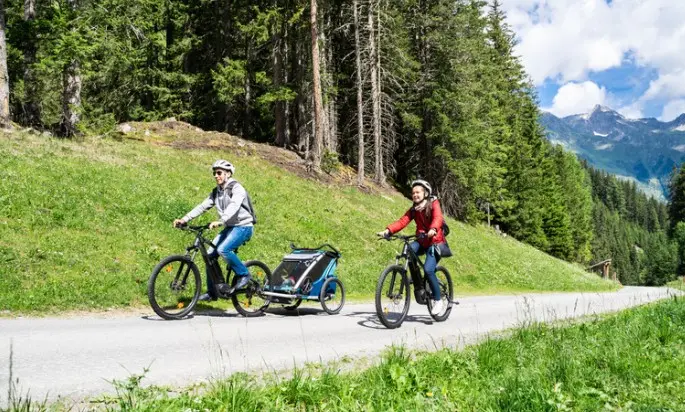
A bike trailer carries very heavy loads, sometimes far beyond a bike fitted with panniers.

It may suit a fully self-supported journey or bulky equipment.

But it has clear limitations:

  • Reduced manoeuvrability (gates, kerbs, narrow passages)
  • Poorly suited to tracks and technical terrain
  • Much greater physical effort uphill

Weight distribution by travel style

In bikepacking, keeping total weight below 10 kg greatly improves endurance in mountains and handling on technical trails. Every gram saved improves performance on long climbs and technical sections.

In cycle touring, carrying capacity takes priority over lightness:

  • You can carry up to 25 kg of well-distributed equipment without compromising pedalling comfort.
  • Around 70 to 80% of weight rests on the rear rack, while the front should not exceed 20 to 30% to preserve handling. This ensures optimal stability on roads or wide tracks. However, keep front-wheel loading below 7 kg for precise steering.

Even when touring, avoid overloading the bike. Why is excess weight a problem?

  • Increased fatigue
  • Unstable bike handling
  • Premature equipment wear
  • Risk of breakage (spokes, axles, racks)

Which equipment, capacity and weight suit your trip length?

Your trip's duration directly determines the capacity and equipment needed. For a short bikepacking weekend, carefully packed 15 litres may suffice, while a ten-day cycle tour needs at least 50 litres for self-sufficiency.
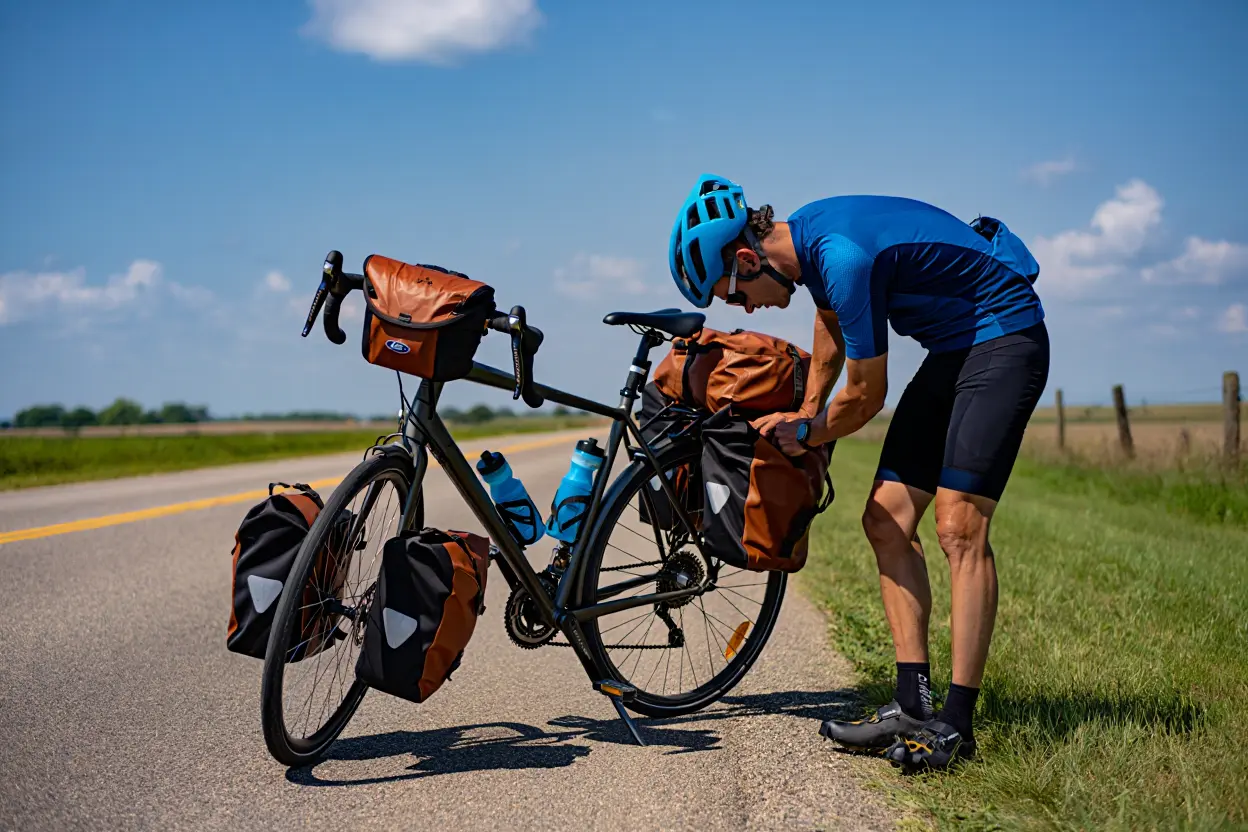
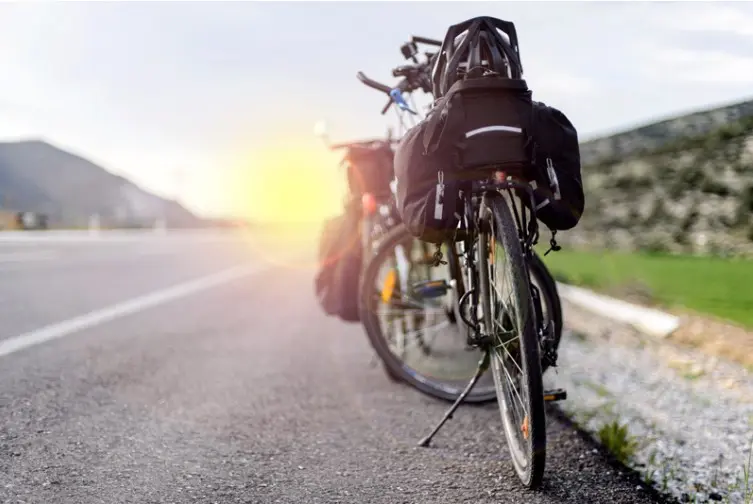
Touring bike loaded with side panniers

Capacity and weight for short bikepacking trips

For 1- to 3-day bikepacking trips, favour 10 to 20 litres total with maximum bike bag weight below 10 kg. For example, combine a lightweight hydration pack with a small frame bag to carry essentials without overloading your bike.

The Z Hydro Race offers 7 litres of storage plus an integrated 2-litre water reservoir, ideal for keeping hands free on rough terrain. The Dyoter (only 520 g) significantly lightens the load while offering good capacity.

DurationRecommended capacityMaximum weightExample bags
1–3 days bikepacking10-20 L8-10 kgZ Hydro Race + frame bag
5–7 days cycle touring30-50 L18-25 kgRear panniers 20–25 L × 2 + front
2–4 days mixed mountain biking16-20 L10-12 kgRaid 16 L + saddle bag

Equipment for long-distance expeditions

For 5- to 7-day cycle tours, choose rear panniers totalling 40 to 50 litres (such as the black Karakorum pro or Aqua Back panniers, sold in pairs), holding a tent, stove and technical clothing. This capacity allows longer between resupplies while maintaining good comfort.

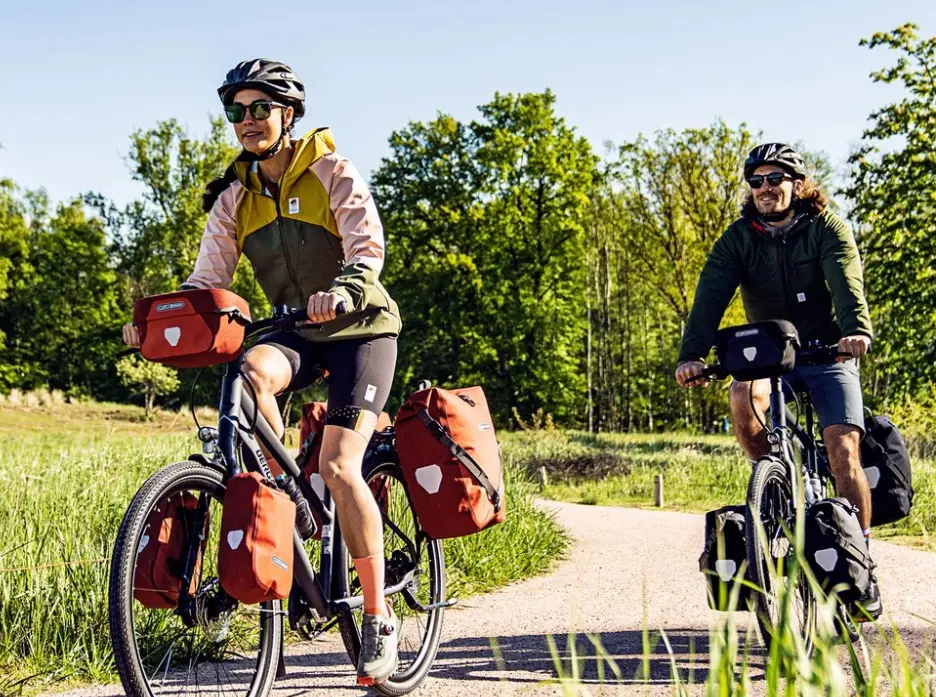
We recommend combining rear panniers, handlebar bags and small frame bags, considering smaller front panniers only if you still need more capacity.

Which cycling hydration system?

A 2-litre water reservoir is crucial in bikepacking for drinking without letting go of the handlebars. Quick access to the tube is particularly practical on rough terrain.

  • The Z Hydro Race offers a complete system positioned on the handlebars or beneath the saddle as needed, adapting perfectly to changing terrain. In summer, consider an extra small 2-litre reserve on routes with few water sources.
  • The Bolt-Lite hydration bladder is both lightweight and easy to handle.

For cycle touring, one or even 2 bottle cages are necessary. Consider an extra hydration reservoir in the panniers for exposed routes or those without refill points. The Watercell ST 6L water carrier, for example, is both light and sufficiently robust.

Which cycling backpack?

For cycle touring, we recommend avoiding a backpack in addition to your load for lasting comfort. Or limit yourself to a simple hydration pack.

For bikepacking, however, a backpack is almost essential for multi-day trips. Keep capacity limited to 15–25L and choose enough flexibility to avoid restricting movement.

  • The Raid 16L backpack is a good choice for 2- to 4-day adventure trips combining cycling and walking on technical trails.
  • Models with integrated ventilation, such as the Tremalzo or Wanaka 20L, significantly improve hot-weather comfort by limiting back sweat on long stages.

Discover our complete selection of bike bags and accessories for your next adventure.

Your equipment does not fit in your bikepacking bags? Combine the 2 systems.

Combining ultralight bikepacking bags with a traditional rack increases capacity while retaining excellent stability, even on technical terrain. This hybrid system enables intelligent distribution of weight and luggage, adapting your load during the journey without losing handling or comfort.

Want to stay light with some comfort? We recommend:

  • Use smaller “front” panniers on the rear rack (20 to 30 L maximum per pair).
  • Add frame bags and a roll-top handlebar bag.

Conclusion

There is no universal system. The right choice always depends on:

  1. terrain
  2. trip length
  3. load weight

In our view, terrain is the first consideration. The rougher and harder to ride it is, the more important light, compact luggage becomes. Conversely, major routes such as Eurovélo 7 or the Vélodyssée allow you to balance weight against desired comfort.

Frequently asked questions

What are the main differences between bikepacking bags and touring panniers?

Bikepacking uses lightweight bags attached directly to the frame, eliminating racks. This offers reduced capacity and excellent stability on technical terrain while keeping weight minimal. Contents may be less accessible than when cycle touring.

By contrast, cycle touring traditionally uses rear panniers on a rigid rack, supplemented by handlebar and frame bags, and sometimes front panniers, with total capacity reaching 70 litres: ideal for more equipment on long trips. It is bulkier and less manoeuvrable on rough terrain.

Which luggage system suits a lightweight three-day trip?

For a lightweight three-day trip, the ideal combination is a handlebar bag, frame bag and saddle bag. This typical bikepacking system offers around 20 litres while keeping total weight below 10 kg. It provides excellent handling and optimal comfort, even on rough terrain.

Can you combine bikepacking bags with traditional racks?

Absolutely! Combine a lightweight handlebar bag with rear panniers on a traditional rack for greater capacity. The key is distributing weight well: around 20–30% front and 70–80% rear. This preserves handling while improving stability on any terrain.

Product comparison
Compare
Rayon Rando advice