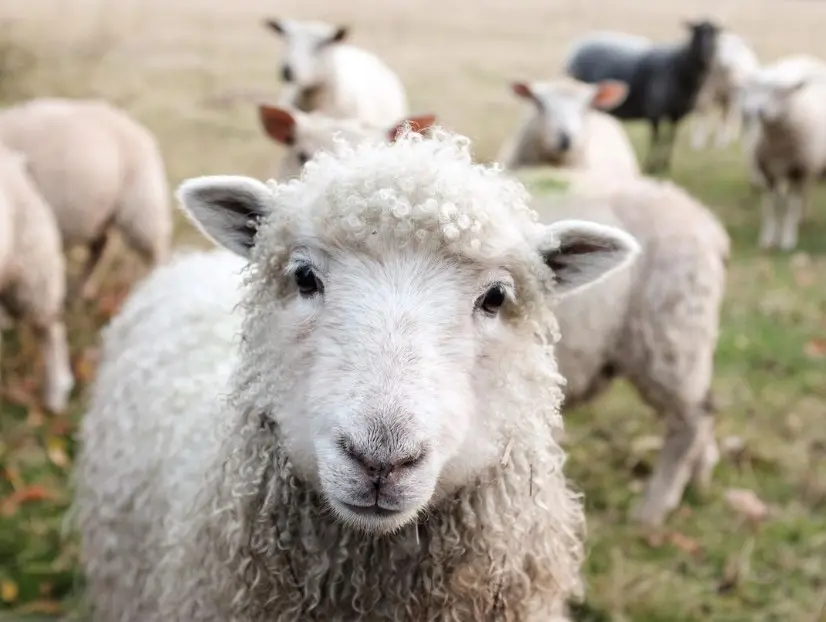
Discover why merino wool is ideal for hiking: temperature regulation, odour resistance and softness.
Socks, underwear, T-shirts: merino wool is a particularly popular hiking base layer. Hiking in cold weather? Or hot weather? Heading out for several days with limited spare clothing? Want comfort both during exercise and at rest? Merino wool ticks many boxes for hikers. However, it also needs a few care precautions.

An overview of this popular natural material in 4 questions:
- What is merino?
- Where is merino used in hiking clothing?
- What are the benefits of merino wool for hiking?
- What are its limitations and precautions for use?
1 – What is merino wool? Properties and origins of this natural fibre
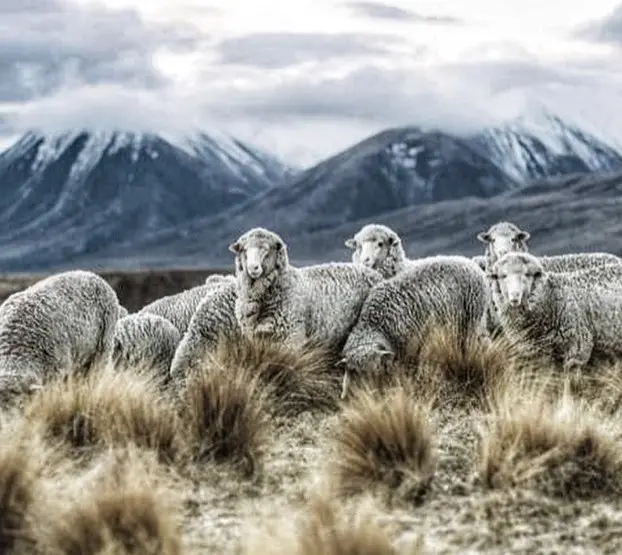
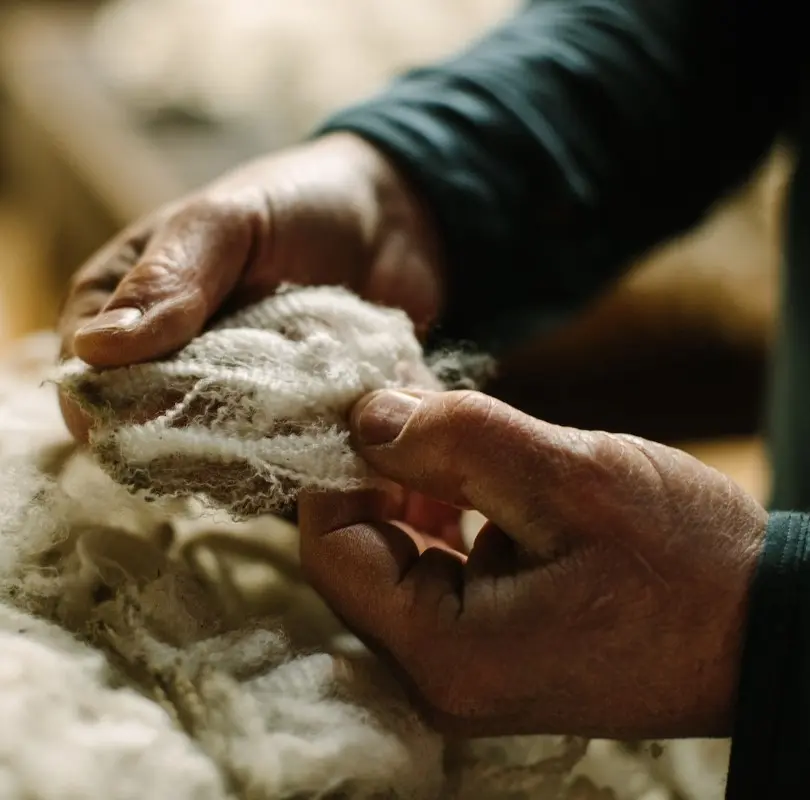
Before it touches your skin, it covers a sheep. But not just any sheep: these are sheep found in the southern hemisphere, mainly New Zealand but also Australia, Argentina and Uruguay, exposed to extreme, changeable weather. Think hot summers with temperatures of 30–35°C, followed by cold winters (down to -10 to -20 degrees).
The sheep are therefore protected by wool adapted to large temperature fluctuations and extremes.
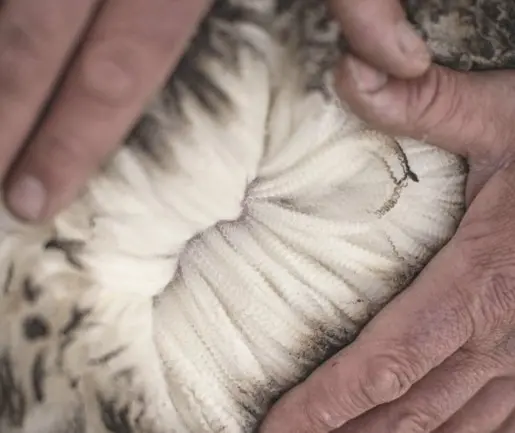
But how does merino differ from wool from French sheep? It is covered with much finer scales and consists of irregular fibres that are exceptionally fine (2.5 to 3 times finer than a human hair, for example). This allows it to trap air for insulation and gives it flexibility and resilience, returning to its original shape and retaining its appearance and volume.
Once processed, merino wool therefore protects against cold through thermal insulation and handles heat by moving body moisture away.
2 – Where is merino used in hiking clothing?
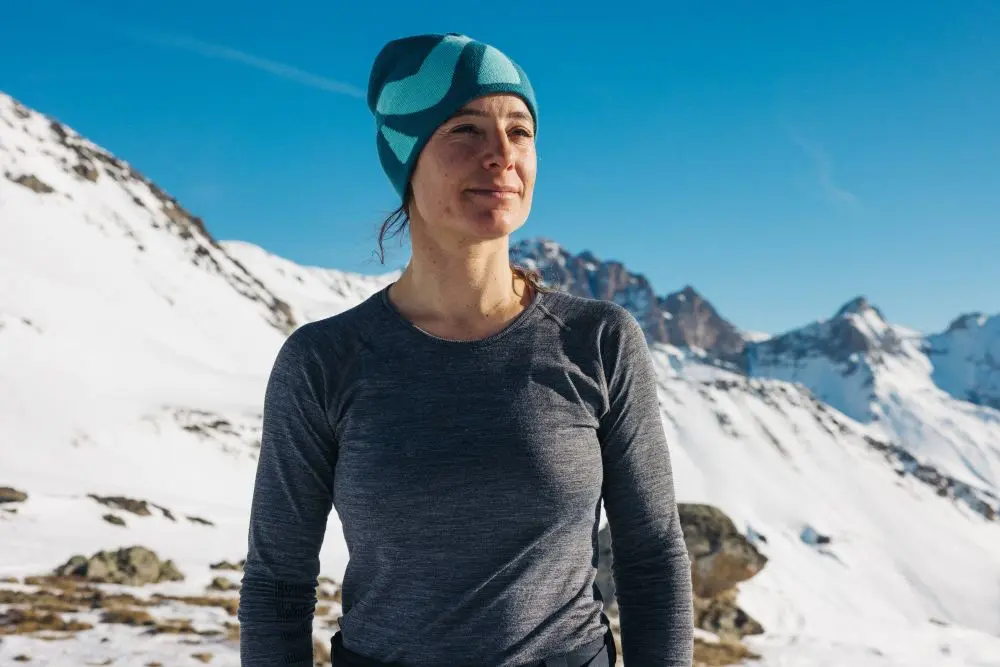
Merino thermal underwear: tops and leggings for cold weather
Long-sleeved thermal tops and leggings are the most commonly mentioned and appreciated uses. Besides warmth and breathability, this underwear offers much greater comfort and freedom of movement than fully synthetic clothing. Specialists such as Icebreaker generally offer underwear made from 100% merino wool. Other brands blend it with one or more synthetic fibres.
Which merino fabric weight should you choose for thermal base layers?
For active use, a fabric weight of 180 to 200 grams provides freedom of movement, warmth and perspiration management.
At rest, a weight of 260 g provides more warmth but is inevitably thicker. It can still be combined comfortably with a fleece and jacket.
Heavier fabrics exist for specific uses (extreme cold, remaining stationary) and generally suit hiking less well.
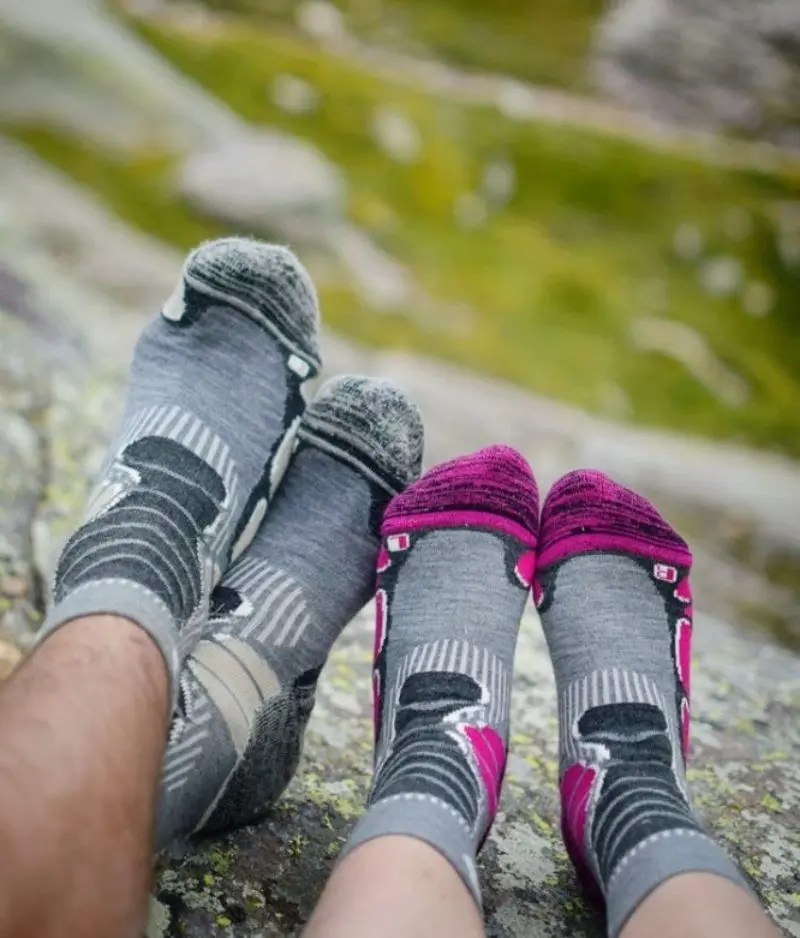
Merino socks for odour resistance and moisture management:
Merino wool is particularly useful in hot weather, wicking moisture to limit rubbing and fungal infections. It is generally blended with a technical yarn to help the sock retain its shape. Specialists such as Monnet place it in selected areas, particularly pressure points and perspiration zones. Discover the best merino socks for hiking and enjoy excellent moisture management and blister prevention properties. Explore merino's benefits for your feet with RayonRando's Trek Light socks.
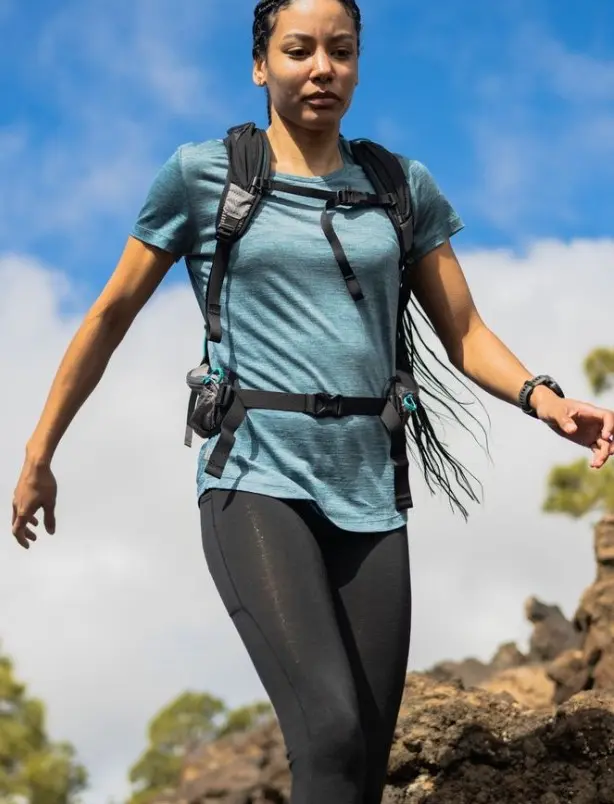
Summer merino T-shirts for breathability and comfort in technical clothing:
Sometimes made from 100% wool, they are more often blended with a technical yarn to help these straight-cut garments retain their shape and reduce costs. Merino T-shirts provide excellent temperature regulation even in damp weather.
Here are 2 products available at RayonRando:
For women, discover our ultralight merino wool T-shirt; for men, our ultralight technical merino T-shirt.
3 – What are the benefits of merino wool for hiking?
Merino benefit No.1: temperature regulation for cold weather and summer
In cold weather, the fibres trap air and insulate against the cold outside. They absorb and release body moisture quickly, preventing thermal bridges that make you feel cold.
A base layer weighing 200 or 260 grams/m2 is warm but still thin, allowing you to add or remove insulating layers as conditions change. Merino allows this layering while keeping you comfortable without trapping perspiration.
In hot weather, wool fibres breathe and continuously move body moisture away, helping cool the body. It acts like a second skin, insulating against heat. This natural temperature regulation makes merino effective technical clothing in winter and summer alike.

Benefit No.2: merino's antibacterial properties combat odours
Hikers particularly appreciate this characteristic, whether wearing garments for long periods or during intensive activity when sweating more than usual.
This antibacterial effect comes from both quick drying and the fibre structure, which does not encourage the bacteria responsible for unpleasant odours to settle.
This improves comfort during use and reduces washing frequency when garments are worn for extended periods.
You can wear merino clothing for several days. Consider airing the garment at the end of the day to keep using it even longer.
Merino benefit No.3: a soft, comfortable natural fibre against the skin
Merino fibres are very flexible because they are so fine (around 18 microns, compared with 45 to 55 microns for a human hair). Their much finer scales than conventional wool feel soft against the skin. This softness lasts.
Does merino wool itch? Does it cause allergies?
No, merino wool fibres do not cause irritation or itching, unlike much thicker conventional wool fibres. Wool's keratin, like the keratin in our hair, is well tolerated by our skin and does not cause allergies. This natural softness makes wool clothing ideal for lasting hiking comfort.
4 – Caring for merino clothing: limitations and precautions for hiking use
Cost: good merino clothing costs more than synthetics and much more than cotton. Blending with a technical fibre sometimes reduces the price slightly.
Care: a strong fibre requiring simple precautions.
Merino fibre is strong, flexible and resilient, returning to its original shape. As with all wool clothing, simply avoid harsh treatment:
- Avoid forcibly stretching it, for example through a high-speed machine spin, an overfilled drum or hanging up soaking-wet fabric.
- Also avoid high temperatures: tumble drying, hot washes and ironing with a hot iron.
- Preserve its natural properties with a delicate cycle, avoiding fabric softener and harsh products.
How to wash and care for merino wool clothing to preserve its quality
- Machine wash cold or at a maximum of 30°C. Wool will not shrink in a cold wash.
- Wash the garment inside out.
- Use a drum that is not overfilled, with a gentle spin.
- Then air dry, laying the garment flat if soaking wet, or hanging it on a line if it is not saturated.
- You can use wool detergent or regular detergent. Do not use fabric softener.
- Do not iron; the garment will generally not be creased anyway.
- Always follow the care label instructions, which may vary with the product's composition.
Washing merino while hiking: be gentle when washing in a stream too; do not rub it against a rock or wring it like an old mop. Dry it flat if very wet. Our clothing care guide provides detailed advice for all your technical garments.
Conclusion:
For hiking, merino wool is ideal as a next-to-skin base layer. Worn alone or with other layers (fleeces, waterproof jackets), it works in every season, particularly in cold or hot weather.
It is, of course, a natural, renewable, biodegradable material (when used alone in a garment). Its strong fibre is much more durable than cotton. This environmental benefit should be balanced against its generally long transport distance.
At RayonRando, we find merino wool's excellent comfort particularly valuable on treks when wearing the same garment for several days, or during fairly intensive, sweaty activity. Its benefits are especially welcome then. It is also ideal for layering in cold weather while staying comfortable. Discover our full range of merino wool clothing for hiking and outdoor activities. Choose the model suited to your climate and activity, and enjoy your hike.