Choosing bike panniers means selecting the right sizes, positions, attachments and protection. You also need to consider load weight and volume, route, bicycle and the cyclist's legs!

At RayonRando, we favour the 2 leading brands Vaude and Ortlieb, particularly reliable for both ease of use and durability. More basic models may suit occasional use, however.

Here are some tips for making the right choices for cycle touring or bikepacking, meaning lightweight bicycle travel.

Which bags for a touring bike?

The starting point: rear panniers

Together with the luggage rack, these provide your main storage.

Points to consider:

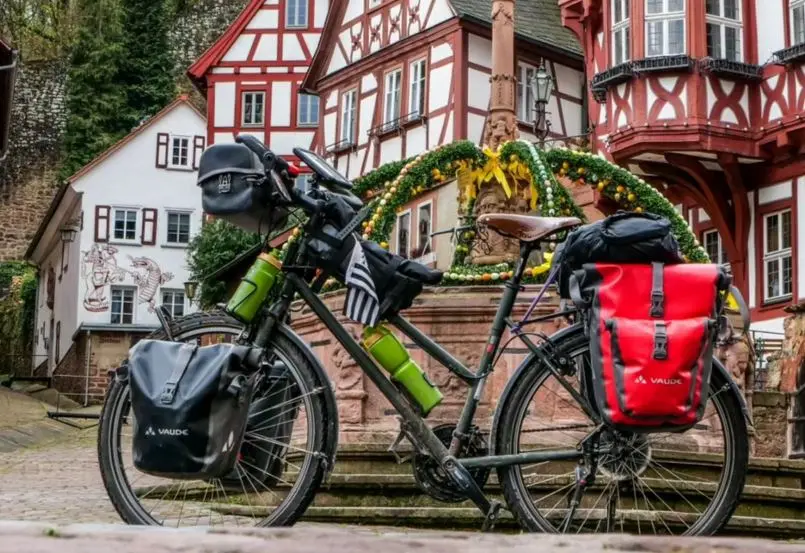
  • Capacity is generally 20 to 25 L each: a good balance between roominess and bulk. Smaller “front” panniers can work perfectly well at the rear if you need less storage. However, I recommend 20–25 L for greater flexibility.
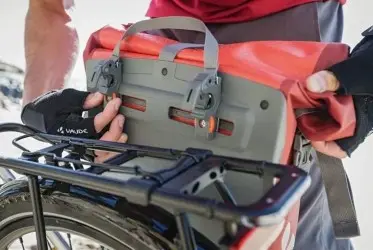
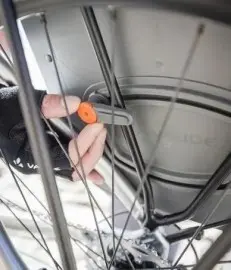
  • The attachment system. Only basic panniers use cheaper hook-and-loop fastenings, which make removal awkward. Click-fix-style attachments are more practical: their hooks close onto the rack in 2 seconds and release just as quickly by pulling the pannier handle. This avoids leaving panniers unattended on the bike and makes arriving at and leaving camp easier. Some accept a cable lock: reassuring, but unlikely to deter a determined thief for long. Both Vaude and Ortlieb offer these systems.
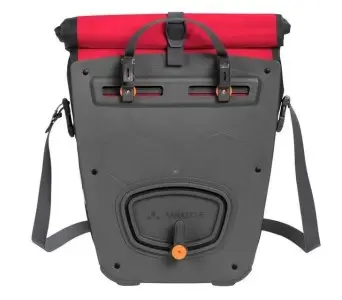
  • Wheel-side protection. I like Vaude panniers with a rigid panel on the wheel side. Ortlieb panniers generally use the same fabric as the front. Both are sturdy, however. At RayonRando, we receive almost no after-sales requests for panniers from these 2 brands.
  • Rain protection. Some flap-top panniers are not waterproof, requiring you to stop and fit a rain cover. Vaude and Ortlieb mainly offer waterproof panniers with roll-top closures. Very effective, with permanent protection, so rain requires no action. However, the few flap-top Vaude panniers still available seem slightly roomier than roll-top versions.
  • Also consider Vaude's Karakorum triple pannier. The last remaining model from Vaude's older non-waterproof range combines 2 zipped side panniers with a top bag. It holds plenty and is useful if you want to avoid front panniers.

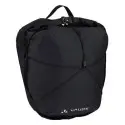
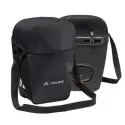
Aqua Back Pro rear bike panniers

A pair of rear bike panniers with flap closures. Easy to attach and remove.
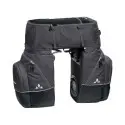
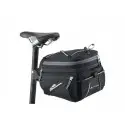
Black Karakorum Pro rear bike panniers

A highly practical combination of three rear bike bags for multi-day cycle tours.
Should you fit front panniers?

I prefer travelling light, so I am not a great fan of front panniers. They have several drawbacks:

  • Weight on the steering wheel makes the bike less manoeuvrable and bumps feel stronger on tracks.
  • Wind resistance, combined with weight, makes riding harder.

They also make the bike harder to handle when pushing it.

However, beyond a certain load, front panniers make sense. In my view:

  • With around fifteen kilos, you can often manage without front panniers, fitting everything into rear panniers, the rack and additional bags.
  • Around twenty kilos or more starts to mean considerable weight on the rear wheel and awkward bulk to accommodate. Distributing volume and load between front and rear wheels then becomes more advantageous.

Front panniers are smaller than rear ones, generally around 10 to 16 L. There is a reason: always minimise weight and bulk on the front wheel to limit the drawbacks mentioned.

Heavily loaded cycle tourists sometimes use a bike trailer instead. Fine on flat, surfaced routes, but potentially hard work with frequent climbs. Consider pedestrian gates, difficult to negotiate with a bike + trailer, and uneven tracks. Best reserved for large loads.

Aqua Back Light waterproof rear bike panniers

A pair of ultralight, compressible rear bike panniers. Ideal for cycle touring.
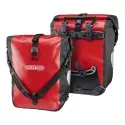
Red SPORT-ROLLER CLASSIC waterproof bike panniers

A pair of fully waterproof front or rear bike panniers with roll-top closures. Easy to attach and remove.
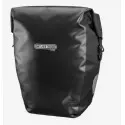
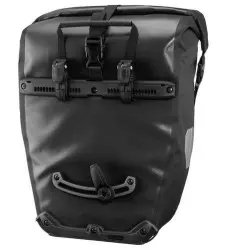
Back Roller Core waterproof bike pannier

Waterproof rear bike pannier with reflective strip and easy attachment.
Which additional bike bags should you choose?

Handlebar bag: very practical during the day.

  • A Click-Fix-style system attaches and removes it in one movement. In use, these systems are reliable and cause no bag vibration (Ortlieb and Vaude; we have not tested every brand).
  •      These bags have a shoulder strap. Use them for items you want close to hand (phone, wallet, snacks, map, etc.) and do not want to leave on the bike. When stopping, take the bag shopping or for a drink.

     Different frame and saddle bags:

  •      Different bag shapes attach inside or sometimes above the frame with hook-and-loop straps.
  •     Useful for distributing weight and storing infrequently needed accessories unlikely to attract theft, such as a puncture repair kit.
  •      A small bag can also attach to the seatpost, provided it does not obstruct rack luggage.
  •      Waterproof cylindrical storage containers also fit into a bottle cage.


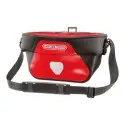
Red Ultimate Six Classic 5 L handlebar bag

5 L handlebar bag with several pockets and a magnetic lid closure.
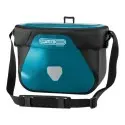
Blue 6.5 L handlebar bag

6.5 L handlebar bag with several pockets and a magnetic lid closure.
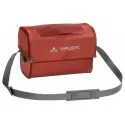
Aqua Box Red handlebar bag

A waterproof handlebar bag; removable in 1 click (Klick Fix).
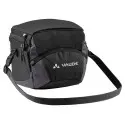
Ontour Box M handlebar bag

Well-organised small handlebar bag with several pockets, rain cover and shoulder strap.
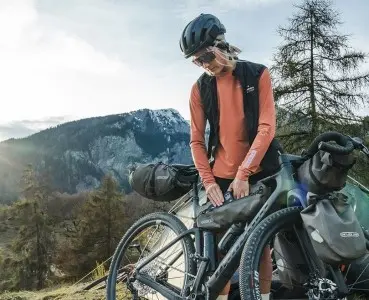
Which bags for bikepacking?

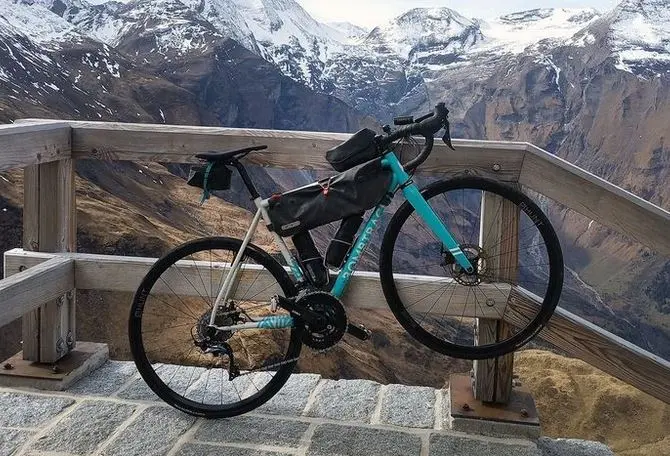
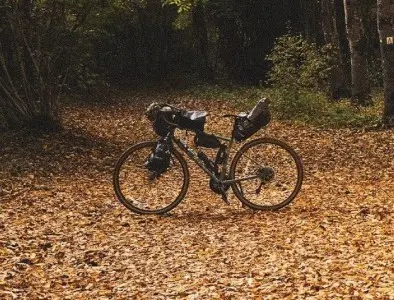
The term bikepacking needs clarification: it means self-sufficient cycling with no rear luggage rack or front pannier rack.

Besides bikes unsuitable for rack fitting, bikepacking aims to:

  • Minimise weight to cover greater daily distances (higher speed and less fatigue) or tackle routes with climbs more easily.
  • Reduce both weight and bulk to preserve bike handling as much as possible. Particularly useful for mountain bike touring on paths and rough terrain.

Bikepacking therefore aims for greater independence (distance, duration and terrain) or less fatigue, at the cost of more basic comfort than conventional touring.

Your bikepacking bags can attach to the seatpost, handlebars, frame or even fork. A small rucksack can supplement them if lightly loaded and comfortable during activity.

Bikepacking bags are generally made from flexible fabrics. Forget rigid panels and click-fix systems: low weight and compactness come first.

The main load attaches to:

  • The seatpost. The saddle bag, generally cylindrical or tapered, narrow and long, attaches directly to the post or via a rigid support. We recommend bags with a rigid support to prevent vibration and swaying, and make handling easier. Vaude and Ortlieb saddle bags work well. Avoid budget bags attached directly to the post and saddle with hook-and-loop straps, unless carrying very little.

Off Road Bag M bike bag

A large bike luggage bag attaching beneath the saddle; removable in 1 click (Klick Fix).
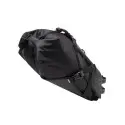
Trailsaddle waterproof bike bag

Waterproof bike saddle bag comprising a saddle attachment system and a 12-litre waterproof bag.
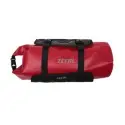
  • The handlebars. A bikepacking handlebar bag is also tubular, with straps or hook-and-loop fastenings. Check that its width fits within your handlebar width. Some tents are narrow enough to carry on the handlebars. Separating the non-compressible poles from the rest of the tent can help reduce bulk.

These bags generally hold between 10 and 20 L. With seatpost bags, remember: the longer and more heavily loaded they are, the greater the risk of swaying.

Z Adventure F10 handlebar bag

Waterproof bike handlebar bag.
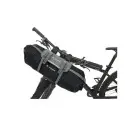
Trailfront waterproof bike bag

Waterproof bike handlebar bag comprising a handlebar attachment system and a waterproof bag.
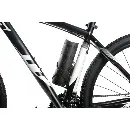
  • Additional luggage can attach inside or above the frame. Use the same small frame bags recommended for touring bikes, or add longer bags. Ensure these are narrow enough not to interfere with pedalling.

As a last resort, you can also attach tubular bags to the front fork. However, this slightly reduces handling and increases wind resistance, diminishing bikepacking's benefits.

Z-Box L tool container

Lightweight, waterproof bottle-shaped tool container with two compartments.
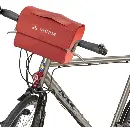
Aqua Box handlebar bag

A waterproof handlebar bag; removable in 1 click (Klick Fix).

Conclusion:

Whether for a family cycle tour on touring bikes or lightweight bikepacking, choosing bike bags requires planning for a fairly or very compact load. Weight matters, but volume is often the main constraint.

For relaxed exploration, we recommend a touring bike setup with rack-mounted panniers. Bikepacking is a sportier option, better suited to experienced cycle tourists prepared to compromise on comfort.

Ultimately, choosing bike bags and equipment means finding a balance between comfort while riding (encouraging less luggage) and comfort at camp (increasing luggage volume).

Product comparison
Compare
Rayon Rando advice