





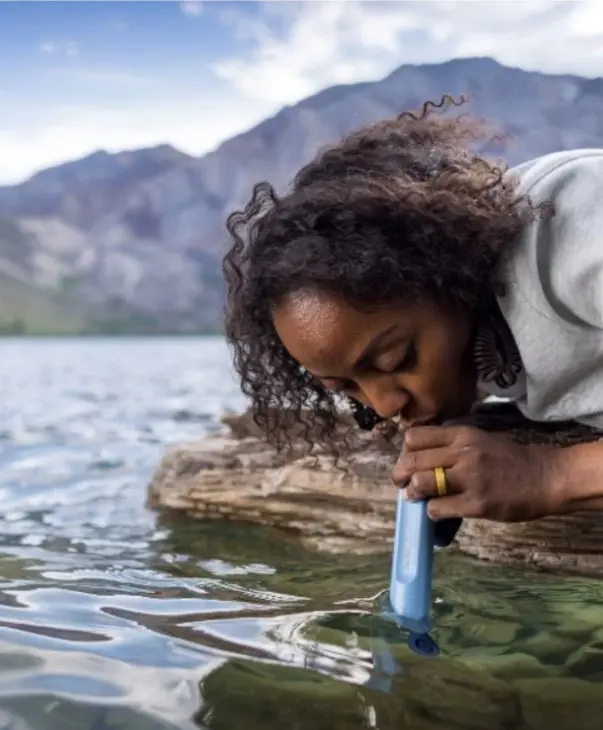
When hiking, finding drinking water is THE priority. But far from civilisation, hikers sometimes doubt the quality of water from a spring, stream or lake, and even more so stagnant water.
Effective solutions exist for easy water purification. Mechanical, chemical and UV systems help turn contaminated water into drinking water simply.
So how do you filter water when hiking? How do these purification systems work? Rayonrando explains everything you need to understand water filtration and equip yourself for future trips, camps and day hikes.
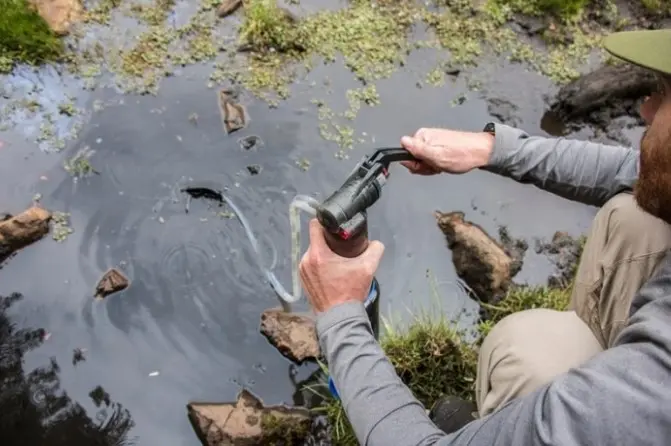
Micropur purification tablets
For clear but high-risk water, such as a stream below a herd of cows, a Micropur tablet is an effective solution. Others exist, such as Hydroclonazone.
These Micropur tablets (Forte version) contain 2 active agents:
- Chlorine: to disinfect water by eliminating bacteria and viruses.
- Silver ions: to preserve water for up to 6 months.
Their format keeps backpack weight low while being very effective against all microorganisms: bacteria, protozoa and viruses.
Take care with prolonged, heavy use, such as a 1-month trek: daily use of these tablets may affect microorganisms in your body. Use them only when genuinely needed and follow the dosage.
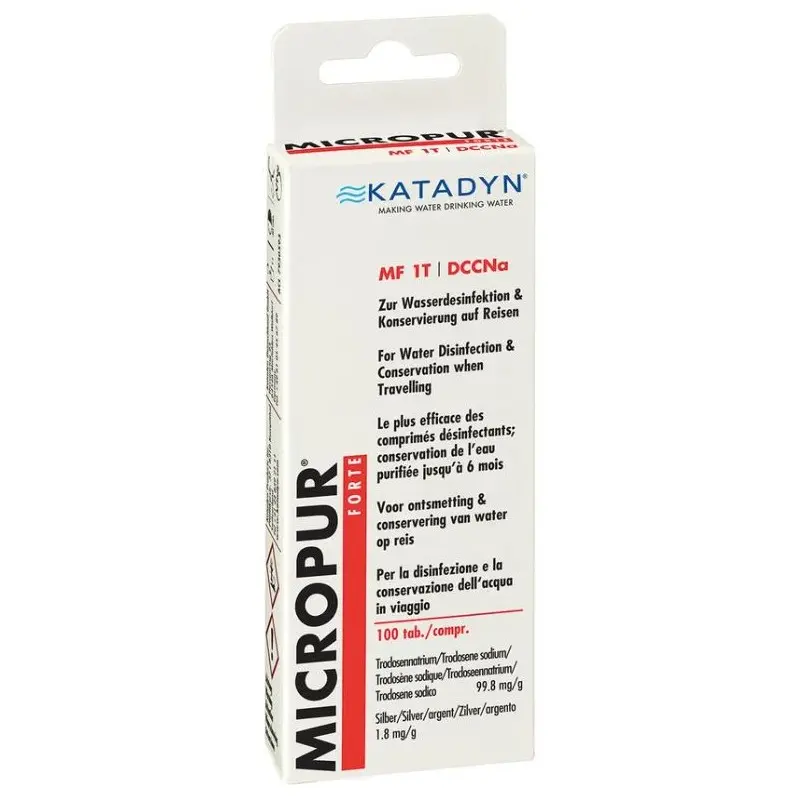
How do you use Micropur tablets?
Use is very simple:
- Take 1 tablet per 1 L of water.
- Place it in your bottle or hydration bladder.
- Wait 30 minutes (120 minutes in tropical countries, to eliminate amoebae and Giardia).
- The water is ready to drink!
Micropur tablets come in boxes of 100 (5 strips of 20 tablets). You can easily carry only the quantity needed, but always allow a margin.
What about bad taste in treated water?
If stored for several hours, water may develop an unpleasant chlorine taste as the active agents contact and eliminate microorganisms. The simplest solution is to treat water as needed. Consider carrying a small bottle of lemon juice or similar to add a few drops. Your water will then be both tasty and drinkable!
What if my water is cloudy? Filter it mechanically first. More on that below.
UV purification
UV water-purification lamps exist: UV-A quickly destroys bacteria, protozoa and viruses in water.
They work perfectly in clear water. Cloudiness and sediment, however, reduce effectiveness.
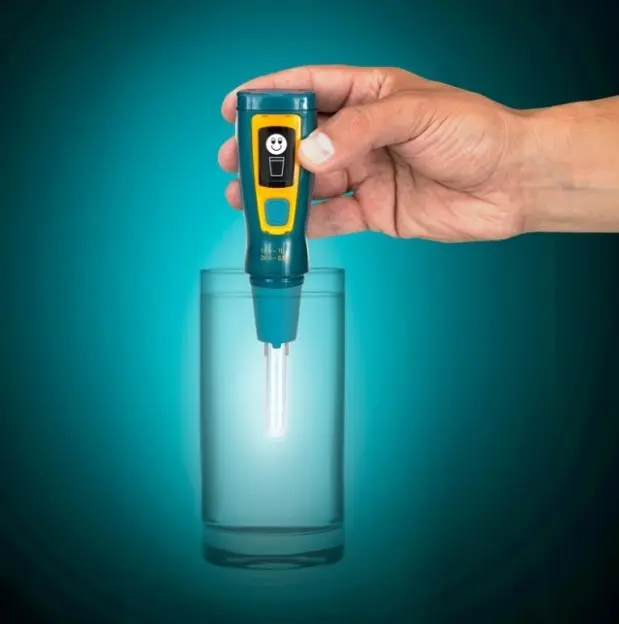
Very light and compact, a UV purifier such as the Steripen Ultra offers exceptional service life thanks to USB charging (or batteries, depending on model) and very simple maintenance.
A UV purifier is also easy to use:
- Switch on the lamp.
- Immerse it in your bottle or hydration bladder.
- Stir for 90 seconds per 1 L of water.
- Your water is ready! On the Steripen Ultra, a small smiley appears when the purification cycle finishes.
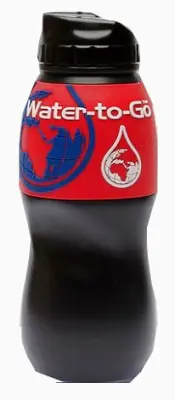
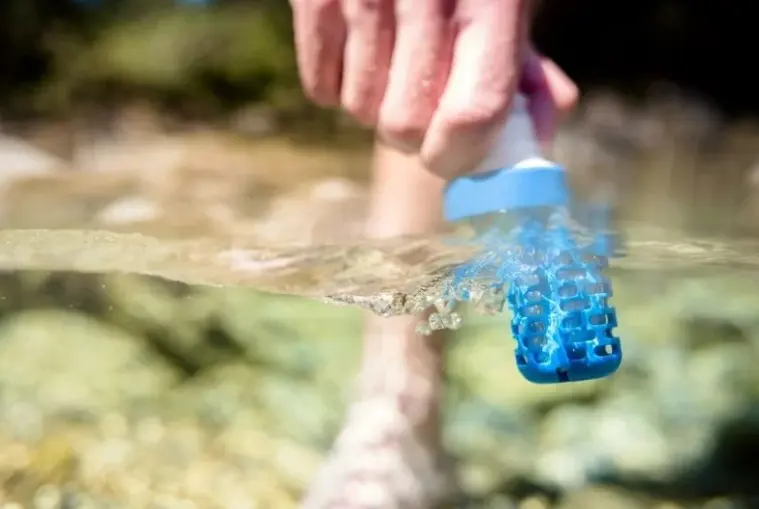
The Water-to-go positively charged filter
Behind this name lies a specific technology based on nano-alumina. These substances, placed on a membrane, emit a positive charge which, once wet, attracts negatively charged contaminants found in protozoa, bacteria and viruses. This technology is used in filter bottles such as the Water-to-go Outdoor.
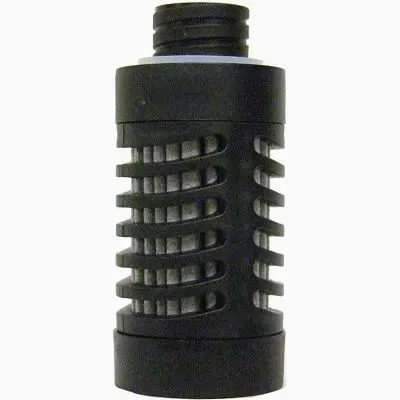
Once the bottle has been used (wetting and activating the membrane), the Outdoor model's filter treats around 200 litres of water or lasts around 3 months. However, the filter is replaceable and sold separately if you wish to keep spares.
The Water-to-go filter is therefore a sensible choice for a one-off trek or trip, bearing its short service life in mind.
While active, purification is effective and use could hardly be simpler:
- Fill your bottle.
- Drink!
Mechanical filters
With this filter type, once clogged, it stops working. This is a reassuring, very effective solution.
These mechanical filters have membranes with micropores between 0.1 and 0.2 microns in diameter. This traps all bacteria and protozoa behind a physical barrier, but not smaller viruses.
This immediately effective filter type is therefore well suited to countries at our latitudes, while requiring caution in risky areas such as streams below livestock that may contain viruses. Tropical countries, more prone to viruses, also require vigilance.
Alongside these mechanical filters, carry spare Micropur Forte tablets for these situations. Filter water first, then add Micropur: it will then act only if germs remain in the water.
These mechanical filters come in several forms:
- Filter bottles for limited needs or precautionary use:
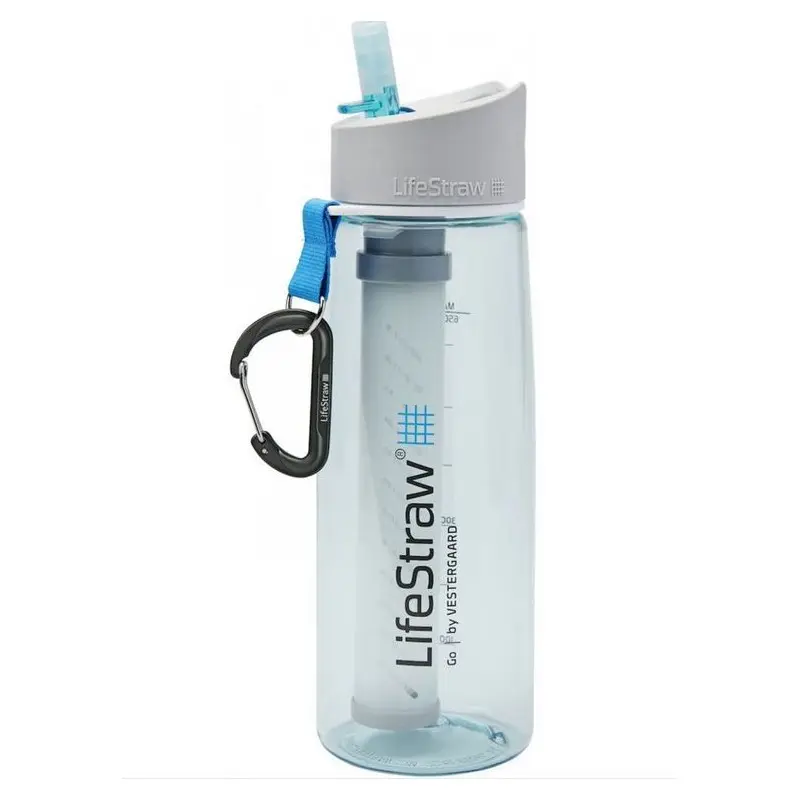
- Rigid bottle (such as the Lifestraw Go tritan): very robust and simple to use.
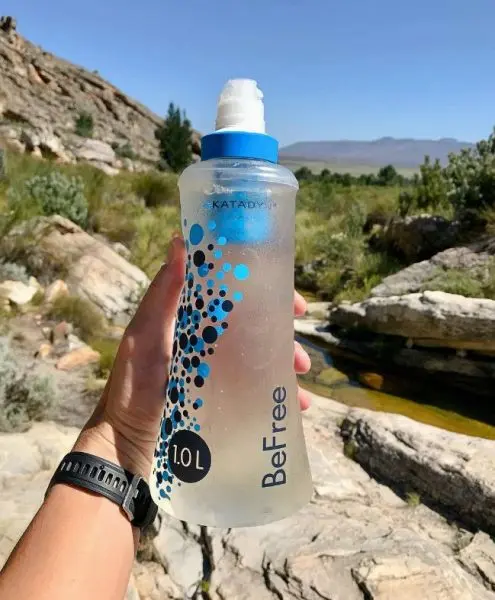
- Soft bottle (such as the Katadyn Befree 1 L): very light, compact and simple to use.
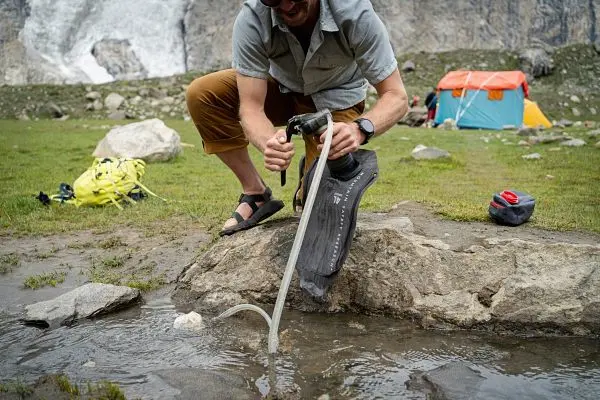
- Pump filters (such as the Katadyn Vario filter) filter larger volumes and very cloudy water. They offer long service life (up to around 2,000 L) and high flow (2 L/min). Service life is indicative, as it depends heavily on the water filtered (clear or “dirty”). They are heavier and bulkier, so take them only when genuinely needed.
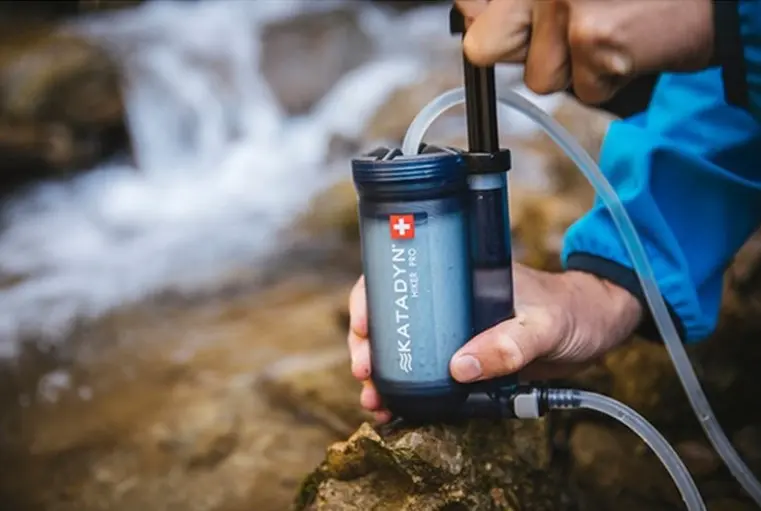
The filter remains effective while water flows, avoiding the risk of using a filter that no longer filters. Replace the cartridge when clogged.
For longer life, maintain your filter regularly by rinsing with clean water to remove impurities. For camps around 0°C, I recommend keeping it inside the tent, or even at the foot of your sleeping bag. This prevents the wet membrane freezing and becoming damaged.
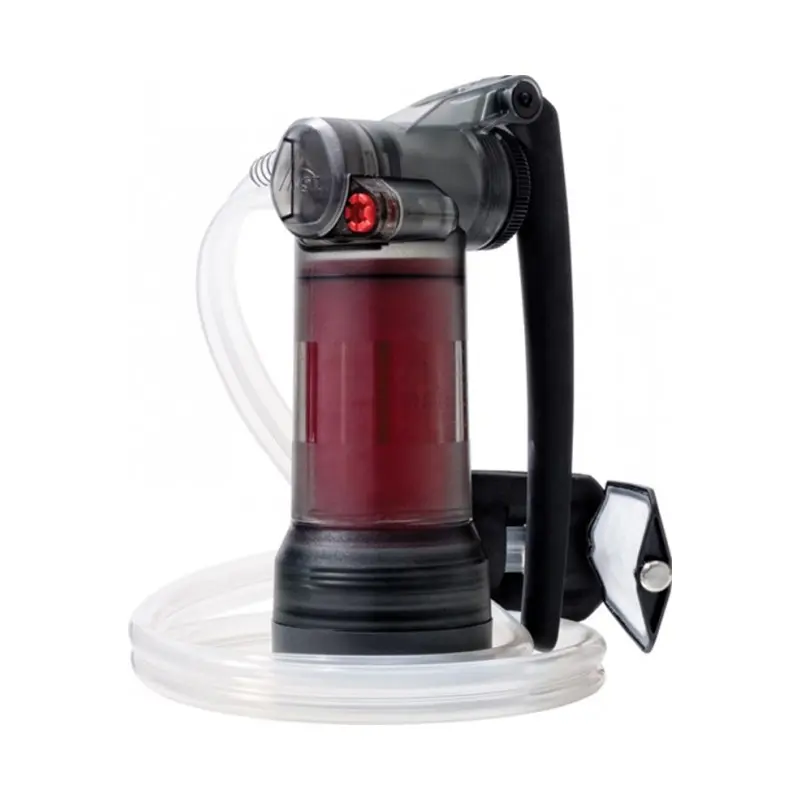
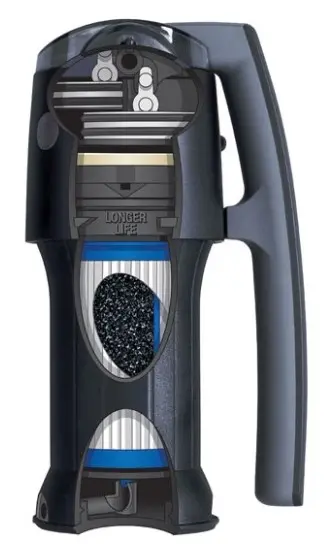
The Rolls-Royce of filters: the MSR Guardian
The MSR Guardian is the only filter offering a 0.02-micron membrane! Even viruses cannot pass through. It also has exceptional service life (up to 10,000 litres of water), depending on water cloudiness, thanks to a clever self-cleaning system activated with every pump stroke. Treated-water flow is substantial (2.5 L/min).
Packed with technology and therefore expensive, this filter comes into its own on demanding expeditions to all 4 corners of the globe, purifying all water encountered.
What about carbon filters?
Some filters include a carbon filter alongside the 0.2-micron filter. This is primarily for comfort: carbon neutralises unpleasant tastes or odours.
Bear in mind, however:
- Carbon filter life is short (often 100 to 200 L). You may not notice it has stopped working, except through an unpleasant taste in the water.
- Carbon filters are sometimes said to act on chemicals such as pesticides. They do, but do not stop them completely. Filtration is partial and depends on the chemical content and condition of your filter. Do not therefore rely on a carbon filter for effective protection against chemicals.
A carbon filter is therefore more of an extra than an essential accessory.
Conclusion
Your water-purification system choice depends on your destination and the equipment's usefulness relative to its weight.
You should always carry a few purification tablets (hydroclonazone or Micropur), which are both highly effective and light. Filter bottles are practical on walks for limited needs. Larger mechanical filters, sometimes combined with tablets, prove very useful for cloudy water and high-risk destinations such as tropical regions.
Remember that filters cannot be used with seawater or urine… Nor can they effectively filter chemicals.
If nothing better is available and you have clear but questionable water without purification equipment, remember the sun's UV rays: prolonged exposure in a transparent bottle can kill microorganisms. However, effectiveness requires several hours of sunlight. The effect is faster if the water is warm.
Finally, seek drinking water, or water with the lowest contamination risk, from the outset. To learn more, read our article: “How to find drinking water when hiking”.