
At RayonRando, we often meet hikers whose main priority is a light backpack. Asked why, they are surprised: low weight seems a good thing in itself. That is not always so.

Could you hike with a simple plastic bag fitted with 2 straps as shoulder straps? It would be extremely light and extremely uncomfortable.

A lightweight backpack: what for?

Weight is a constraint when trekking. Reducing the weight you carry improves comfort by reducing the fatigue of carrying an unfamiliar “extra load”.

But carrying comfort also means moving freely, avoiding discomfort from rubbing or pressure points, and having a backpack that is easy to handle and organise.

From that perspective, a lighter backpack does not necessarily mean greater comfort.

There is no miracle solution to making a lightweight backpack. More technical packs may use lighter materials than basic backpacks, but lightweight packs mainly use less material. At RayonRando, we find that what really distinguishes a lightweight backpack from a very comfortable one is this reduction in material, which means:

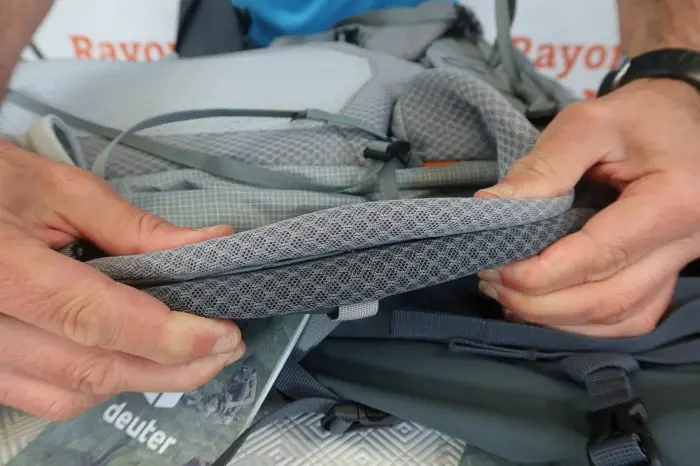
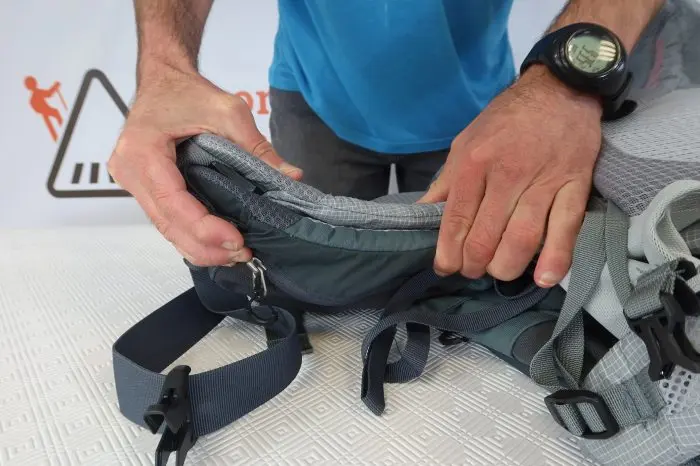
  • A thinner carrying system. This may affect the frame, but it is particularly noticeable in the foam padding on the shoulder straps, back and hip belt. It is invariably thinner, and often firmer, than on heavier backpacks.
  • Fewer features: fewer pockets, zipped pockets, access points and accessories such as attachment straps and a rain cover.

As a result, you gain comfort by reducing weight, but lose comfort through a more basic carrying system and less convenient storage.

Before choosing a lightweight backpack, you therefore need to decide whether the weight saving makes it more comfortable in use than the reduced carrying system and storage options.
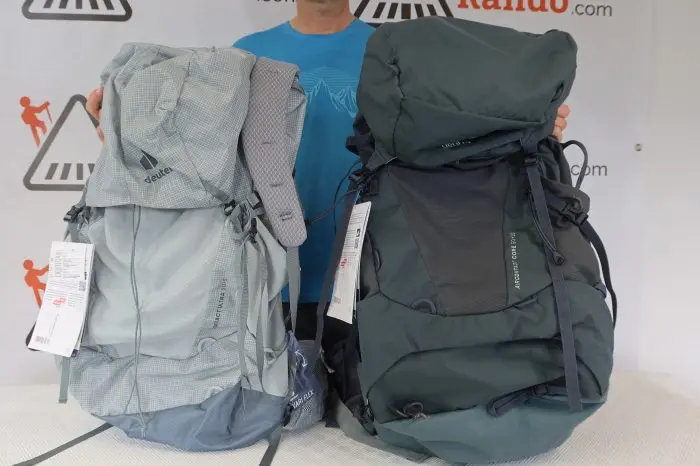
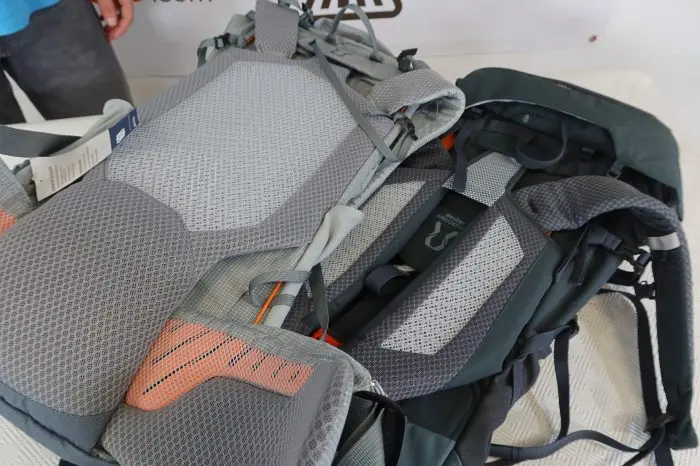
  

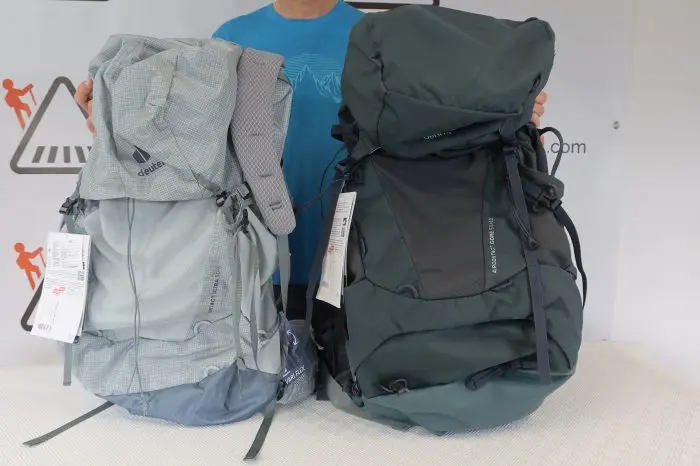
For example, here is a comparison between Deuter's Aircontact Ultra 50+5, on the left, and Aircontact Core 50+10, on the right. The first saves almost 1 kilo compared with the 2nd, for the same capacity. However, its hip belt and shoulder strap padding is thinner, while the Aircontact Core's back offers more comfortable, breathable lumbar support.
  

How do you find the right balance?

To decide whether to opt for an ultralight backpack or a heavier but more comfortable pack, we recommend considering 5 aspects.

The weight of your kit, excluding the backpack:

- If you carry a heavy load, you need good padding and a stable carrying system that moves with you. Above 15 kg, for example, I do not think looking for a lightweight backpack makes sense.  

- If you have already optimised the rest of your equipment and your kit is already light, below 10 kg, a lightweight backpack may be worth considering, without neglecting carrying comfort.
Your health:

If you have physical problems, think carefully about what suits your situation best. A lightweight backpack may help reduce back pain, provided it is lightly loaded. For leg joint pain, however, a backpack with a comfortable carrying system may be more appropriate.


The length of your trip:

If you are travelling for a long time, the balance tends to favour a comfortable backpack. You will probably have slightly more equipment and weight than on a short trek. In this case, convenient storage is very welcome, whereas emptying your pack to find your belongings can become tiresome.

Of course, on a long ultralight hiking trip with minimalist equipment, a lightweight backpack still makes perfect sense.

For a short trek, it is easier to optimise your kit and pack weight.


The type of trip:

If you travel or hike staying in a private room every night, you can easily empty your pack and do not necessarily need lots of pockets.

If you sleep in mountain hut dormitories, and especially in a tent, it is useful to have plenty of pockets so you can find your belongings easily without emptying everything.

If you travel fully self-sufficiently, with a tent, stove and food, good compartmentalisation is also welcome. Having to rummage through your pack during the day looking for a hidden accessory is frustrating.

Conclusion:

Seeking a lightweight backpack at all costs can be counterproductive to your actual aim: walking more easily, feeling more comfortable and tiring less.

The weight of your kit, excluding the pack, remains the first factor to consider. If you carry less than 10 kg, you can look to optimise the pack's weight. If you carry more than 15 kg, a sufficiently substantial pack with a good back system and padding is preferable.

Likewise, if you have a slight, lightweight build, pack weight is worth considering, less so if you weigh 90 kg. Looking for an ultralight women's backpack is often a legitimate concern.

Finally, if you have physical problems, think carefully about what matters most: a very light pack, or one that is comfortable on your hips, stable and does not restrict your movement?

Hiking light is very pleasant. But looking for an ultralight backpack should always be the final stage of reducing weight. The first step is to lighten the contents of your backpack.

Product comparison
Compare
Rayon Rando advice