





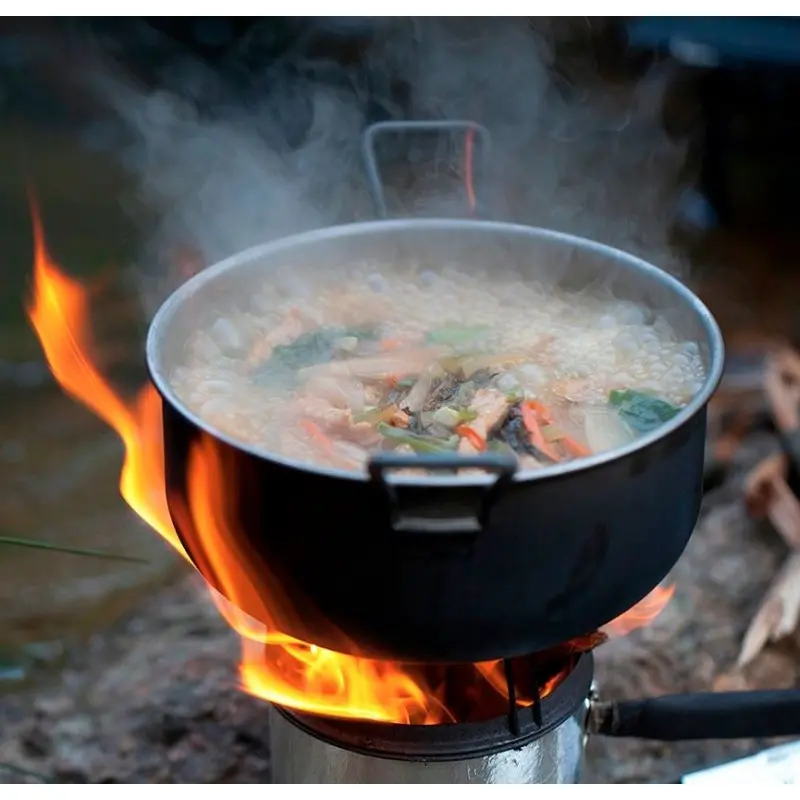
On a hike, the best soup is not necessarily made in the oldest pot: good cookware is a better bet. Camping cookware is your outdoor saucepan, the foundation of successful camp cooking. Choose carefully to avoid regretting it. Here is a short guide to selecting the cookware set suited to your needs.

Define your needs to choose cookware for wild camping or campsite use
-
What will I use my cookware for: cooking or just heating water?
> Just heating water:
You only need hot or simmering water for your morning coffee or tea at camp. For other meals, freeze-dried food is on the menu! One advantage is the small amount of water required. Allow an average of 300 to 500 ml of water per person for one freeze-dried meal pouch.
In this case, around 0.6 L per person should suffice: a 0.5 to 1 L pot for one person, or 1 L / 1.2 L for 2. Beyond this, add 0.5 L per person. From 2 L upwards, however, you also need a stove suited to the pot, with a sufficiently wide burner.
> Cooking:
In this case, a wide pan makes cooking ingredients easier, while the wide opening makes stirring easier. For 1 person, a 1.2 L pot may suffice. For 2, 1.2 L is rather small; 1.4 or 1.6 L generally works well. For 3 people or more, 2 L is preferable. Choose a suitable stove if you go larger (a wider burner, or even a remote-canister stove for greater stability).
-
How much space is available in my hiking rucksack?
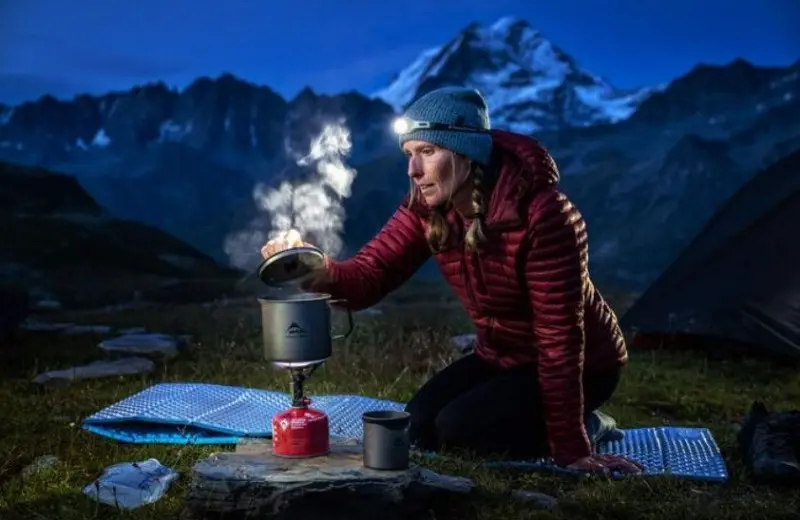
A fairly large camping pot may seem tempting for greater versatility, switching between freeze-dried meals and home-style cooking. But a 2 L pot may not be ideal in a 40 L hiking rucksack if you also need room for sleeping equipment, clothing and other accessories.
If possible, start by packing your rucksack with all the equipment you want to carry. This gives you a clearer idea of the space available.
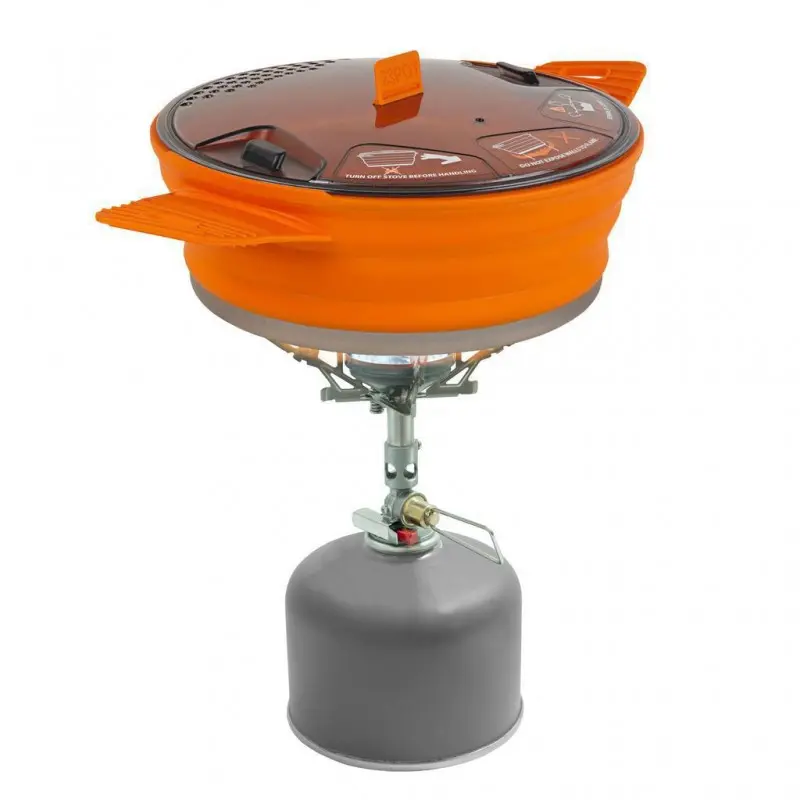
If you still want a generously sized pot, collapsible silicone cookware is available.
Remember that a large pot can hold plenty of accessories (gas canister, stove, sponge, etc.) that would otherwise need space elsewhere. Its bulk needs to be considered in context.
-
How often will I use my cookware?
Will you use your cookware occasionally, regularly or intensively?
How often you use it helps determine the best material, mainly according to its resistance to impacts and scratches.
For occasional use, we recommend an affordable, lightweight option such as aluminium, although it can dent if knocked.
For intensive use, sturdy stainless steel or titanium can be a long-lasting choice.
Which material should I choose for hiking cookware?
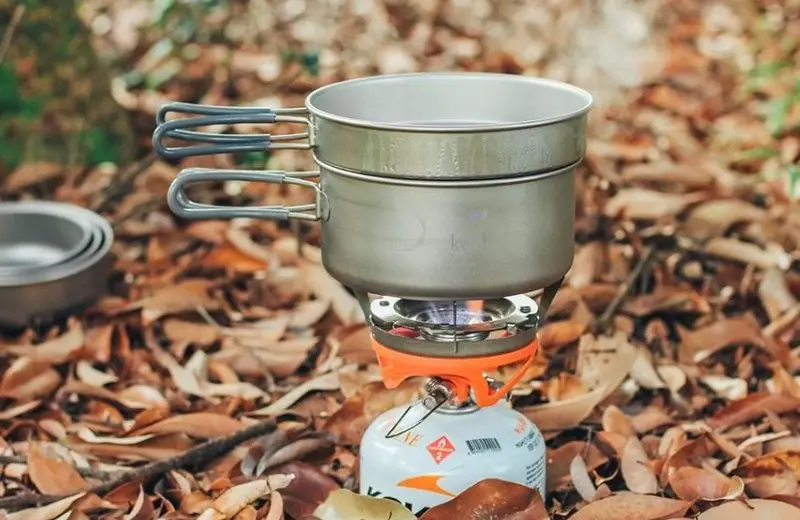
Strength, weight and price are the main criteria when choosing a cookware material:
- Aluminium cookware: lightweight and affordable.
Aluminium cookware is ideal for moderate budgets and lightweight equipment, particularly on multi-day hikes where every gram counts.
For even sturdier, easy-care cookware without extra weight or a large price increase, anodised aluminium is an excellent option.
- Steel cookware: sturdy and affordable, but heavier
Stainless steel cookware offers the strength of your pans at home. It is an extremely durable, affordable material. If damaging equipment is your main concern, steel is for you. However, it is much heavier than aluminium, a real drawback when carrying a heavy load and counting every gram.
- Titanium cookware: ultralight and sturdy, but expensive
What if you could combine the lightness of aluminium with the strength of steel? Titanium makes this possible. Titanium hiking cookware is something of a final refinement for keen wild campers. A 1.4 L pot weighing 170 g is possible when you invest in titanium.
If you camp regularly, it is a worthwhile purchase. The only drawback is its much higher price compared with other materials.
- Silicone cookware: a lightweight, compact alternative
This material saves considerable space in your rucksack. Silicone makes your cookware collapsible and durable, even after repeated use. It can still go on your stove: the base is often anodised aluminium to keep it light and sturdy. It packs away much more easily than conventional cookware. However, you cannot store anything inside it… Handling it while cooking is slightly less convenient than using a rigid pot.
How can I heat my cookware efficiently and reduce fuel use?
Do not forget the lid:
Leaving the lid behind saves weight but wastes a lot of heat. A metal plate can serve instead, although it is harder to handle when the pot is hot.
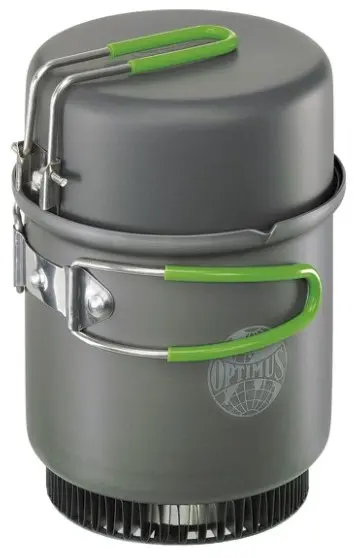
What about cookware with a heat exchanger?
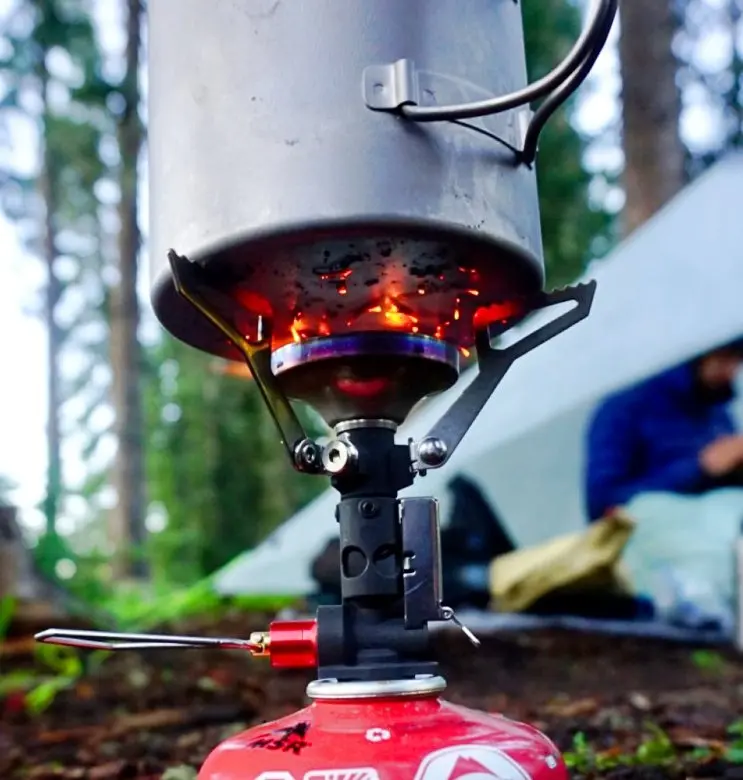
These small metal fins beneath the pot transfer heat from the flames efficiently. This offers a major advantage over other cookware, heating contents faster and making cooking easier with even heat distribution. However, it weighs slightly more.
How can I prevent my pot tipping over?
It depends on your stove. Using a large pot on a small stove with a small support and heating area can create a risk of the pot tipping over. It will also be less efficient at bringing water to the boil.
For a large pot, or a narrow but full one, prioritise stability:
- Choose a stove with wide pot supports and a wide burner.
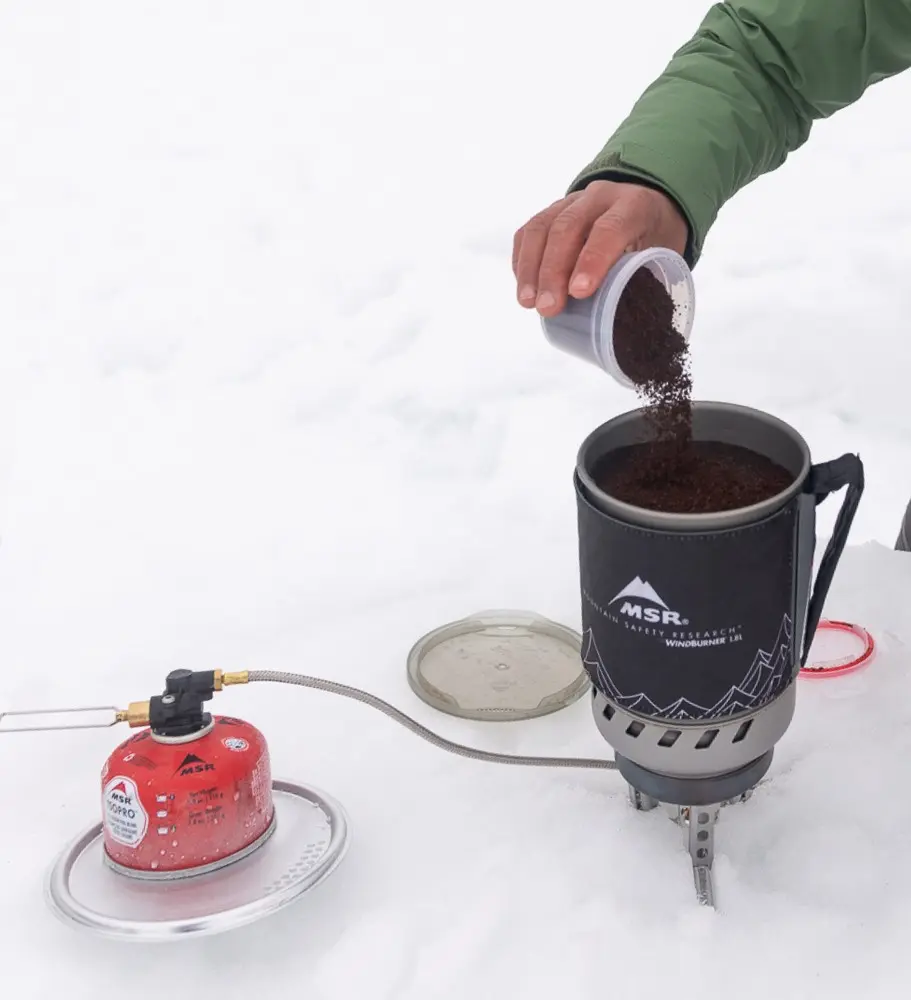
- A remote-canister stove also suits large pots very well. It sits lower and is more stable and wider, although inevitably bulkier.
- Gas canister stabilisers widen the base and steady the whole setup: very effective and compact.
If you want a compact stove that is stable enough for your pot, RayonRando lists the diameter with its supports unfolded to help you choose.
Conclusion:
Your cookware must first be practical to use. Prioritise the right capacity and shape for the number of people and intended use.
Weight and bulk matter, but come second when choosing. At RayonRando, you can quickly filter by capacity, material and weight. Discover all our cookware now!
Do not overlook the stability of your pot and stove together. Energy efficiency also matters on a long trek with a limited gas supply.