Preventing and managing altitude sickness: the complete guide to high-mountain hiking
The high mountains attract thousands of hikers and trekkers every year, seeking magnificent landscapes and new challenges. Whether you dream of reaching Kilimanjaro's summit, walking Nepal's trails, discovering the Andes or simply hiking in the Alps, one thing is certain: altitude requires preparation.
Above 2,500 metres, lack of oxygen can quickly turn a hike into a real ordeal. Headaches, unusual tiredness, nausea… These early signs of altitude sickness, also called acute mountain sickness (AMS), are often mild when addressed promptly. Ignoring them, however, can lead to more serious complications.
I experienced this while climbing Kilimanjaro. This legendary Tanzanian summit reaches 5,895 metres and presents no particular technical difficulty. Yet many hikers turn back before the summit, not because of the terrain, but because they have not acclimatised sufficiently.
In this guide, discover how to recognise the first symptoms, understand why they occur and, above all, prevent altitude sickness so you can fully enjoy your high-mountain hikes.
At what altitude does mountain sickness occur?
There is no precise altitude at which everyone develops altitude sickness.
For most people, the first symptoms appear between 2,500 and 3,000 metres. Some may be sensitive from 2,300 metres, while others feel no discomfort before 4,000 metres.
This sensitivity depends on many factors:
- speed of ascent;
- level of acclimatisation;
- tiredness;
- lack of sleep;
- state of health;
- dehydration.
Sensitivity to altitude sickness varies enormously between individuals, and between treks. Never having suffered from it does not guarantee you will avoid it on your next ascent. Conversely, someone who has experienced acute mountain sickness can perfectly well complete another trek successfully with better-planned acclimatisation.
When does altitude sickness become dangerous?
In most cases, symptoms disappear with rest, good hydration and no further ascent.
However, if you continue gaining altitude despite the first signs, acute mountain sickness can develop into more serious complications.
Oedema
In the vast majority of cases, altitude sickness is limited to headaches, tiredness or nausea. However, if symptoms are ignored and the ascent continues regardless, they may occasionally develop into more serious complications, such as high-altitude pulmonary or cerebral oedema. These situations remain rare among properly acclimatised hikers, but they underline an essential rule: if symptoms worsen, descend without delay.
These complications require descent and medical care.
How can you prevent altitude sickness?
The best way to avoid altitude sickness is to give your body time to adapt. No medication or exceptional level of fitness can replace proper acclimatisation.
Plan proper acclimatisation
If you remember just one piece of advice, make it this: do not rush.
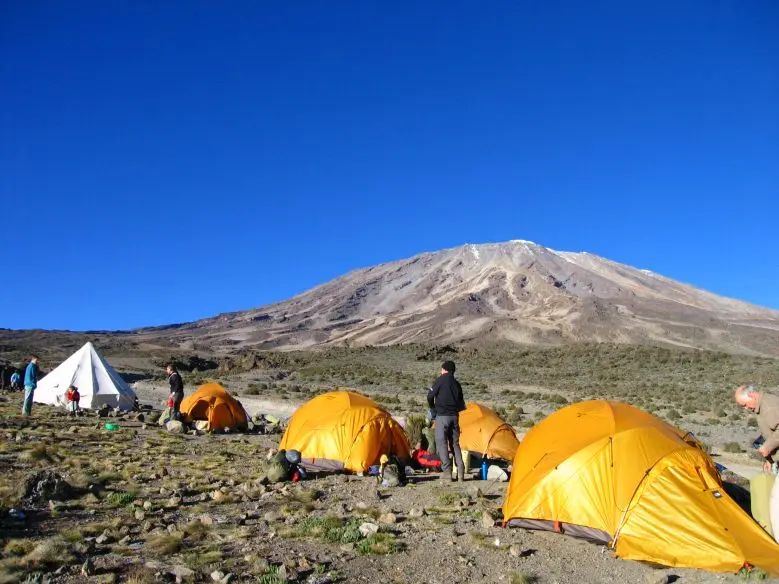
My experience on Kilimanjaro convinced me that good acclimatisation often makes all the difference. Before our ascent, we spent a week hiking on Mount Kenya. This first part of the trip allowed us to adapt gradually to altitude. The result: 11 of 12 people reached Kilimanjaro's summit, while many trekkers who chose a shorter programme had to turn back before Uhuru Peak.
Of course, every body reacts differently.
In my personal experience, which is obviously not a universal rule, you need at least four days' acclimatisation before considering several days of hiking above 3,500 metres. Some people need more time, while others acclimatise faster.
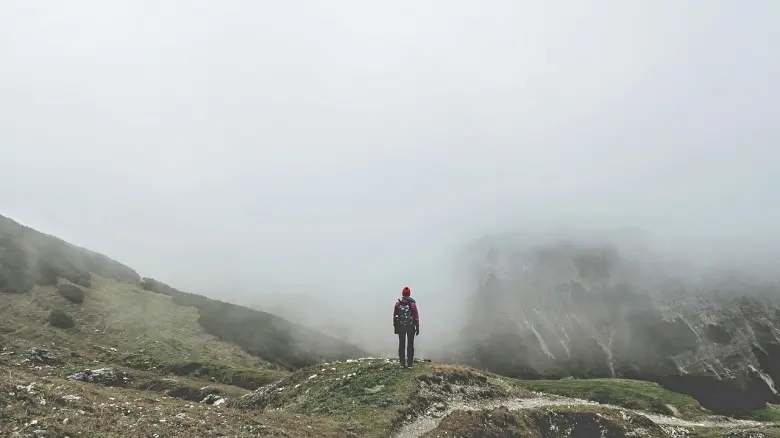
Ascend gradually
The principle is simple: the more gradually you ascend, the more time your body has to adapt.
From around 3,000 metres, try to limit increases in sleeping altitude as much as possible. A rise of around 500 metres between two nights is a useful guideline where the route allows. If you must ascend further, plan an extra day at the same altitude where possible to aid acclimatisation.
Climb high, sleep lower
In the mountains, a commonly recommended principle is: “climb high, sleep low”.
In practice, this means gaining altitude during the day before descending a few hundred metres to spend the night. This method promotes acclimatisation while limiting the risk of symptoms appearing during sleep.
Headaches associated with altitude sickness often tend to be worse when lying down. If the route allows, sleeping slightly below the day's highest point generally helps you recover better.
Keep a steady pace
At altitude, performance takes second place. The aim is to maintain a steady effort without excessive breathlessness.
Walk at your own pace, take regular breaks and do not wait until you are completely exhausted to recover. If you feel your breathing accelerate or your heart race, slow down. A steady pace is often more effective than a series of intense efforts.
Eat and drink well
Altitude promotes dehydration. The air is drier, breathing speeds up and water loss increases. It is therefore important to drink regularly, even if you are not thirsty.
Food also plays an important role. Loss of appetite is common at altitude, but your body uses more energy to adapt to the lack of oxygen. Keep eating enough to maintain your physical abilities throughout the trek.
Adapt the group's pace
One of the most common mistakes is to walk at the pace of the fastest members.
In the mountains, the opposite is needed. The group should move at the pace of the person most sensitive to altitude. Forcing a hiker to keep up with an unsuitable pace can quickly turn a simple headache into a much more serious problem.
Better to slow the group down than have to stop the trek entirely.
Acclimatisation does not last forever
You sometimes hear that acclimatising a few weeks before a trek is enough to avoid problems.
In reality, physiological adaptations gradually disappear when you return to low altitude. Acclimatisation a month before departure will therefore have practically no effect left.
To be truly useful, it needs to take place immediately before the trek or at its start.