Comfort is not the only criterion when choosing a hiking mat. Protection against cold from the ground matters just as much, particularly when camping in mountains or cool weather.

This is precisely what R-value measures: an essential indicator for comparing hiking mat thermal performance. This rating measures a mat's thermal insulation from the ground. Whether summer trekking, three-season camping or winter hiking, understanding R-value helps you choose the right mat.

Higher R-values mean better insulation. A well-insulated mat does not generate warmth: it reduces body heat loss to the ground.

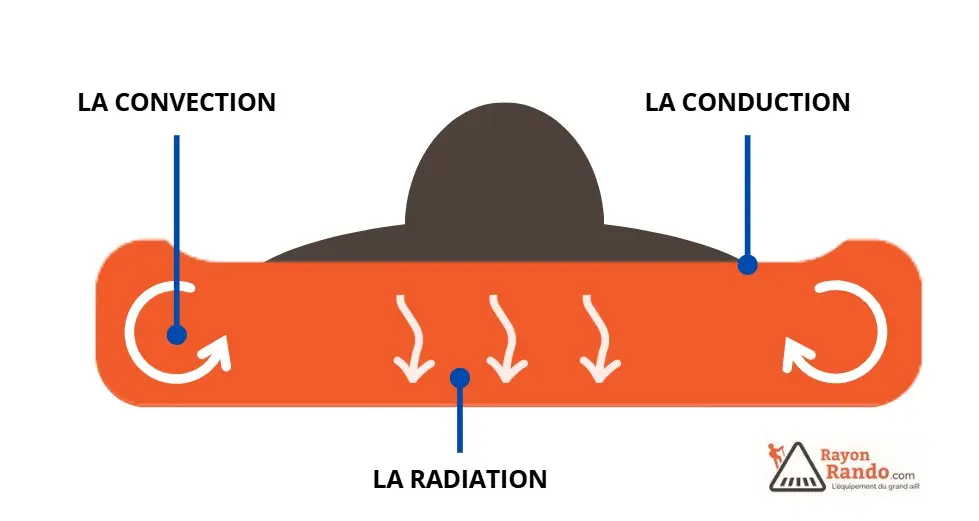
How is heat lost through a sleeping mat?

Heat loss occurs for 3 reasons: 

  • Convection: warm air moves into contact with a cold surface (walls), loses heat and becomes colder and denser (liquid), forming condensation.
  • Conduction: direct contact between a warm body and a colder sleeping surface transfers heat.
  • Radiation: heat travels as electromagnetic thermal waves radiating from the heat source.

Why does R-value matter for hiking?

When camping, the ground absorbs a substantial proportion of your body heat.

Even with an effective sleeping bag, you may feel cold if your mat lacks insulation. Body weight compresses the bag's filling, greatly reducing its insulating ability.

The mat becomes your main barrier against ground cold.

An appropriate R-value helps:

  • Retain more body heat;
  • Improve sleep quality;
  • Increase thermal comfort;
  • Reduce the risk of discomfort on cold nights.

How does R-value work?

A mat's thermal resistance depends on several factors:

  • Mat thickness;
  • Materials used;
  • Internal insulation;
  • Air chamber design.

An inflatable mat incorporating synthetic or reflective insulation generally has a higher R-value than an ultralight summer model.

A high R-value does not necessarily mean greater comfort. It measures only thermal performance.

The ASTM standard: a reference for comparing mats

For years, each manufacturer used its own calculation method, making comparison difficult.

Brands now use ASTM F3340 to measure thermal resistance through a standardised protocol. Independent laboratories test hiking mats according to specified procedures and conditions (ambient temperature, pressure on the mat, inflation level).

This makes published values much more reliable and comparable between brands.

The mat is placed between two plates in a chamber at 4°C:

  • A top plate maintained at 35° simulates the human body, exerting constant pressure on the mat.
  • A bottom plate maintained at 5° simulates the ground.

Sensors in the lower plate measure the energy needed to maintain a constant temperature.

When comparing mats, always check that R-value was measured using this standard.

This gives a classification of increasing insulation from 0 to 8.5.

Do R-values add together?

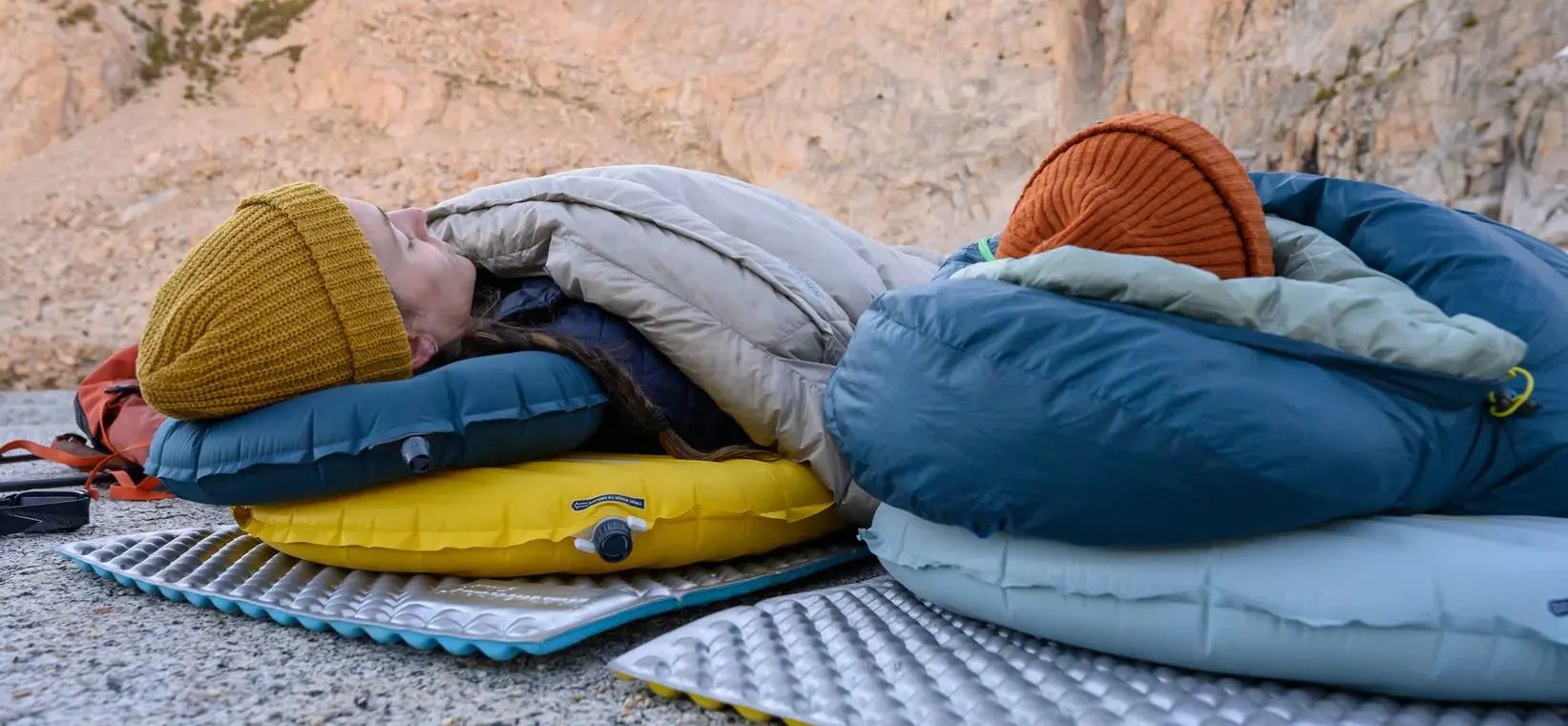
Yes, R-values can be added by stacking mats.

It may sound unusual, but offers an affordable way to improve insulation. Put a foam mat rated 2 beneath an inflatable mat rated 3, obtaining an R-value of 5 for occasional winter camping. Also useful for cold sleepers borrowing a friend's hiking mat: simply add an inexpensive foam mat.

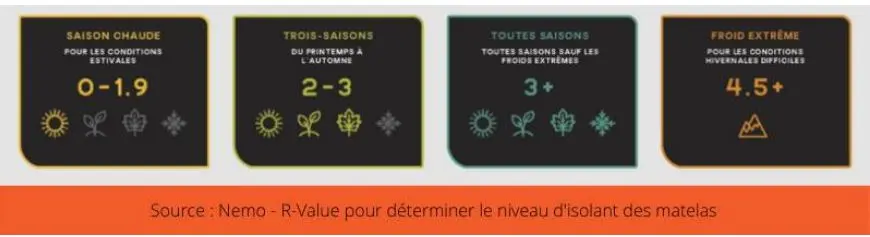
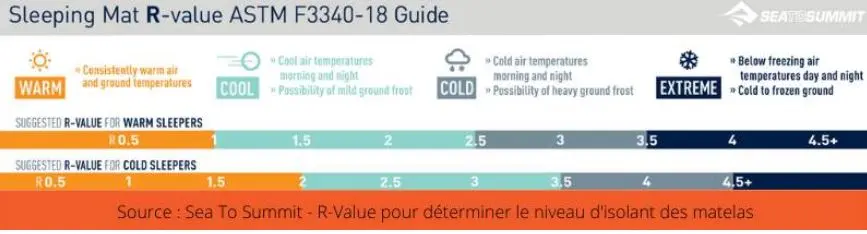
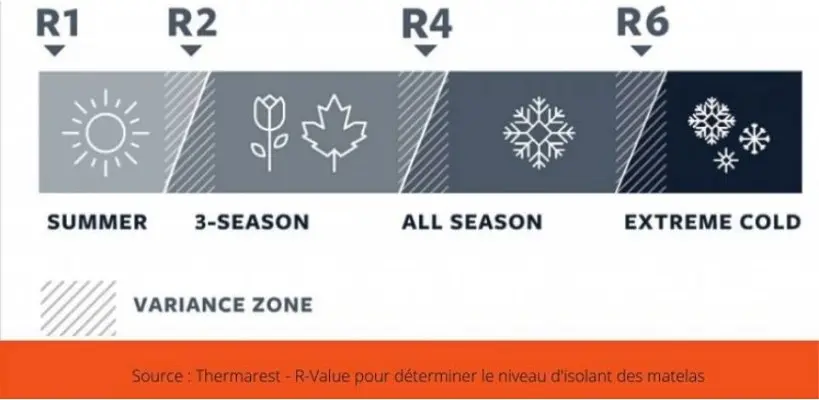
Each brand interprets results in its own way:

Nemo

Sea To Summit

Thermarest

RayonRando offers a simpler initial classification to make choosing easier (see the article's conclusion).

Insulation: a little technical detail

2 elements provide mat insulation:

  • Several separate chambers, containing independent air masses.
  • Specific insulation: aluminised layers or Primaloft-type filling in inflatable mats, and varying insulating foams in self-inflating mats.

How should you use R-value?

Beyond the precise rating, first ask: “Do I need an insulated mat?”

I find dedicated mat insulation useful in several situations:

  • Tent camping in cold weather (or cold, damp weather), supplementing sleeping bag insulation.
  • Particularly camping on cold, damp ground, mainly in winter, camping on snow, but also Nordic countries or high altitude, in a tent or directly on the ground.
  • For someone sensitive to cold who doubts their sleeping bag's insulation. However, an insulated mat cannot compensate for a bag that is not warm enough.

Otherwise, an insulated mat offers less benefit, particularly for summer mountain camping, and even less under shelter rather than a tent. I do not use an insulated mat myself: my trips are in summer without the conditions above. Insulation adds clearer value for 4-season use.

  • For unexpected cold, spread an emergency blanket beneath your mat to block ground cold.

How to choose an insulated mat

Which R-value for your activities?

The choice mainly depends on expected sleeping temperatures.

From around 2.5, a mat can be considered insulated. But which hiking mat should you choose across R-values from 2.5 to 8.5? Which R-value for winter? These indicative ranges may suit your circumstances:

R-value 1 to 2: summer hiking

These mats suit warm nights and summer camping.

They offer several advantages:

  • Low weight;
  • Small packed size;
  • Quick inflation.

However, they are poorly suited to cool temperatures.

-> RayonRando recommends the Golden Eagle Regular inflatable mat, offering good value and improved tent comfort, with enough thickness to keep you off the ground. An affordable investment or an option for occasional use.

R-value 2 to 4: three-season hiking

The most versatile range.

  • You hike in mid-altitude mountains in summer but feel the cold strongly.
  • You hike in mid-altitude mountains in spring/autumn without particular sensitivity to cold.
  • You hike in lowlands in spring/autumn but feel the cold strongly.

These mats suit:

  • Spring;
  • Summer;
  • Autumn;
  • Most mid-altitude treks.

They provide an excellent balance of insulation, weight and packed size.

-> RayonRando recommends the Ultralight XR Small inflatable mat, a short version that is very light and balances comfort, insulation and packed size exceptionally well. Ideal for 3-season camping.

R-value 4 to 5: mountains and cool conditions

This category suits:

  • High-altitude camping;
  • Cold nights in spring and autumn;
  • People sensitive to cold.

Insulation becomes significantly more effective while remaining suitable for regular hiking use.

-> RayonRando recommends the Ether Light XR Insulated Regular inflatable mat: a thick, ultralight, comfortable, insulated 4-season mat with pump sack. Save weight without compromising comfort.

R-value above 6: winter and extreme cold

Mats rated above 6 are designed for:

  • Winter hiking;
  • Camping on snow;
  • High-altitude expeditions;
  • Extreme cold.

They effectively limit heat loss to the ground.

-> RayonRando recommends the Tensor Extreme Conditions Regular inflatable mat, with outstanding R-value 8.5 insulation for all winter conditions.

R-value reference table

R-valueRecommended use
1 to 2Summer and mild temperatures
2 to 4Three-season hiking
4 to 5Mountains and cool nights
5 to 6Moderate winter conditions
Above 6Snow and extreme cold

This table is a useful guide, but everyone's sensitivity to cold differs.

These ranges are indicative, not strict rules. Do not overlook other mat characteristics.

Conclusion:

R-value is currently the best indicator of hiking mat thermal performance.

The higher the rating, the more effectively your mat protects against ground cold. Choosing the right R-value greatly improves sleeping comfort and helps you enjoy nights outdoors in any conditions.

FAQ

Which R-value for winter sleeping?

For winter use, choose a mat rated above 5.

Does a high R-value make a mat more comfortable?

No. R-value measures insulation only. Comfort also depends on thickness, construction and materials.

Can you use a summer mat all year?

In some conditions, but it may become insufficient when temperatures fall or the ground becomes cold.

Are R-values comparable across all brands?

Yes, provided measurements follow ASTM F3340.

Why am I cold despite a good R-value?

An unsuitable sleeping bag, damp clothing, wind or personal sensitivity to cold may explain it.

Product comparison
Compare
Rayon Rando advice