





Well, no! If you really want to be comfortable hiking alone, a 2-person tent will be much more pleasant.
A particularly brief article, you might say. But my sense of nuance requires me to say more and offer a few solutions.
First, if you choose a 1-person tent, it is probably for one of these reasons: keeping weight or packed size down, having a small footprint that makes finding a camping spot easier, staying discreet in nature, or reducing the budget compared with an equivalent 2-person tent.
In that case, a “spacious” tent is probably not your priority. Depending on your expectations, however, you may still want a “reasonably” spacious or “comfortable” tent.
If by a spacious 1-person tent you mean:
- A tent you can sit up in to read, eat or change clothes.
- A tent where you can store your belongings under shelter.
Then my answer is yes, it is possible, at RayonRando.com.
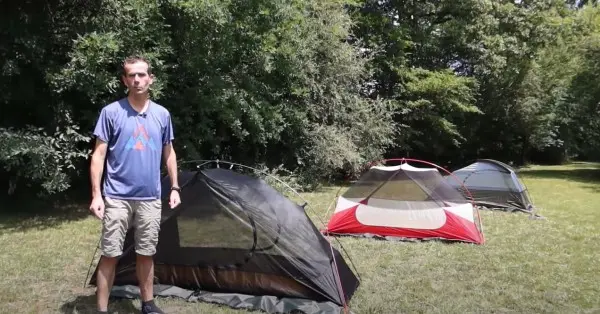
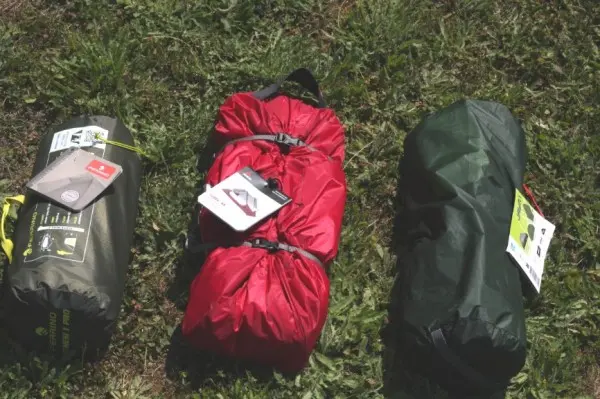
To be specific, let us compare 3 tents that meet these 2 requirements:
- The Ferrino Némési 1 tent.
- The MSR Hubba NX tent.
- The Jamet Jaya 1 tent.
These 3 tents share:
- A freestanding structure high enough to sit up in.
- One or 2 side entrances with porches for easy access and storage.
Here is what sets them apart:
Ferrino Némési 1 tent:
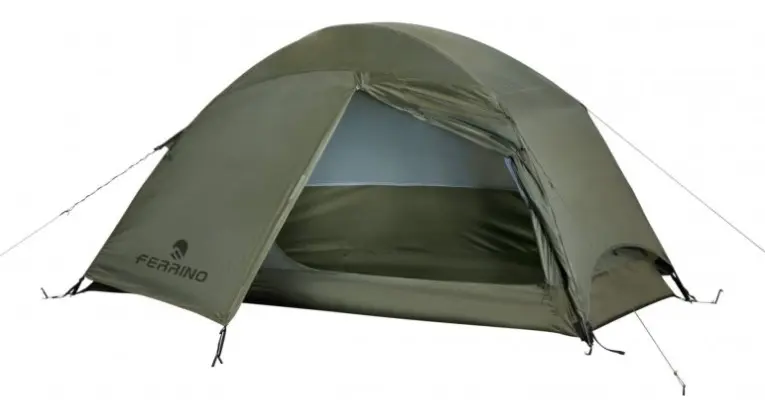
Even with a generous interpretation, it is difficult to call it spacious. But it meets the requirements above, within certain limits:
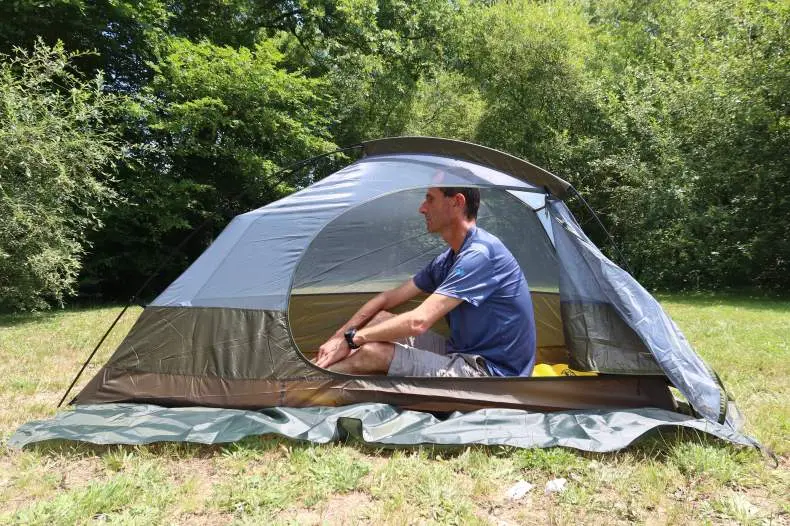
- You can sit up in it unless you are particularly tall. At 1m85, I only just fit sitting and lying down, but a team member measuring 1m92 touches the ceiling and, lying down, both ends. No problem for Inès at 1m60… Widthwise, your mat fits, of course, but changing is not very comfortable because the walls are close.
- The porch holds a backpack and shoes, without much room to spare.
- There is one easy-to-use side entrance.
Compared with the other 2, the Némési 1 is the least spacious and the heaviest at 1.6 kg, but has several advantages:
- It is the toughest, with an 8,000 mm groundsheet and 3,000 mm flysheet. The lower inner walls use solid fabric to protect the sleeper from wind. It therefore offers the best protection of the 3.
- It is the most compact when packed. Easy to slip into your backpack or attach outside without protruding beyond it.
- It is the most affordable of the 3.
MSR Hubba NX tent:
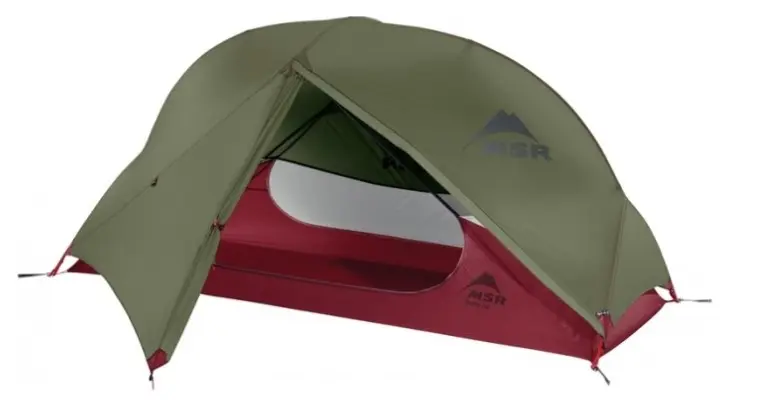
This is the 1-person version of the Hubba Hubba NX, a benchmark tent for lightweight hiking.
Testing reveals some excellent qualities:
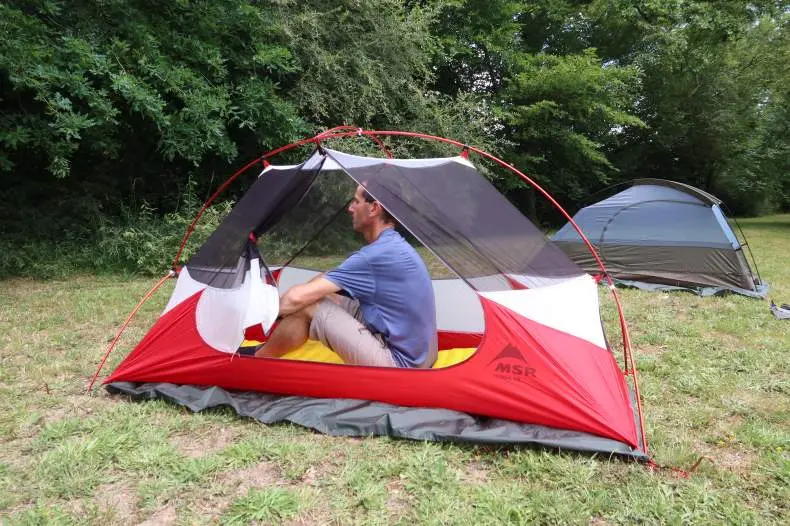
- The inner tent feels comfortable. Height and length are very good for me and adequate for a hiker measuring 1m92. The width is pleasant too: I can move without the walls getting in the way.
- The porch is spacious enough to store one person's luggage and shoes easily.
- There is one easy-to-use side entrance.
- The lower inner walls use solid fabric, protecting the sleeper from wind.
- It is the lightest of the 3, barely 1.3 kg, and genuinely easy to carry.
Its limitations:
- The fabrics are thin but standard for ultralight tents: 3,000 mm for the groundsheet and 1,200 mm for the flysheet. Use it carefully and inspect the ground before pitching.
- Its price will lighten your wallet too.
Jamet Jaya 1 tent:
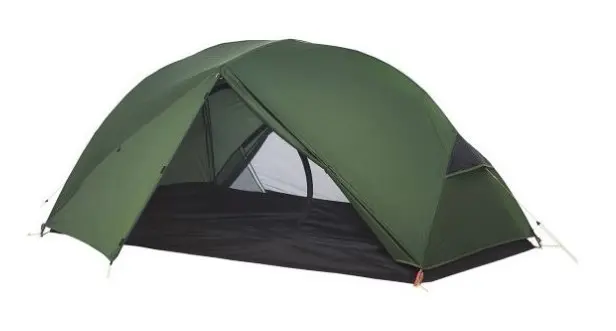
I will admit this is my favourite. It is genuinely comfortable while staying very light. Jamet first developed the 2-person version, probably with the aim of offering an alternative to the MSR Hubba Hubba.
The Jaya 1, the 1-person version, is very well executed:
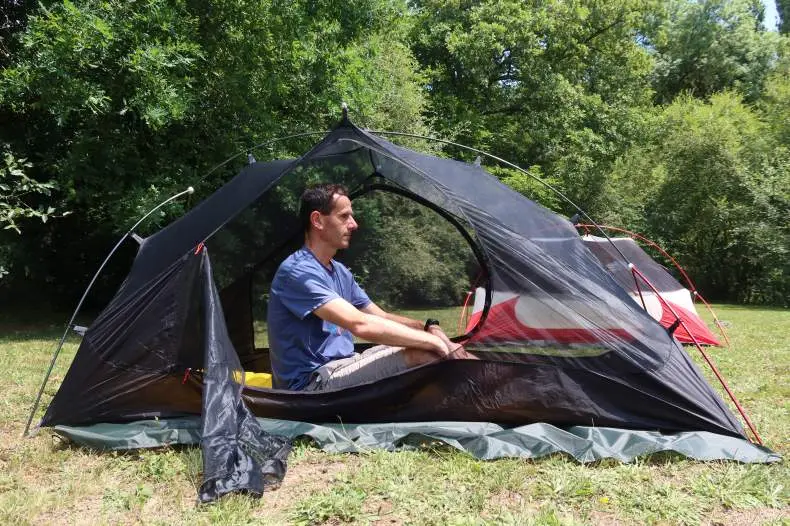
- The inner tent is truly spacious. This time, everyone, even the tallest among us, feels comfortable. Headroom and length are generous. The width lets you change easily without the walls getting in the way.
- There are 2 entrances, so you can pitch it anywhere without worrying about which side the entrance is on.
- There are therefore 2 spacious porches, allowing you to store your belongings under one and exit on the other side.
- The fabrics are fairly tough for a lightweight tent, midway between the Nemesi 1 and Hubba NX: 5,000 mm for the groundsheet and 3,000 mm for the flysheet.
- It is barely heavier than the Hubba Nx at 1.39 kg, but more affordable.
You have to look harder for its limitations:
- The inner tent is largely mesh, so you are a little more exposed to draughts when lying down.
- Its footprint is slightly larger than the other 2.
- Although cheaper than the Hubba, it is still a substantial investment.
Conclusion:
As you can see, looking for a 1-person tent does not mean settling for a cramped tunnel where you can only lie down.
However, extra comfort costs more than basic models. The 3 models I have presented let you enjoy the benefits of a 1-person tent with a reasonable level of comfort: not roomy enough to invite friends in for drinks, but sufficient to enjoy your hike fully without discomfort or restriction.
This may be useful if you are away for more than a week, may need to spend some time sheltering inside, or simply want room to move without wriggling around, and to unpack and shelter your belongings easily.