For hikers, the Cretan diet is much richer and more varied than a simple salad. Here is why Crete can be a good hiking destination when skies are grey closer to home…
Good reasons to go hiking in Crete:
For the variety of discoveries Crete offers:
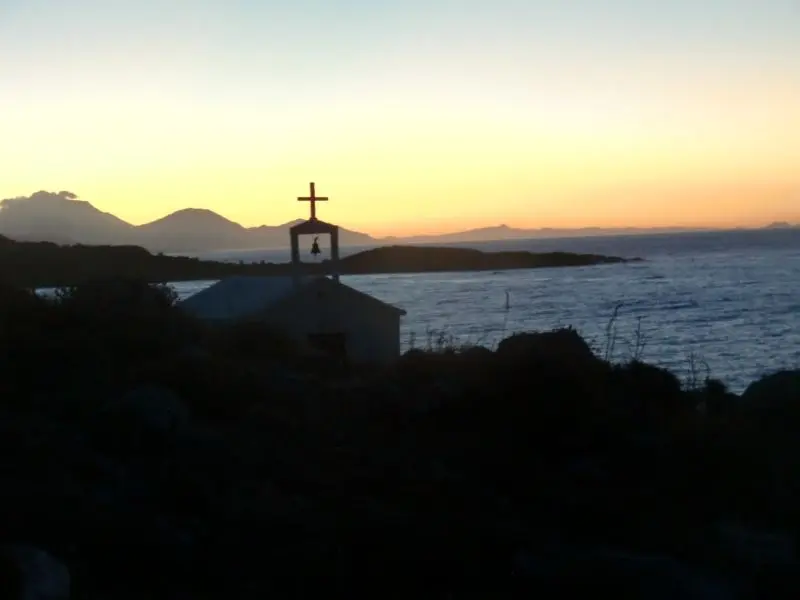
- You can combine culture and hiking. There are remarkable sites such as Knossos and preserved old towns such as Hania, Chania, or Rethimnon. But culture and hiking can also happen together: a Venetian fort on a ridge, a Byzantine church on a beach or an abandoned village may lie along your route.
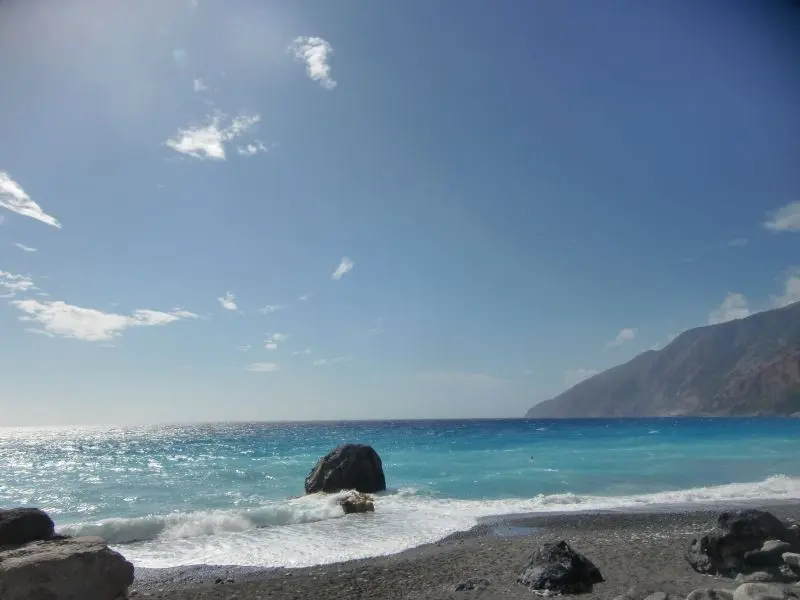
- You can combine sea and mountains: standing on a summit at midday does not stop you taking a sea swim at the end of the day.
- The scenery is well worth seeing, especially certain gorges and views that frame mountains against the sea.
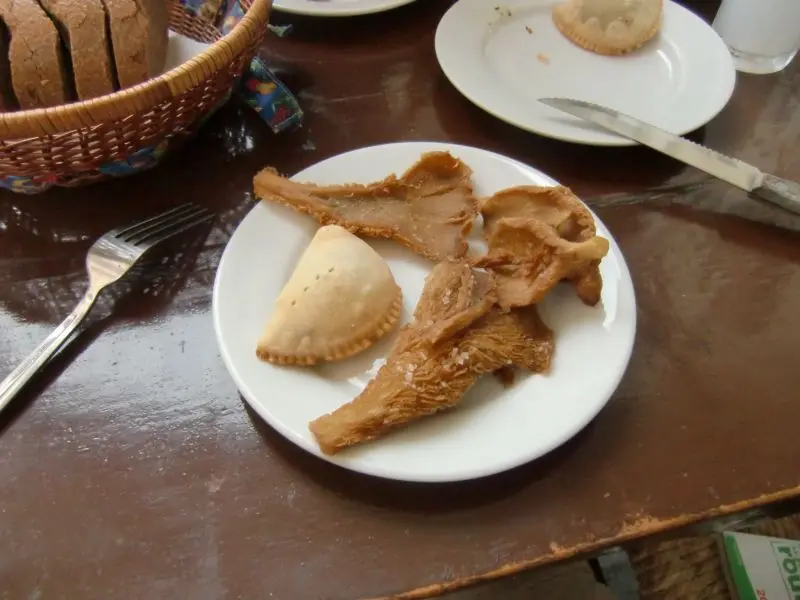
- Finally, the food is good, people are welcoming and relaxed, and it is inexpensive out of season.
Crete offers the complete package: mountains, sea, gorges, culture, sunshine and good food.
When to go?
Definitely not summer. In late September and early October, we had over 30°C on the coast. Temperatures ease as you climb. For the weather, choose autumn or early spring, and to avoid the biggest crowds too…
Practical arrangements:
Accommodation:
Wild camping is normally prohibited. In practice, it is tolerated in some coastal places, particularly beaches, but not everywhere! Higher up, finding flat, stone-free ground is difficult. Finding water can also be a real problem.
Local accommodation is therefore preferable. Without booking ahead outside towns, we found very good hotels for around thirty euros, without breakfast. In towns, prices are higher and booking ahead is advisable.
Transport:
Buses are simple and inexpensive. Services to villages may be infrequent, so check in advance. Website: http://bus-service-crete-ktel.com/timetable.php
Some villages have no road access: you reach them on foot or by boat, another very common means of transport.
Water:
This is constraint number 1. Routes may have no water sources, and the hot, dry climate means drinking plenty. Take precautions and enquire before setting off.
Food:
Small local restaurants serve good food, and villages always have a grocery shop. For stove use, an alcohol stove is safest: I only saw pierceable gas cartridges. Threaded cartridges may exist somewhere, but you need time to look.
What to see and do?
Here is a partial overview of the island's possibilities, as we stayed only a week.
Culture:
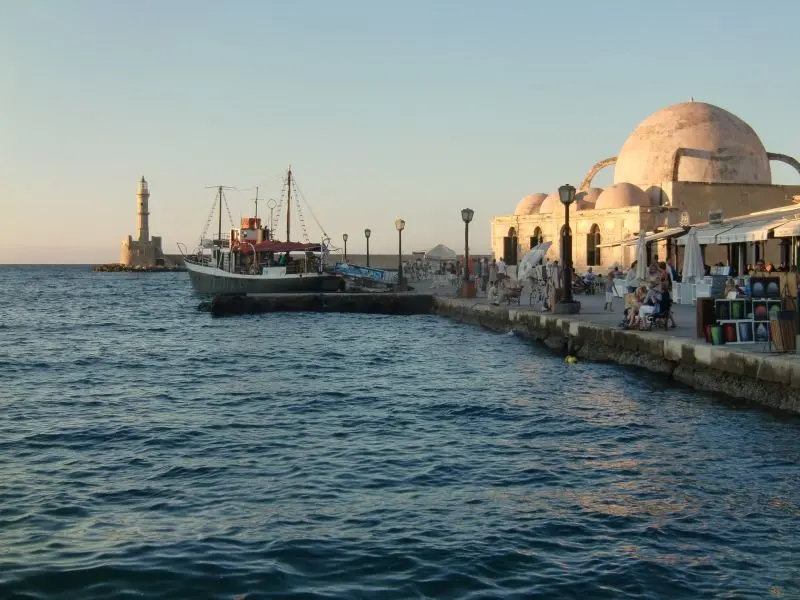
While Heraklion has little appeal, 2 towns are worth visiting: Hania and Réthimnon:
- Hania, Chania or La Canée: the former capital retains fortifications, an old town of narrow lanes and fine buildings. Restaurants and shops fill the old town. Although evening strolls are pleasant, early morning is best to appreciate it, when everything is still closed and there are no tourists. A truly charming town.
- Réthimnon also has a large commercial old town, but a few side turns lead to quiet lanes even in daytime. Less devoted to tourism than Hania, it retains shops and the normal activity of a Cretan trading town. Some fine monuments too.
There are 2 major ancient sites: Knossos and Phaistos. We visited only Knossos, a few km from Heraklion and accessible by city bus. We were rather disappointed by its presentation. Explanatory boards abound, but none gives a coherent overall picture. Reconstructions and renovations help imagine how it may have looked, but feel rather too much like reinforced concrete… Perhaps try a guided tour to appreciate it better.
Hiking:
We went to the south-west coast, which seems the best hiking area.
Must-sees:
- Samaria Gorge and Gigilos summit, 1,974 m: the island's most famous, busiest gorge. The trail is extensively maintained and straightforward for regular hikers. The end is the most impressive part: at the narrowest point, only a few metres separate the walls. If time is short, start from below. If descending like most people, starting late morning can be clever, long after the main flow of walkers; we met almost nobody. From the same upper access point, you can climb Gigilos. We combined the 2: part of the ascent early morning, at least as far as a superb stone arch 1h15 uphill, then retraced our steps and descended the gorge. To reach the summit, which must be lovely, walk the gorge the following day and sleep in Omalos overnight.
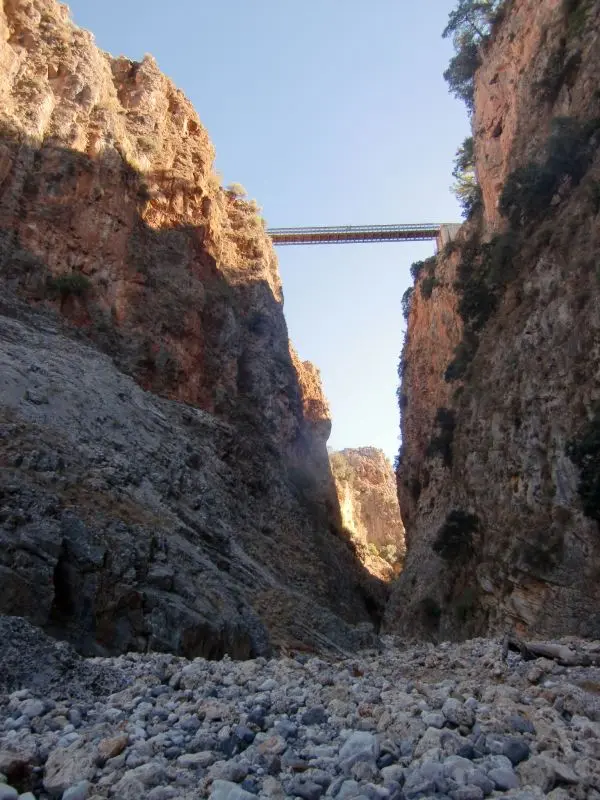
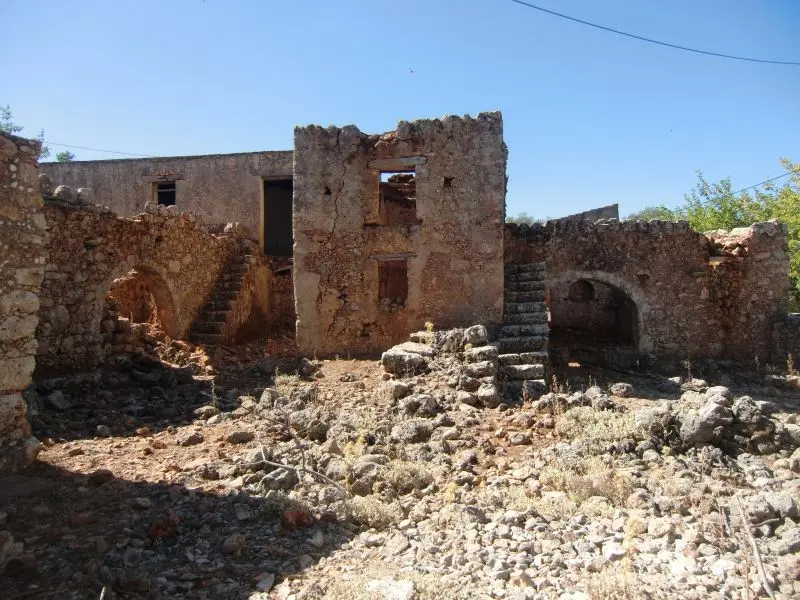
- Aradena Gorge: less known, but our favourite! Wilder, less developed and impressive: simply magnificent! As a bonus, at its end you climb to the abandoned village of Aradena, its charming ruins overlooking the drop. However, descending through the mountains to Finikas is harder in blazing heat; returning through the gorge may be better…
Some details of our hiking route:
- Day 1: bus from Hania to Paleochora. A warm-up day combining walking and sea swimming. Pass the small Roman temple at Lisos, modest ruins that still stir the imagination. Wild camp at Sougia, with no evening bus to Omalos.
- Day 2: bus to Omalos, stopping at the Samaria Gorge entrance, then climb towards Gigilos, particularly its fine stone arch. Return and descend Samaria Gorge to Agia Roumeli.
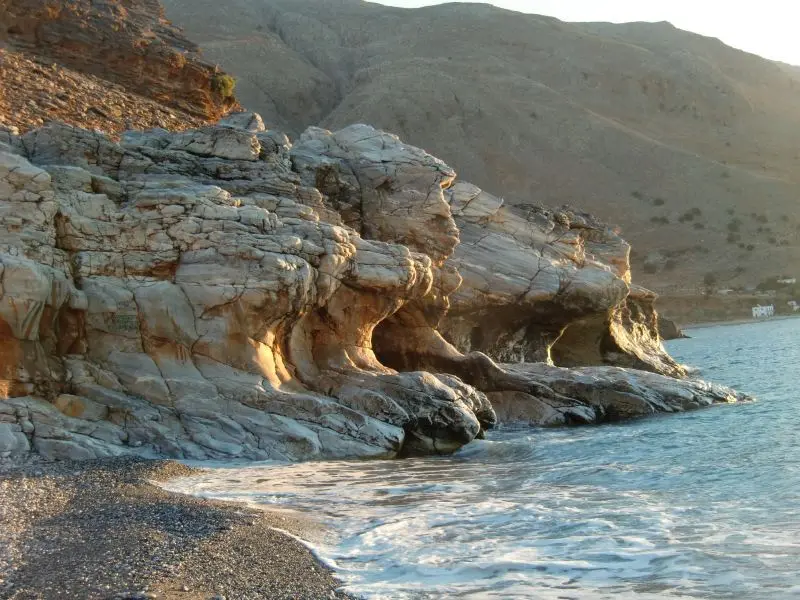
- Day 3: climb to the ‘Venetian’ fort above the village, then a smaller ruined fort higher up. Return to the village and continue along the coast to Marmara beach on paths alternating shoreline and exposed heights. Pass the Byzantine church of Aghios Pavlos, an unusual monument on the beach far from any settlement.
- Day 4: ascend superb Aradena Gorge, then a cliffside path to the beautiful ruined village of Aradena. Finally, a long mountain descent to the coast through arid scenery. Pass another ruined Venetian fort and stay in Loutro.
- Day 5: follow a path along or above the coast via Glyka Nera beach, with surprising freshwater springs emerging from the sand metres from the sea. Reach Chora Sfakion for the bus to Rethimnon, changing at Vrises.