





Dreaming of Corsica? Make it happen!
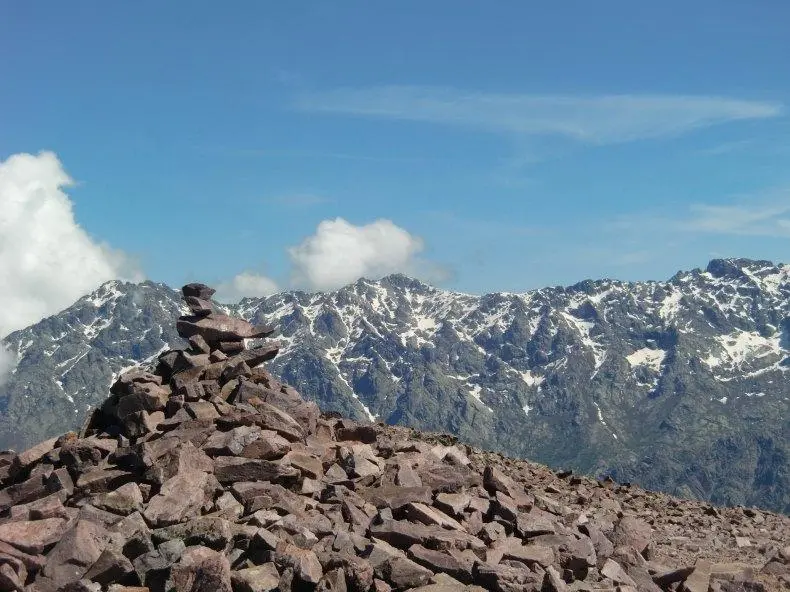
Here are some route descriptions from 2 visits to Corsica. Far from exhaustive, they offer practical information and route ideas.
The GR20, and what else?
For hiking enthusiasts, there is more to Corsica than the GR20!
The GR20 certainly has beautiful sections it would be a shame to miss entirely, but it can also be overcrowded… Moreover, the ban on wild camping forces everyone to camp together, reducing some mountain enjoyment and creating ‘processions’ at departure.
There are GR20 variants and junctions with other GR trails that let you create a beautiful, original route and partly escape summer crowds.
On our 2nd trip, personal constraints and heavy snow led us to create hybrid routes combining GR20, other GR trails, marked non-GR paths and unmarked trails. Beware: little-used trails may mean overgrown vegetation or hard-to-find markers.
Is it difficult?
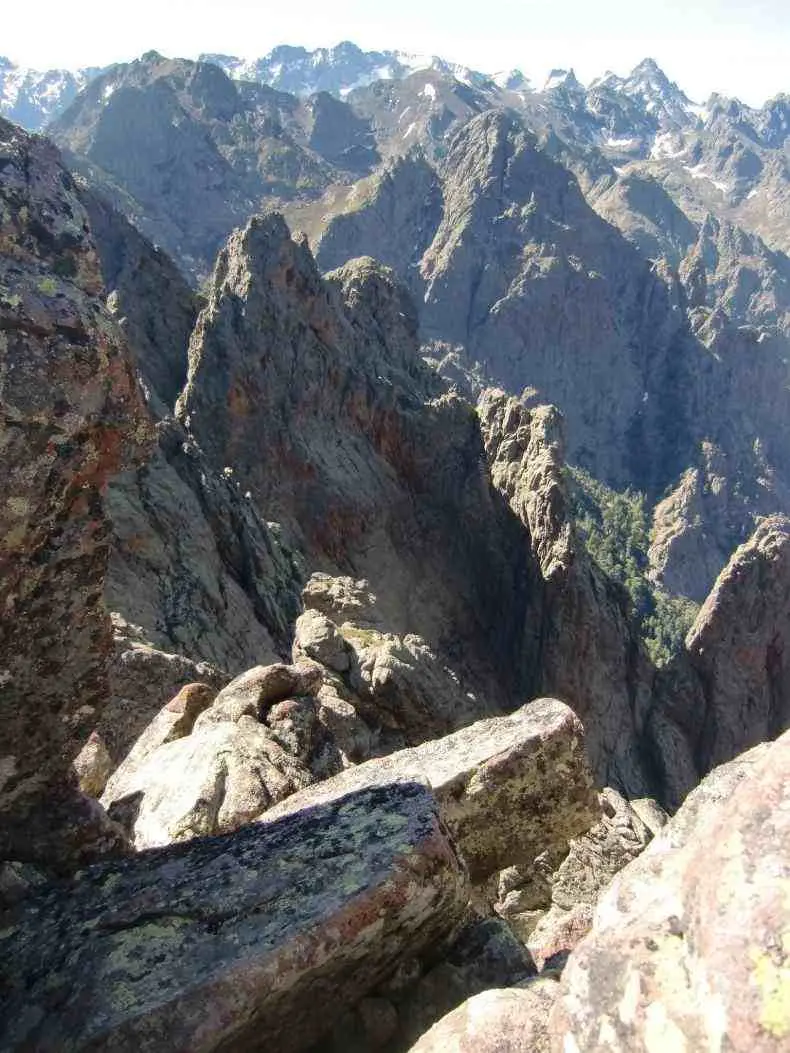
Elevation gain is not necessarily enormous, so not insurmountable. Difficulty often comes from very stony trails, particularly on the GR20. Over time, they wear out your feet, sometimes force an irregular stride and heat up quickly in sunshine! Those used to regular dirt paths may be surprised.
More generally, if you want to complete the entire GR20, ask yourself whether you have the experience and fitness for such a long hike.
Corsica's other GR trails are stony too… Note that Cirque de la Solitude, closed for several years after a fatal accident, is no longer part of the GR20 and has no waymarking or maintained infrastructure: a dangerous passage. Avoid unnecessary risks.
Practical information:
When to go:
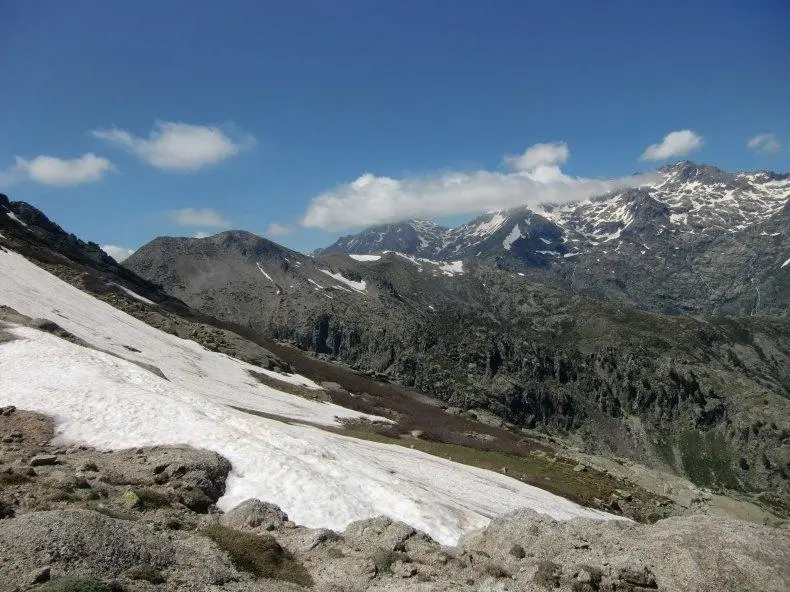
Many avoid July and August to reduce heat and GR20 crowds. However, the GR20 is busy from June. Other trails are quiet. Early in the season, snow can remain substantial in May-June and disrupt your route, as happened to us. Capitelo notch is not always passable without crampons and is sometimes impassable altogether. Enquire and be willing to change your route: there is so much to see…
September avoids this snow risk and may be quieter, but days are shorter.
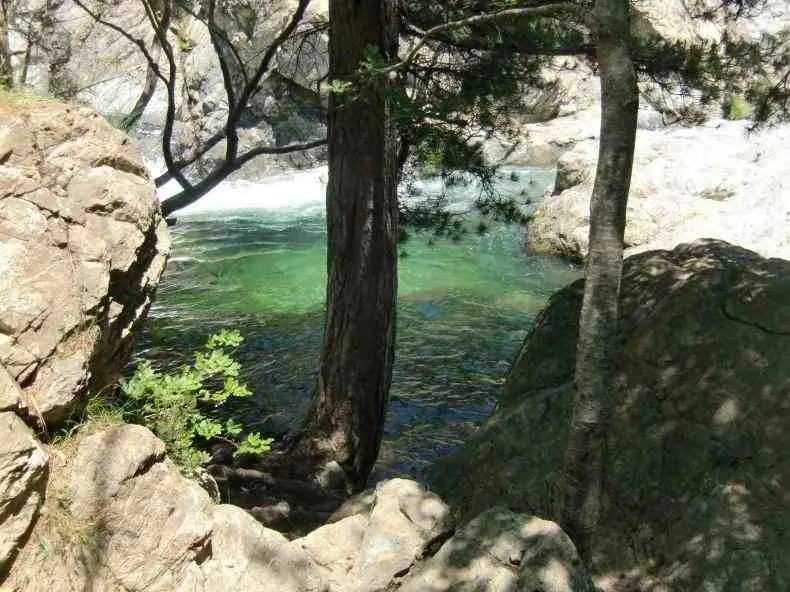
In high summer, consider routes passing natural pools, where a dip is delightful.
Transport and access to starting points:
Travel on mountain roads takes time, so minimise transfers on short stays.
Without your own vehicle, choose between:
Bus: several routes exist, often infrequent, so check well in advance. Some only run from July, for example to Calenzana, the northern GR20 start.
Trains are no faster than buses but slightly more frequent. The Bastia-Ajaccio line stops at several trailheads, notably Vizzavona, halfway along the GR20, and Corte at the Restonica and Tavignano valley entrances. The Calvi-Bastia line approaches the northern GR20 start; see below.
Hitchhiking works very well in most places, particularly small roads used by hiking tourists, but poorly elsewhere, especially town exits. Best reserved for short journeys.
GR20 access: if walking only half the GR20, you stop at Vizzavona, with direct trains to Bastia or Ajaccio. For the northern GR20, take the Bastia-Calvi train. Before July there is no bus uphill to Calenzano: hitchhike, walk or take a taxi, unless a bus driver offers a lift for a small supplement… Alight at Calvi for a taxi, or Padule to try hitchhiking or walking. Southern GR20 access: we did not try it and have no information.
Accommodation:
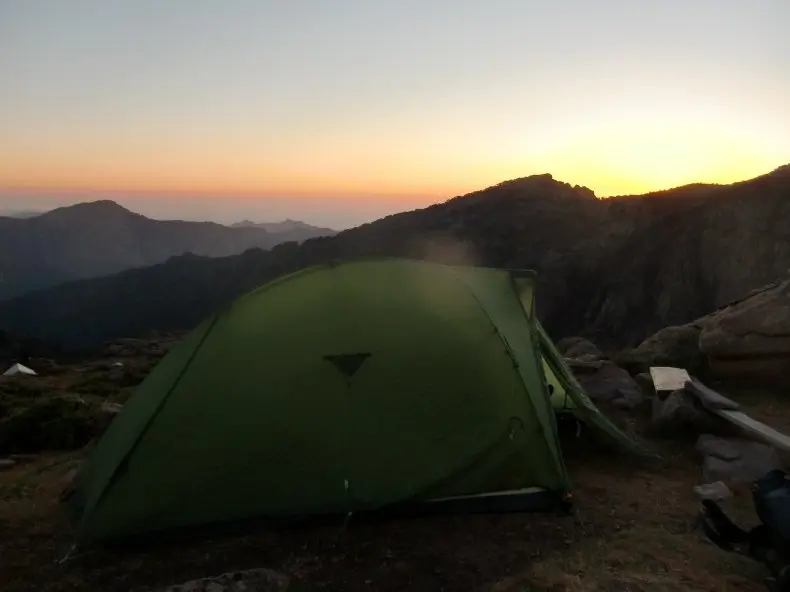
Wild camping is officially prohibited in the regional park. A pity for nature lovers, but justified by fire risks and seasonal crowds. It is certainly excluded along the GR20: alongside huts, there are designated camping areas nearby.
There are also several campsites in areas accessible by road.
Resupply:
GR 20: staying strictly on the GR20 means encountering no grocery shops. Huts offer some supplies at high prices. Some hikers book a guesthouse night at Vizzavona, halfway, and have a Colissimo parcel delivered there. If you do not want to carry food and your budget allows, you can also have breakfast and dinner at huts.
Other trails let you pass villages, resupply at grocery shops and see another side of Corsica.
Corsican cured meats and cheeses make delicious picnics.
Some routes:
The GR20:
Designed in 15 stages, with compulsory stops at huts and their camping areas. Some combine stages, doing 2 in a day. Some are indeed short if you start early or walk well. Others are slightly short for a day but too long to combine… We did not walk it in order, but covered roughly 5 stages within the routes below.
Calanques de Piana-Corte crossing:
Via Foce d'Orto summit, Spelunca Gorge, Evisa, Col de Vergio, Bocca San Pedru, Lac de Nino and Taviniano Gorge.
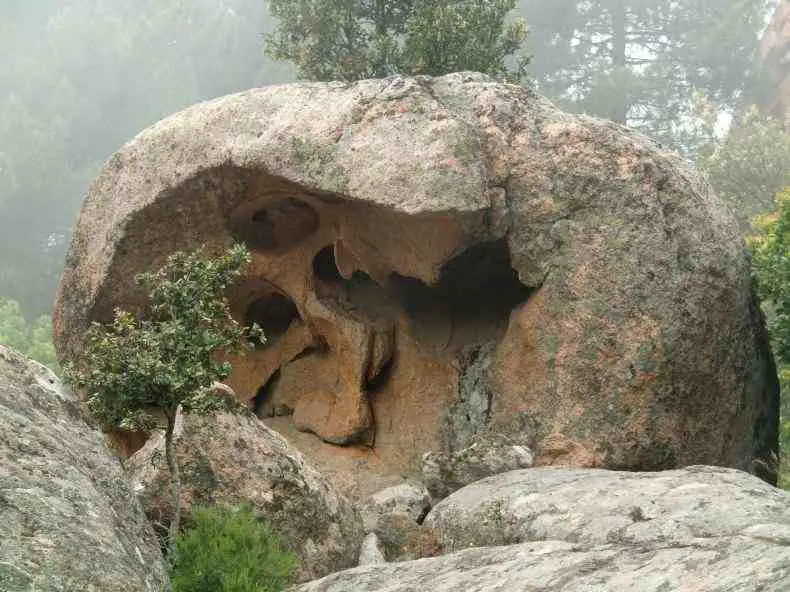
A beautiful route with Piana's jumbled rocks, uplands and Lac Nino, lovely Spelunca and Taviniano gorges, woodland sections and superb views of Corte's citadel. Varied and mostly away from GR20, so we met almost nobody. It uses the GR Mare et Monti, Mare a Mare Nord, GR20 and local paths, sometimes unmarked but clear between Foce d'Orto and Porto valley.
Practicalities: Ajaccio-Piana bus, not Sundays; train at Corte. Resupply possible at Ota and perhaps Evisa. Campsite in Porto valley, Funtana a l'Ora; camping areas at Col de Vergio and near La Sega refuge.
Around Corte:
Besides visiting the town and citadel, Corte is a good base for day hikes, with several campsites: Restonica Gorge and the ascent to Melo and Capitello lakes, Tavignano Gorge and Corte's stone arch.
A loop is also possible along Restonica and Tavignano gorges via Mélo and Capitello lakes and Manganu refuge on the GR20, over 3 days:
Day 1: leave Corte towards Restonica Gorge.
The beautiful start follows Restonica Gorge, but also the D623 to Grottelle shepherds' huts. You can begin the loop there instead.
The climb is steep and rocky but worthwhile: first superb Lac de Mélo, then Capitello.
Join the GR20 to reach Brèche du Capitello, Bocca Alle Porte, at 2,200 m, the GR20's highest point, with fine views of the 2 lakes and Monte d'Oro on the other side.
Then follow the GR20 towards Manganu refuge, after several hours descending through scree…
Day 2: Manganu refuge to La Sega refuge, along Tavignano Gorge.
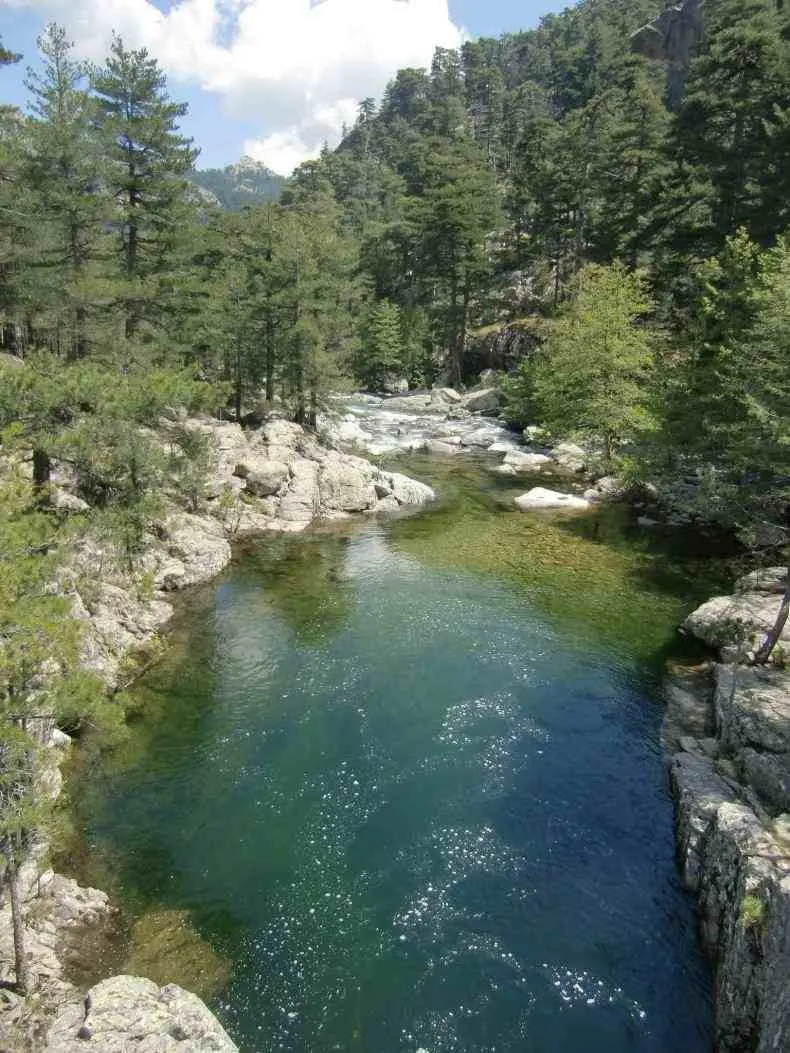
A beautiful stage, more restful than the previous day. It follows the gorge, with many pools for swimming, welcome relief for your feet!
Woodland sections reduce sun exposure too, pleasant in high summer.
The refuge borders a natural pool and has a very large camping area, restaurant and dormitories.
Day 3: La Sega refuge to Corte, following Mare a Mare Nord.
Reach an ancient path through successive climbs and descents.
You can swim and refill water at a spring beside Rossolinu bridge, 760m.
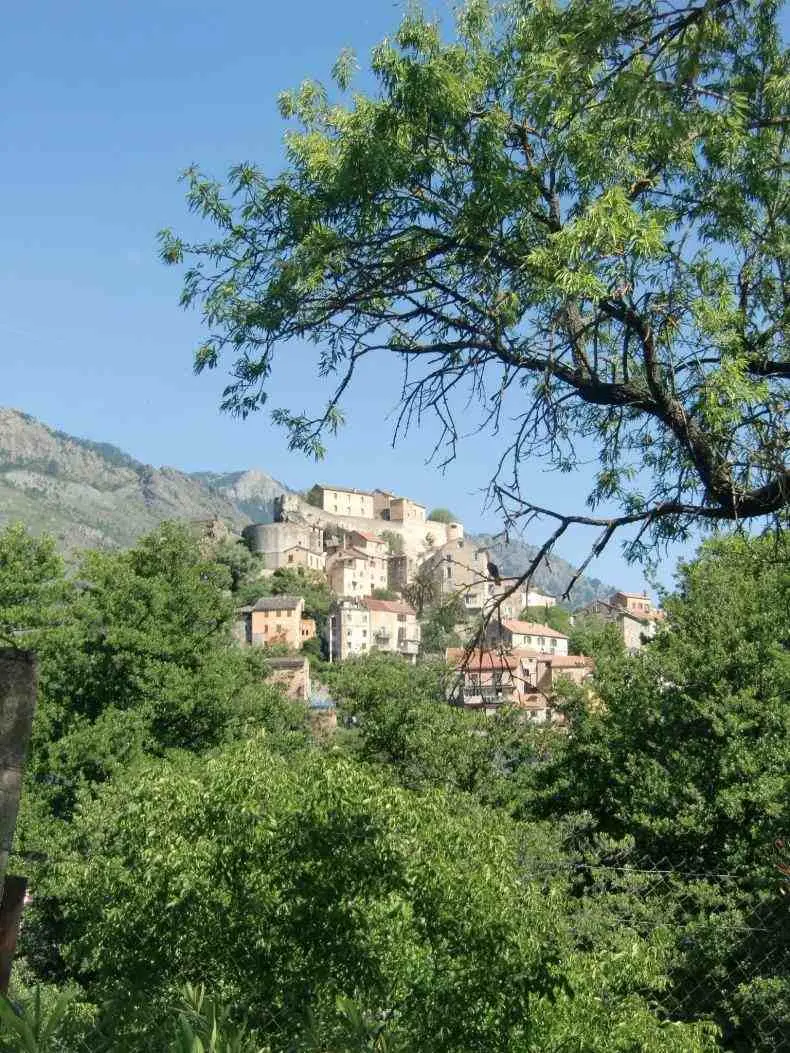
Then more climbs and descents through magnificent views until Corte's Bely citadel appears, the end of our loop.
Rotondo summit:
A memory from an earlier trip: a shelter stands a few metres below the summit, where we slept in fine summer weather to enjoy sunset and sunrise.
Loops around the northern GR20:
- Loop 1, 2 days:
Day 1: GR20 stage 1 from Calenzana plus the ascent of Monte Corrona.
Calenzana, capo Ghiovu, Refuge Ortu di u Piobbu, Monte Corrona
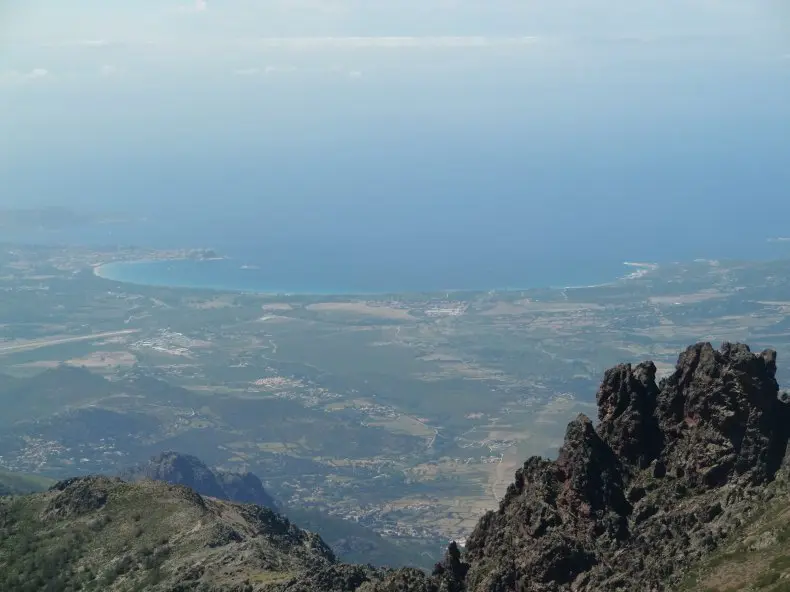
A lovely loop with fine views of the peaks and coast.
The GR's start offers beautiful views of Calvi bay. In the afternoon, climbing Monte Corrona, 2,140 m, above the refuge provides superb 360° views, particularly the main peaks on one side, still snowy in June, and coast on the other. The west-facing refuge site is pleasant for camping, with beautiful sunsets. At peak times, arriving early is probably necessary to find space…
Day 2: GR20 stage 2 plus descent to Bonifatu forest house.
Ortu di u Piobbu refuge, Capu Ladroncellu pass, 2,087m, Carrozzu refuge, Bonifatu forest house.
After a good climb, follow an exposed, rocky route offering fine viewpoints.
After Carruzzo refuge, the woodland descent to the forest house, often beside the stream, is very pleasant during hot hours.
Hitchhike back to Calvi and its beautiful citadel.
- Loop 2, 2 days:
A lovely loop with streamside sections welcome in hot weather.
Day 1: ‘Camping Savaggio’ railway stop, Mare a Mare Nord variant then GR20, L'Onda refuge, then GR 20 towards Serra di Tenda ridge and back to L'Onda refuge.
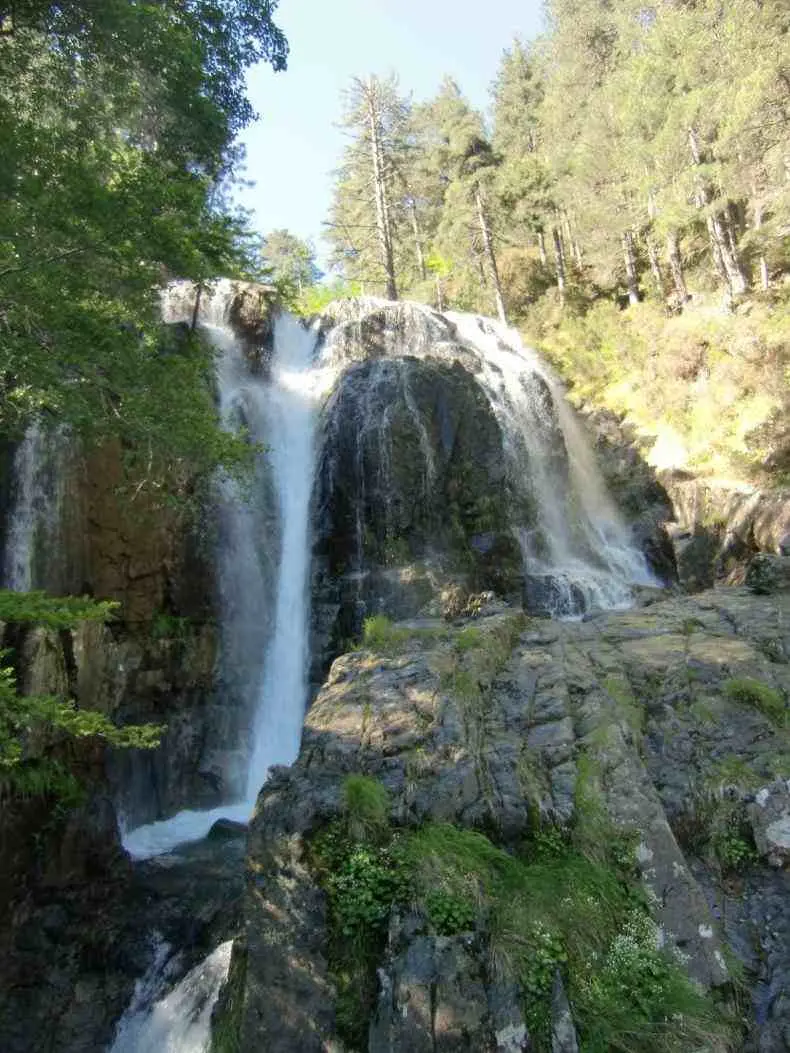
The first part is little used. It follows a superb stream and passes the foot of beautiful Meli waterfall. The ridge ascent between the 2 refuges offers fine summit views.
Day 2: GR20 stage from L'Onda refuge to Vizzavona railway station.
The first section is rocky alpine terrain with a fine panoramic viewpoint at Punta Muratello, 2,141 m, followed by a forest descent past beautiful Cascade des Anglais. Trains from Vizzavona to Ajaccio and Bastia.
Mare a Mare Centre:
We walked this crossing from Cozzano to Porticcio in 2 days. Good walkers can easily combine two or even three stages, as they are short and straightforward.
It offers very little interest: lots of chestnut woods, few views apart from wild pigs.
Only the Col St Georges-Porticcio stage is worthwhile, with splendid views over Ajaccio bay.
The end is very rough, descending through what resembles a dry canyon. Watch your footing and avoid slipping.
This overview of Corsican hikes is very partial, but shows how easily you can create short circuits by combining different trails.