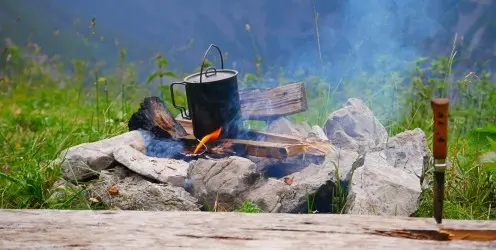
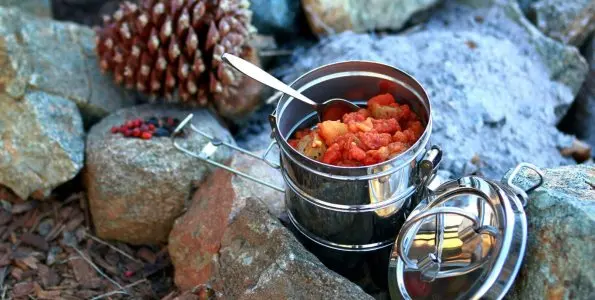
The best hiking cookware sets

Nobody wants a tumble on a hike. But at camp, having a good cooking pot matters too. There are many models! That is why Rayonrando offers a list of the best hiking cookware sets currently available.

Choosing cookware involves several factors:

  • Low weight, but also durability.
  • Usable cooking capacity, but also compact storage.

Heating performance and practicality become more important on multi-day trips.
A variety of materials is used:

  • Aluminium ranks number 1 for low weight.
  • Steel is attracting renewed interest for its strength, but weighs more.
  • Titanium combines low weight and strength at a higher price.
    This article selects models that perform well in their category and suit 1 to 2 people (some come in several capacities).

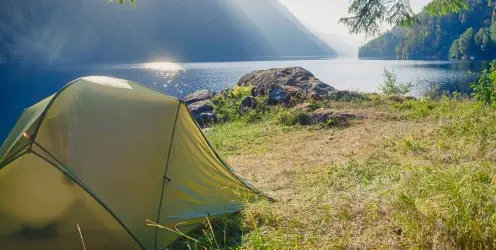
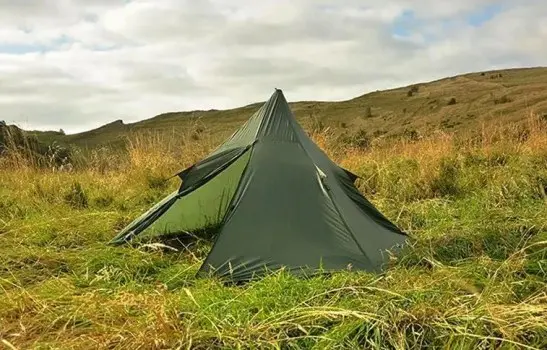
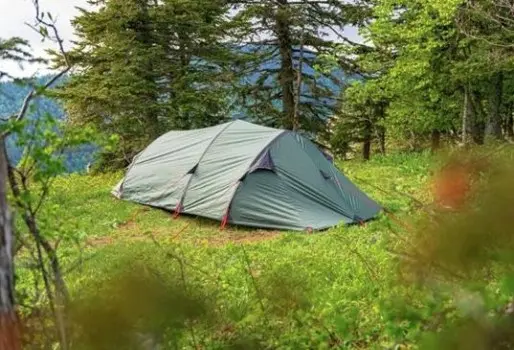
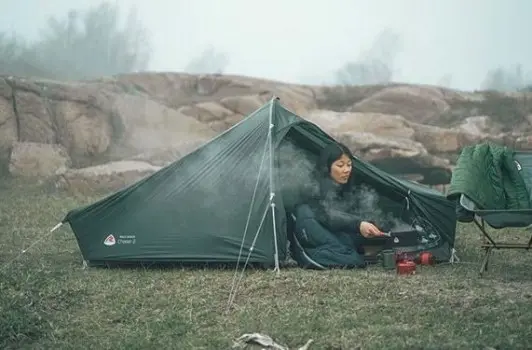
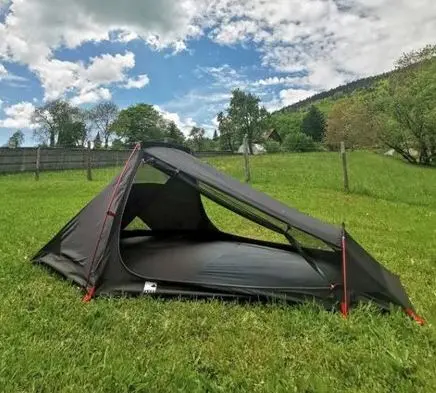
Ultralight tents: what compromises?

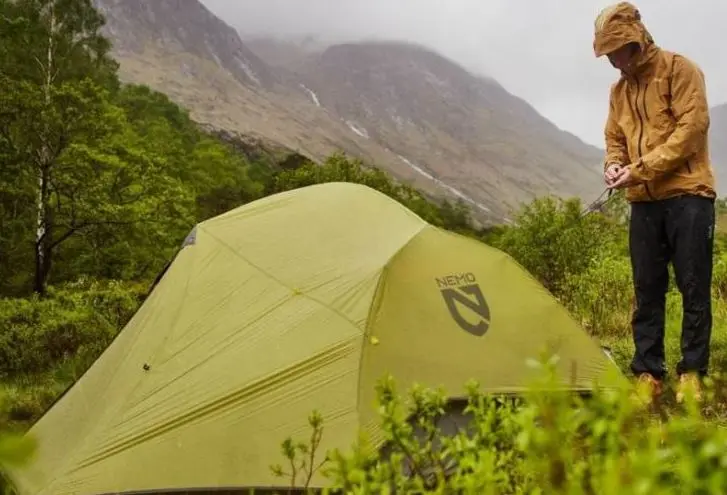
Weight is a hiker's enemy, so choosing an ultralight tent to make your load more manageable is tempting. 1 kg, 1.5 kg, or even less than 1 kg. It sounds wonderful. And very light gear is often very compact too, another welcome benefit.

While the advantages need little explanation, in this article I want to highlight the limitations and constraints of an ultralight hiking tent.

By weighing up the pros and cons, you can ensure saving grams does not mean adding problems…

Looking for a tent that is very comfortable, exceptionally tough and ultralight? I do not think that will be possible… You will need the right compromises.

What compromises on comfort?

Here are some comfort considerations where you may need to decide your minimum requirements, or which optional features you are willing to give up to save weight:

  • Inner tent floor area. With less than 1.20 m of width, fitting 2 mats and 2 sleepers without some interference is difficult. Some tents also narrow towards the feet (on RayonRando.com, we tell you if a tent is a “false” 2-person model that cannot fit 2 standard inflatable mats side by side). Want to keep belongings beside you overnight? You will need enough width or extra length. Consider the sleeper's build too: your companion built like a rugby prop cannot make themselves smaller.
  • Interior volume, especially height. Greater height and space require more fabric and metal, hence more weight. Some lightweight tents, particularly tunnels, save weight by being low: you cannot always sit up or change comfortably. If you only crawl inside to sleep, that may suffice. If you want space to shelter from rain, read, eat or change, it can be frustrating. Others are taller at the head than the feet, preserving some comfort. Light, spacious tents do exist, of course, but use thinner, more fragile materials (see the next point).

  • Number and size of porches. Having 2 side entrances and 2 porches is convenient for coming and going without disturbing each other and storing belongings. But a single porch and just 1 zip help save weight. Note that tents with a single porch at the head end, such as Vaude's Hogan and Taurus, often offer enough room for 2 backpacks and 2 pairs of shoes.
  • Protection from draughts and cold. Take time to inspect the inner tent fabric. All-mesh fabric, like mosquito netting, is lighter and very pleasant in hot weather. But it lets wind through, which can be unpleasant in strong or cold winds. Some lightweight inners have mesh above and solid fabric below, sometimes extending higher at the head for a better balance of ventilation and protection. If you hike in 3 seasons or cold, windy conditions, this matters.

What compromises on durability?

Low weight means less material. Tent volume is one lever; the 2nd is using lighter, thinner materials. This inevitably means greater fragility than full-weight versions.

Here are 4 things to consider:

  • Groundsheet thinness. Groundsheets often have a hydrostatic head rating of 1,200 mm (Schmerbers). Compared with ratings of 5,000, 8,000 or even 10,000 mm on intermediate lightweight tents, this indicates thinner fabrics. The main concern is less waterproofing itself than puncturing the groundsheet, which then leaks. Be careful when pitching: avoid stony ground and clear branches, brambles and stones.
  • Thin fabric and seams: under intensive use, these have a shorter lifespan than thicker fabrics. Two weather factors can weaken them: UV if the tent remains in sunshine for long periods (these tents are designed to be packed away daily), and wind and strong fabric tension, which can make seams less waterproof over time. Frequency of use and weather conditions are therefore 2 reasons to choose a slightly heavier fabric.
  • Poles: also thinner, they are generally unsuitable for severe conditions, although tent shape and structure may improve resistance to gusts. For Iceland, for example, prioritise strength.

    Zips: generally trouble-free in normal use, but may cope less well with intensive use.

More generally, for long journeys or intensive use, do not compromise on strength. Your tent will take a beating. An ultralight tent is unsuitable and will cause problems. Paying a high price does not make it tougher… Prioritise durability and take care of it.

Here are some ways to limit compromises on durability:

  • To protect the tent floor, take an extra groundsheet, not necessarily the tent-specific one: a lightweight sheet such as the Magic Carpet, available in our shop, can work. If that seems too heavy, replace your basic survival blanket with a reusable one such as the Trigano Argentée survival blanket we offer (160 g, suitable for multiple uses). And of course, inspect and clear the ground if necessary.
  • For groundsheet waterproofing, avoid pitching in a hollow. Ask yourself where water will flow if it rains.
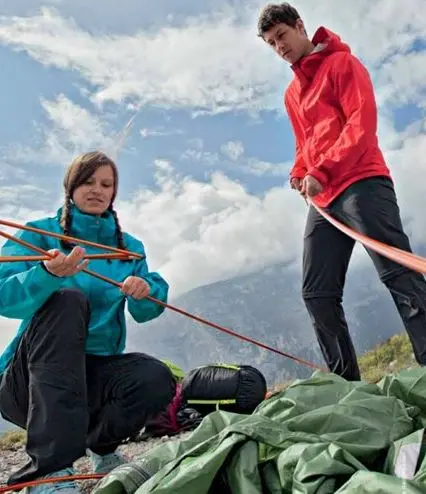
  • If wind picks up, use guylines: if none are included, take 4 cords and 4 pegs to add elevated anchoring points. This reduces movement and pressure on the poles.
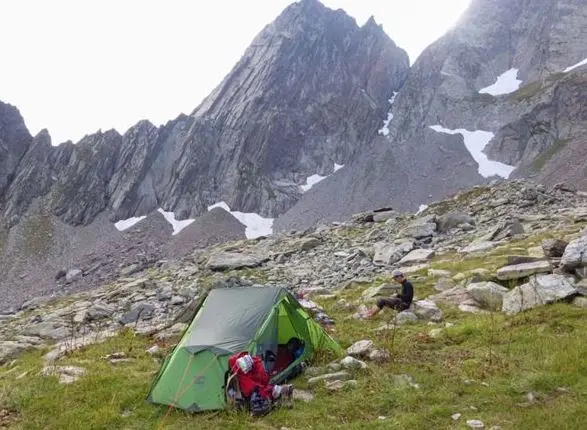
  • For wind protection too, look for a sheltered fold in the terrain. Otherwise, orient your tent to offer the least wind resistance. If there is no wind or it changes direction when pitching, choose the safest orientation, generally along the valley rather than across it.

  • If zips are stiff, do not force them: loosen the porch fabric slightly so the zip runs freely.
  • Finally, to preserve the flysheet, do not leave the tent pitched continuously unless necessary. A full summer of UV exposure will damage the fabric.

Conclusion:

When choosing an ultralight tent, you need to understand both what you gain and what you give up.

If you lack experience, here is my personal view:

For trips longer than 1 week, discomfort becomes a significant problem in my view. Over several weeks, it is decidedly unpleasant.

When sharing as 2 with someone unused to wild camping, some comfort is needed to keep everyone happy and getting along.

Difficult weather, particularly wind but also cold and rain, favours a tent comfortable enough to spend more time inside than in fine weather, change clothes and preserve a dry space. The same conditions also favour a tent that is light yet sufficiently tough.

For a journey lasting several months, forget ultralight tents and prioritise strength.

Finally, for solo wild camping, 1-person tents are appealing but always fairly cramped. Many people prefer a 2-person model.

In other situations, carrying an ultralight tent that disappears into your backpack and proves a pleasure at camp is wonderful!

Waterproof does not mean watertight

At RayonRando, we are sometimes asked whether a jacket or pair of boots is “completely watertight”. This means explaining that hiking equipment, even the most technical, is not watertight but “merely” waterproof.

Waterproofing, watertightness and water repellency: a chance to clarify concepts that can be confusing.

What is watertight, and why is it unsuitable?

Take your rubber boots and thick sailor's oilskins: they are properly watertight. You can be sure water will not get in. The disadvantage is that they are sealed on both sides: nothing gets in, but nothing gets out either.

When active, however, you sweat. If perspiration cannot escape, you are protected from rain but wet anyway… Furthermore, body moisture creates a thermal bridge, making you feel cold more easily, especially after exercise. Not to mention bacteria and other organisms developing, causing odours, irritation and so on…

In short, watertight clothing or footwear is uncomfortable when moving a lot and sweating, as when hiking.

Why are hiking footwear and fabrics “only” waterproof?

They prevent water entering up to a point… But eventually it can penetrate.

The reason is the other side of what I mentioned about watertight fabrics:

  • Breathability: for comfort, your jackets and footwear must be as waterproof as possible while remaining breathable, allowing body moisture to escape.
  • Weight and thickness are another reason: a waterproof hiking jacket is much lighter than oilskins, more pleasant to wear or carry in your pack, and allows greater freedom of movement.

How can my jacket be waterproof and breathable?

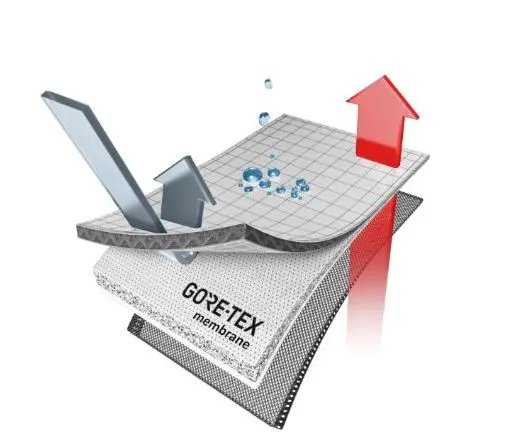
Because it has a membrane: imagine fabric with microscopic holes, small enough to keep water out but large enough for water vapour to escape. Goretex is the benchmark brand, but most manufacturers have their own.

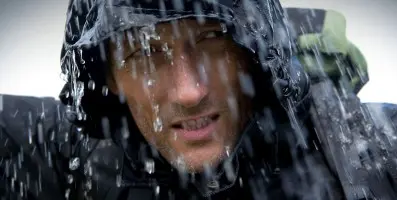
Membrane performance varies in waterproofing and breathability, sometimes assessed in laboratories. But be realistic: prolonged rain with a continuous layer of water on the fabric eventually penetrates. Likewise, heavy perspiration condensing on the fabric leaves you wet inside.

Why are waterproof hiking jackets more waterproof than tent fabrics?

You may point out that a tent flysheet does not need to breathe much: air circulates between the 2 layers. So you might expect more waterproof fabric than on a jacket. For example, waterproofing, often measured in mm without going into detail, is commonly 10,000 mm or more for a jacket. For a tent flysheet, it is often 3,000 or even 1,200 mm on ultralight tents.

There are 2 reasons:

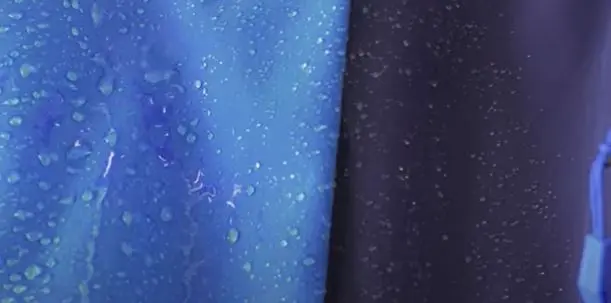
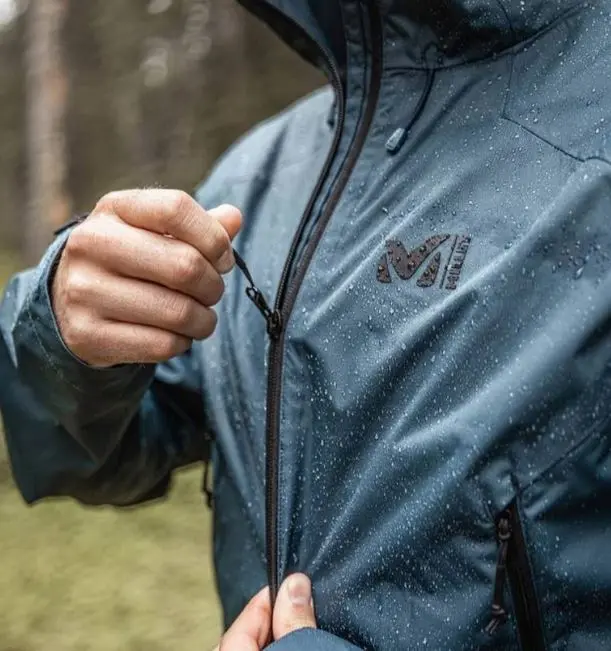
  • Water repellency: water can pool in jacket folds or under backpack pressure; on a tent, the first aim is to make it run off. That is water repellency. If water runs off, it has no time to penetrate. Tensioning the flysheet at a steep angle lets gravity do the rest. A water-repellent surface treatment is often added, helping droplets bead and run off more easily. This matters particularly for ultralight tents with lower waterproof ratings.
  • Weight and volume again: using oilcloth would be much heavier and bulkier.

Groundsheets are more waterproof than flysheets because they do not benefit from water running off.

Can a fabric's waterproofing be restored?

Not really, apart from patching tears.

We sell spray-on or soak-in “waterproofing treatments”. But these restore surface water repellency, which can diminish with time, friction and washing. They are designed not to clog the waterproof membrane's pores.

But if the membrane is damaged, a treatment will not repair it. In particular, avoid excessively frequent washing and vigorous spin cycles.

RayonRando also offers liquid silicone for re-waterproofing seams. Applied with a brush, it penetrates seams and seals microscopic holes.

Conclusion:

For active use, which inevitably means sweating, forget watertightness and seek waterproofing and breathability in worn equipment. Fabrics with waterproof, breathable membranes appear in rain jackets and trousers and footwear; at RayonRando we also offer waterproof socks and gloves, very useful for cycling, for example.

For some waterproof fabrics, durability takes priority over breathability: gaiters, subject to abrasion, and rain ponchos, which must resist tearing if snagged.

For equipment such as tents, tarps and rain covers, we want waterproofing and low weight, so outer fabrics are designed to be water-repellent as well as waterproof. A higher waterproof rating often accompanies tougher, thicker and heavier fabric.

Water repellency can be restored with a treatment, but waterproofing cannot, except by sealing holes with an adhesive patch or using silicone on seams.

Finally, RayonRando does offer equipment described as “watertight”: roll-top bags, cases and other accessories to protect your belongings. There are always limits. Likewise, some electrical, optical and electronic equipment is protected against water, sometimes carrying an ingress protection rating, such as IP57 or IPX7 for the most protective models.

Receive RayonRandoZine:

Clear, concise articles:

  • Practical advice
  • First-hand experiences
  • Technical advice
  • Route guides & destinations
  • Books on hiking and long-distance journeys...

Subscribe!

You will receive 1 free magazine a month for 12 months.

No advertising. No marketing emails.

We would like your feedback:

If you have 3 minutes, tell us what you thought of this issue. It will help us improve future issues: Share my feedback

Product comparison
Compare
Rayon Rando advice