FAQ – Choosing your Camino in Spain
Which Camino should you choose for a first experience?
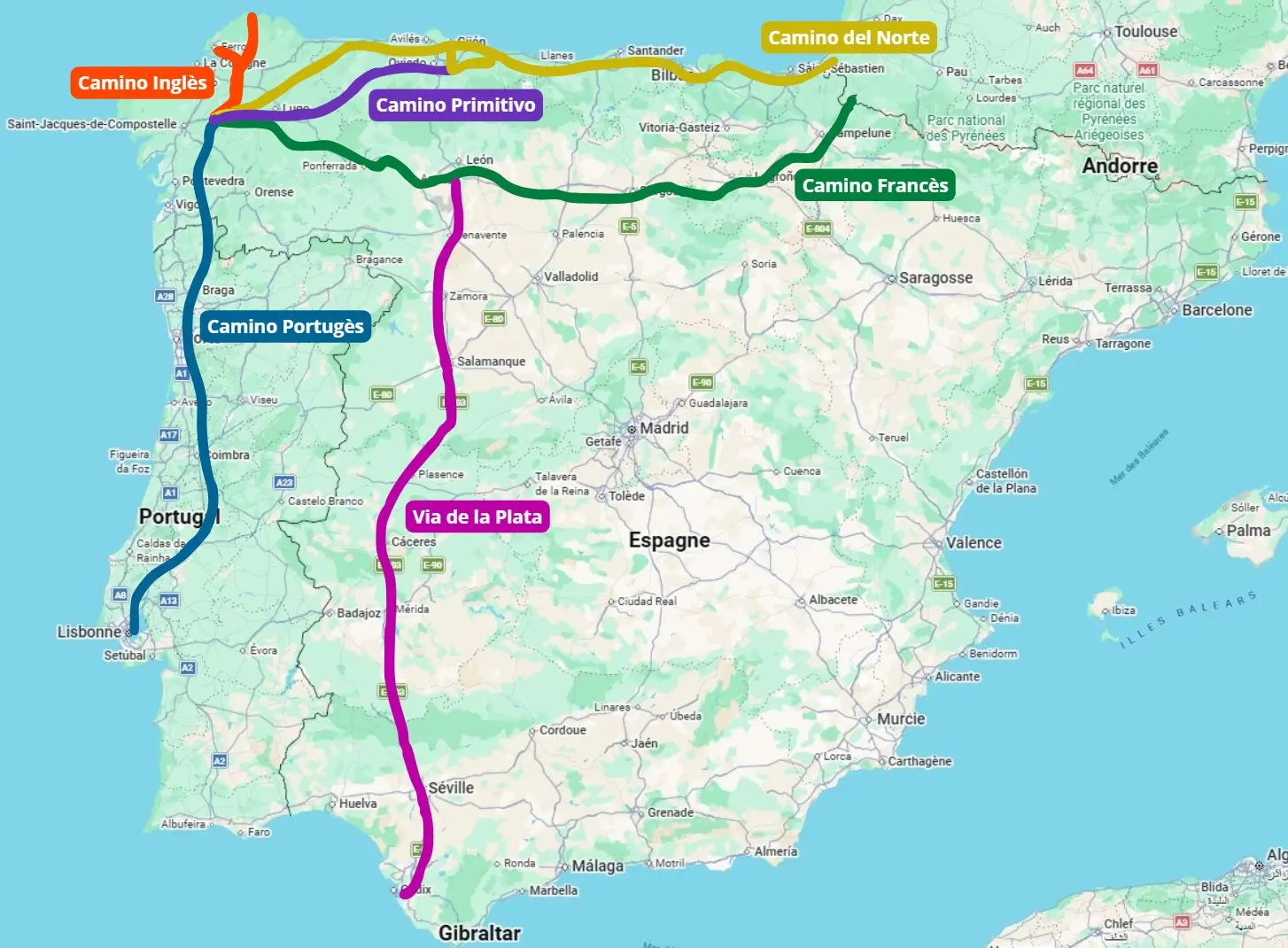
For a first experience on a Camino route in Spain, the Camino Francés remains the most reassuring. Its extensive infrastructure makes it easy to find accommodation, get food and water, and gradually adapt to the walking rhythm. It also offers opportunities to meet other pilgrims, which helps a lot when discovering long-distance walking.
Which Camino is the quietest?
The Camino Primitivo and some sections of the Camino del Norte are significantly quieter than the Camino Francés. They offer more solitude and a more introspective atmosphere. However, this means greater self-sufficiency and better logistical preparation, particularly in high season.
Can you walk just the last 100 kilometres?
Yes. To obtain the Compostela (official certificate), you must walk at least 100 kilometres. This is why the section between Sarria and Santiago de Compostela is so popular. It offers the experience of arriving while remaining manageable in around a week. However, be aware that this is also the busiest section.
When is the best time to walk in Spain?
May, June and September generally offer the best conditions: moderate temperatures and more balanced visitor numbers. In summer, the Meseta on the Camino Francés can become very hot. In spring and autumn, the north (Camino del Norte and Primitivo) can be wetter. Timing greatly affects walking comfort.
How many kilometres should you walk daily to complete the route?
A novice pilgrim averages between 12 and 15 kilometres per day, while an experienced hiker can easily cover 20 to 30. It is crucial to adapt your daily stage to elevation gain and weather, planning shorter days in mountainous terrain. Remember rest days too, to discover the rich cultural heritage.