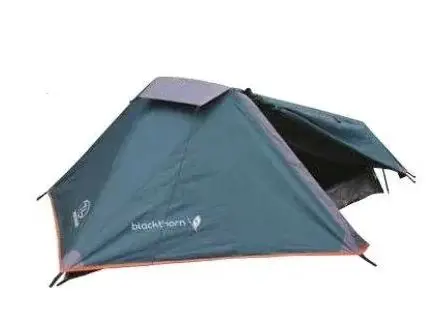
You are setting off alone on a multi-day trek or cycling trip with wild camping. Or travelling in a group, with everyone carrying their own tent. In these 2 situations, hesitating between a 1-person and a 2-person tent is perfectly reasonable.
Although a 1-person tent may seem the most natural choice, it often raises questions.
Is a 1-person tent too small? You may wonder about space, confinement and overall comfort.
Is a 1-person tent worthwhile? By definition, it is limited to one hiker. You may question whether it suits your long-term use or whether you will need to invest in a larger tent later.

To help you choose between these 2 options, RayonRando presents the features to consider for comfort, practicality and carrying. Then we explain how to prioritise your choices according to your circumstances.

Comfort: the 2-person tent wins, but…

For comfort, the advantages seem clearly in favour of the 2-person tent. All of them? No, choosing a 2-person tent also brings some discomfort.
Advantages of the 2-person tent:

  • The floor area lets you spread out. Unpacking your backpack, sheltering everything inside and finding your belongings easily: every task is simpler. You can also use a wide mat without feeling cramped.
  • The more generous volume gives you room. You can move, change clothes, read or eat comfortably. It is also welcome if you need to shelter for a while.
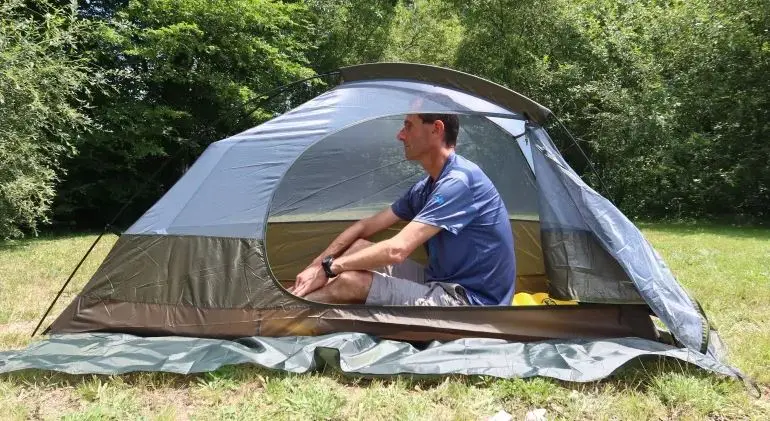
  • The height, generally greater than a similar 1-person tent, lets you sit up without touching the fabric.
  • The porch or porches let you store shoes, or even a pack, without difficulty.
  • The volume and ventilation reduce condensation.

Conversely, a 1-person tent feels more confined, restricting movement or sitting up. Condensation is generally inevitable, especially in tunnel designs. The porch is sometimes very small: usually enough for shoes, but awkward for storing a pack.

However, a 2-person tent can sometimes be less comfortable than a similar 1-person tent:

  • Cold. It is easy to overlook, but warming a 2-person inner tent with body heat and staying warm when sleeping alone is harder than in the smaller volume of a 1-person tent. This matters when wild camping at altitude or in cool or cold seasons.
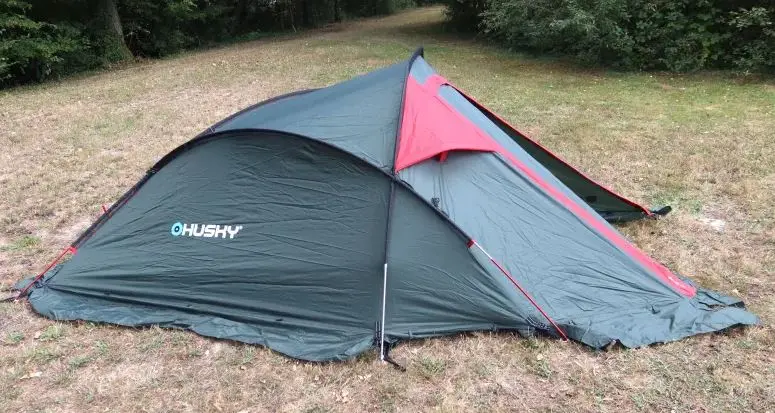
  • Wind exposure. Roomier and generally taller than a similar 1-person tent, a 2-person tent may be less comfortable in storms or gusts. Its greater wind exposure can cause shaking and disturb your sleep.

Finally, not all 1-person tents offer the same comfort level:

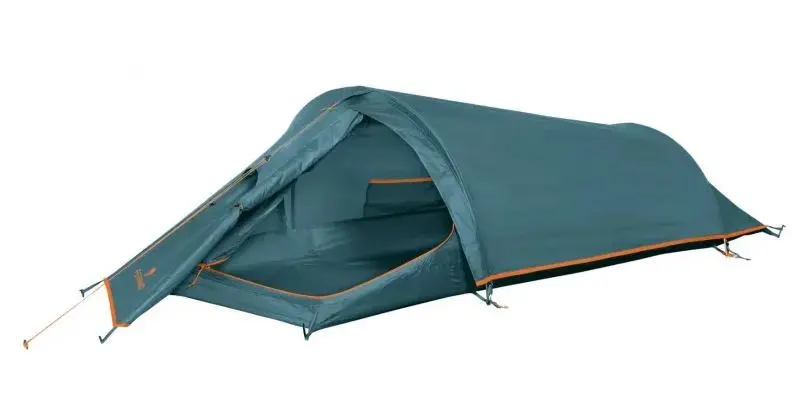
  • 1-person tunnel tents often only allow you to lie down and require you to leave your pack outside. They are prone to condensation. However, they are among the lightest and most affordable.

Some 1-person tunnel tents:

Sling 1 lightweight hiking tent

Tunnel tent with a front entrance
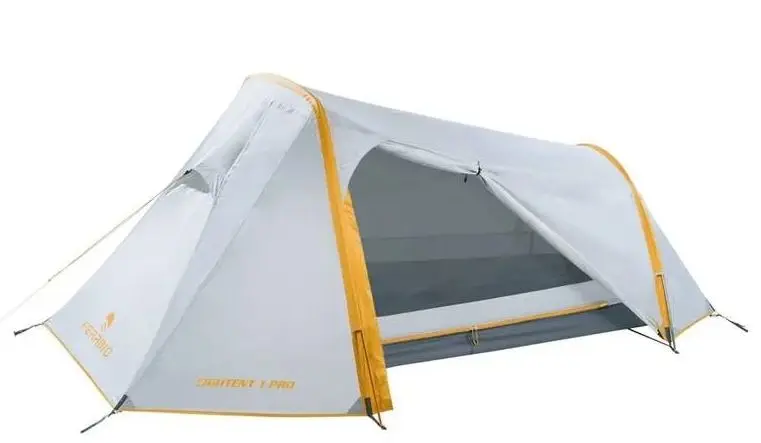
Lightent 1 Pro lightweight hiking tent

A tough, more comfortable tunnel tent
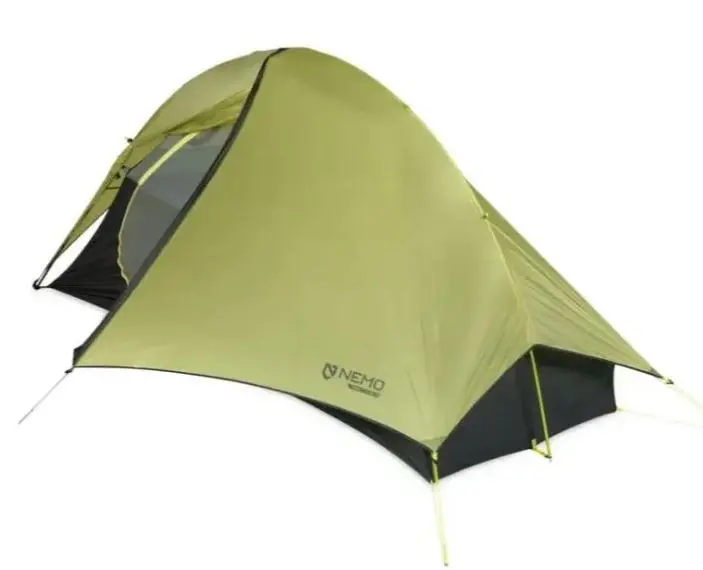
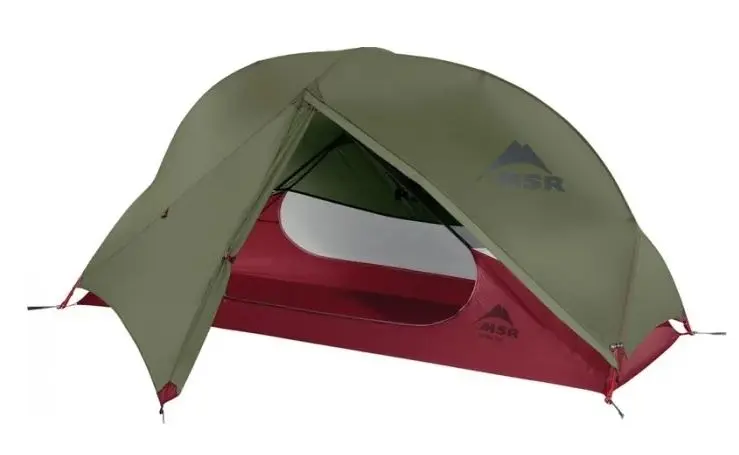
1-person igloo or dome tents are not necessarily wider but offer more volume. They feel airier, and the side porch is generally more generous for sheltering your belongings. Some dome tents have vertical walls thanks to a short central pole, allowing you to sit up in reasonable comfort.

Some 1-person dome tents:

Hubba NX lightweight hiking tent

A benchmark. A good balance of weight and comfort.
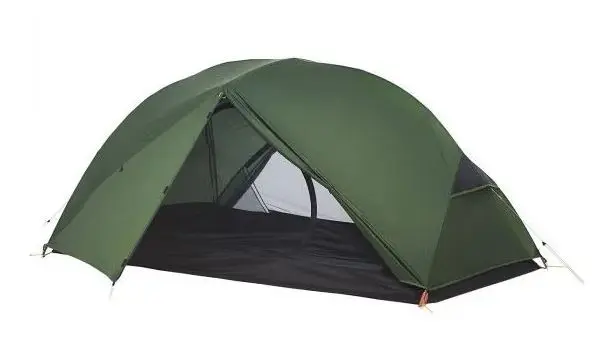
Jaya 1 lightweight hiking tent

The spacious 1-person tent
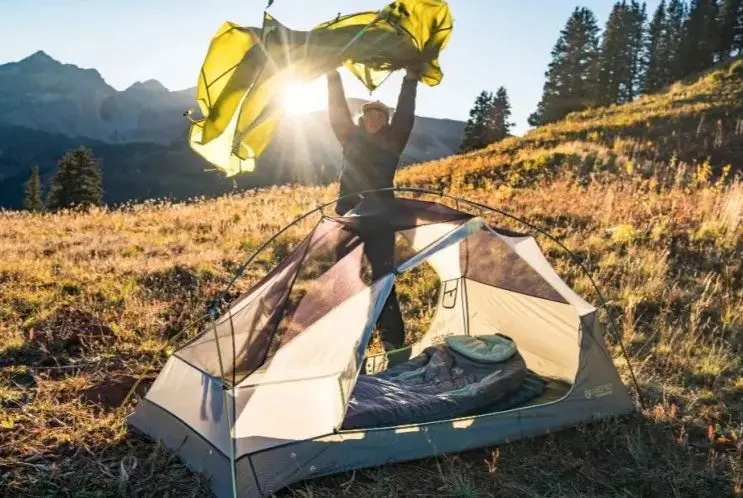
For more information, also read our article A spacious 1-person tent: is it possible?

Practicality: 1 is simpler

For practicality, the 1-person tent wins on every count:

  • Quicker to pitch than a 2-person tent. It is also generally easier to pitch alone than a 2-person model, particularly non-freestanding tunnel tents, whose fabric must be tensioned before securing them. They are quick to pack away too, very welcome when setting off in the cool of the morning.
  • Easier to find a camping spot. The smaller footprint makes it possible to find flat, usable ground almost anywhere, including beside a trail, where a 2-person tent may struggle. This matters when camping in steep or rocky areas.
  • More discreet. Smaller and often lower, 1-person tents blend into the landscape, which solo hikers may appreciate.
  • Carrying: featherweight. This is a major advantage for solo hikers. Compared with a similar 2-person tent, you save several hundred grams.
  • Carrying: less bulk. This is an appealing advantage for solo hikers, who can optimise their load and perhaps pack the tent inside the backpack rather than outside. It is useful for cyclists and especially bikepackers, who sometimes face a seemingly impossible task fitting everything onto the bike.

Choosing a 1 or 2-person tent: how do you prioritise?

You now know the main criteria. To prioritise and finalise your choice between a 1-person and 2-person tent, consider personal factors and conditions of use:

Depending on the person:

  • A 2-person tent will appeal to those with a larger build, tall or broad, and of course anyone who feels a little claustrophobic.
  • For joint pain or other health problems, the comfort of a 2-person tent is also a real benefit.
  • For very light people, under 60 kg for example, pack weight on a trek is essential, giving a big advantage to the 1-person tent.
    In other situations, both of the 2 options are possible.

Depending on the conditions of use:

  • If you are an adventure traveller or bikepacker, the ease of use of a 1-person tent is a real benefit.
  • If you are a traveller or cyclist, comfort comes to the fore, favouring the 2-person tent.
  • If you expect to shelter for several hours, in bad weather for example, or stay 2 nights in the same place, the comfort of a 2-person tent is genuinely useful.
  • Finally, if you are heavily loaded, the tent is the item on which you can save the most weight.
  • Consider future uses: a 2-person tent may prove useful more often, since it works alone or for 2.
  • Finally, if these points do not settle the question, at RayonRando we think the length of your trip can decide it. You can tolerate some discomfort on a 5-night trip or regular weekends and choose a 1-person tent. On longer journeys, lack of comfort and space for you and your equipment can quickly become frustrating. A 2-person tent is then very welcome.

Conclusion:

Comfort, practicality, weight: the choice between a 1 or 2-person tent depends on your personal characteristics and conditions of use.
Still unsure? Budget may also matter considerably. With comparable tents, choosing the 1-person model saves money. For a similar budget, you could afford a more technical 1-person tent than an ordinary 2-person model. However, this saving may prove questionable if, in 3 or 4 years, you discover you prefer wild camping as 2…
If in doubt, the 2-person tent remains the most versatile option.

Product comparison
Compare
Rayon Rando advice