Getting lost while hiking is more common than you might think. A route error, unclear waymarking, a disappearing path or a simple moment of inattention can be enough to take you off course.

Fortunately, being lost does not necessarily mean being in danger. By staying calm and responding appropriately, you can often find your route again quickly or help emergency services reach you if necessary.

Check your position regularly before you get lost

The best way to deal with getting lost is still to avoid it.

Many hikers wait until they have serious doubts before getting out a map or GPS. Yet a few seconds checking your position can often prevent several kilometres of wrong turns.

Make a habit of checking your progress regularly, particularly:

  • at poorly waymarked junctions;
  • when a path becomes unclear;
  • after leaving a main track;
  • as soon as the terrain no longer matches your expectations.

If doubts arise, stop immediately to check your position. The sooner you react, the easier correcting your route will be.

Find hiking route waymarking here.

Stay calm: the first decision is the most important

When you realise you have probably lost your way, panic is often your worst enemy.

The desire to find the right path quickly can tempt you to walk without thinking. Yet this is the surest way to stray further from your route.

Stop for a few minutes. Breathe, observe your surroundings and think through your progress since the last point where you were certain of your position.

This short pause often prevents a chain of poor decisions.

Avoid wandering at random

Continuing “just to see” is rarely a good idea.

Every minute spent heading the wrong way makes locating you harder and increases the risk of reaching more difficult terrain: dense forest, scree, a ravine, cliffs or impenetrable vegetation.

If you are almost certain of the last junction you took, retracing your steps is often the simplest, safest solution.

However, if you have walked for a long time without knowing where you were heading, stop and try to establish your position before continuing.

Try to establish your position

Before setting off again, try to determine exactly where you are.

Start by observing the terrain, summits, a river, forest track or any other distinctive feature that could serve as a landmark.

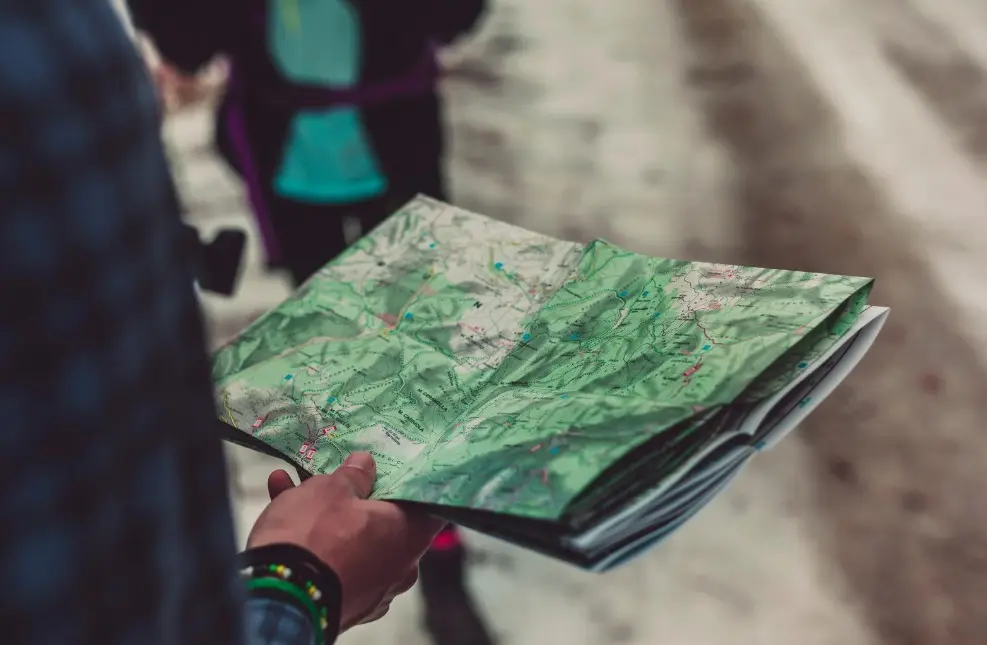
Then consult your topographic map and, if you have one, use your compass to confirm your orientation.

If following a GPX track, check your position relative to the planned route.

One of the most effective methods is to obtain a GPS position using the Cartes IGN app (or equivalent mapping app). Within seconds, your position appears directly on the topographic map. You can immediately see which side of the path you are on and which direction to take.

Take time to analyse the situation before resuming your walk.

Avoid shortcuts to regain the correct trail

Once you have established your position, it can be tempting to head straight across to the path shown on the map.

Yet this is a common mistake.

On a map, a few hundred metres seem insignificant. On the ground, they can conceal dense vegetation, scree, a rock barrier, ravine or impassable watercourse.

A fall off the trail also makes the situation much more complicated. Rescuers will find it harder to locate you, and other hikers are unlikely to pass nearby.

Even if it means a detour, returning to a waymarked route is almost always preferable to crossing unknown terrain.

Contact emergency services only when the situation warrants it

Mountain rescue services intervene when your safety is genuinely threatened.

An injury, fall, inability to progress, dangerous weather or nightfall without a safe route to reach justify a call.

However, rescue services are not taxis for bringing back a hiker who is simply tired or disoriented.

If you need to call 112, prepare the essential information:

  • your position as accurately as possible;
  • your state of health;
  • the number of people with you;
  • the difficulties encountered.

Once the call is over, conserve your phone battery. Rescuers may need to contact you again.

How to signal your presence to rescuers

If rescuers are on their way, make their job easier.

If possible, position yourself in an open area where you will be easily visible.

You can attract attention in several ways:

  • a whistle (six blasts in quick succession, followed by a minute's pause);
  • a head torch if light is fading;
  • bright clothing or a contrasting object placed on the ground.

Avoid repeatedly changing location if rescuers already know your approximate position.

Distress signals for helicopter rescue

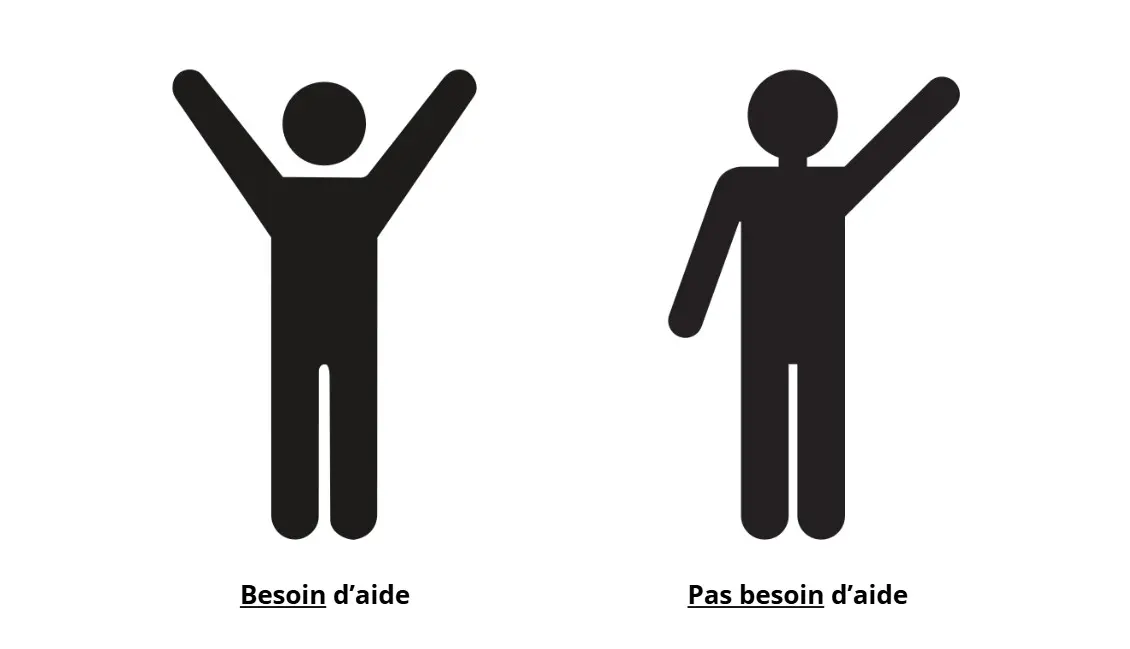
If a helicopter is searching, simple international signals indicate your situation.

You need help:

  • Raise both arms above your head to form a Y.

You do not need help:

  • Raise one arm while keeping the other by your side to form an N.

If the helicopter approaches:

  • remain still;
  • choose an open area if possible;
  • never run towards the aircraft;
  • secure your cap, emergency blanket and any light objects that rotor downwash could blow away.

Wait for the crew's instructions before moving.

If you need to spend the night where you are

If you can no longer progress safely, it is sometimes better to wait for first light.

Find a spot sheltered from the wind, protect yourself from cold and moisture, and limit movement.

Conserve water, food and phone battery.

If rescuers know your position, stay where you are to make their response easier.

How to avoid getting lost on future hikes

Good preparation greatly reduces the risk of getting lost.

Before every outing:

  • plan your route;
  • download offline maps;
  • carry a map, compass or hiking GPS;
  • tell someone close to you your route;
  • check the weather;
  • choose a hike suited to your ability.

Finally, make a habit of checking your position regularly throughout the hike. A few seconds checking are always better than several hours wandering.

Conclusion

Getting lost while hiking does not necessarily mean an accident. Staying calm, analysing your position and making considered decisions greatly increases your chances of finding your route without putting yourself in further danger.

The best protection, however, remains planning ahead: a well-prepared hike and regular navigation checks prevent most route-finding errors.

FAQ

Lost while hiking: should you retrace your steps or stay put?

If you know exactly where you left the correct route, retracing your steps is often best. However, if you have walked a long time without landmarks or the terrain has become dangerous, stop, establish your position and assess the situation before setting off again.

How can mountain rescuers locate you?

Give your GPS position if known, describe visible features around you (summit, lake, hut, forest track…) and stay in an open area if possible. A whistle, head torch or bright clothing also makes you easier to spot.

What should I do if I lose mobile coverage while hiking?

Move only if you can do so safely, to try to find coverage. If your safety is threatened, stay somewhere visible and conserve phone battery. Downloaded offline maps let you continue navigating without a signal.

Which GPS apps work offline?

Several apps allow maps to be used without a connection, provided you download them before departure. Cartes IGN, Visorando, Komoot and Outdooractive offer this for previously saved areas.

What equipment should you carry to avoid getting lost?

The minimum includes a map, compass or hiking GPS, a charged phone with offline maps, a power bank, whistle and head torch. These items take little space and can prove invaluable when the unexpected happens.

Product comparison
Compare
Rayon Rando advice