





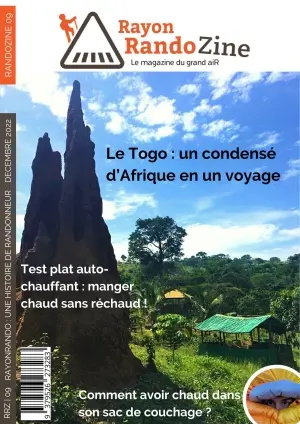
Contents no. 9 - December 2022:
Togo: a taste of Africa in one trip
How to stay warm in your sleeping bag?
Self-heating meal test: hot food without a stove!
 Togo:
Togo:
a taste of Africa in one trip
COVID had some unexpected side effects. For example, it introduced us to Sara, who worked at RayonRando for a few months in 2020 before being able to return to Togo and resume her usual work with Arimi at le Pas de Côté Voyage, combining accommodation and tours to discover the country. Today she introduces a little-known yet exceptionally varied and welcoming destination.
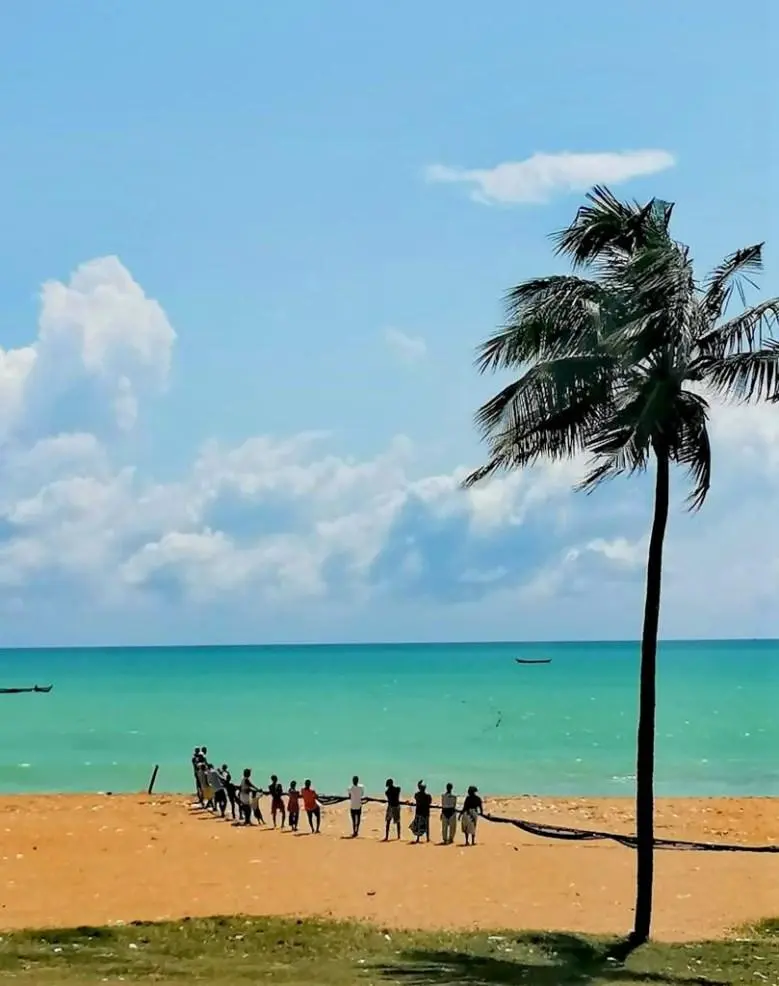
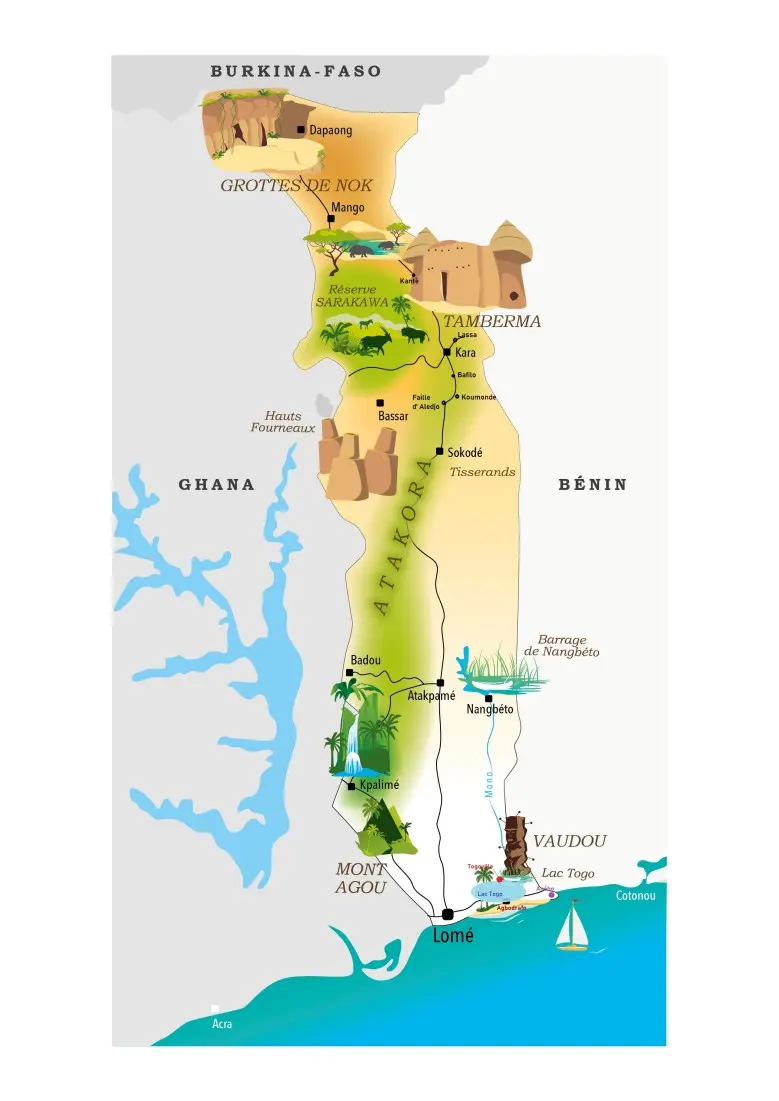
Situated between Ghana and Benin, in the middle of the African horn, this country, the smallest in French-speaking West Africa, stretches lengthways for almost 600 km, offering great diversity in terrain. From the Atlantic coast to the savannahs on the Burkina Faso border, Togo has green plains, hills and mountain peaks, lakes and waterfalls, forests of rare trees: a whole palette of landscapes that also explains its wide variety of ethnic groups. With around thirty languages spoken, choosing one is difficult, so French has remained the official language, making communication easier between visitors seeking human contact and the warm, welcoming population.
Despite a few recent alerts in the north, Togo offers considerable political stability and religious tolerance. It also remains sheltered from mass tourism, providing an opportunity to discover West Africa in a peaceful, authentic way.
Back to contents
 How to stay warm in your sleeping bag?
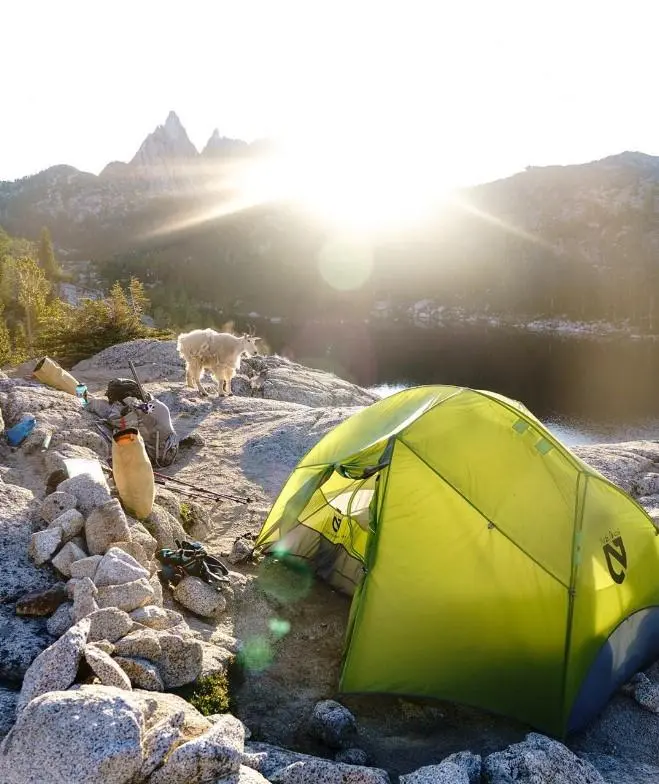
When wild camping, being warm enough to sleep well is essential. And it does not depend solely on your sleeping bag.
This article does not cover choosing a sleeping bag (the subject of other articles and advice on Rayorando.com). Here I offer tips and techniques to optimise your thermal protection and sleep well:
- Choosing your camping location carefully;
- Reducing your sensitivity to cold;
- Using your sleeping bag as effectively as possible;
- Knowing what to do if it gets too cold.
 Self-heating meal test:
hot food without a stove!
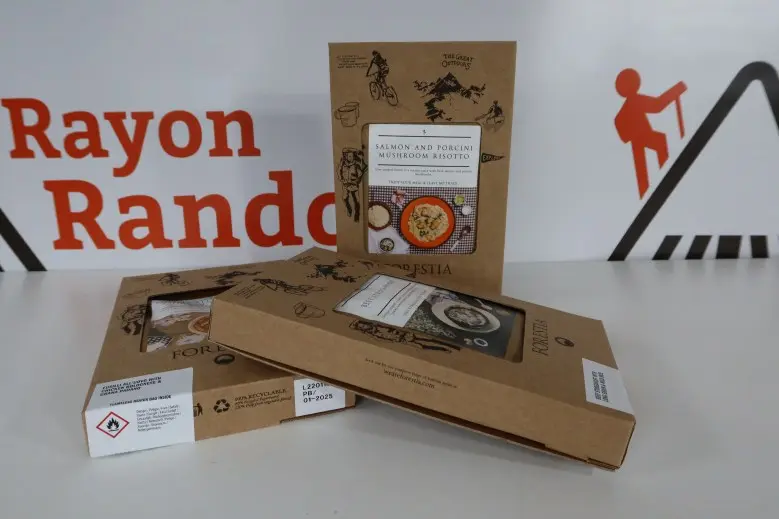
How do you eat hot food without a stove when hiking? Self-heating meals make it possible.
Today, RayonRando.com tests Forestia self-heating meals.
How self-heating works:
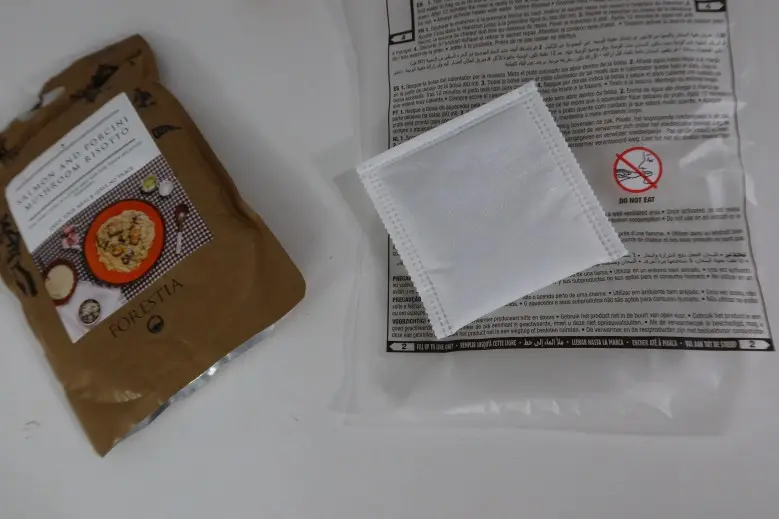
The meal comes in sealed packaging (a pouch for Forestia) with a heating system in the form of a sachet that reacts with water (on the same principle as water reacting with lime) and releases heat. No lighter or fuel is therefore needed.
The test:
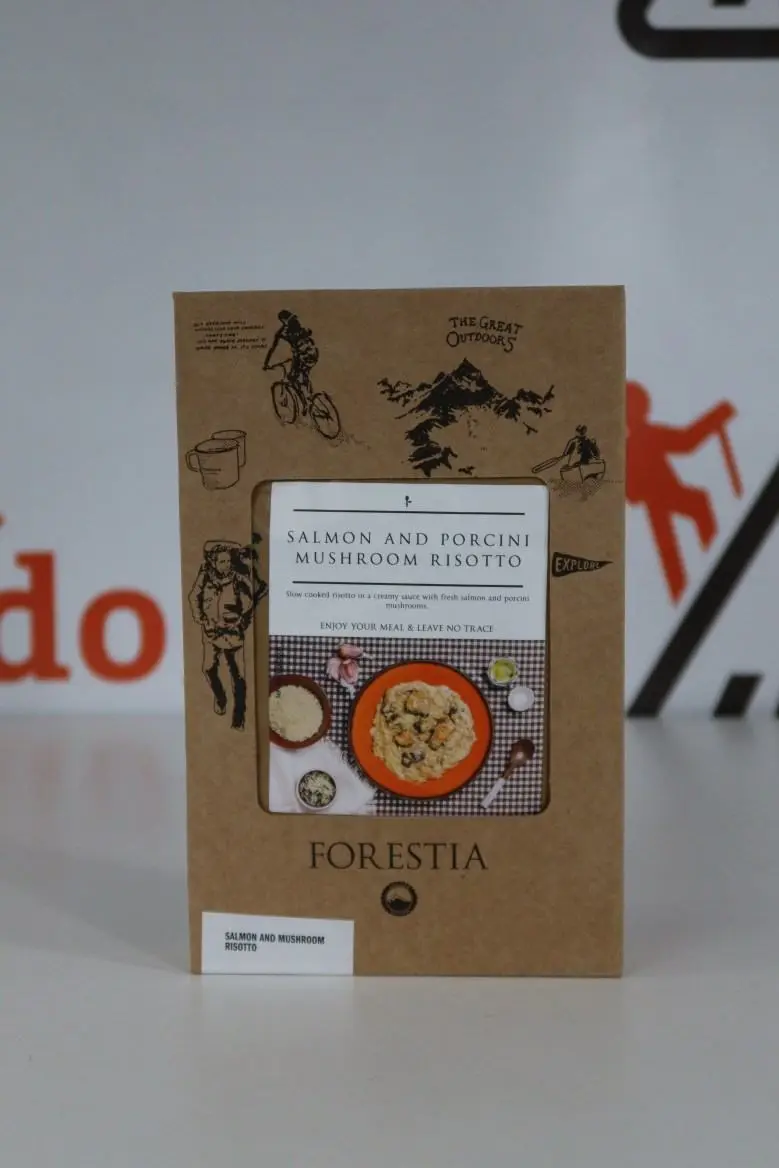
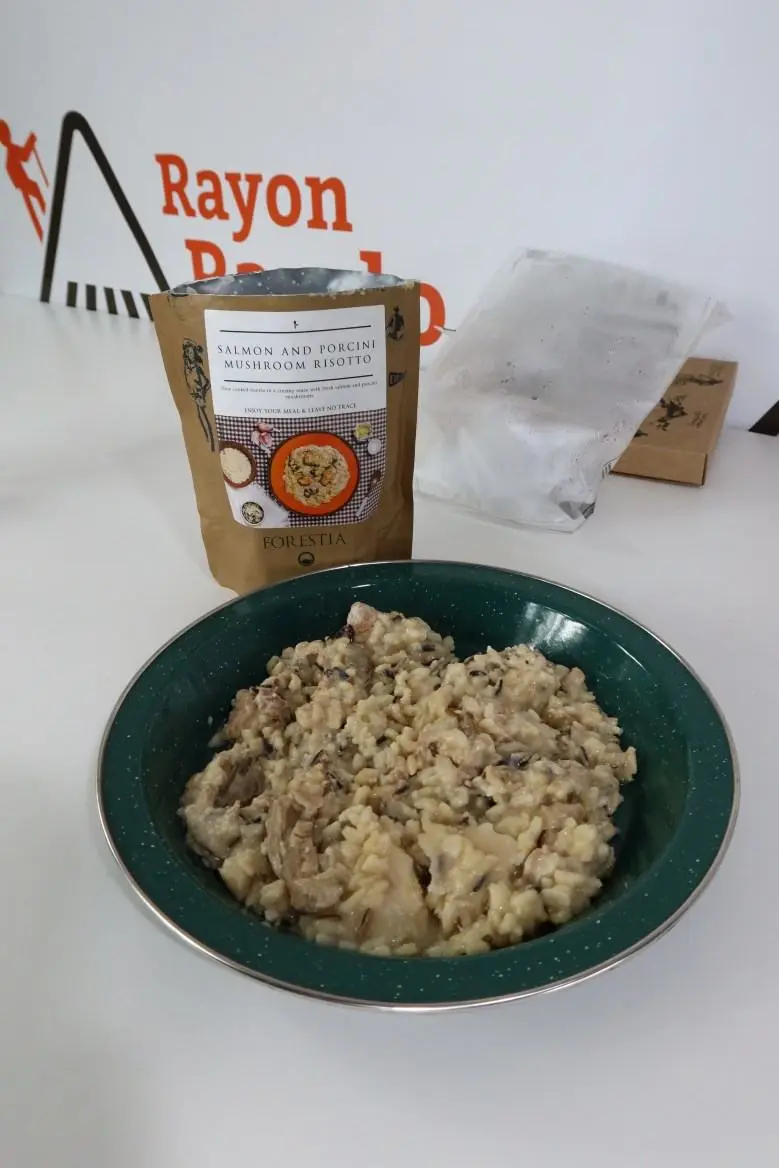
For the test, the RayonRando.com chef offers salmon and mushroom risotto. I can almost hear your mouth watering…
1) Preparing the self-heating meal:
The kraft cardboard packaging contains the meal in its airtight pouch and a transparent heating bag holding the self-heating sachet.
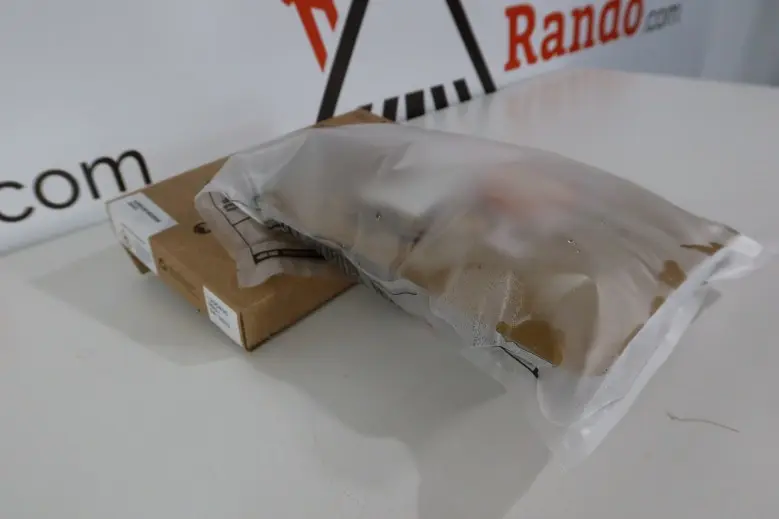
Simply slip the food pouch into the bag and pour in around 5 cl of water (up to the clearly marked line). I then fold the bag and lay it almost flat (propped on the kraft cardboard, making sure the heating sachet is beneath the meal rather than above it, so it absorbs the water properly).
Preparation is very simple and takes only a few seconds.
2) Heating time:
You need to wait 12 minutes for the meal to heat through.
I find that heating starts almost immediately. There is a fizzing sound and the bag initially inflates (before the air gradually escapes).
It quickly becomes very hot. I cannot hold the bag in my hand. Make sure you place it on a suitable surface, table or the ground. Do not let children play with it!
I wait the full 12 minutes. The fizzing continues almost until the end. Afterwards, almost all the water has been absorbed.
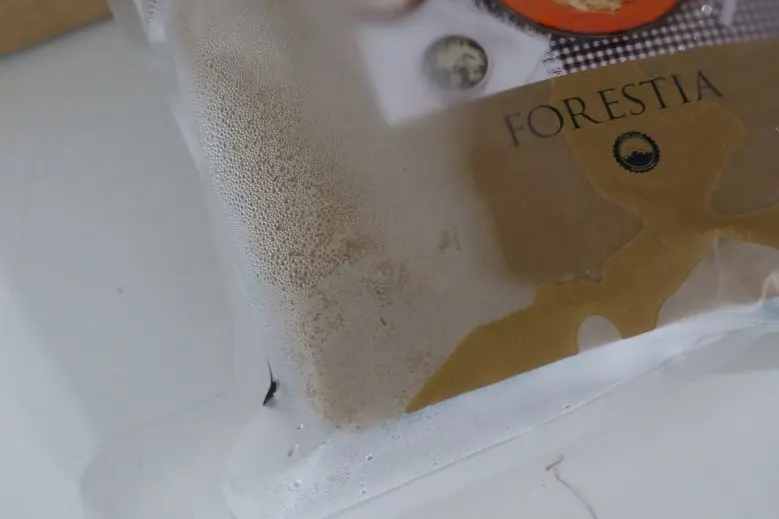
3) Tasting:
I remove the food pouch, which I can hold and handle.
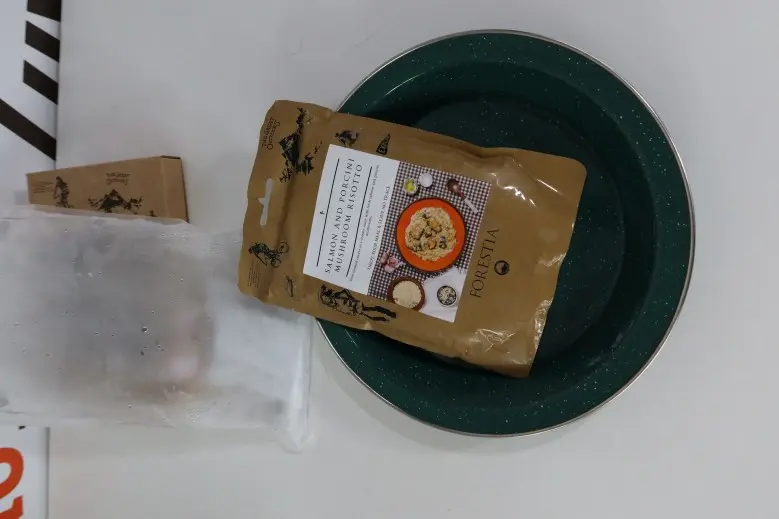
You can eat without a plate:
Opening it by hand is easy thanks to the tear notches.
The pouch stands upright because its sides spread out. I can therefore eat directly from it without getting my fingers dirty, as the opened pouch is not too deep.
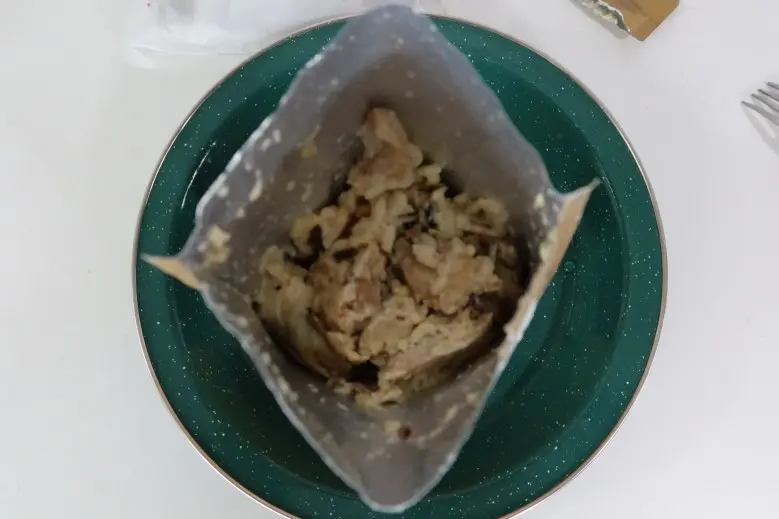
Heat:
My meal, previously stored at 10–15 °C, is now nice and hot. Warm enough without being scalding, so I can eat it straight away.
Texture, taste and seasoning:
Being used to freeze-dried meals, I immediately notice the difference. There are no tiny pieces here: it looks like a “traditional” meal. The salmon pieces are normal bite-sized chunks. The rice, mushrooms and salmon all have a good texture.
The same goes for taste: it feels like eating a “traditional” prepared meal. The seasoning suits my taste and the risotto flavours come through clearly. It is good, without matching a good home-cooked meal.
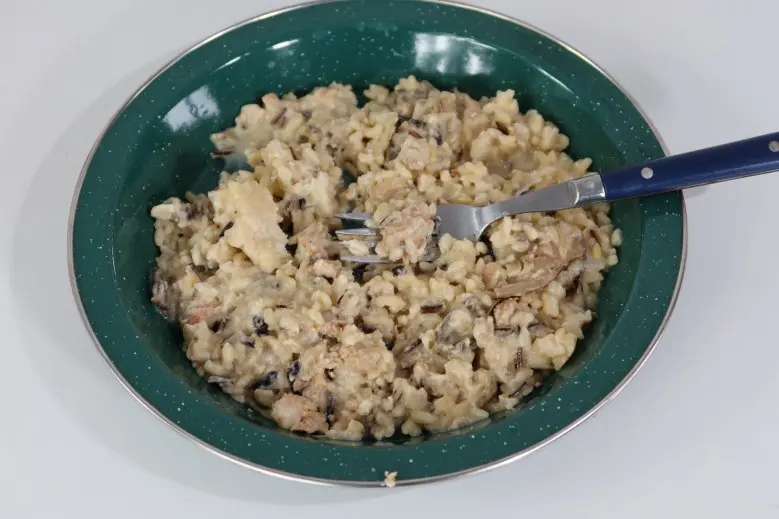
Filling?
The portion weighs 350 g. Having done no exercise beforehand, I find it sufficiently generous and filling. It provides 318 kcal, less than most 125 g freeze-dried meals (usually around 400–450 kcal). It is good, but after a proper hike I think I would welcome a dessert.
Conclusion:
I find the meal easy to use and the heating effective. It is also easy to eat without a knife, directly from the pouch or from a plate if you prefer.
Advantages of a self-heating meal over a freeze-dried meal:
The meal is genuinely tasty and more enjoyable to eat than a freeze-dried meal, in both taste and texture (like food at home).
It is filling but provides less energy than a 125 g freeze-dried meal, so would not be enough for me after strenuous exercise. A dessert is needed.
The experience is enjoyable, even as an alternative to a traditional meal.
Advantages of self-heating over a stove:
- It is an interesting option for a day hike or weekend with one or two meals. In that case, it is lighter and less bulky than a stove + gas canister + cookware set. However, it soon becomes heavier if you take several meals.
- It is also a useful emergency backup to keep in your backpack, for example if you plan to eat dinner regularly in mountain huts but want an alternative just in case…
Outside hiking, self-heating meals can also be useful:
- When travelling or at work, they are a practical option for eating on the go without giving up a hot meal when no kitchen is available.
- On motorised trips, such as in a van, when the vehicle has no stove installed.
Back to contents
Receive RayonRandoZine:
Clear, concise articles:
- Practical advice
- First-hand experiences
- Techniques
- Route guides & destinations
- Hiking and long-distance travel literature...
You will receive 1 free magazine a month for 12 months.
No adverts. No marketing emails.