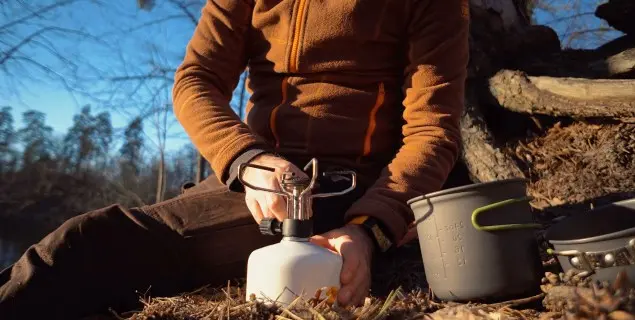
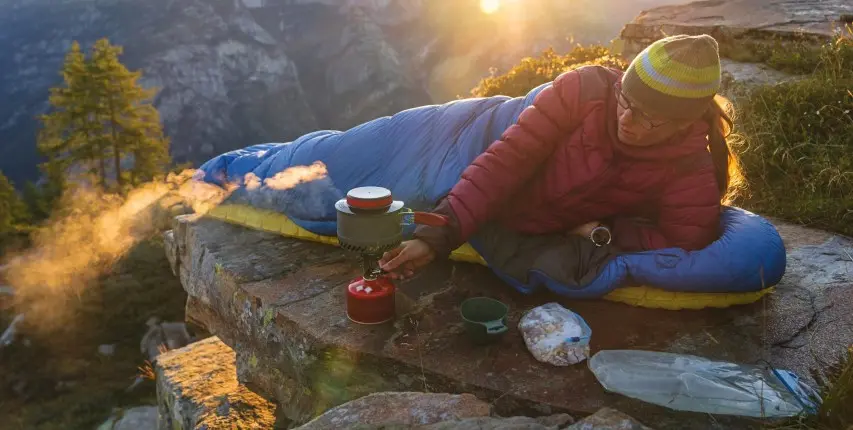
How to choose your camping stove?

There are several types of hiking stove: gas, multi-fuel, wood-burning and alcohol (liquid or tablets).
Most hikers choose a gas stove. But having made that decision, there are still many gas stoves to choose from. In this article, RayonRando helps you choose the right hiking gas stove for your needs.
After defining your use and the 4 selection criteria, we examine the 3 types of gas stove and which suit those criteria best.

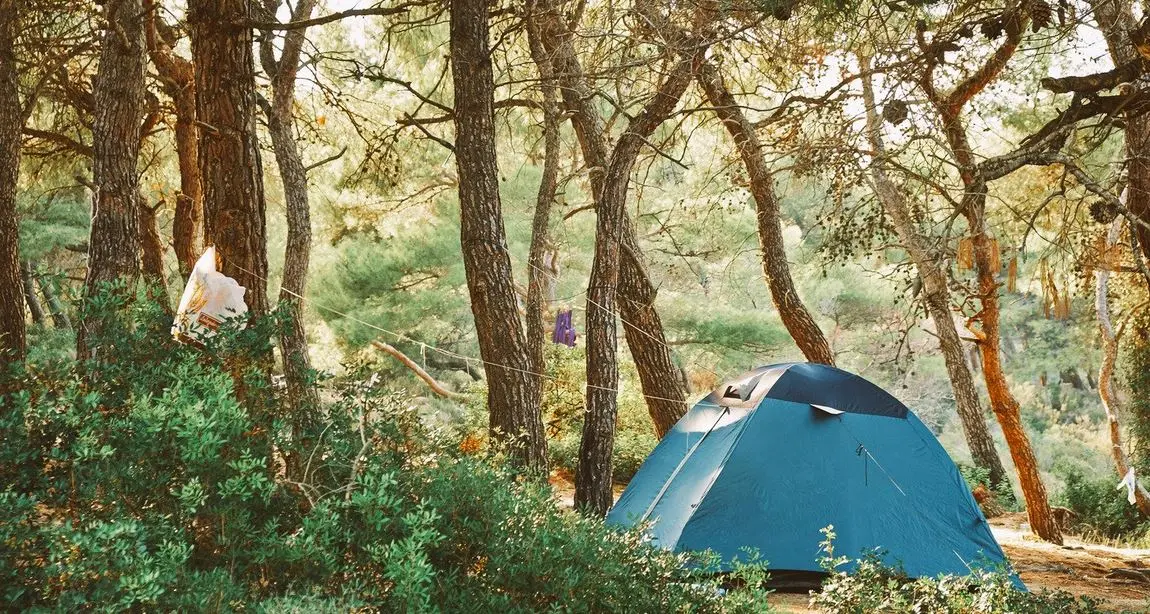
The 10 best hiking tents

Choosing among dozens of hiking tents is not easy. They come in every shape and price range, with varied features and widely differing quality.
To make things easier, RayonRando offers a selection of 10 good hiking tents.
Our method:

  • For easier comparison, we focus on 2-person tents (some models also come in 1- and 3-person versions).
  • We exclude single-wall tents, whose use is more limited because of condensation.
  • We include some affordable, dependable tents, as well as higher-end models.
  • Finally, to cover a broad range of needs, we select 2 or 3 tents from different categories: tunnel tents, dome tents, lightweight but robust tents and ultralight tents.

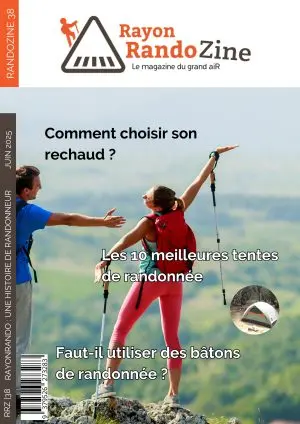
Should you use trekking poles?

For a long time I hiked without trekking poles. But that was a long time ago… Since taking them up, I have never let them go, at least on longer hikes.

Some RayonRando visitors are unsure whether to use poles. They wonder about their usefulness, and perhaps how to use them. Walking with just one pole, or without properly supporting yourself on them, does offer limited benefits.

Here I address the first part of the question: the advantages and disadvantages of using trekking poles.

The advantages of using trekking poles:

  • Poles improve safety. This is the first benefit that comes to mind. Having fallen frequently when hiking, particularly because of a weak ankle, I immediately noticed the difference. Not only is footing more secure, but a firm pole placement corrects missteps before a fall. Since enjoying the experience of carrying a well-loaded child carrier, this safety benefit has become paramount.
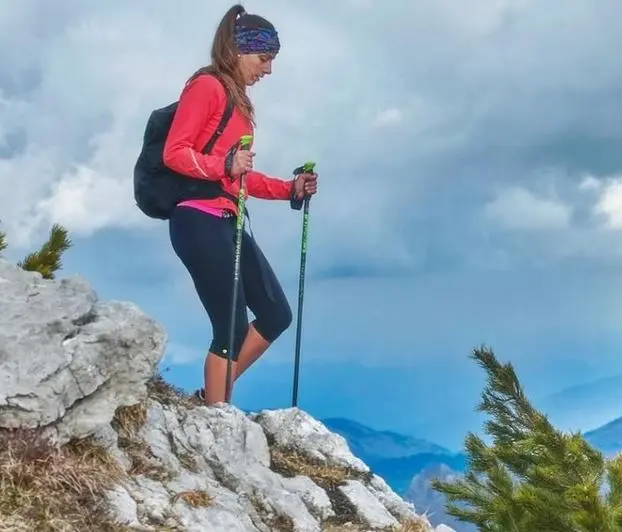
  • Poles improve stability. Providing 2 simultaneous ground contacts (right foot and left pole), they help prevent twisting and ease joints: ankles and knees do less shock absorption with each step than when walking without poles.
  • Poles provide support. Spreading body weight over 2 contact points eases the leg muscles. They noticeably reduce muscular fatigue over rough terrain or long days. I find them valuable both uphill and downhill.

These benefits only arise if you genuinely put weight on correctly adjusted poles with every step. Some hikers merely place the poles without leaning on them, giving a feeling of security against missteps but little real stability or relief.

The disadvantages of trekking poles:

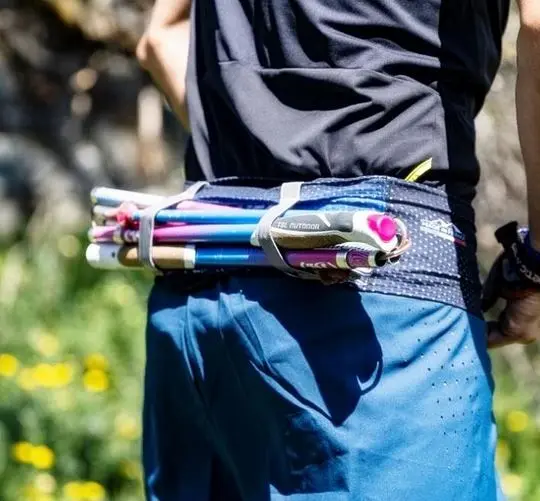
  • Your hands are occupied. Frequent camera or binocular use means freeing your hands, perhaps putting the poles down for comfort. They are also awkward on scrambling or cable-protected sections. Sometimes you must take time to fold and attach them to your backpack for safe, comfortable passage.
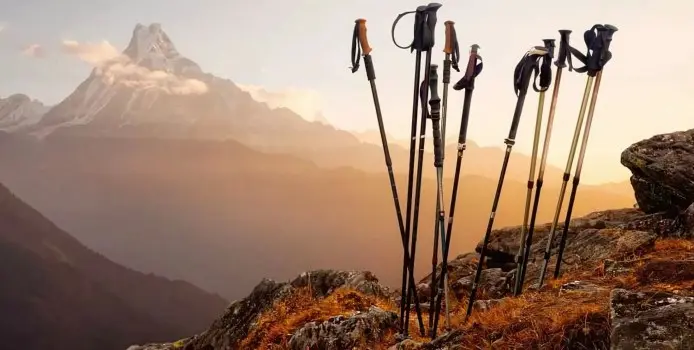
  • Sensitive wrists. Putting weight through the wrists at every step can be uncomfortable for some people. However, poles with built-in shock absorbers exist, such as the Fizan Trek AS. The absorber can be locked or activated as required.
  • Rocky sections. A pole may catch between 2 rocks and, carried by your momentum, snap under leverage. Avoid putting weight on poles in such sections. However, I have tested TSL's spider-foot pole tips, which provide better grip here.
  • Extra weight when carried on your backpack. Generally, however, they remain in your hands almost constantly, so this is secondary in normal use. Pole weights vary considerably, allowing optimisation here too. The lightest adjustable poles weigh around 150 g, such as the Fizan Compact.
  • Packed size? If you need to stow poles inside your bag, for example for a flight, some are rather long. But I mean telescopic or folding poles, so this remains relative. Some are more compact, such as the TSL Tour carbon 5 folding poles (40 cm). I sometimes also separate telescopic sections to fit them more easily in my backpack.

When should you use or avoid walking poles?

In my experience, you can use trekking poles:

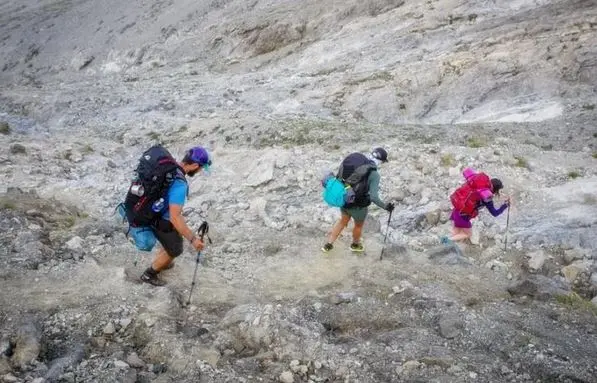
  • Throughout a multi-day hike.
  • When carrying a substantial load, such as a trekking backpack or child carrier.
  • On day hikes with elevation changes, rough terrain or uneven ground.
  • On a long, demanding hike, such as an out-and-back summit route.

You may choose not to use them in these situations:

  • Hiking over easy terrain.
  • Weak or painful wrists.
  • Needing to keep your hands free.
  • You are a mountain goat who enjoys running downhill through scree.
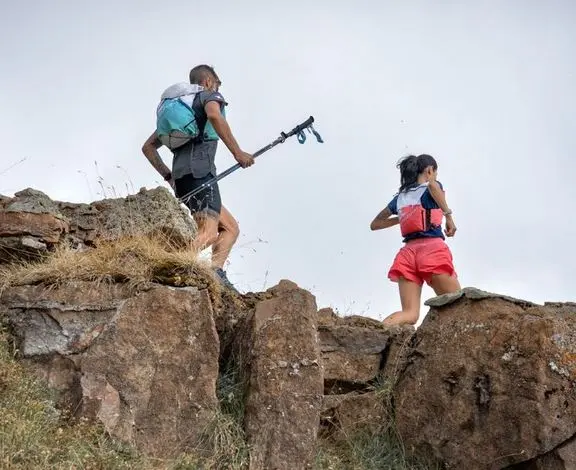
  • Also where prohibited, sometimes on coastal paths to limit erosion, or in certain trail races to avoid injuring fellow runners.

How to use trekking poles properly:

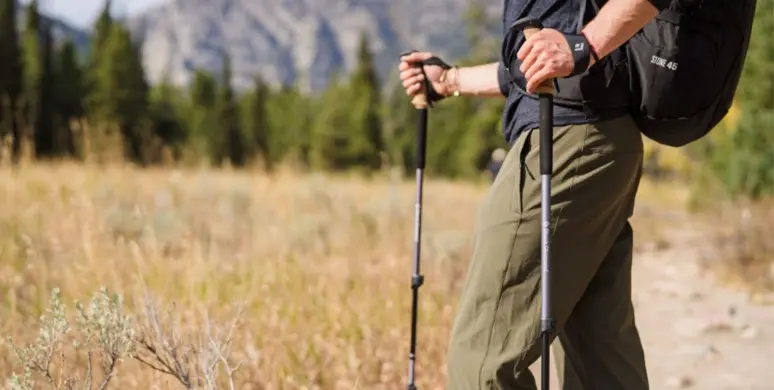
  • Always use 2 poles and put weight on them with each step.
  • Adjust their length to your height and the slope: shorter uphill, longer downhill.
  • Use the wrist strap for support.

RayonRando will cover technique in a dedicated article.

Conclusion:

Since taking up trekking poles, I cannot do without them. Fewer falls and twisted ankles, but also greater comfort: more stability with less conscious attention and less muscular fatigue. The disadvantages ultimately seem minor, except on scrambling or cable-protected sections, where prudence requires folding and stowing them.


I do not use them for a family woodland or seaside walk. But I always use them in the mountains. They seem essential whenever I carry a loaded backpack, even more so a child carrier. For me, they naturally complement good footwear.

Receive RayonRandoZine:

Clear, concise articles:

  • Practical advice
  • First-hand experiences
  • Technical advice
  • Route guides & destinations
  • Books on hiking and long-distance journeys...

Subscribe!

You will receive 1 free magazine a month for 12 months.

No advertising. No marketing emails.

We would like your feedback:

If you have 3 minutes, tell us what you thought of this issue. It will help us improve future issues: Share my feedback

Product comparison
Compare
Rayon Rando advice