Winter is a magnificent season for hiking, trekking, snowshoeing and camping. Landscapes are often wilder, visitor numbers lower and the atmosphere incomparable. But it is also the season when mistakes carry the highest cost.

Rapidly changing weather, a snow-covered trail, a battery drained by cold or a poorly managed break can turn a pleasant outing into a difficult situation. Fortunately, most accidents are not caused by exceptional events. They generally result from an accumulation of small mistakes that gradually reduce your safety margin.

Here are the main mistakes to avoid to fully enjoy your winter outings.

Why winter increases risks in hiking and outdoor activities

Cold profoundly changes conditions underfoot and the body's responses.

As temperatures fall, your body uses more energy to maintain its internal temperature. Wind intensifies this by increasing heat loss, while moisture, from snow, rain or sweat, accelerates cooling.

Tiredness develops faster and judgement errors become more frequent when you start feeling cold.

Shorter days also reduce your room for manoeuvre. In midwinter, darkness sometimes falls before 17:00. A simple delay can force you to finish your hike in the dark.

Progress also becomes more difficult. Even a thin layer of snow slows walking and increases effort. On icy terrain, every step requires more care, while deep snow can halve your speed.

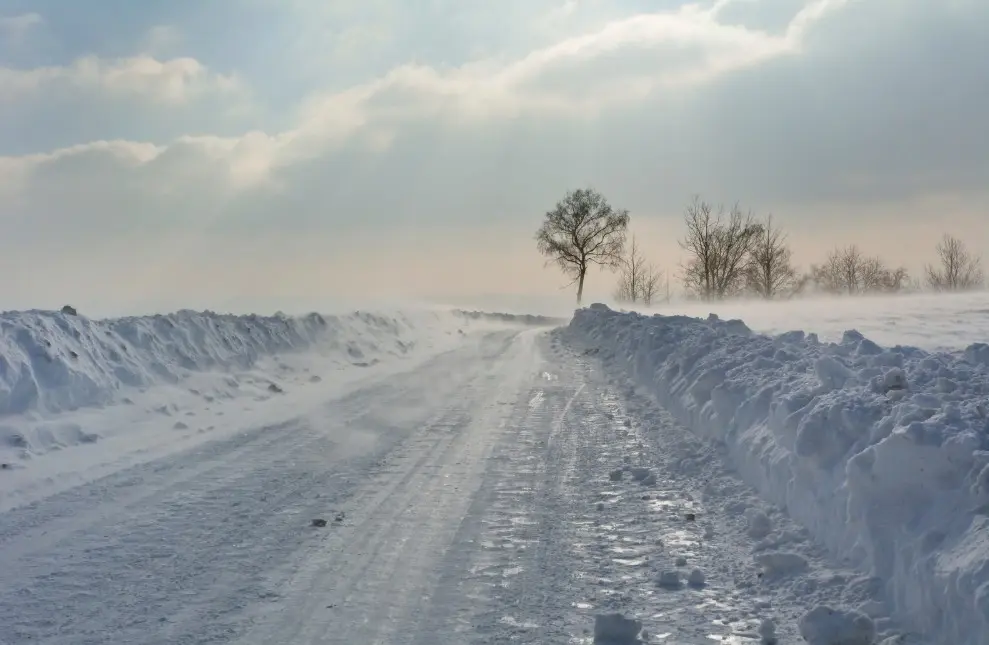
Finally, the risk of getting lost increases. Paths sometimes disappear beneath snow, fog greatly reduces visibility and familiar landmarks become invisible. Even a route you know perfectly in summer can become difficult to follow in winter.

All these constraints require more rigorous preparation than in warmer months.

Mistake no. 1: underestimating the weather

Weather is probably the primary risk factor on a winter outing. A pleasant hike can quickly become much more demanding if wind strengthens, precipitation arrives earlier than expected or temperatures plunge.

In winter, looking beyond the simple number displayed by your weather app is essential.

Looking only at temperature

A temperature of 0°C has very different consequences in sunshine, snowfall or a 60 km/h wind blowing over the ridges.

Wind greatly increases how cold you feel and accelerates heat loss. This is called the wind chill effect. Similarly, moisture increases body cooling.

Also check the forecast temperature at the altitude of your outing. It may be a few degrees above freezing in the car park and several degrees below just a few hundred metres higher.

Neglecting wind, precipitation and changing conditions

Mountain weather sometimes changes very quickly.

Snowfall can hide tracks in minutes. Fog can greatly reduce visibility and make navigation much more complex. Freezing rain can turn an easy path into a real ice rink.

So do not only check the forecast at departure. Also check how conditions will develop throughout your outing, along with any weather warnings.

Adapt your route or turn back when conditions deteriorate

Changing your objective or postponing your outing is no failure.

If conditions are worse than expected, choose a shorter route, less exposed to wind or at lower altitude.

And if forecasts become truly poor, the best decision is often to stay home. The mountain will still be there tomorrow.

Mistake no. 2: choosing clothing poorly

Cold is generally not a problem while walking. Difficulties begin during breaks or when clothing is damp.

The three-layer principle remains the best solution:

  • a breathable base layer to wick sweat away;
  • an insulating layer to retain warmth;
  • a windproof, waterproof outer layer.

Avoid cotton. Once wet, it dries very slowly and encourages cooling.

The most important thing is managing your temperature during exertion. If you start sweating heavily, open your jacket or remove a hat or layer before getting soaked. Preventing sweat is much easier than drying damp clothing in the cold.

At every break, quickly put on a warm layer to prevent your body cooling down.

Trail tip: carry a foam sit mat. Weighing only a few tens of grams, it lets you sit comfortably on snow or a damp rock without getting cold. Failing that, sit on your gloves rather than directly on the ground. This avoids wet trousers, always unpleasant in low temperatures.

Mistake no. 3: setting out with incomplete equipment

Winter requires slightly different equipment from summer.

Some items become almost indispensable:

  • a head torch with a fully charged battery;
  • an emergency blanket;
  • a spare pair of gloves and hat;
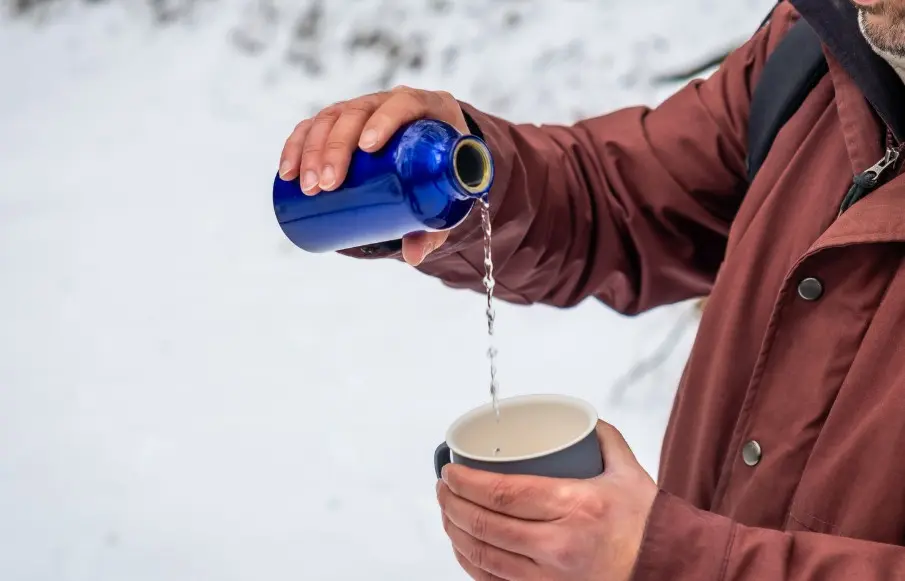
  • a hot drink in a vacuum flask: before filling it, pour boiling water inside for a few minutes. This preheats the walls and keeps your drink hot much longer;
  • a power bank;
  • a map and compass, even if using GPS;
  • depending on conditions: poles, crampons or snowshoes.

Cold is particularly bad for lithium batteries. It can dramatically reduce battery life. Keep your phone and power bank in an inside pocket, against your jacket, rather than an outer backpack pocket.

Warmers can make hands and feet more comfortable. However, they never replace good insulation. If you are already hypothermic, their effectiveness is very limited.

Mistake no. 4: neglecting food and hydration

Cold tends to reduce thirst. Yet your body continues losing water through breathing, sweating and producing heat.

Waiting until you feel thirsty is therefore a mistake.

Drink regularly throughout the day, even small amounts. A hot drink is often more pleasant than icy water and encourages better hydration.

Your body also uses more energy to maintain its temperature. It is therefore normal to need more calories than on a summer hike.

Choose foods that are easy to eat in the cold: dried fruit, walnuts, almonds, cereal bars, cheese, chocolate or dried sausage. Eating small amounts regularly is better than waiting for a long lunch break.

Regular food and hydration directly help maintain alertness, heat production and endurance: three essentials for moving safely in winter.

Mistake no. 5: managing effort poorly

In winter, managing effort is almost as important as choosing equipment.

The most common mistake is setting off too fast. After a few minutes, you feel hot and sweat, then keep damp clothing on because you do not want to stop to remove a layer. Yet this sweat becomes your worst enemy as soon as you slow down or stop.

Damp clothing loses much of its insulating power. Cooling can then be very rapid, particularly in wind.

Ideally, start slightly cool and adjust your clothing as you exert yourself. Opening your jacket or removing a hat as soon as you warm up is often more effective than waiting until soaked.

Manage breaks carefully too. As soon as you stop, put on a warm layer before even feeling cold. For a longer break, find somewhere sheltered from wind and avoid direct contact with snowy or damp ground as much as possible.

Finally, consider your return time. In winter, a safety margin is your best ally. Set off early enough and set a turnaround time, even if you have not yet reached your objective.

Turning back a few hundred metres from the summit can be frustrating, but often ensures a safe, calm return.

Mistake no. 6: ignoring early signs of hypothermia and frostbite

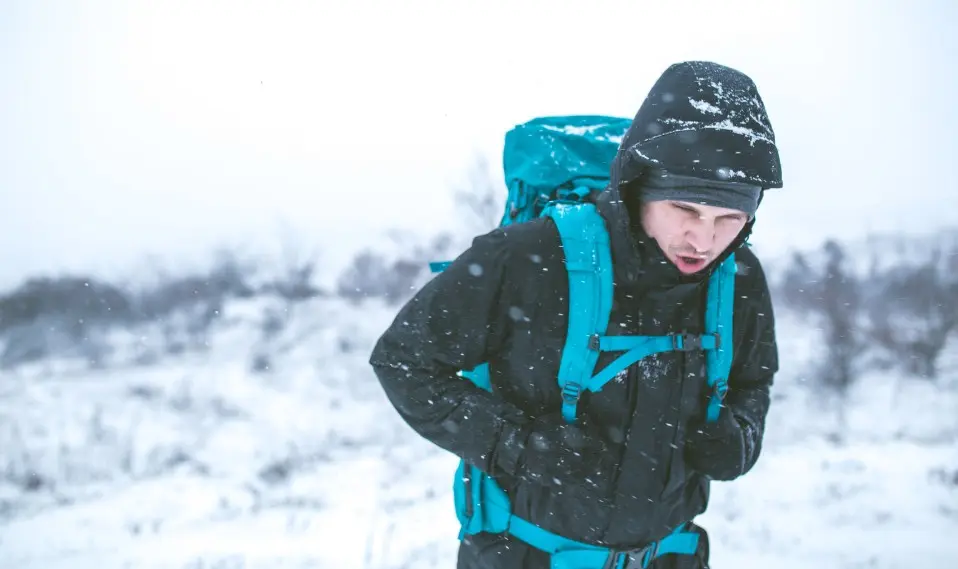
Hypothermia does not usually happen suddenly. It develops gradually, and early signs can be subtle.

Persistent shivering is the first warning sign. This may be followed by loss of dexterity, difficulty operating a zip, unusual tiredness, reduced alertness or abnormal behaviour.

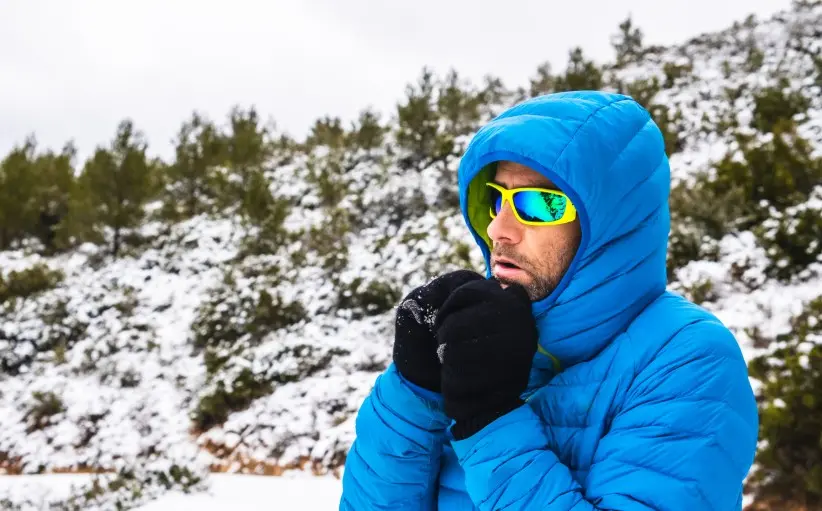
Frostbite mainly affects the extremities: fingers, toes, nose and ears. It often starts with numbness before the skin becomes very pale or whitish.

At the slightest doubt, react immediately. Shelter from the wind, replace damp clothing if possible, add a warm layer and give a hot drink if the person is conscious.

One misconception persists: the hip flask of alcohol that “warms you up”. In reality, the opposite is true.

Alcohol dilates blood vessels, creating a temporary feeling of warmth. But this sensation is deceptive. Your body actually loses more heat, and cold-related warning signs are less clearly perceived. Alcohol also impairs judgement, creating an additional risk.

The best drink against cold is therefore… a hot, alcohol-free drink.

Mistake no. 7: improvising your route

A winter route is not planned like a summer one.

Snow, ice or frozen terrain considerably slow progress. A route described as taking four hours in summer can easily take five or six in winter.

Always allow a comfortable time margin, consider daylight hours and identify a fallback route for poor conditions.

Before departure, also tell someone close to you your route and expected return time. This simple precaution can save valuable time if rescuers need to intervene.

Do not underestimate avalanche risk

Whenever you hike in snowy mountains, avalanche risk must be part of your preparation.

The first step is to consult the avalanche risk bulletin (BERA) published by Météo-France. It gives the risk level and valuable information on the most exposed slope aspects and altitudes.

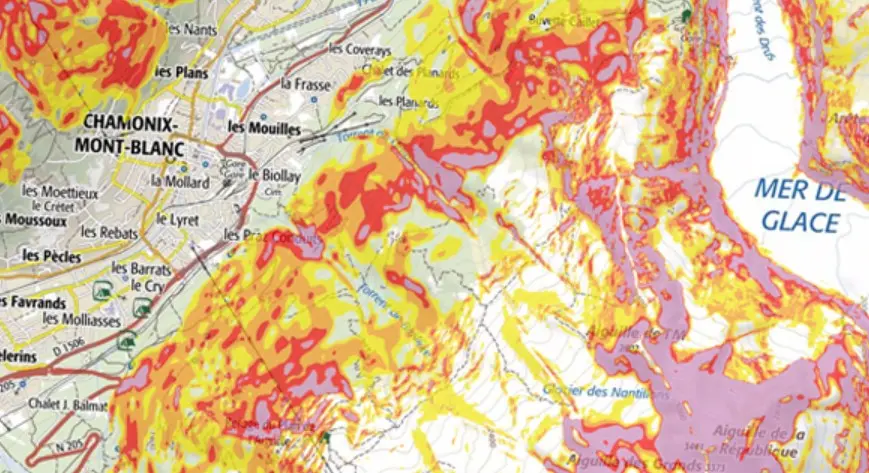
It is also important to know a key reference: an avalanche can start on a slope of 30°. Many hikers assume a dangerous slope must be very steep, yet a 30° slope often looks relatively moderate on the ground.

To plan your route better, use the slope map available on Géoportail (IGN maps). It quickly shows areas exceeding 30°, 35° or 40° and helps identify potentially avalanche-prone zones.

Finally, remember that an avalanche transceiver (ARVA or DVA), shovel and probe are rescue equipment. They improve the chances of finding a buried victim, but never make a route safe.

The best strategy is always to avoid risky slopes and accept changing or cancelling your outing when conditions require it.

Mistake no. 8: overestimating your experience

It is better to build experience gradually.

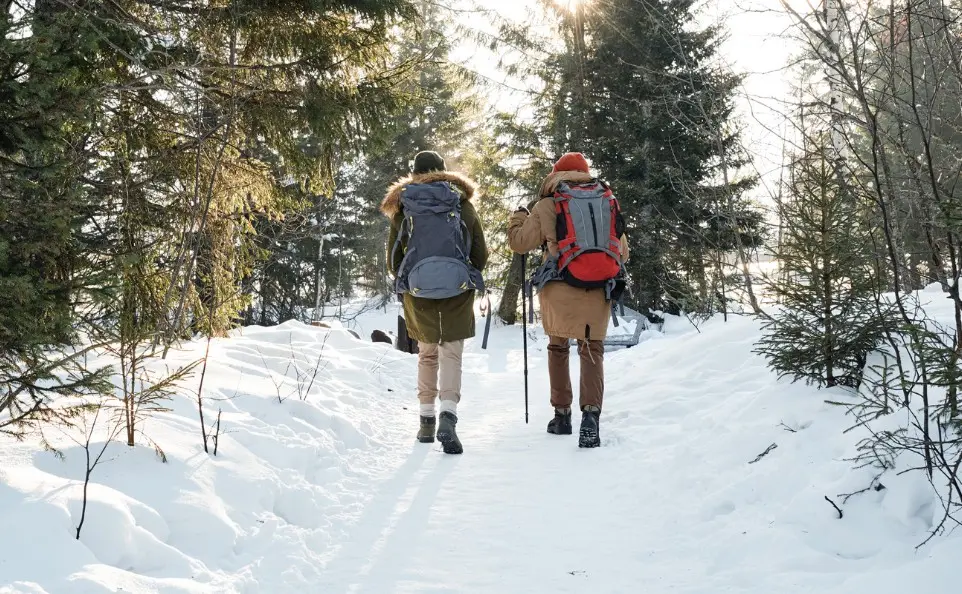
Start with familiar routes, with little exposure and suited to conditions. Learn to use your equipment correctly, manage your pace and recognise situations that require turning back.

If you plan regular outings in snowy mountains, training in snow travel, crampon use, winter navigation or avalanche risk management is an excellent investment.

Experience means knowing how to avoid risks, rather than taking more.

Conclusion

Surviving winter is not an exceptional feat. In the vast majority of cases, it all depends on good preparation and decisions made before the situation becomes difficult.

Choosing a suitable route, checking weather, carrying the right equipment, managing effort, staying hydrated and recognising early signs of cooling are simple actions that greatly reduce risks.

Ultimately, the real principle of winter outdoor activity is to always retain a margin: time before darkness, energy before exhaustion, warmth before feeling cold, and safety in route selection.

If there were just one quality to remember in an experienced outdoor enthusiast, it would undoubtedly be this: knowing when to turn back. The mountain will still be there tomorrow, and returning is always more pleasant than having to rely on rescuers.

FAQ

Can you hike in winter without being an expert?

Yes, provided you progress gradually. Choose routes suited to your ability, check weather forecasts, equip yourself properly and accept changing your objectives if conditions worsen. Experience builds gradually, rather than through putting yourself in difficulty.

How can you avoid hypothermia on a winter hike?

The best approach is planning ahead. Wear several breathable layers, limit sweating by adjusting your pace, eat and drink regularly, and put on a warm layer at every break. If shivering becomes pronounced or alertness drops, it is time to shorten the outing.

What is the best drink to carry in winter?

A hot drink in a vacuum flask remains the best option. Preheat the flask with boiling water before filling it to keep your drink hot longer.

Are warmers really useful?

Yes, but consider them an additional comfort measure. They keep hands or feet warm when used preventively. However, they cannot treat hypothermia. Wearing suitable clothing and staying dry always remain the priority.

Why should you avoid alcohol in cold weather?

Alcohol gives a false feeling of warmth. In reality, it accelerates body heat loss, masks early signs of cooling and impairs judgement. It therefore creates an additional risk in winter environments.

At what slope angle does avalanche risk arise?

The risk becomes significant at around 30°. Before any outing in snowy mountains, consult the BERA and use Géoportail's slope map to identify the most exposed areas.

How can you protect your phone battery from cold?

Cold greatly reduces lithium battery life. Keep your phone and power bank in an inside pocket, as close to your body as possible. Avoid leaving them in an outer backpack pocket for hours.

What is the most important quality for winter survival?

The ability to retain a margin. This means allowing extra time, carrying suitable equipment, managing effort, accepting changes to your objective and, above all, turning back before conditions deteriorate. This decision often distinguishes an experienced outdoor enthusiast from a reckless one.

Product comparison
Compare
Rayon Rando advice